Copy of Mitosis, Meiosis, and Asexual Reproduction (4/27/2024)

Last updated over 1 year ago
32 questions
Mitosis
Required
1

Correlate the phases (G1, S, or G2) to the correct explanation.

Draggable itemCorresponding Item
G1
Cell prepares for division by synthesizing proteins
S
Cell enlarges, synthesizes proteins, and prepares to replicate DNA
G2
DNA synthesis and replication
Required
1

Which are primary roles of mitosis in living organisms? (Choose all that apply.)

Required
1

Match the statements with the appropriate phase of prophase in mitosis.

Draggable itemCorresponding Item
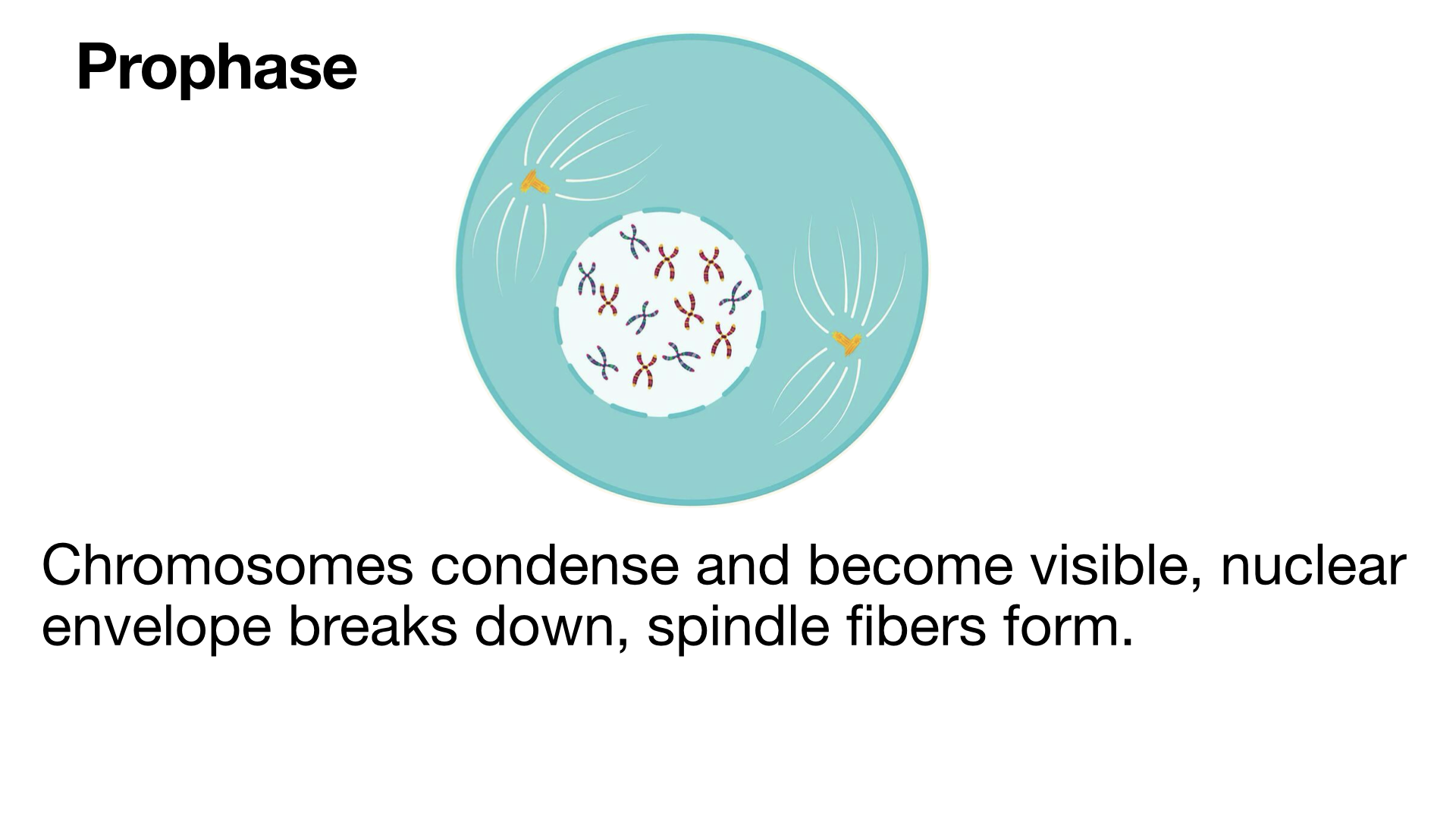
Nuclear envelop breaks down
Late Prophase
Centrosomes start moving toward poles
Mid Prophase
Chromosomes start to condense
Early Prophase
Required
1

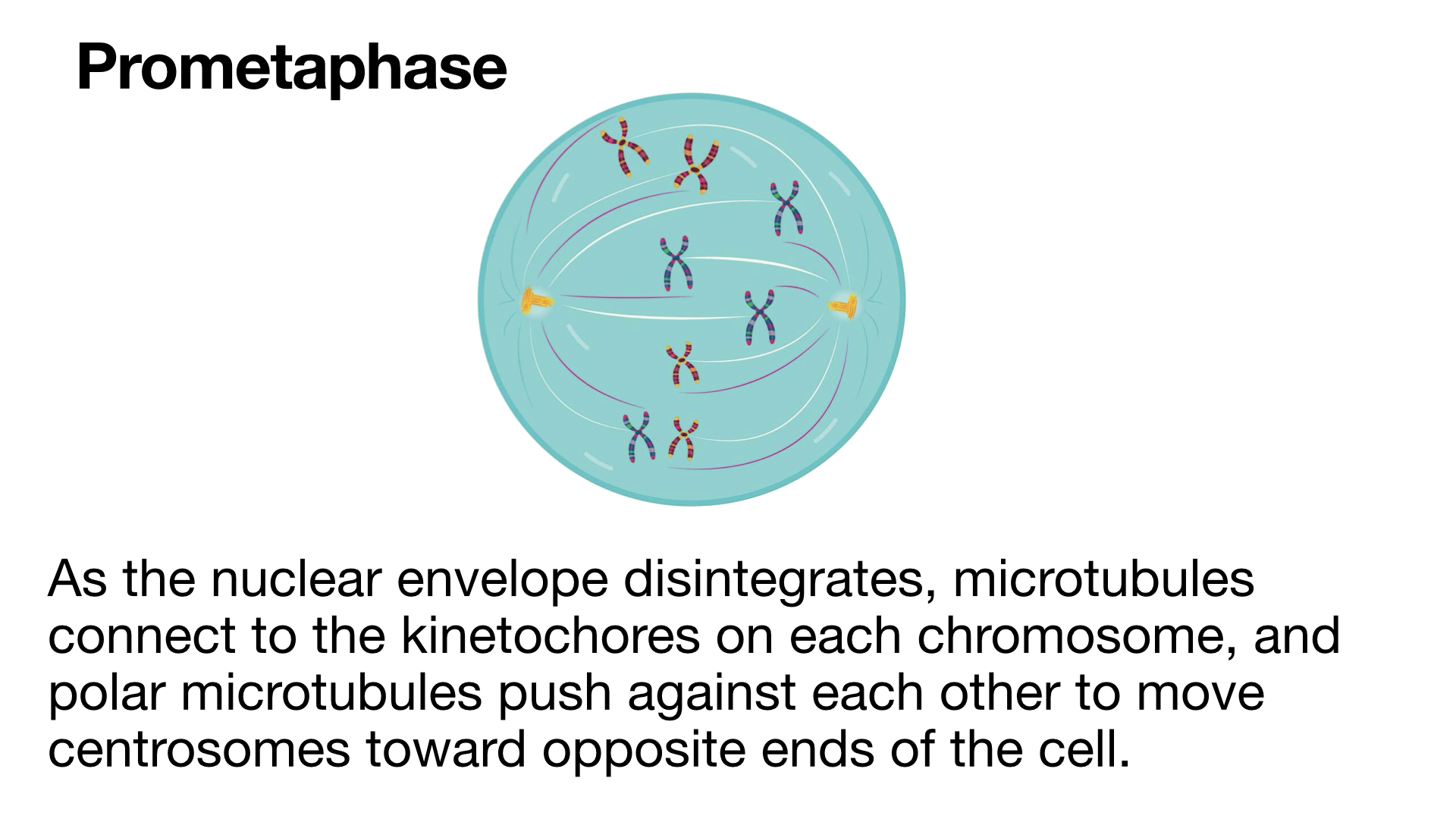
What happens to chromosomes during Prometaphase?

Draggable itemCorresponding Item
Chromosomes align at cell equator
No, this happens in Prophase
Nuclear envelope breaks down and chromosomes are free
No, this happens in Metaphase
Chromosomes condense and become visible
Yes, this happens in Prometaphase
Required
1

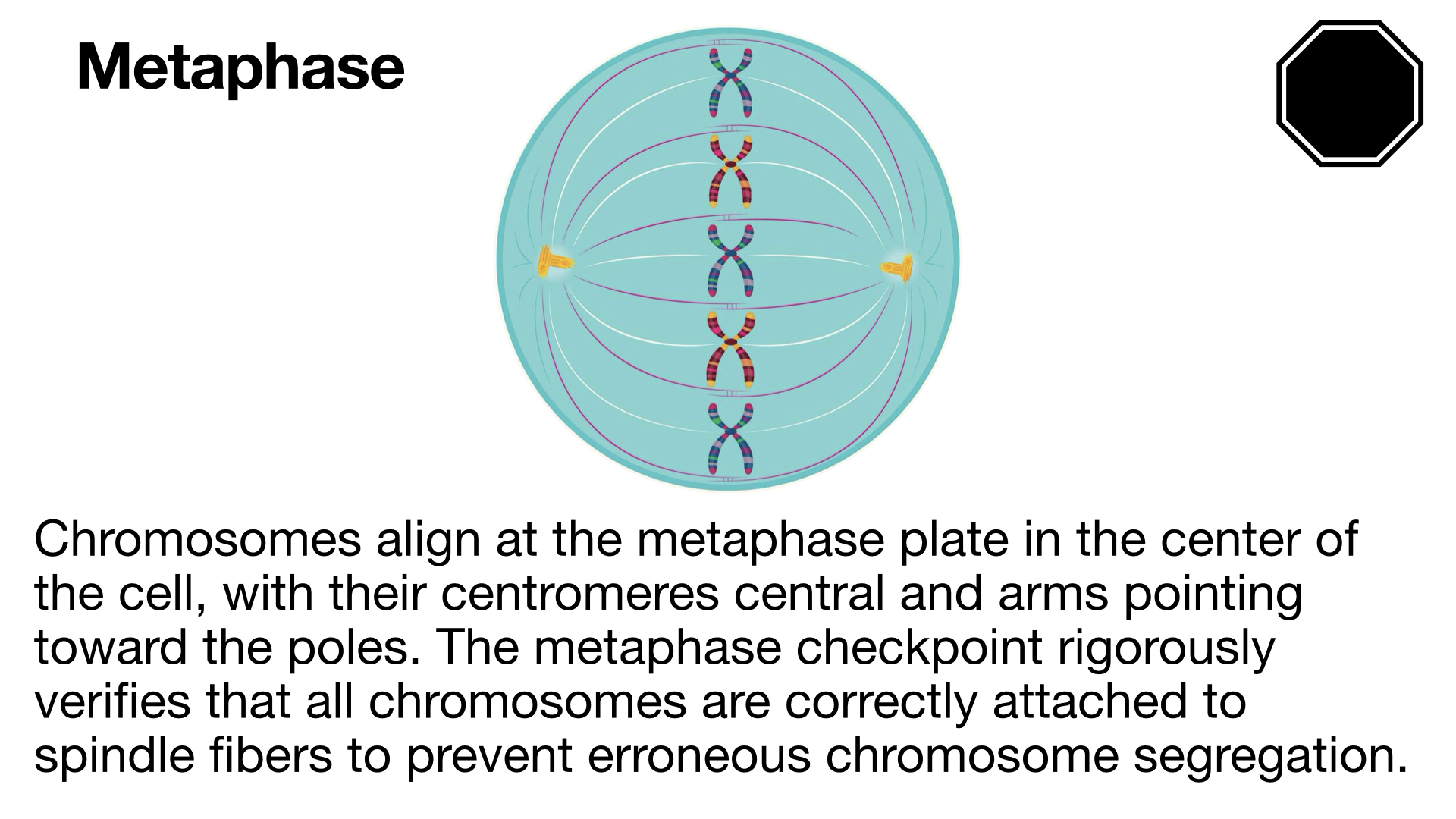
What happens to the chromosomes during metaphase of mitosis?

Draggable itemCorresponding Item
Replicate and line up in the middle
False
Remain condensed and visible
True
Separate into two identical sets
True
Required
1

Match the stages of mitosis with their correct descriptions

Draggable itemCorresponding Item
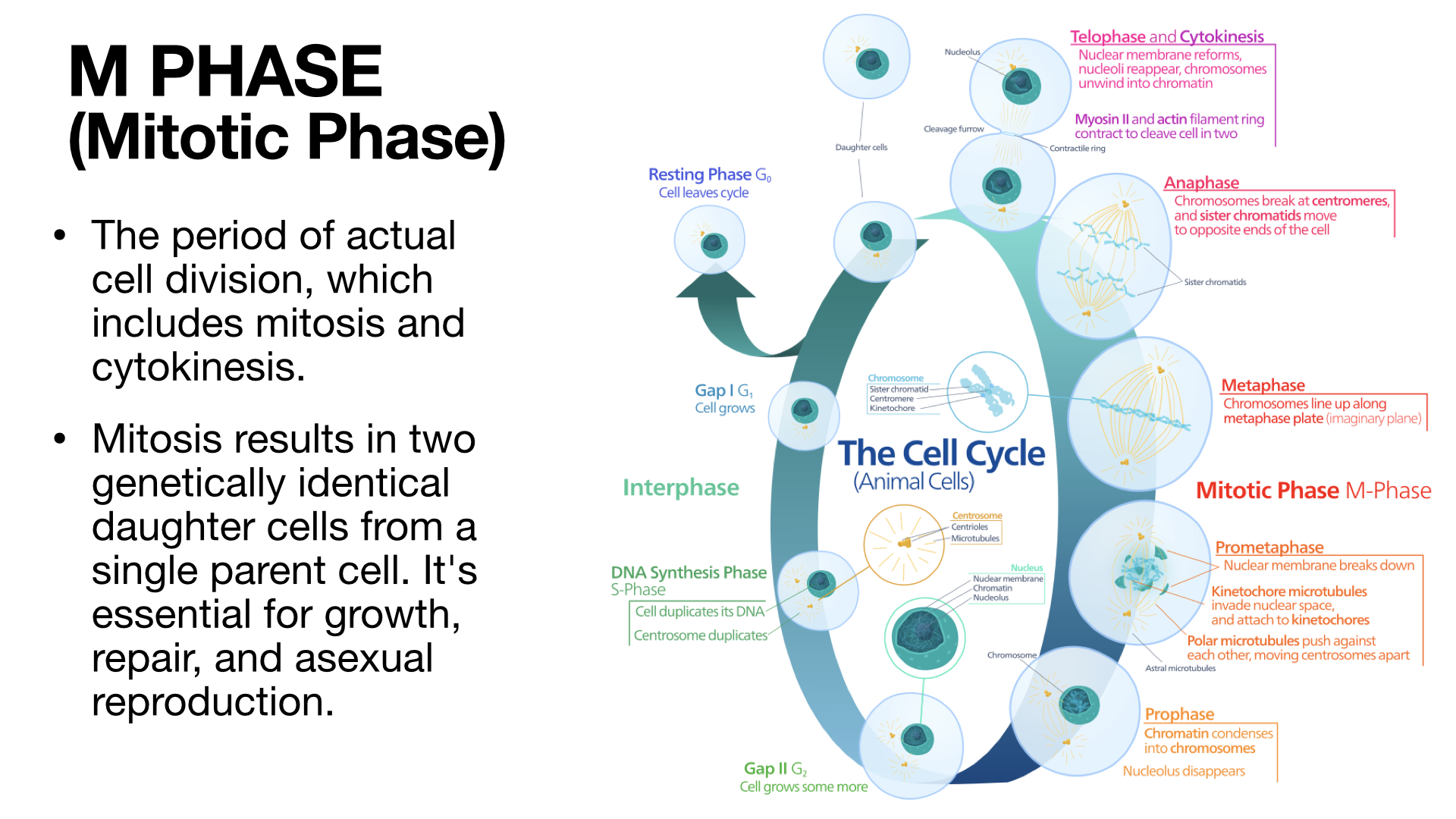
Prophase
Nuclear envelope breaks down, chromosomes become visible
Anaphase
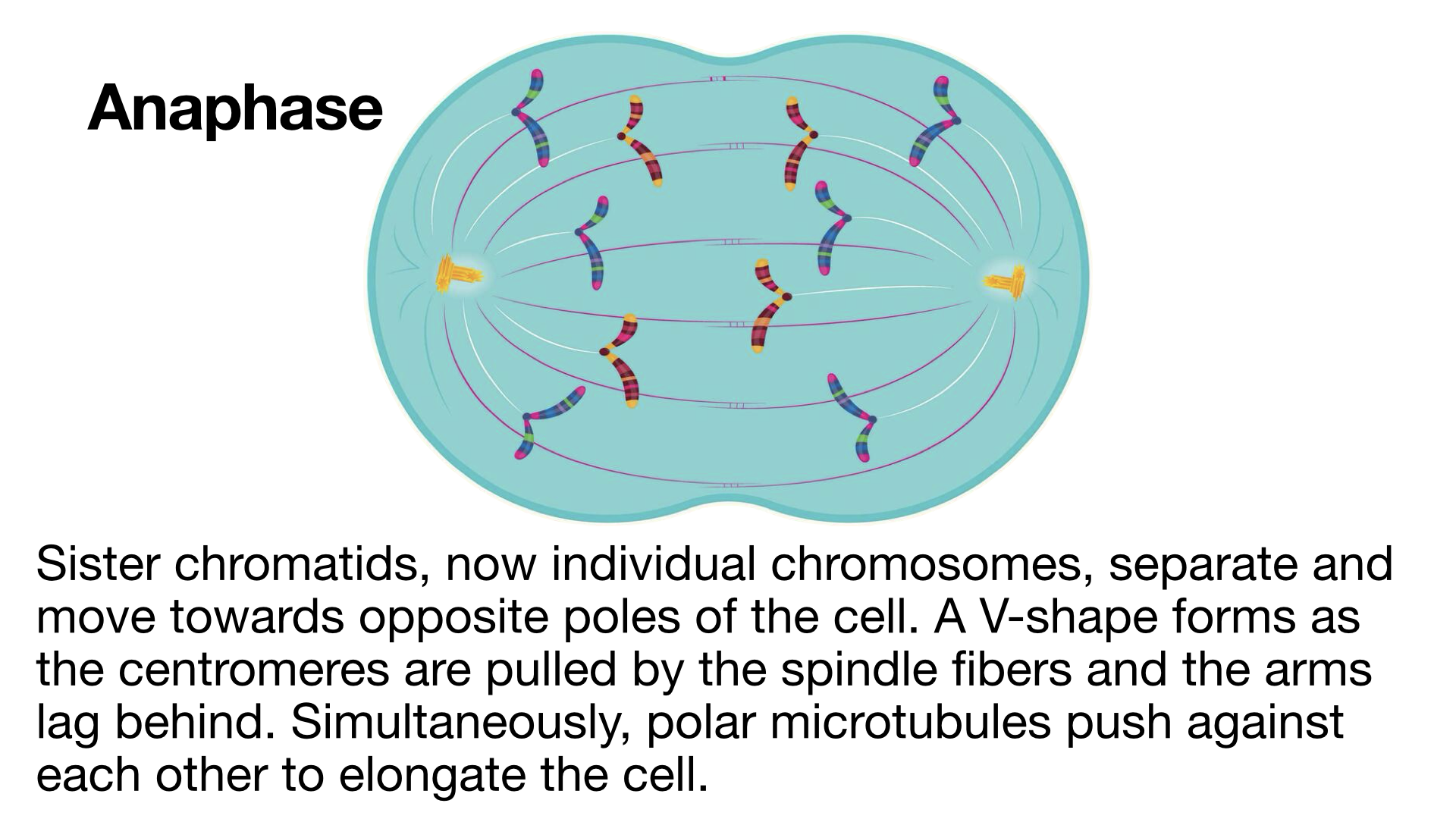
Sister chromatids separate and move towards the poles
Metaphase
Chromosomes align in the middle of the cell
Required
1

Match the phase of mitosis with the cellular structures playing a vital role.

Draggable itemCorresponding Item
Interphase
Nuclear envelope
Telophase
Microtubules
Prometaphase
DNA molecules
Required
1

Match the stages of mitosis with their corresponding descriptions.

Draggable itemCorresponding Item
Interphase
Prepares for cell division by carrying out metabolic processes
Prometaphase
Marks the breakdown of the nuclear membrane
Telophase
Starts the cytoplasmic separation into two daughter cells
Required
1

Match the stages of mitosis to what's occurring with the chromosomes.

Draggable itemCorresponding Item
Telophase
Chromosomes are no longer visible
Cytokinesis
Chromosomes parallel to each other at mid-cell
Metaphase
Chromosomes at opposite ends of cell
Required
1

Identify where these processes mostly occur.

Draggable itemCorresponding Item
Skin cells regeneration
Uncontrolled mitosis
Sperm and egg cells formation
Mitosis
Tumor or cancer cells formation
Meiosis
Meiosis
Required
1

Link the mechanism to its role in genetic diversity.

Draggable itemCorresponding Item
Ensures different gene combinations
Independent assortment
Formation of genetically unique cells
Meiosis
Exchanges DNA between paired chromosomes
Crossing over
Required
1

Match the process to its role in sexual reproduction.

Draggable itemCorresponding Item
Fertilization
Allows for growth and development of the organism after fertilization
Meiosis
Combines gametes to form a zygote
Mitosis
Produces haploid gametes for fertilization
Required
1

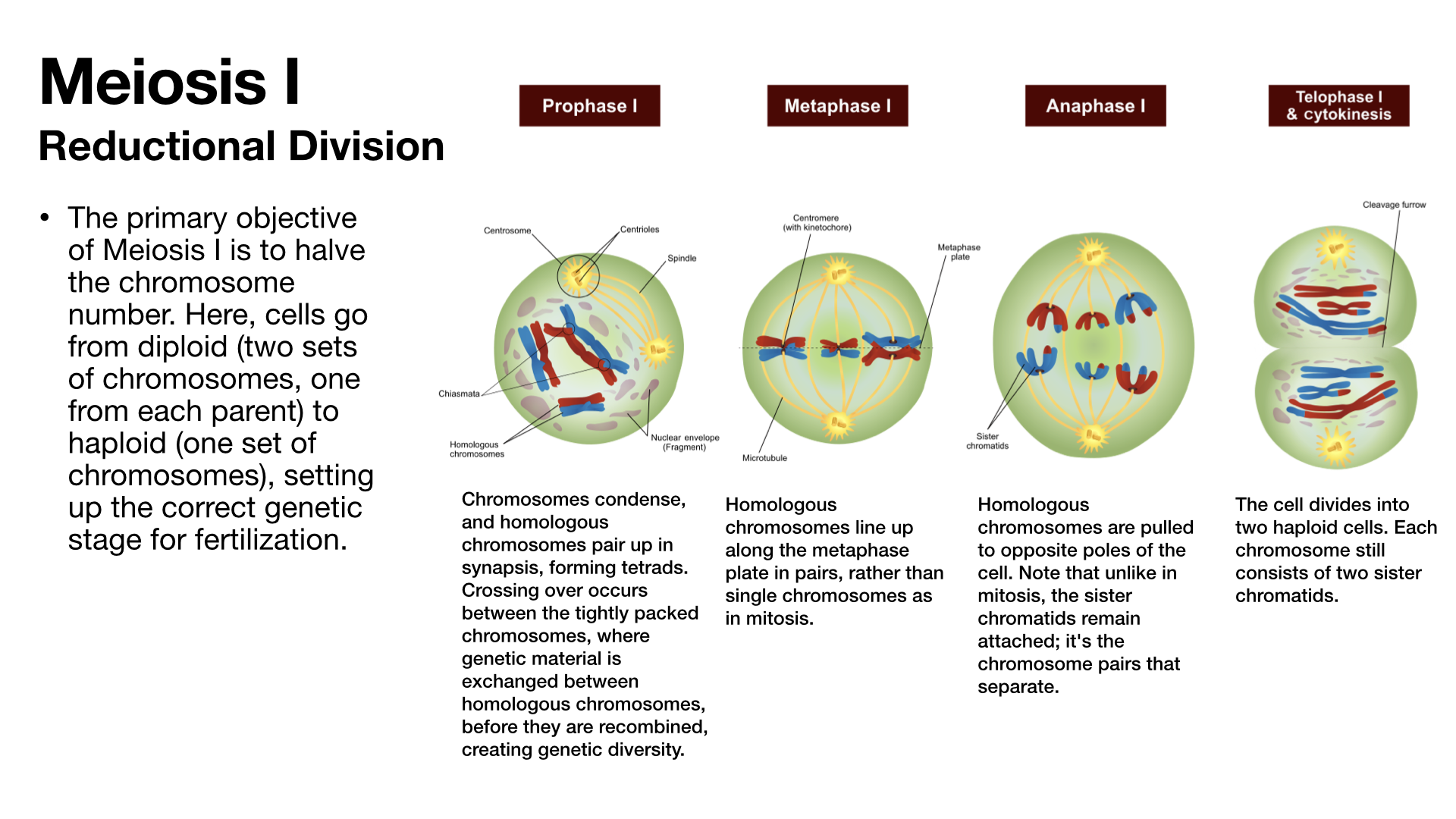
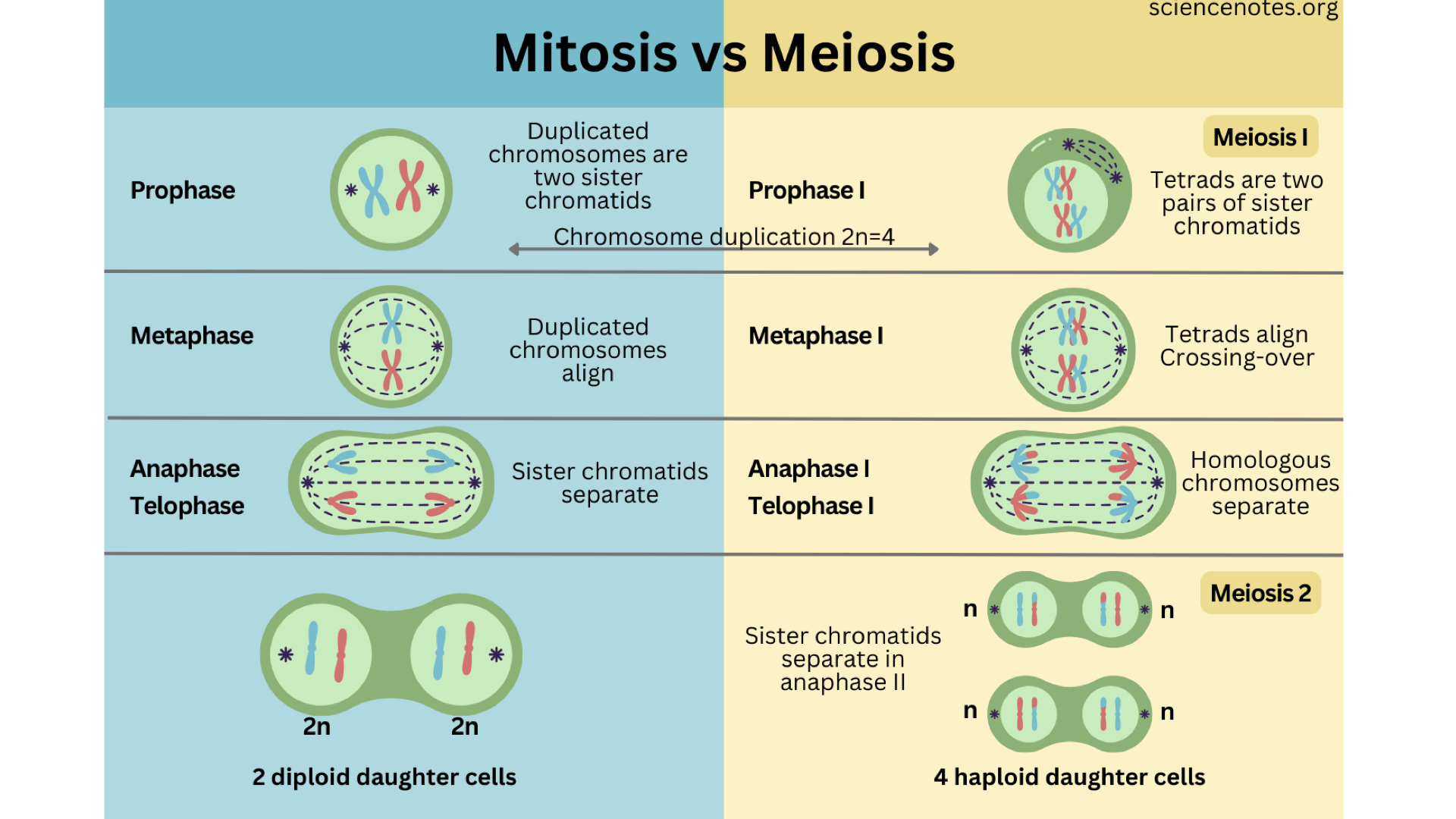
What can be seen under the microscope at the end of each Meiosis I phase?

Draggable itemCorresponding Item
End of Anaphase I
Chromosomes form tetrads
End of Metaphase I
Homologous chromosomes moving towards the poles
End of Prophase I
Tetrads are lined up at the equator
Required
1

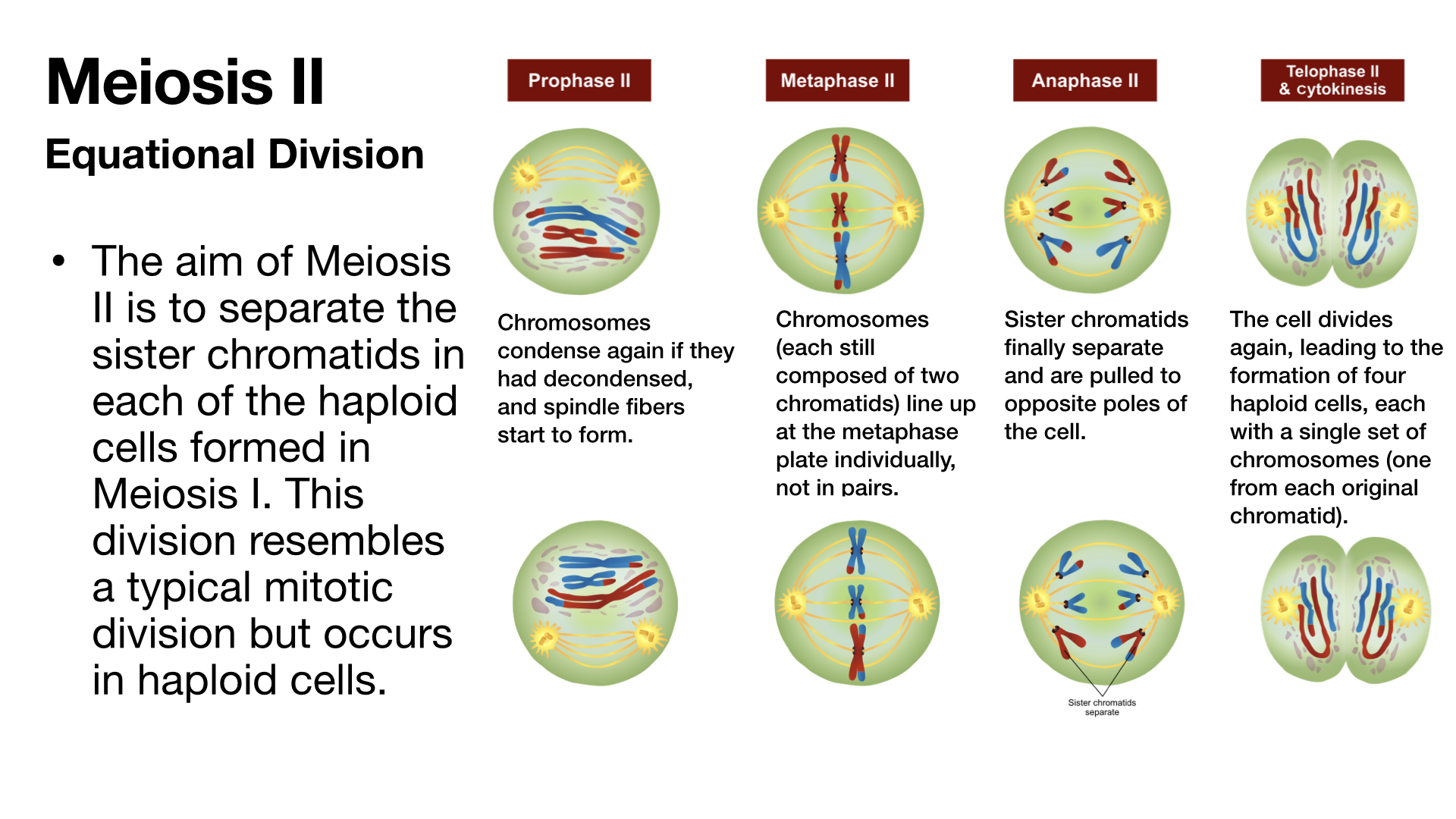
Pair the results of Meiosis II with the corresponding statements

Draggable itemCorresponding Item
Four haploid cells
End result of Meiosis II
Sister chromatids separation
Main event in Anaphase II
Genetic variation
Reason for independent assortment and cross-over
Required
1

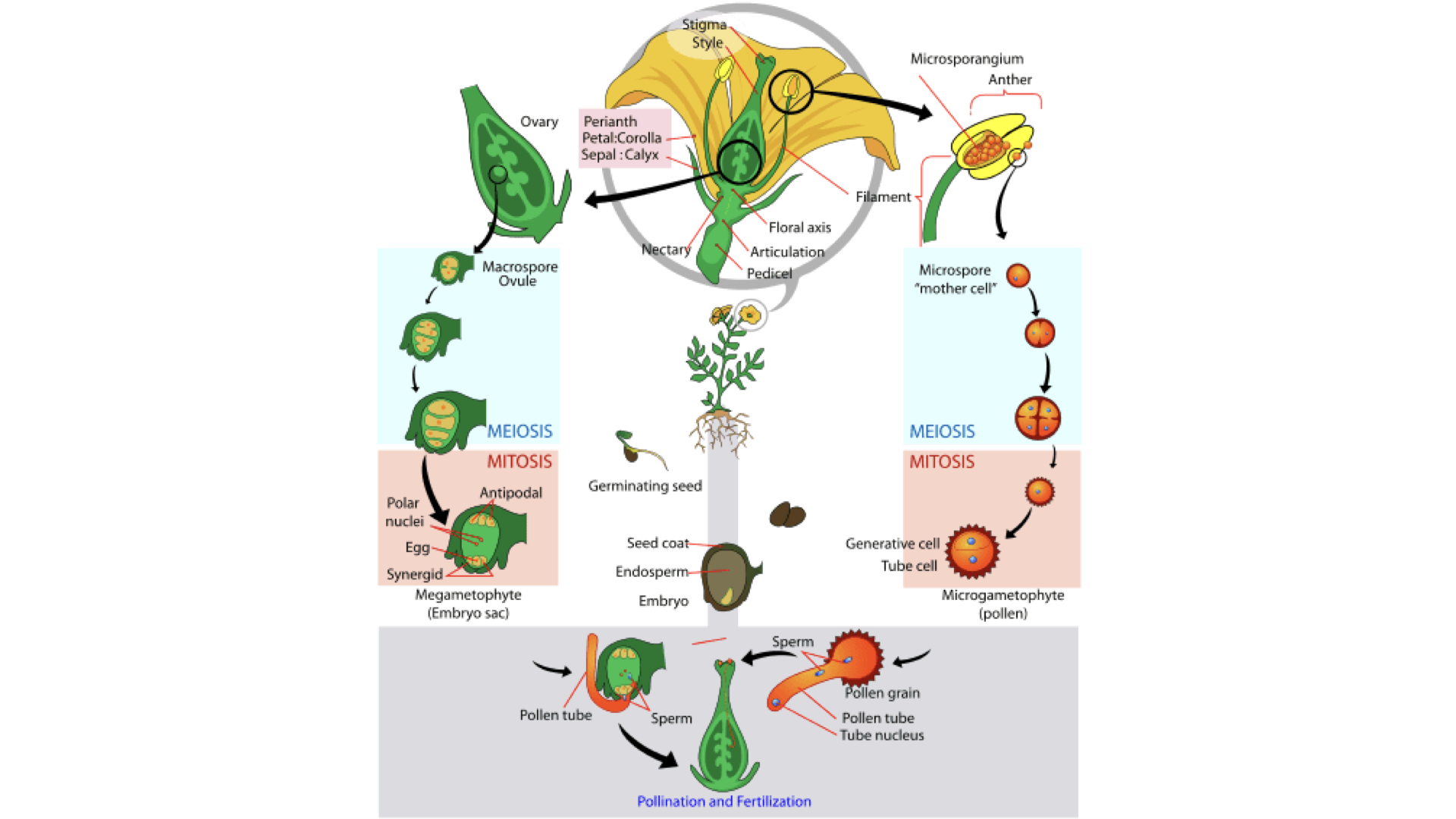
Match the reproductive structure with the plant type that commonly uses it.

Draggable itemCorresponding Item
Pollen and Seeds
Flowering plants
Fragmentation
Grasses and some algae
Spores
Ferns and fungi
Required
1

How many daughter cells are produced at the end of a complete Mitosis and Meiosis cycle?

Asexual Reproduction
Required
1

Match the process with its key characteristic

Draggable itemCorresponding Item
Meiosis
Involves a single organism
Mitosis
Results in genetic variation
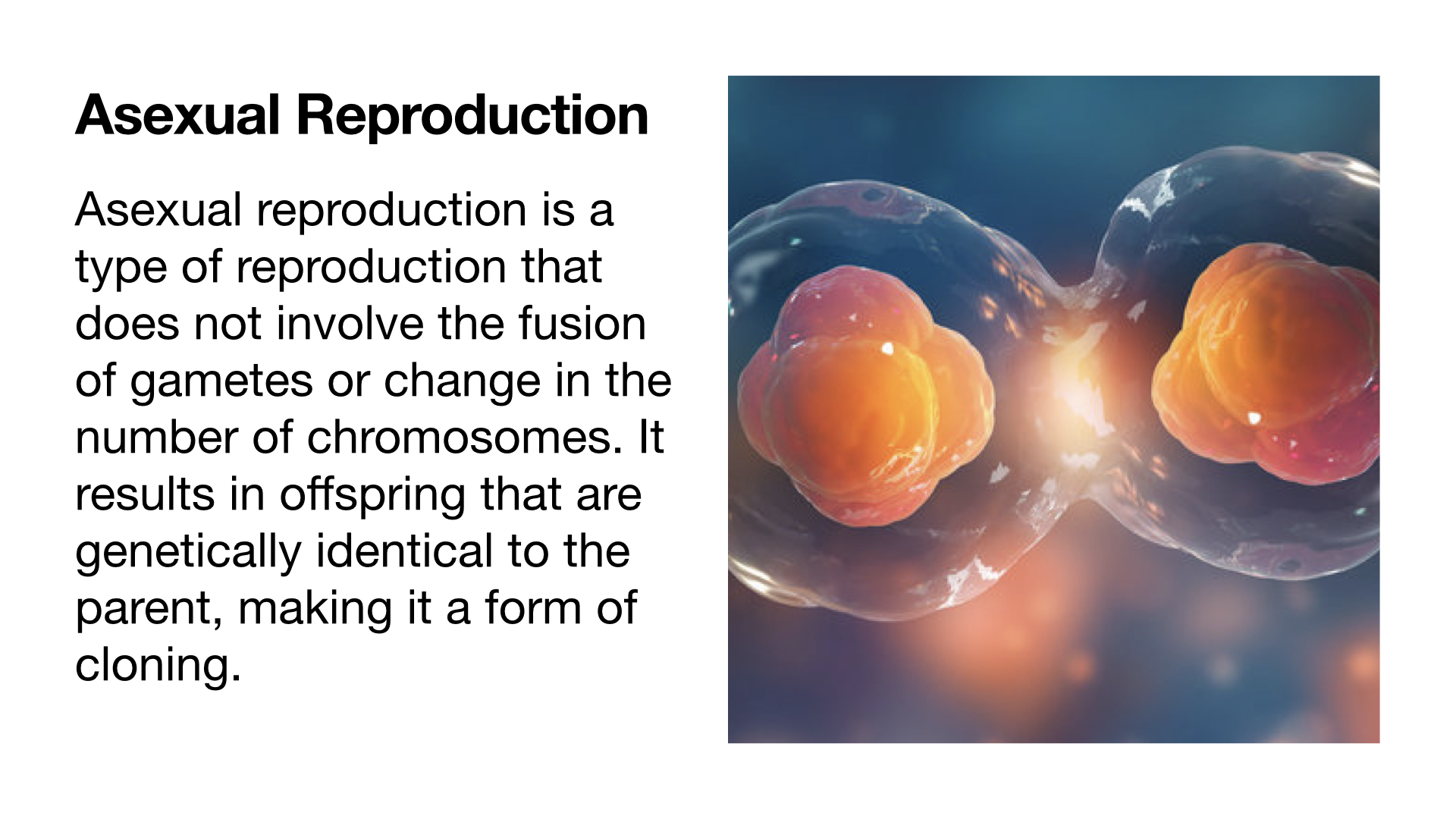
Asexual reproduction
Produces identical daughter cells
Required
1

Match the process with the number of daughter cells produced

Draggable itemCorresponding Item
Mitosis
One identical cell
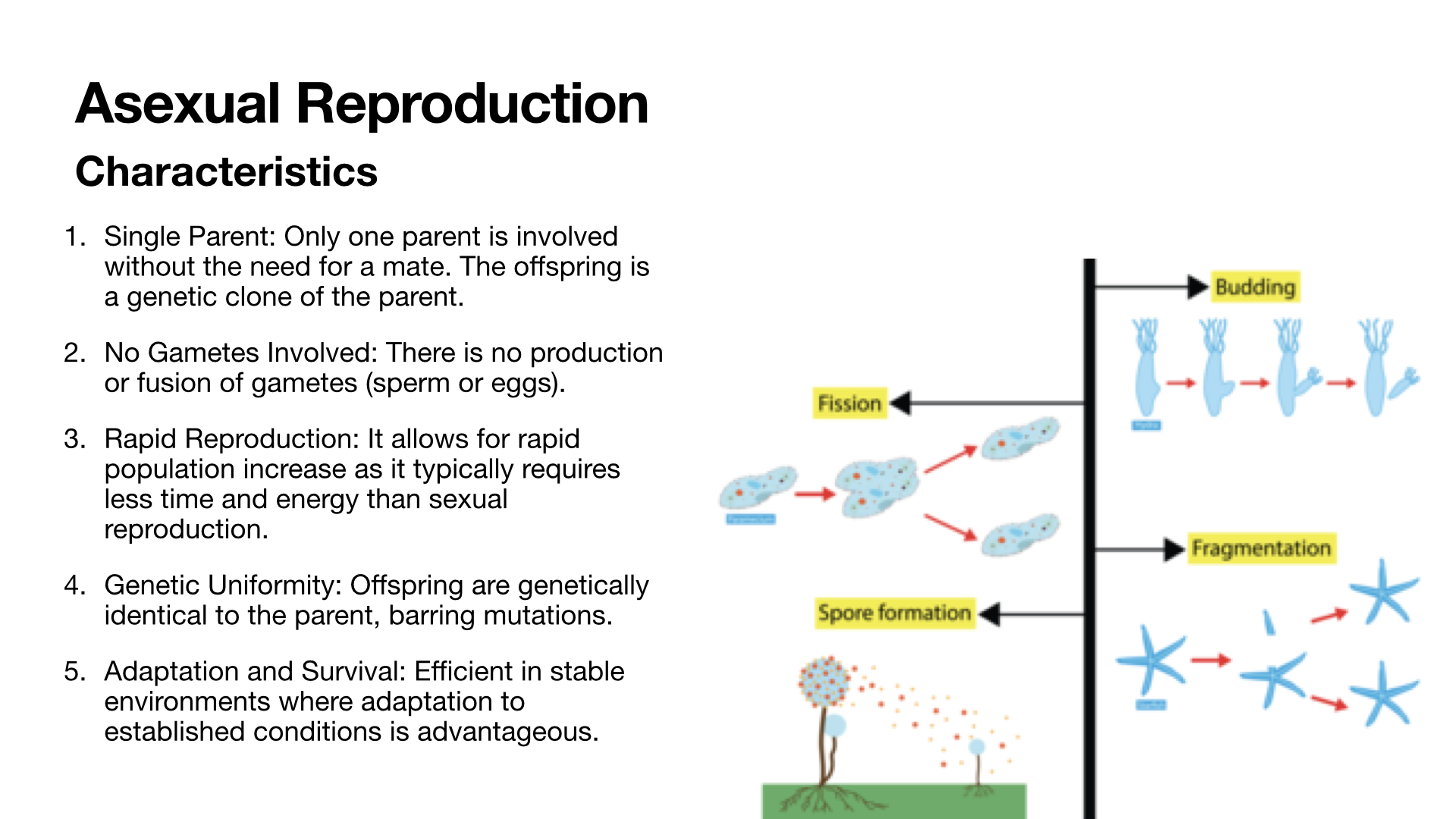
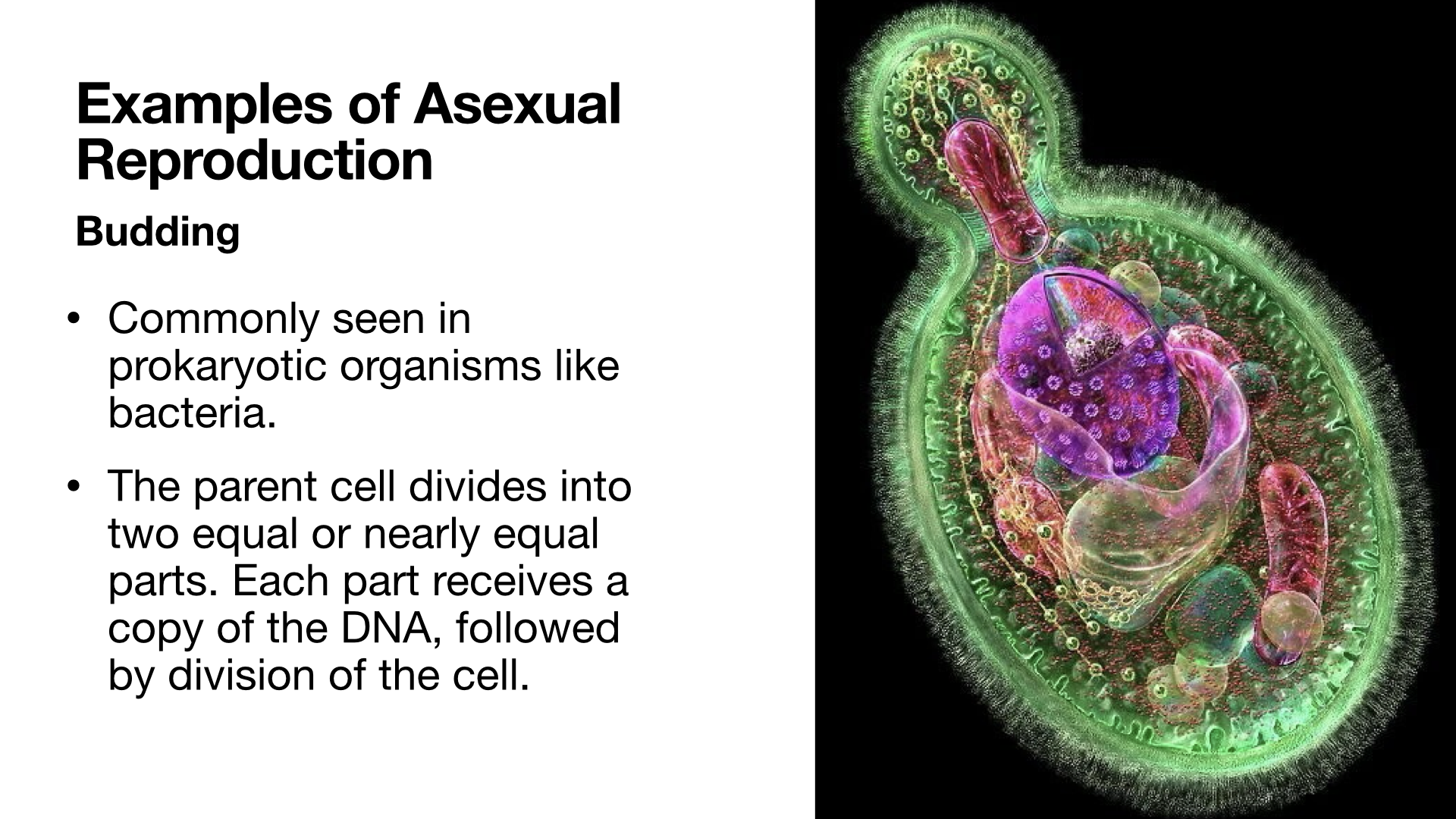
Budding (a type of asexual reproduction)
Four different cells
Meiosis
Two identical cells
Required
1

Match the process to its primary function

Draggable itemCorresponding Item
Fission (a type of asexual reproduction)
Production of sex cells
Meiosis
Growth and Repair
Mitosis
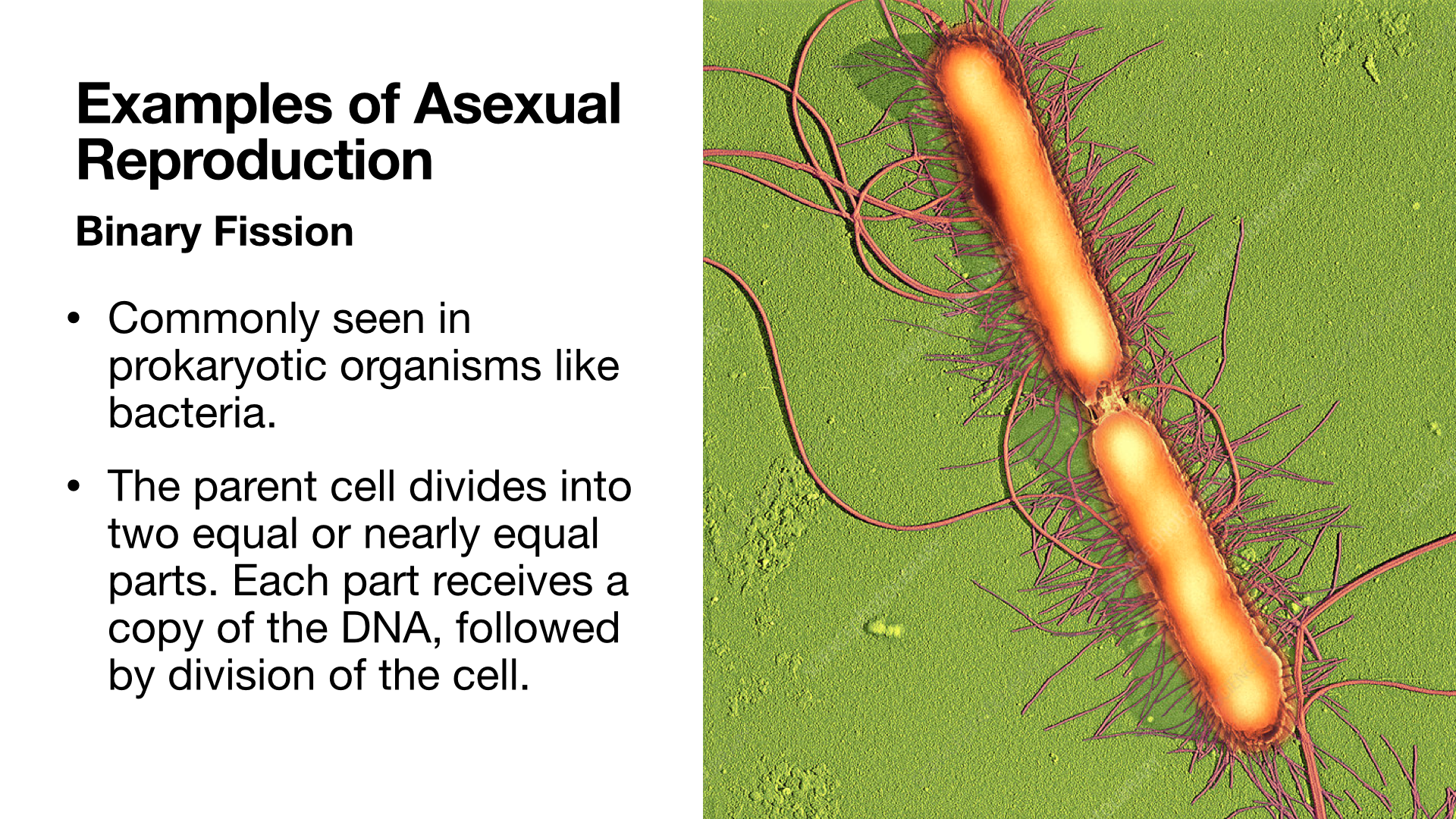
Duplication of unicellular organisms
Required
1

Match the term to its number of divisions.

Draggable itemCorresponding Item
Mitosis
One division resulting in 2 cells
Meiosis
Two divisions resulting in 4 cells
Budding
No cell division
Required
1

Match the different forms of vegetative propagation to their potential advantage

Draggable itemCorresponding Item
Tissue culture
Produces large number of plants quickly
Grafting
Combines best traits of two plants
Division
Simple and cost-effective
Required
1

Match the plant with its type of vegetative propagation.

Draggable itemCorresponding Item
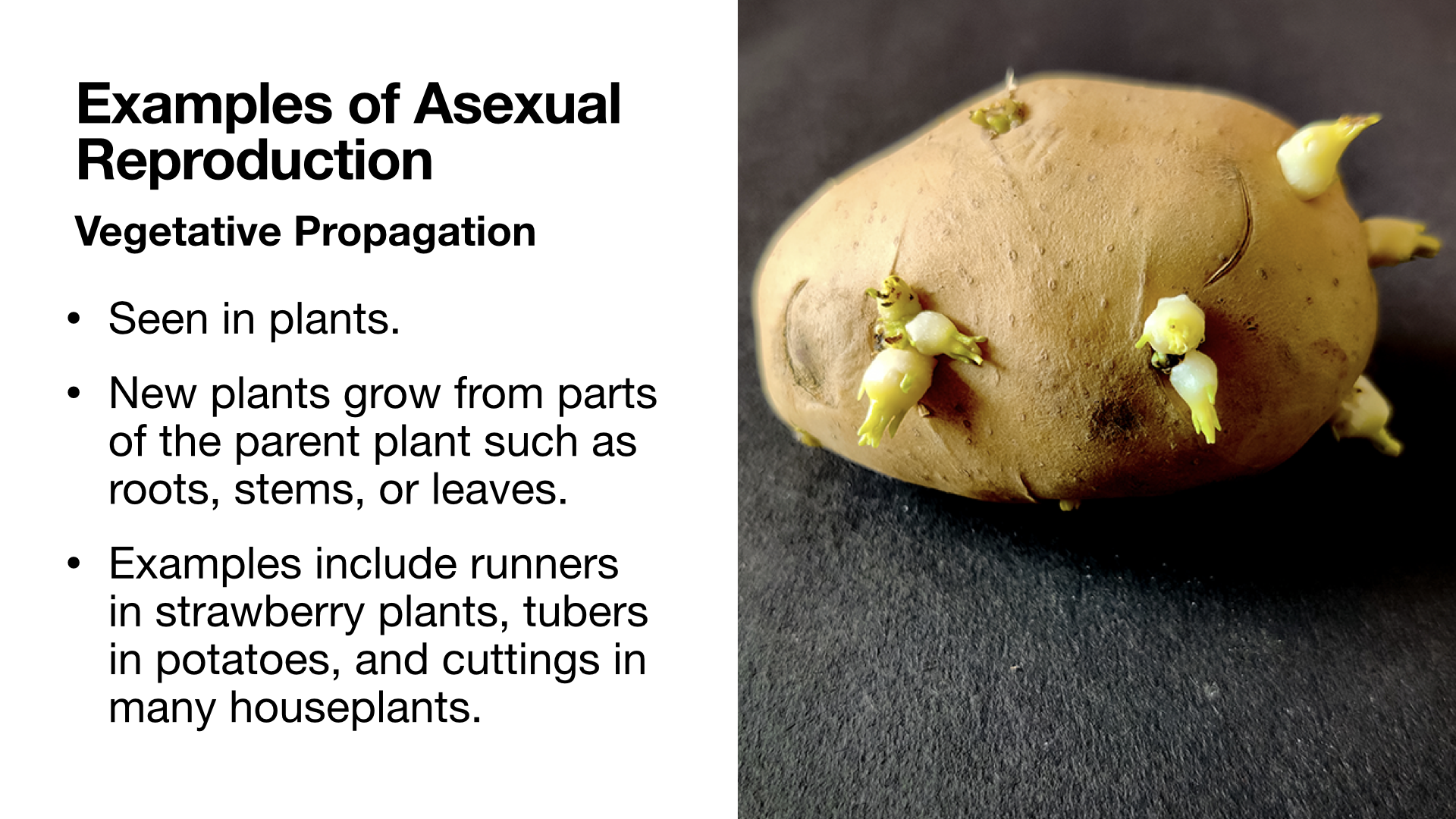
Potato
Tuber
Banana
Rhizome
Strawberry
Runner
Required
1

Match the advantages of vegetative propagation with their appropriate examples.

Draggable itemCorresponding Item
Can survive harsh conditions
Old grape vines can still produce new plants
Producing uniform offspring
Desert plants propagate by offsets
Can prolong fruit-bearing age
All apples from one tree taste the same
Required
1

Match the disadvantage of vegetative propagation to its explanation.

Draggable itemCorresponding Item
Lack genetic variability
Resulting plants are clones - no new traits
Overcrowding
New plants grow close to parent
Spread of diseases
Pests or infections can be transmitted to offspring
Required
1

Relate these biological terms to either mitosis, meiosis, or asexual reproduction.

Draggable itemCorresponding Item
Body growth
Mitosis
Genetic diversity
Meiosis
Cloning
Asexual reproduction
Assessment
Required
1

Required
1

Planaria are flatworms that reproduce asexually. Catfish reproduce sexually. Which statement best compares planaria and catfish?

Required
1
Mitosis is a form of_______ reproduction that produces daughter cells with genetic information that is _______ the parent cell
Required
1
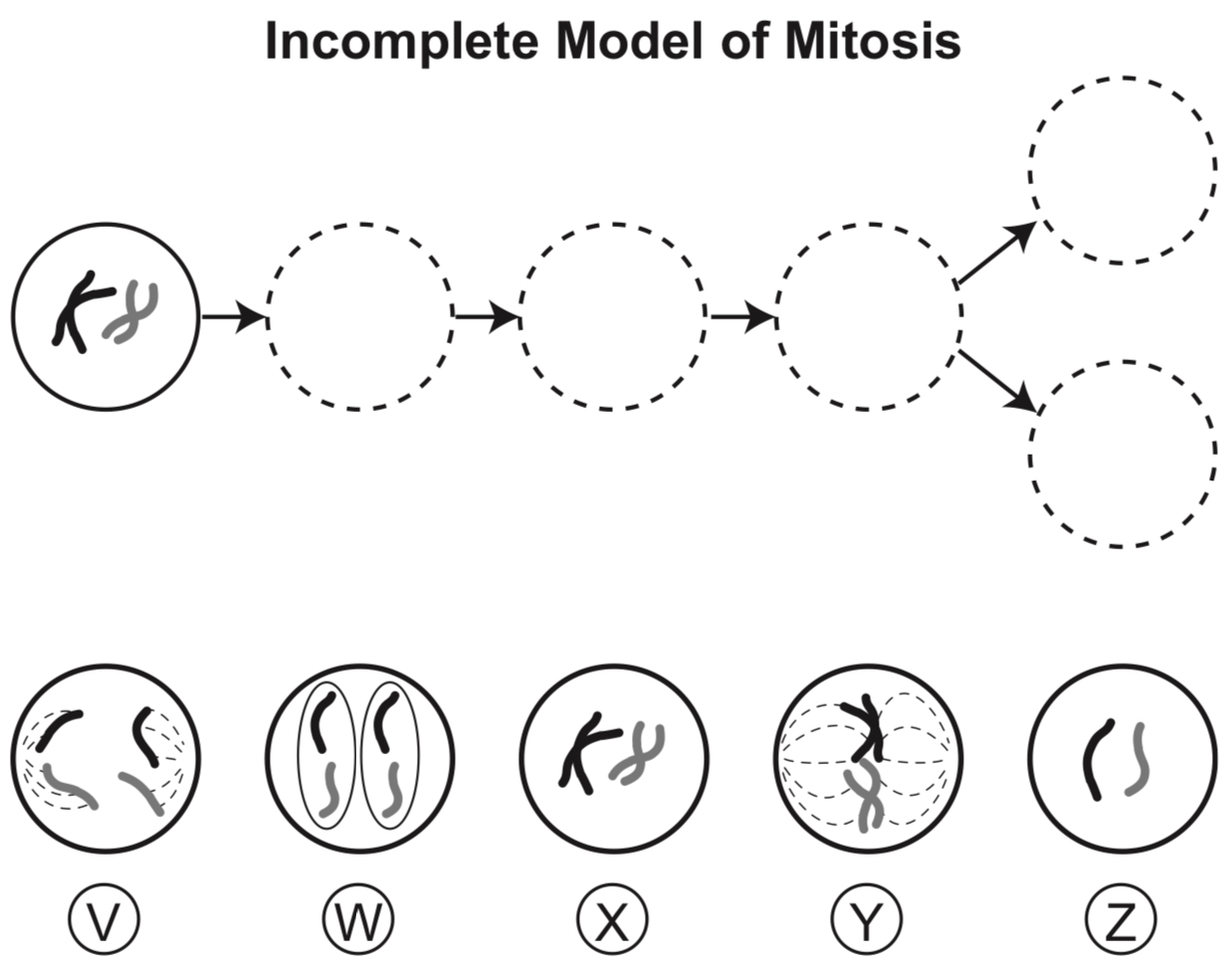
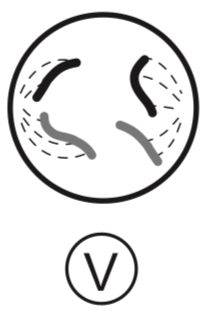
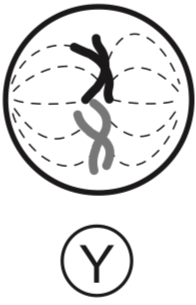
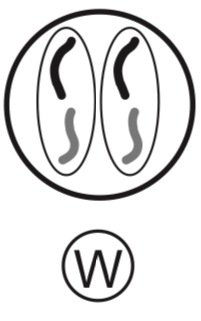
A model of mitosis is shown below beginning with the prophase stage. Record the letter of a cell stage in each circle to correctly complete the model of mitosis. Some cell stages may be used more than once and some may not be used at all.
Other Answer Choices:
Required
1

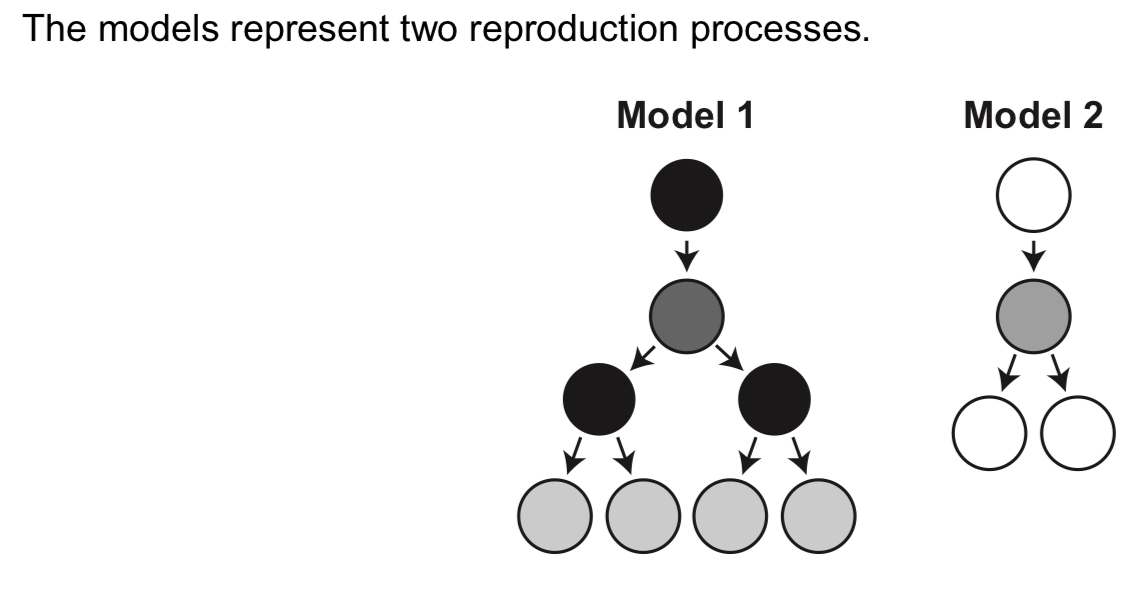
Select the three terms listed that describe only Model 1.

Required
1
In meiosis, the cell divides _______ to produce _______ cells that contain _______ number of chromosomes as the original cell.
Required
1