Log in
Sign up for FREE
arrow_back
Library
Lesson 11 Proving Parallel Lines
By edith lopez
star
star
star
star
star
Share
share
Last updated over 1 year ago
34 questions
Add this activity
1
2
3
4
5
6
7
8
10
12
14
9
11
13
15
16
17
18
19
title
title
20
21
22
23
24
25
zoom_in
1
1
1
1
1
1
1
1
1
1
1
1
1
1
1
1
1
1
1
1
1
1
1
1
1
26
27
28
29
30
31
32
33
34
zoom_in
1
1
1
1
1
1
1
1
1
Question 1
1.
Same Side Interior Angle Theorem
Alternate Exterior Angle Theorem
Same Side Exterior Angle Theorem
Corresponding Angle Postulate
Linear Pair Theorem
Alternate Interior Angle Theorem
Vertical Angle Theorem
Question 2
2.
Verticla angle Theorem
Alternate Interior Angle Theorem
Corresponding Angle Postulate
Alternate Exterior Angle Theorem
Same Side Interior Angle Theorem
Same Side Exterior Angle Theorem
Linear Pair Theorem
Question 3
3.
Linear Pair Theorem
Corresponding Angle Postulate
Same Side Exterior Angle Theorem
Vertical Angle theorem
Alternate Interior Angle Theorem
Same Side Interior Angle Theorem
Alternate Exterior Angle Theorem
Question 4
4.
Alternate Interior Angle Theorem
Same Side Exterior Angle Theorem
Linear pair Theorem
Vertical Angle Theorem
Corresponding Angle Postulate
Alternate Exterior Angle Theorem
Same Side Interior Angle Theorem
Question 5
5.
Alternate Interior Angle Theorem
Corresponding Angle Postulate
Vertical Angle Theorem
Alternate Exterior Angle Theorem
Linear pair Theorem
Same Side Exterior Angle Theorem
Same Side Interior Angle Theorem
Question 6
6.
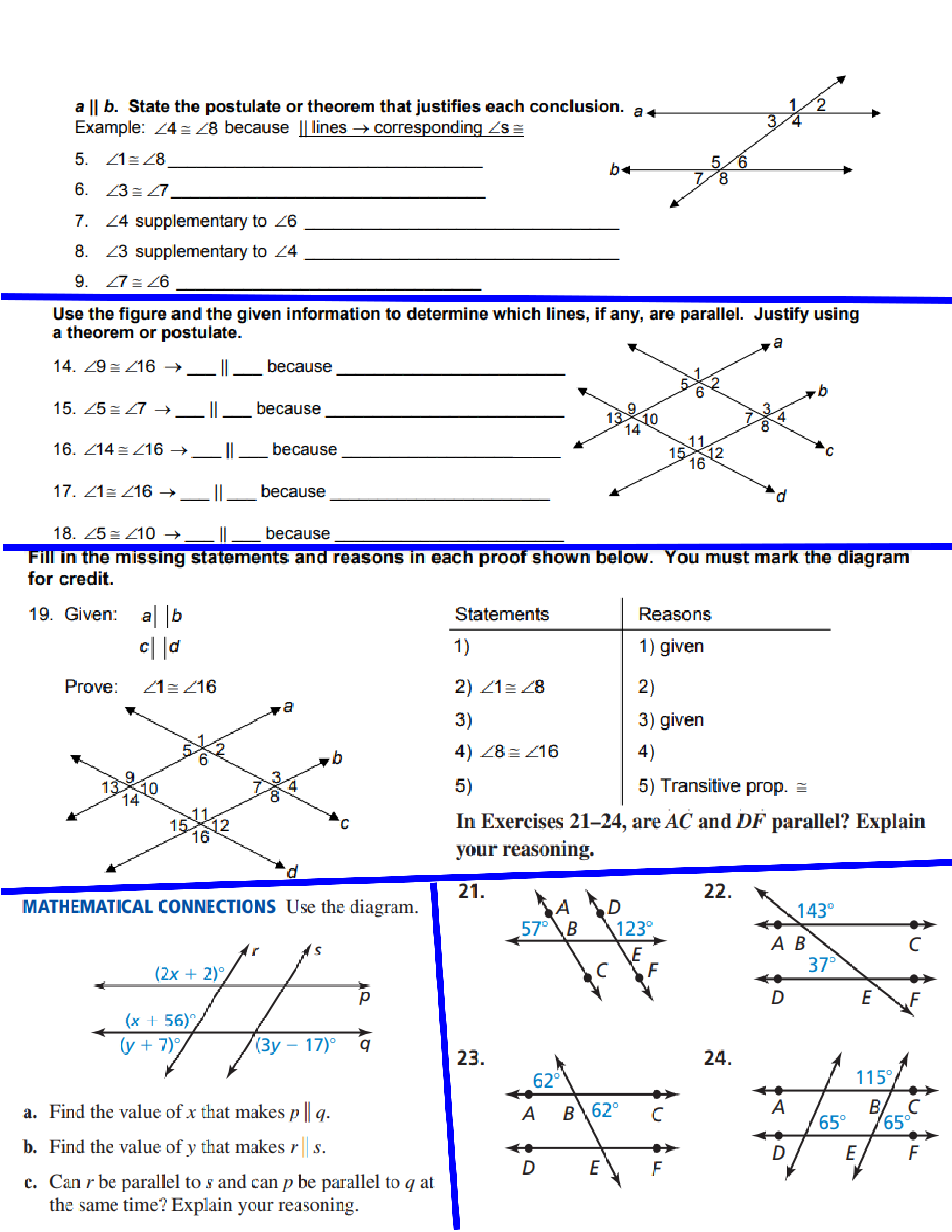
Based on the two angles to the left, which two lines can be known to be congruent?
a ll b (line a is parallel to line b)
c ll d (line c is parallel to line d)
Not enough information to say any lines are parallel
Question 7
7.
Why are they or are they not parallel
Linear pair Theorem
Vertical Angle Theorem
Same Side Exterior Angle Theorem
Not an angle pair
Same Side Interior Angle Theorem
Corresponding Angle Postulate
Alternate Exterior Angle Theorem
Alternate Interior Angle Theorem
Question 8
8.
Based on the two angles to the left, which two lines can be known to be congruent?
a ll b (line a is parallel to line b)
c ll d (line c is parallel to line d)
Not enough information to say any lines are parallel
Question 9
9.
Why are they or are they not parallel
Corresponding Angle Postulate
Same Side Exterior Angle Theorem
Alternate Interior Angle Theorem
Alternate Exterior Angle Theorem
Same Side Interior Angle Theorem
Linear pair Theorem
Vertical Angle Theorem
Not an angle pair
Question 10
10.
Based on the two angles to the left, which two lines can be known to be congruent?
a ll b (line a is parallel to line b)
c ll d (line c is parallel to line d)
Not enough information to say any lines are parallel
Question 11
11.
Why are they or are they not parallel
Alternate Interior Angle Theorem
Vertical Angle Theorem
Same Side Interior Angle Theorem
Corresponding Angle Postulate
Linear pair Theorem
Same Side Exterior Angle Theorem
Alternate Exterior Angle Theorem
Not an angle pair
Question 12
12.
Based on the two angles to the left, which two lines can be known to be congruent?
a ll b (line a is parallel to line b)
c ll d (line c is parallel to line d)
Not enough information to say any lines are parallel
Question 13
13.
Why are they or are they not parallel
Alternate Interior Angle Theorem
Alternate Exterior Angle Theorem
Corresponding Angle Postulate
Same Side Interior Angle Theorem
Not an angle pair
Same Side Exterior Angle Theorem
Vertical Angle Theorem
Linear pair Theorem
Question 14
14.
Based on the two angles to the left, which two lines can be known to be congruent?
a ll b (line a is parallel to line b)
c ll d (line c is parallel to line d)
Not enough information to say any lines are parallel
Question 15
15.
Why are they or are they not parallel
Alternate Interior Angle Theorem
Vertical Angle Theorem
Same Side Interior Angle Theorem
Linear pair Theorem
Alternate Exterior Angle Theorem
Corresponding Angle Postulate
Same Side Exterior Angle Theorem
Not an angle pair
Question 16
16.
Which lines are parallel because of anglesd 1 and 8 being congruent?
c and d
b and d
a and b
a and c
Question 17
17.
What peoperty tells us that angles 1 and 8 are parallel?
Corresponding Angle Postulate
Same Side Exterior Angle Theorem
Vertical Angle Theorem
Alternate Exterior Angle Theorem
Same Side Interior Angle Theorem
Linear pair Theorem
Alternate Interior Angle Theorem
Question 18
18.
Which lines are parallel because of angles 8 and 16 being congruent?
b and d
c and d
a and c
a and b
Question 19
19.
What peoperty tells us that angles 1 and 8 are parallel?
Linear pair Theorem
Vertical Angle Theorem
Same Side Interior Angle Theorem
Alternate Exterior Angle Theorem
Alternate Interior Angle Theorem
Same Side Exterior Angle Theorem
Corresponding Angle Postulate
< 1 = < 16
I messed up here. These instructions go with the questions below the blue line
Question 20
20.
Which equation can I use to show if they are parallel?
2x + 2 = x + 56
2x + 2 + x + 56 = 180
Question 21
21.
What does x equal?
Question 22
22.
yes
no
Question 23
23.
yes
no
not sure
Question 24
24.
yes
no
not sure
Question 25
25.
yes
no
Question 26
26.
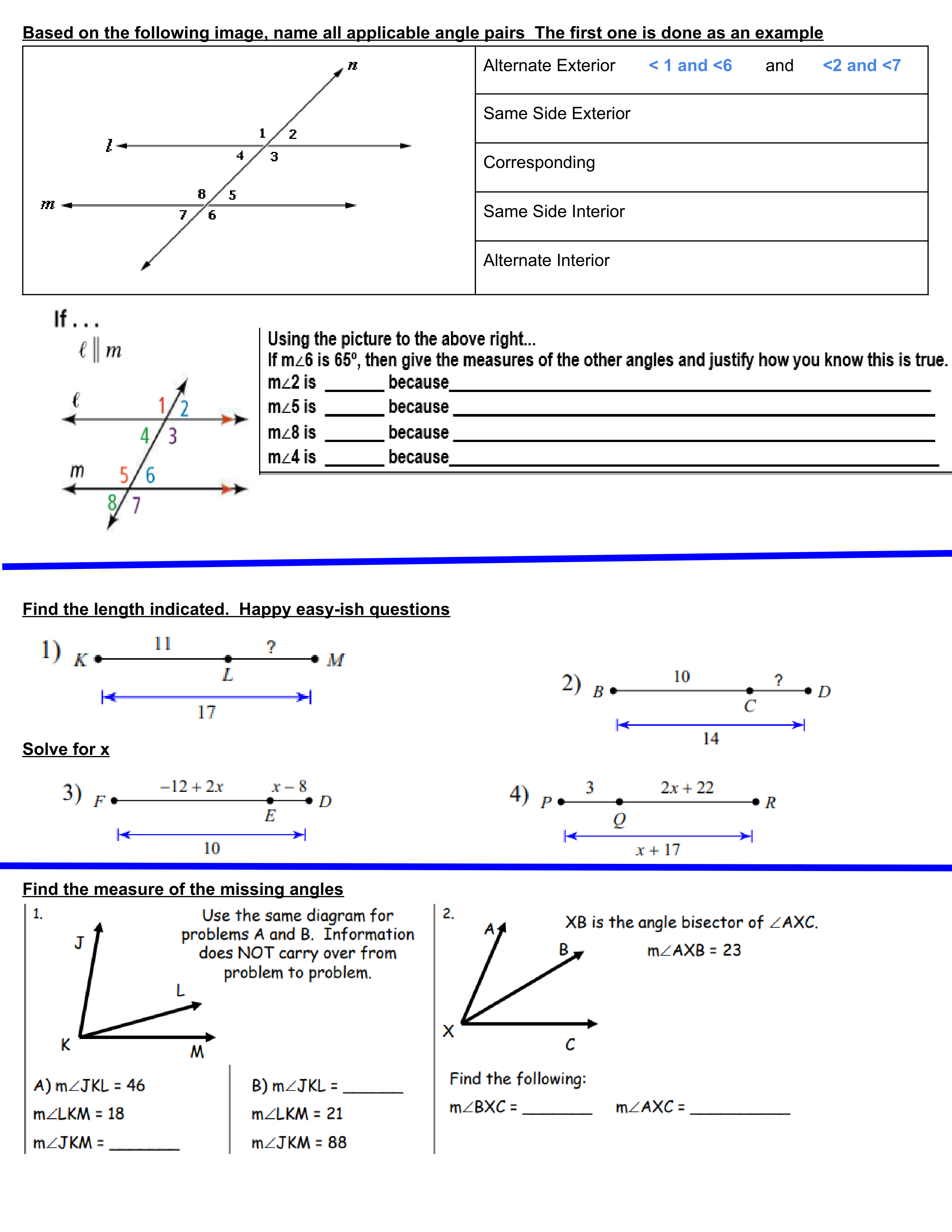
how many degrees is angle 2
Question 27
27.
how many degrees is angle 5
Question 28
28.
how many degrees is angle 8
Question 29
29.
how many degrees is angle 4
Question 30
30.
how lonh is segment LM?
Question 31
31.
How long is segment CD?
Question 32
32.
How many degrees is <JKM?
not enough information
64
90
28
Question 33
33.
How many degrees is <BXC?
Question 34
34.
How many degrees is <AXC?