Digital Inquiry - Fossils

Last updated over 1 year ago
6 questions

Video: The Grand Canyon


The Grand Canyon has exposed rock layers that give hints to help us understand past organisms and the environments in which they lived.

The Colorado River in Grand Canyon National Park has cut a vertical path through rock that dates from the Precambrian period (nearly two billion years ago) to the Permian (250 million years ago). As presented in this video segment adapted from NOVA, each of the exposed rock layers, or strata, tells the story of another time period. Through careful study of these layers, scientists can describe how the area's climate has changed, how this affected the environment, and how some of the previous inhabitants looked and behaved.
1

How has the area where the Grand Canyon is located changed over time?

1

How do fossils help you know?

Story: Antarctica Expedition


After you click the link, click the arrows on the right to read the the story and view the photos.

Note: A shrew is similar to a mouse.
1

How is Antarctica different today than it was in the past?

Video: The Top Two Layers


Click the link to watch a video about the environments at the time the top two layers of the Grand Canyon were formed.

As you look at the sedimentary rocks at the Grand Canyon's rim, the top layers of visible rock are the youngest. In this video segment adapted from NOVA, a scientist explains what we know about the changing conditions in this location and the kinds of life they supported. The canyon's top layer, the Kaibab formation, records deposits laid down at the bottom of a shallow sea. The Coconino sandstone formation below it indicates that these watery conditions were preceded by much drier ones. This video is available in both English and Spanish audio, along with corresponding closed captions.
1

What 2 environments once existed where the Grand Canyon is located today?

TEXT: A Fossil Wonderland


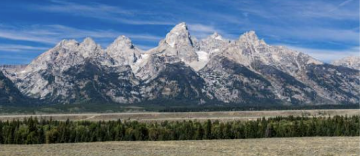
Wyoming is a favorite spot for paleontologists who study forms of life throughout history. There, some of the oldest layers of rock in North America are exposed for study. Wyoming’s fossil record (group of fossils arranged chronologically and for structure) is extensive and diverse.

The earliest fossils are stromatolites, lime-secreting cyanobacteria trapped in sediment underwater 1.7 billion years ago.

Paleozoic Era – 542 to 241 million years ago – fossils from the warm, tropical seas that
covered Wyoming area include trilobites, corals, fish with jaws, clams, and snails.

In the Mesozoic Era, from 250 to 65 million years ago, the seas advanced and retreated. There are fossils from ammonites, crocodile-like reptiles, and clams.

Sometimes, dinosaurs left tracks in beach areas. Toward the end of the era, the land lifted and dinosaurs, such as T-Rex and Triceratops, returned to the area. Deciduous trees’ fossils are found. The dinosaurs and many marine animals disappeared at the end of the era.

In the Cenozoic Era, the dominant life forms were mammals – horses, dogs, cats, rhinos,
antelopes, camels, mastodons, and bison. The temperature changed from tropical to ice age. Human life left fossil evidence.
1

How has Wyoming and the organisms that live there changed?

1
The environments and organisms found on Earth have changed over _________. Scientists use ____________ to make inferences about how Earth has changed.

In the Grand Canyon, fossils show the top layer formed when it was a ________________ . Before that, sandstone layers show the area was much __________. The area in which the Grand Canyon is located has changed many times over _____________of years.

Other places have changed over time. Antarctica used to be a ___________ temperature than it is today. Oklahoma has ______________fossils, helping us understand the area used to be covered in water. Wyoming was once covered with warm seas before drying up.

Fossil records help us learn about past ______________ and their environments.
Other Answer Choices:
time
shallow sea
fossils
trilobite
drier
warmer
organisms
millions