A dinosaur fossil is shown.
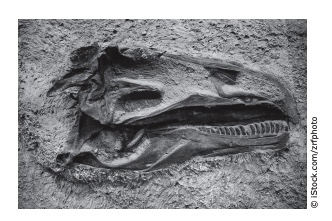
Which question can scientists most likely answer from studying the fossil of the dinosaur?
A dinosaur fossil is shown.
Which question can scientists most likely answer from studying the fossil of the dinosaur?
Researchers found seashell fossils, including those from mollusks and coral, in a rock formation high in the Rocky Mountains.
Which statement BEST explains why seashell fossils can be found on some mountains?
A dinosaur fossil is shown.
Which question can scientists most likely answer from studying the fossil of the dinosaur?
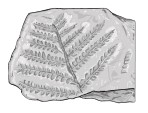
A scientist finds the plant fossil shown.
Which question can the scientist most likely answer by examining this fossil?
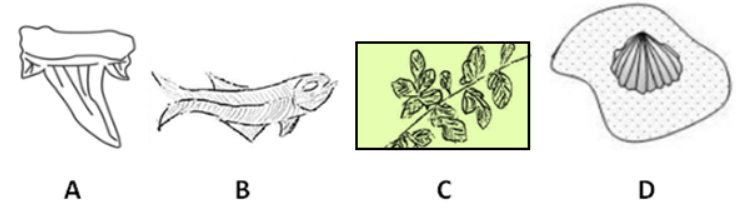
An archeologist thinks that his dig site used to be a creek environment.
Which fossils would help support this hypothesis?
Plant fossils are found in abundance within the sandstone of the Antarctic Peninsula. The diverse plant fossils found in the area tells us that past the environment of Antarctica was ―
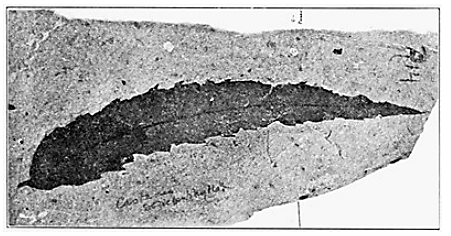
Imagine that a student found a fossil of the leaf, shown below, in your school’s playground.
Which conclusion best represents the origin of the fossil based on the evidence shown?
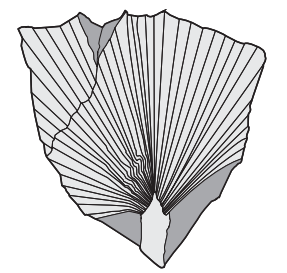
Scientists have uncovered palm plant fossils in Alaska, the northern-most state of the United States. Modern-day palm plants grow in tropical climates. A picture of a palm fossil that measures almost one meter across is shown.
This discovery suggests to scientists that this area in Alaska once was —
Scientists believe that Texas’s landscape and climate has changed throughout history. 250 million years ago, Texas was believed to be partially covered by salt water. Which of these fossils could be evidence of the fact that there was an ocean where Texas is today?
Select TWO answers.