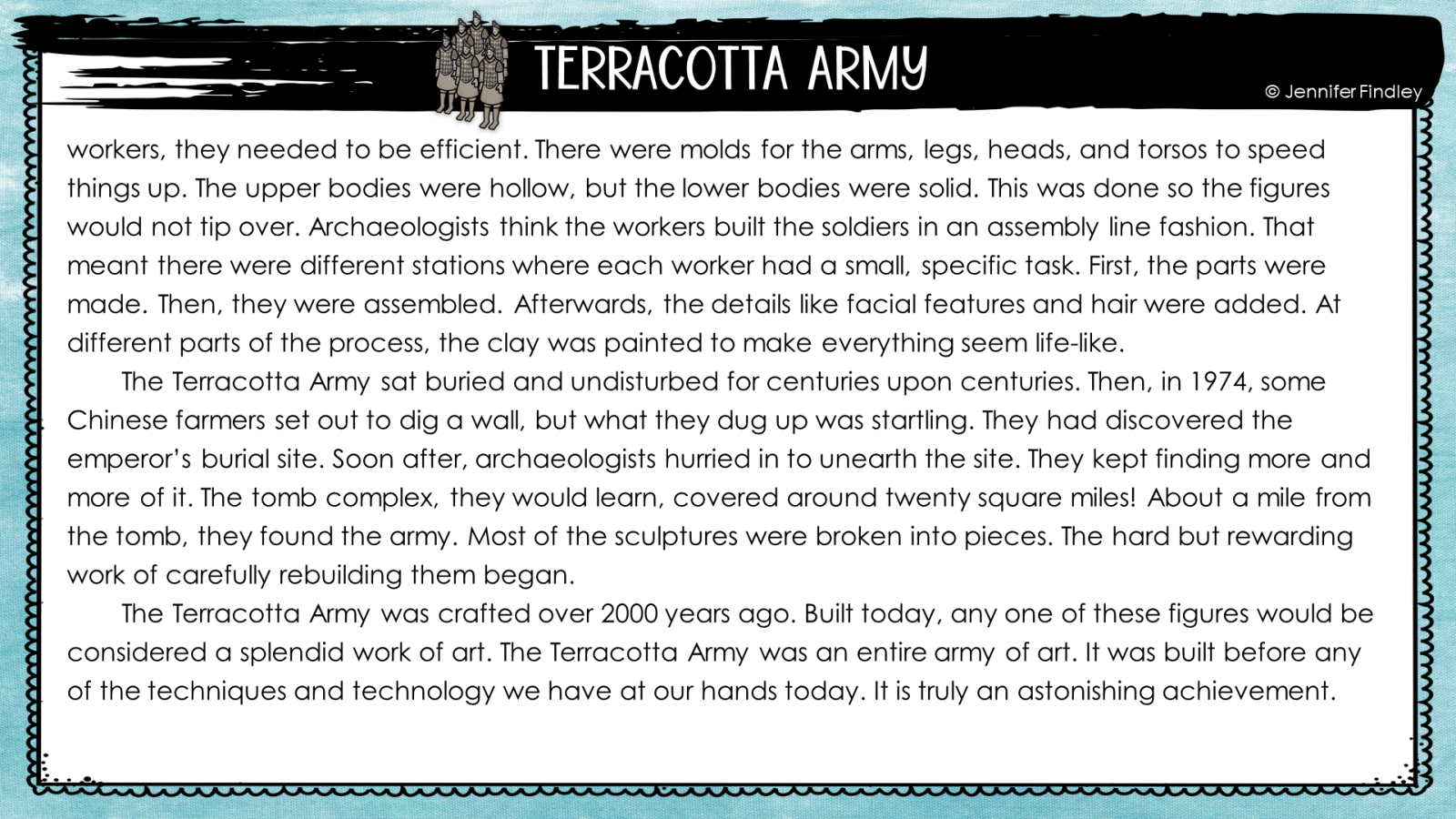
Log in
Sign up for FREE
arrow_back
Library
Terracotta Army
By Rhonda Pawlik
star
star
star
star
star
Share
share
Last updated almost 2 years ago
12 questions
Add this activity
zoom_in
zoom_in
zoom_in
Required
8
zoom_in
Required
8
zoom_in
Required
10
zoom_in
Required
8
zoom_in
Required
8
zoom_in
Required
10
zoom_in
Required
8
zoom_in
Required
8
zoom_in
Required
8
zoom_in
Required
8
zoom_in
Required
8
zoom_in
Required
8
Question 1
1.
Question 2
2.
Question 3
3.
Question 4
4.
Question 5
5.
Question 6
6.
Question 7
7.
Question 8
8.
Question 9
9.
Question 10
10.
Question 11
11.
Question 12
12.
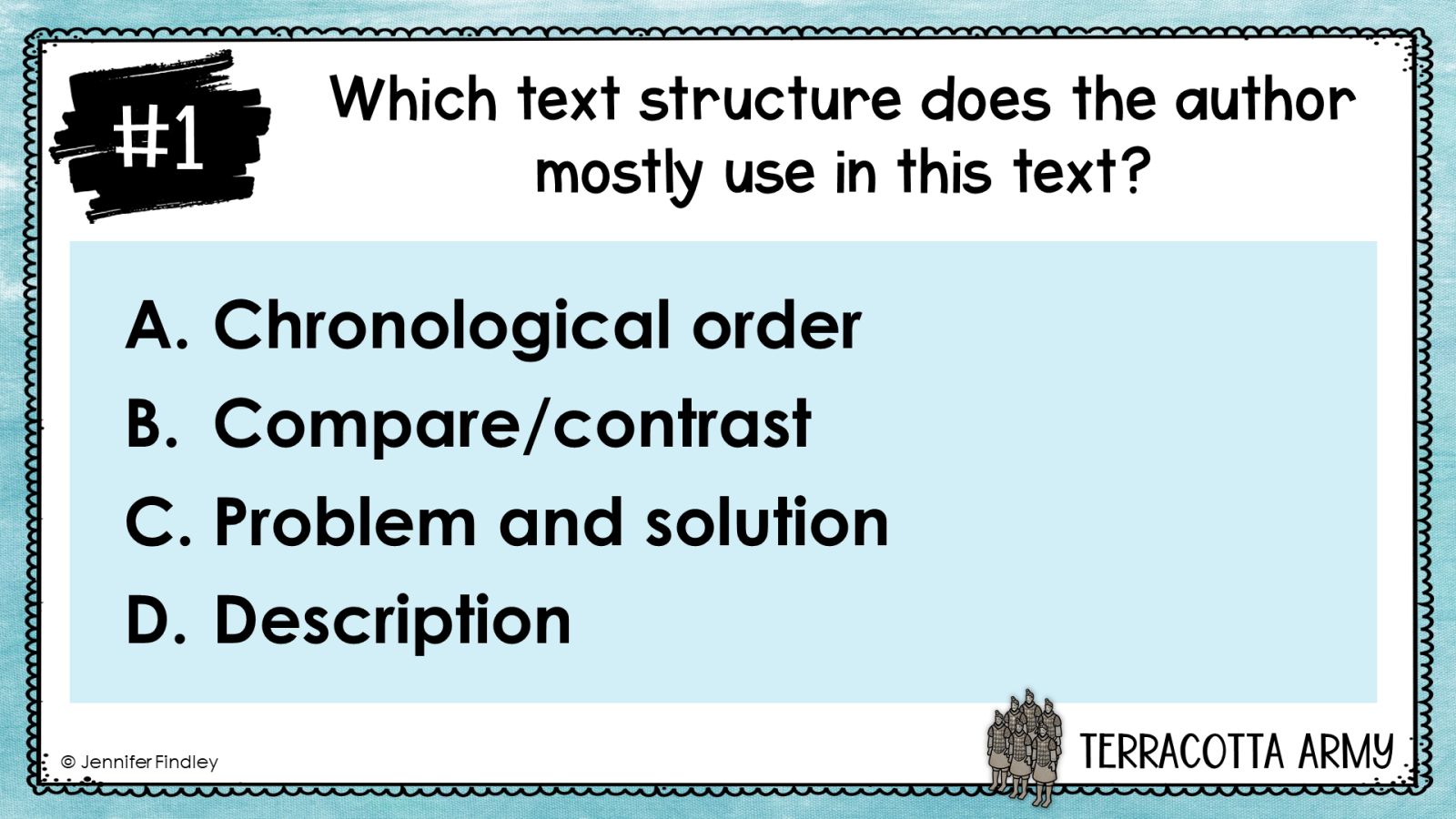
Which text structure does the author mostly use in this text?
A-Chronological order
B-Compare/Contrast
C-Problem and solution
D-Description
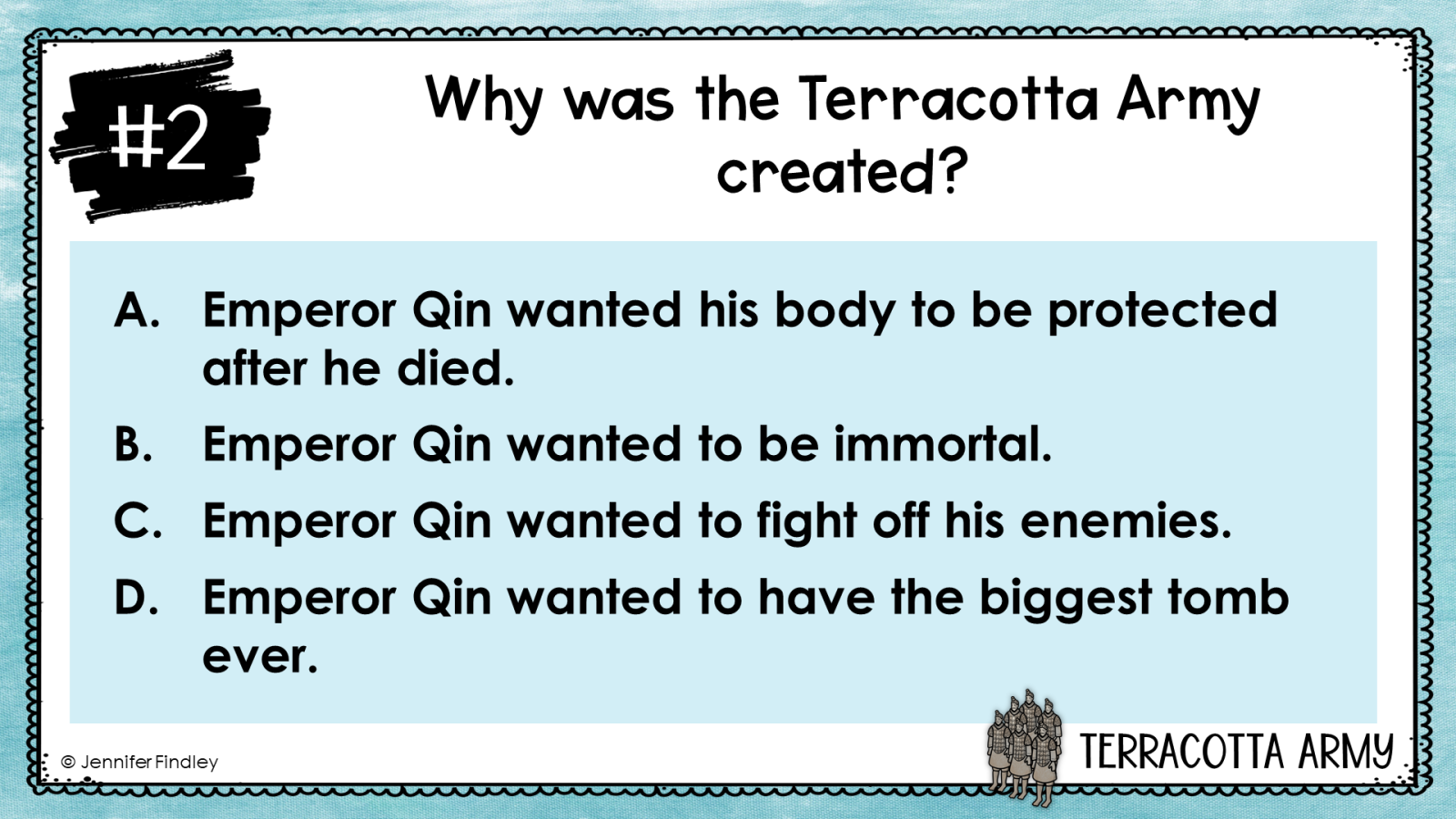
Why was the Terracotta Army created?
A- Emperor Qin wanted his body to be protected after he died.
B-Emperor Qin wanted to be immortal.
C-Emperor Qin wanted to fight off his enemies.
D-Emperor Qin wanted to have the biggest tomb ever.
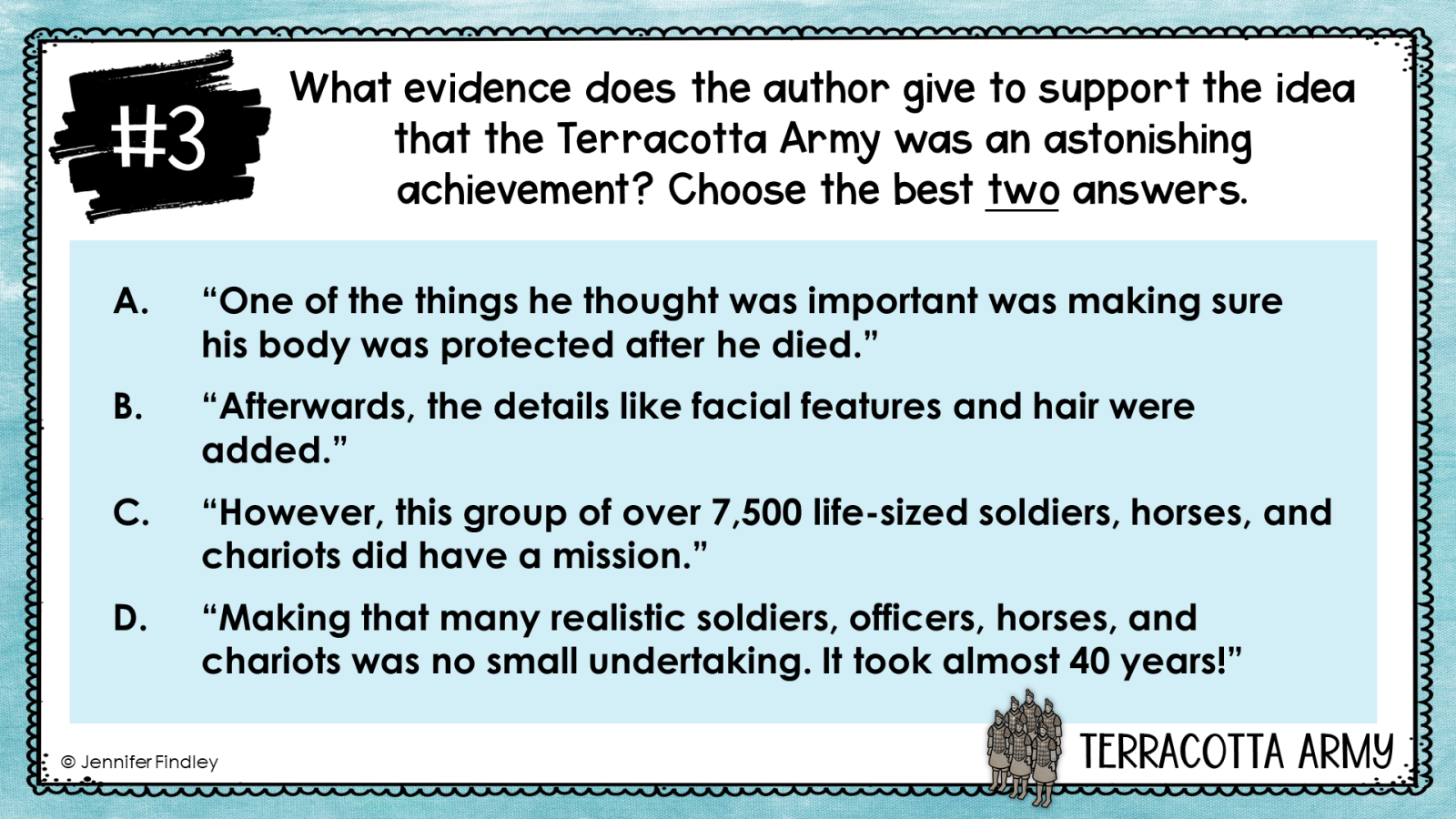
What evidence does the author give to support the idea that the Terracotta Army was an astonishing achievement? Choose the best
two
answers.
A-"One of the things he thought was important was making sure his body was protected after he died."
B-"Afterwards, the details like facial features and hair were added."
C-"However, this group of over 7,500 life-sized soldiers, horses, and chariots did have a mission."
D-"Making that many realistic soldiers, officers, horses, and chariots was no small undertaking. It took almost 40 years!"
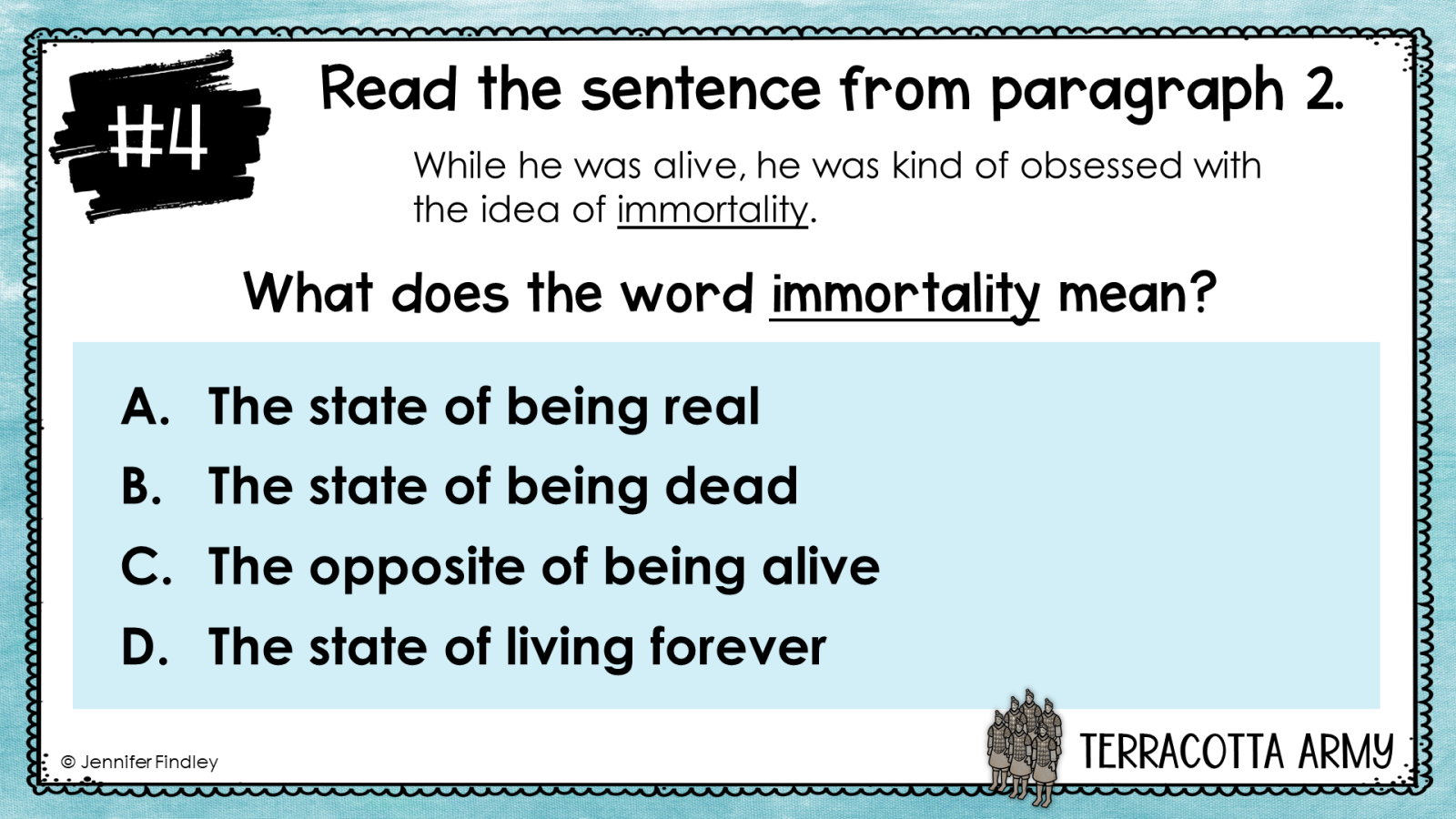
What does the word
immortality
mean?
A- The state of being real
B-The state of being dead
C-The opposite of being alive
D-The state of living forever
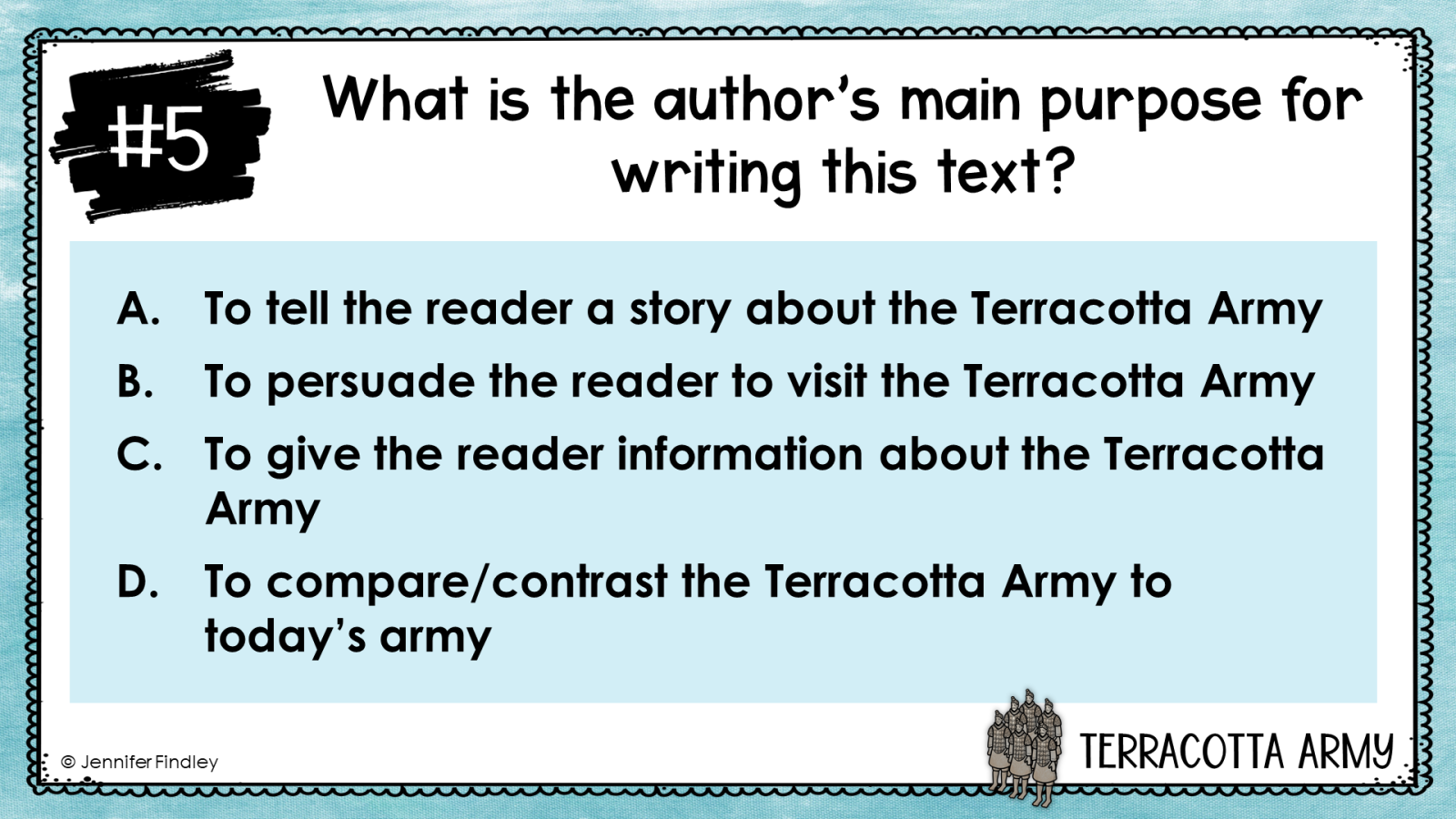
What is the author's main purpose for writing this text?
A-To tell the reader a story about the Terracotta Army.
B-To persuade the reader to visit the Terracotta Army.
C-To give the reader information about the Terracotta Army.
D-To compare/contrast the Terracotta Army to today's Army.
Which two details support the author's claim that the soldiers were incredibly realistic?
A-No two soldiers had the same face.
B-The Terracotta soldiers had crossbows that were designed to be triggered by intruders.
C-The soldiers' hair had elaborate braids and knots.
D-They were built out of clay called terracotta.
Which detail from the story should
NOT
be included in a summary?
A- The Terracotta Army is a group of over 7,500 life-sized soldiers, horses, and chariots.
B-The Army was built to protect Emperor Qin.
C-There were as many as ten different head shapes.
D-It took almost forty years to create.
What does the word
efficient
mean as it is used in the sentence below?
Even with that many workers, they needed to be
efficient
.
A-good
B-hard-working
C-strong
D-well- organized
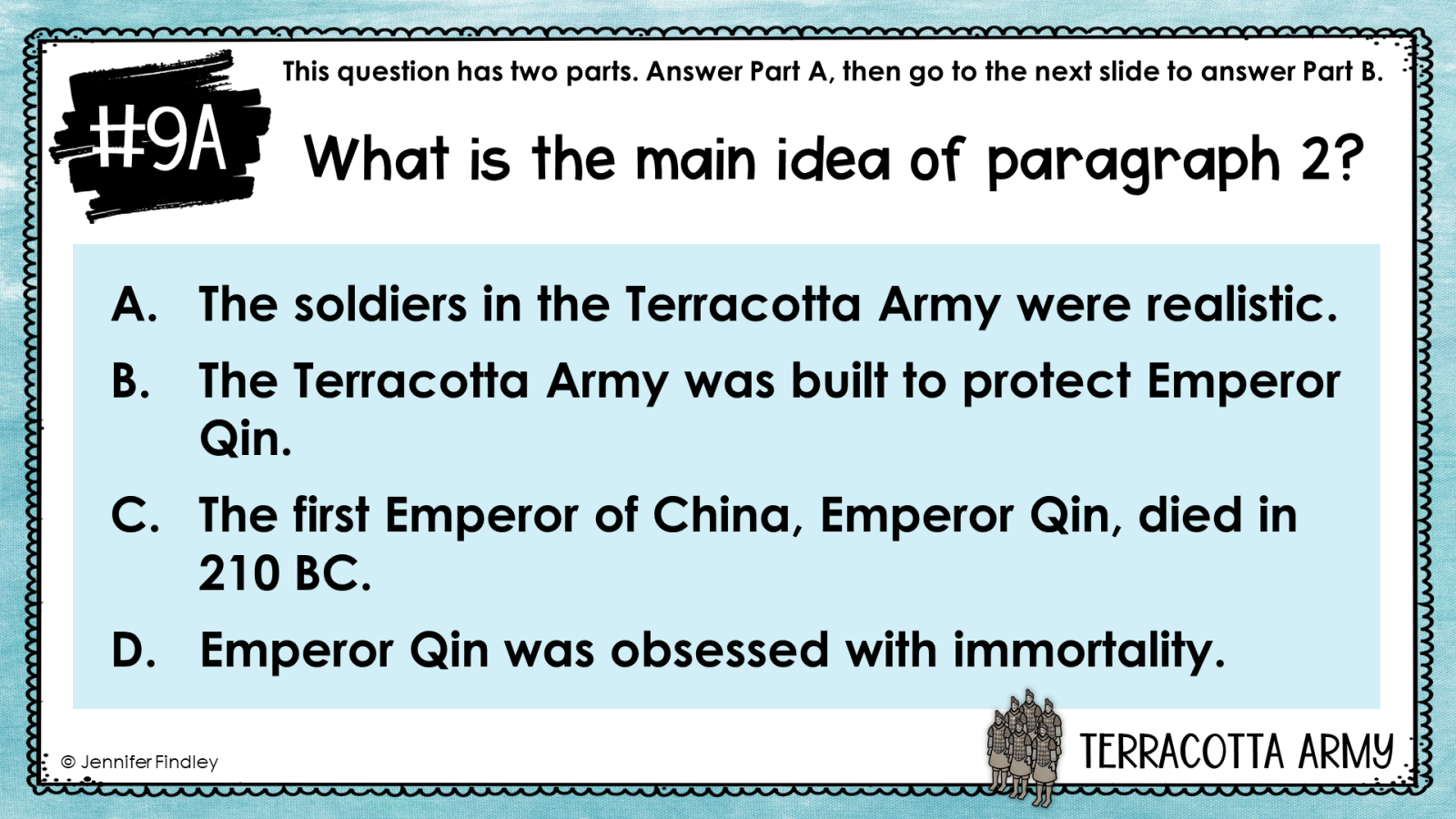
Part A: What is the main idea of paragraph 2?
A-The soldiers in the Terracotta Army were realistic.
B-The Terracotta Army was built to protect Emperor Qin.
C-The first Emperor of China, Emperor Qin, died in 210 BC.
D-Emperor Qin was obsessed with immortality.
Part B. Which
two
details support your answer to part A?
A-"As a result, he put a lot of time and money into building the biggest tomb ever."
B-"Well, many of the terracotta soldiers had actual working crossbows designed to be triggered by intruders."
C-"Built into this tomb was an army to protect him-the Terracotta Army."
D-"No two soldiers had the same face."
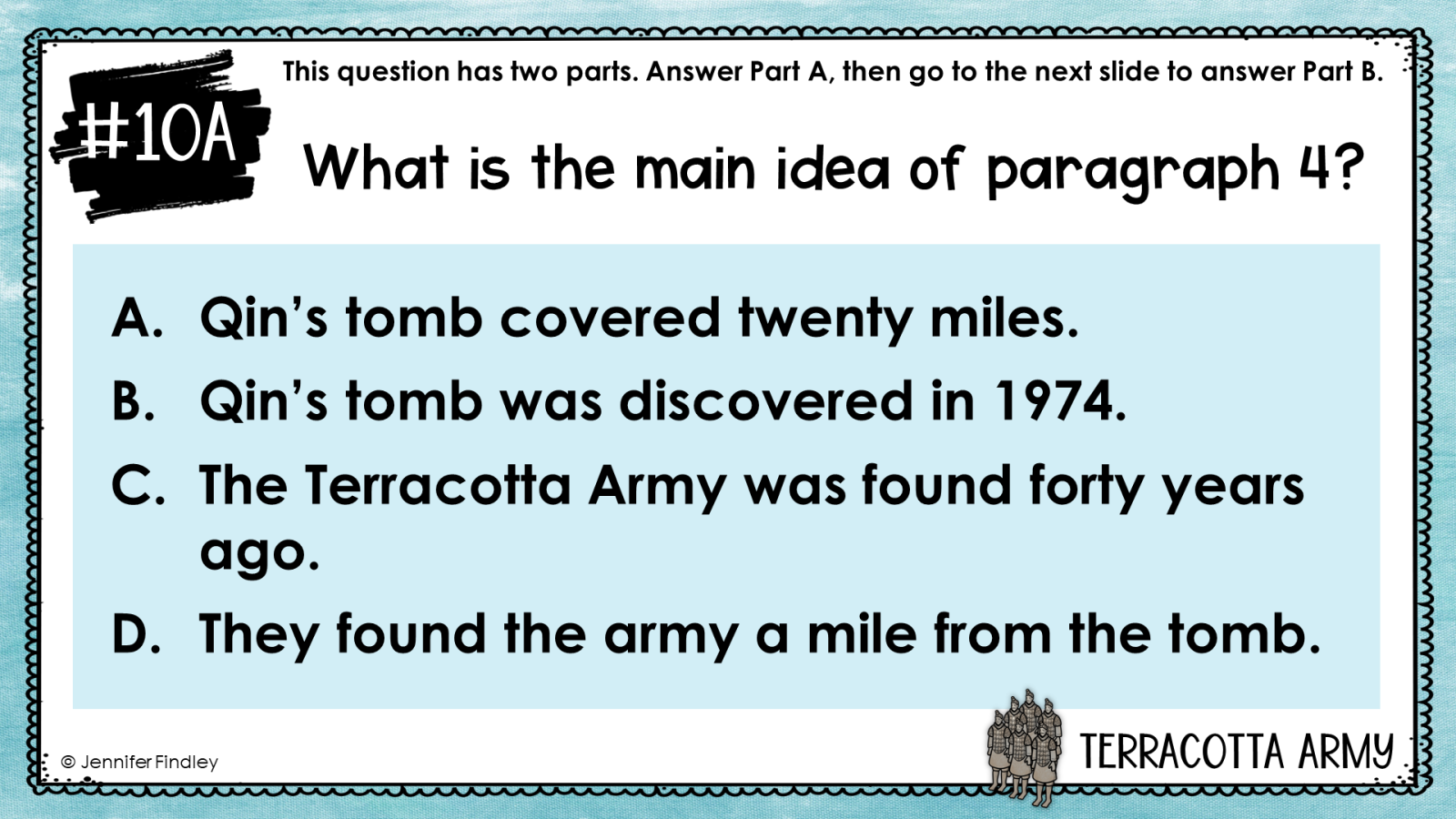
What is the main idea of paragraph 4?
A-Qin's tomb covered twenty miles.
B-Qin's tomb was discovered in 1974.
C-The Terracotta Army was found forty years ago.
D-They found the army a mile from the tomb.
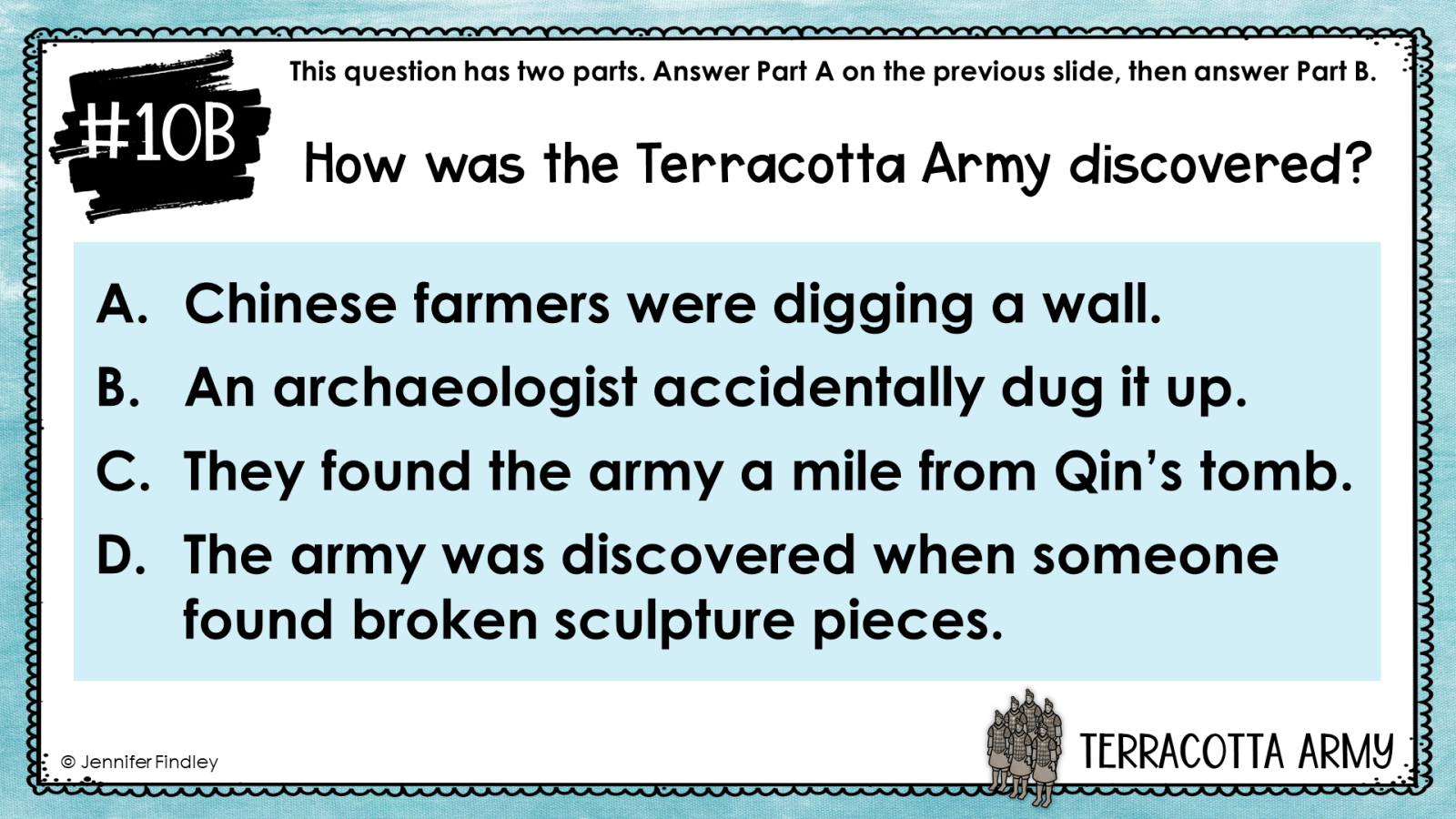
How was the Terracotta Army discovered?
A-Chinese farmers were digging a wall.
B-An archaeologist accidentally dug it up.
C-They found the army a mile from Qin's tomb.
D-The army was discovered when someone found broken sculpture pieces.