Log in
Sign up for FREE
arrow_back
Library

(Myers) Classwork: Pearl Harbor & U.S. Entry into WWII (5/2/2024)

star
star
star
star
star
Last updated almost 2 years ago
8 questions
Note from the author:
0
Required
1
0
Content Objective: I will be able to analyze the historical context of FDR's "Infamy" speech.

Standard Objective: I will be able to draw reasonable conclusions from the text.

Click here for the slides from today.
Content Objective: I will be able to analyze the historical context of FDR's "Infamy" speech.

Standard Objective: I will be able to draw reasonable conclusions from the text.

Click here for the slides from today.
Question 1
1.

Warm Up: There's a war happening in the world right now! Have you been following the Russia-Ukraine war? What are your thoughts on this current event?

Today we are going to practice taking "college-ready" notes! When you are in college, professors will not have fill in the blank notes, and often times they won't even have slides on the board during a lecture. This means we need to practice summarizing text quickly and effectively.

You will work on this skill as a senior, but let's try it briefly right now!
On December 7, 1941, the U.S. naval base in Pearl Harbor was attacked in one of the biggest military surprises in the history of warfare. In less than two hours:
  • Over 300 airplanes, 20 American naval vessels, including eight battleships, destroyed.
  • More than 2,400 Americans died, including civilians. Another 1,000 people were wounded.
The American people were outraged. Though diplomatic relations between the United States and Japan were deteriorating, they had not yet broken off at the time of the attack. Instantly, the incident united the American people in a massive mobilization for war and strengthened American resolve to guard against any future lapse of military alertness.
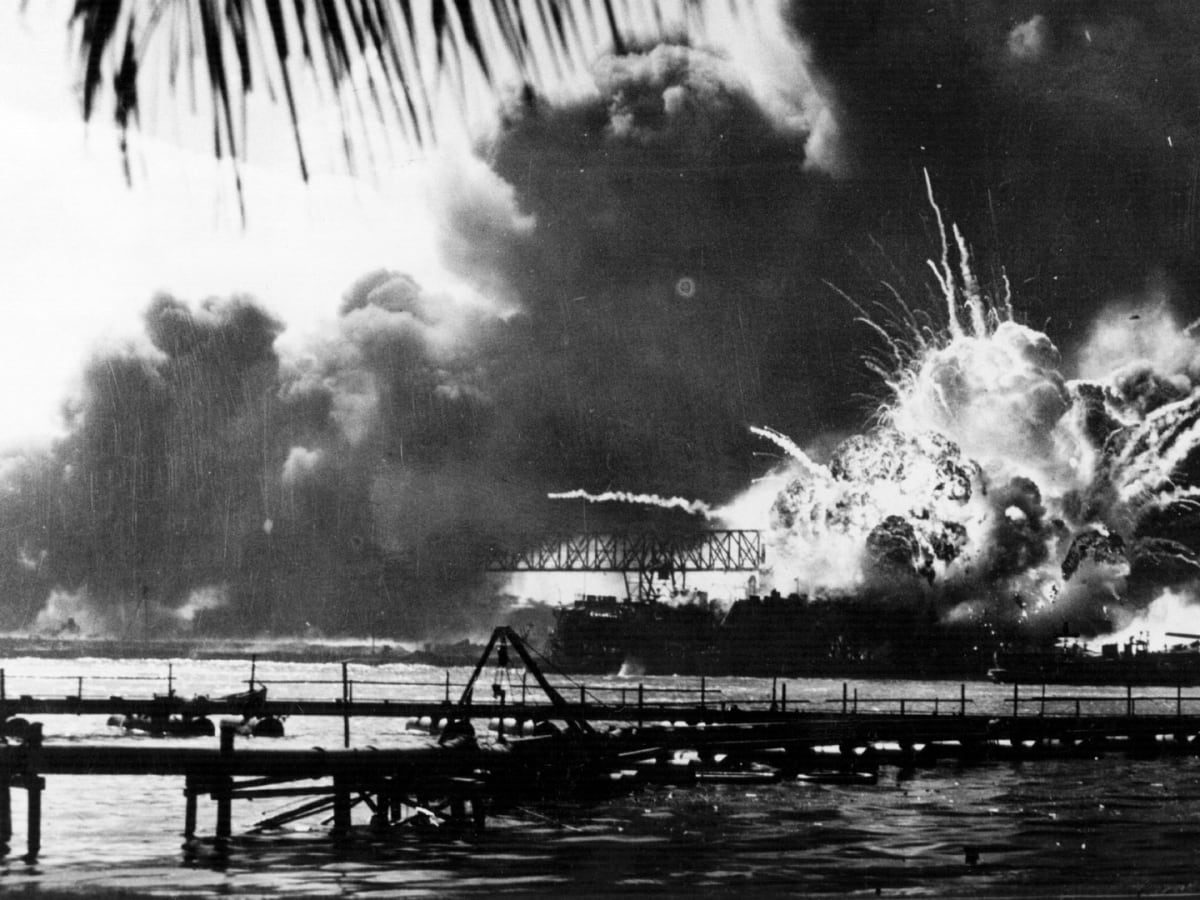
1
The day after the assault, President Franklin D. Roosevelt gave a speech asking Congress to declare war on Japan. Ultimately, the Japanese attack on Pearl Harbor catapulted the United States into World War II.
1
Question 3
3.

Applying Knowledge: Today, we are going to listen to President Franklin D. Roosevelt's famous "Infamy" speech, which was given on December 8th, 1941 - the day after Pearl Harbor.
If you would prefer to follow along and read the speech transcript, click here.

Even Presidents revise their work! Check out a previous draft of FDR's Infamy speech here.
Question 4
01:13
keyboard_arrow_down
Required
1
IIWD.01
Question 5
02:25
keyboard_arrow_down
Required
1
Question 6
03:22
keyboard_arrow_down
Required
1
RAG.03
Question 7
7.

Question 8
8.

Question 2
2.

How can this text be summarized? Please try creating three "college-ready" bulletin points to summarize the paragraph above.

How can this text be summarized? Please try creating two "college-ready" bulletin points to summarize the paragraph above.
Question 4
4.

Question 5
5.

Question 6
6.

SIDE NOTE: True or False? Only the U.S. President can declare war on another country.
True, this privilege is given to the President in the Constitution.
True, but the tradition is that the President has the support from the other two branches of government.
False, only the Supreme Court has the power to declare war.
False, only the Congress has the power to declare war.
Exit Ticket: Please evaluate how well you understood today’s lesson on a scale from 1 to 4:
1 - I'm still confused. I need to seek out extra help from my teacher or someone else.
2 - I feel okay. I need to relearn on my own by relooking at this formative.
3 - I feel pretty good. I mostly understood the lesson on my own without the help of anyone else.
4 - I completely understood this lesson. I could successfully explain this topic to someone else.
What does President Roosevelt mean by the word “infamy”?
notoriety
fame
significance
obsolescence
The phrases "many American lives were lost" and "onslaught against us" primarily serve to
set a somber and vengeful tone in the speech.
invoke the power of the Presidency.
appeal to the sense of logic of the audience.
evoke horror and indignity among the audience.
The primary reason President Roosevelt makes for entering World War II is to
protect the safety and security of the American people.
secure American economic interests overseas and abroad.
defend the principles of democracy and self-determination.
defend our Allied friends who have been overpowered by fascism.