Preskoči na glavni sadržaj
Prijava
Sign up for FREE
arrow_back
Biblioteka

RA_Spanish I FINAL EXAM 2023-24

star
star
star
star
star
Posljednje ažuriranje about 2 years ago
55
11
Obavezno
1
Obavezno
2
Obavezno
1
Obavezno
1
Obavezno
2
Obavezno
1
Obavezno
2
Obavezno
2
Obavezno
1
Obavezno
1
Obavezno
1
Obavezno
1
Obavezno
1
Obavezno
1
Obavezno
1
Obavezno
1
Obavezno
1
Obavezno
1
Obavezno
1
Obavezno
1
Obavezno
1
Obavezno
1
Obavezno
1
Obavezno
1
Obavezno
1
Obavezno
1
15
Obavezno
8
Obavezno
15
1
2
1
1
1
Obavezno
2
Obavezno
2

¡Bienvenidos al examen final del año! You have worked so hard and learned so much this year in Spanish. Now is the time to show what you can do! Please read each section very carefully.

Do not rush through your work! You have plenty of time, so take that time to develop your responses and demonstrate the language that you have acquired.

Pitanje 1
1.

PARTE 0 - VOCABULARIO DE LA CASA

Label - Nombre 4 cuartos y 7 objetos que hay en esta casa.

PARTE 1 - LOS VERBOS

Write the correct conjugation of the verb in parenthesis

Hint: some of the responses will be in the infinitive (unconjugated)

The verbs with the * are irregular or stem-changing verbs.

Pitanje 2
2.

Durante las vacaciones, mi familia y yo (viajar) a Puerto Rico.

Pitanje 3
3.

Cuando yo (ir*) a Puerto Rico, yo siempre (pasar) mucho tiempo con mi familia.

Pitanje 4
4.

Por las mañanas yo (jugar*) voleibol en la playa con mis hermanos.

Pitanje 5
5.

Después de jugar voleibol, mis hermanos (nadar) en la piscina.

Pitanje 6
6.

Después, nosotros (ir*) a la casa y (comer) el almuerzo.

Pitanje 7
7.

Normalmente, mi madre, mi padre, y mi hermano mayor (cocinar) el almuerzo para nosotros.

Pitanje 8
8.

Mi hermana (ser*) muy graciosa cuando nosotros (estar*) en Puerto Rico.

Pitanje 9
9.

Por las noches, mi padre y yo (ir*) a un café y nosotros (escuchar) un poquito de música.

Pitanje 10
10.

Yo nunca (estar*) aburrido en Puerto Rico.

Pitanje 11
11.

Mis amigos y yo (hablar) en el gimnasio los jueves y los viernes por la tarde.

Pitanje 12
12.

¿Tú (poder*) ir al cine conmigo este sábado?

Pitanje 13
13.

Yo (querer*) ir a la biblioteca mañana para estudiar.

Pitanje 14
14.

En el verano, ella siempre (dormir*) hasta muy tarde.

Pitanje 15
15.

Ellas (ir*) al centro comercial esta tarde.

Pitanje 16
16.

Somos gemelos. Nosotros (tener*) quince años.

Pitanje 17
17.

A mi hermana le encanta (bailar) todos los días.

Pitanje 18
18.

¡Estás enfermo! ¡Tú (tener*) que ir al médico!

Pitanje 19
19.

¿Dónde (estar*) mis libros de matemáticas?

Pitanje 20
20.

¿Tú (estar*) enojado conmigo? ¿Por qué?

Pitanje 21
21.

Ustedes (escuchar) a la profesora de matemáticas todos los días.

Pitanje 22
22.

¿Tú (ir*) a nadar en la playa este verano?

Pitanje 23
23.

¿Cómo (estar*) usted?

Pitanje 24
24.

Me gusta (tomar) limonada en el verano.

Pitanje 25
25.

¿Cuántos años (tener*) tu hermano?

Pitanje 26
26.

¿De dónde (ser*) ustedes?

Pitanje 27
27.

Yo siempre (hacer*) mi tarea de español.

Part 2 - Interpersonal writing

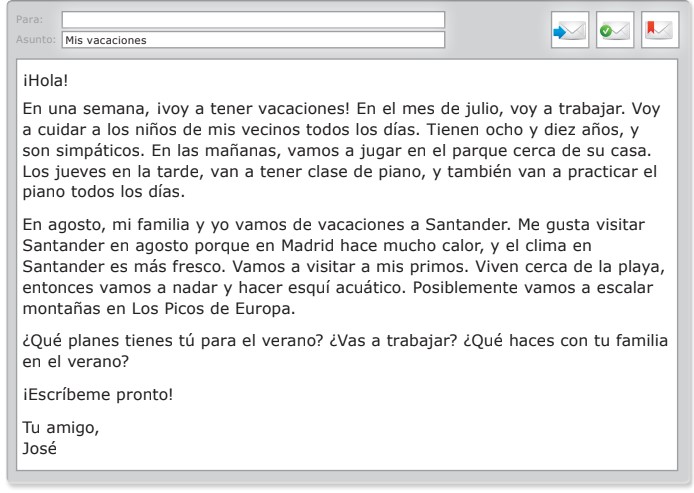
Prompt: You receive a message from José, your pen-pal in Madrid. In your response, you should ask him some questions about his plans for the summer, and answer his questions, telling about your real or imaginary plans.

Minimum Requirements:

  • 12 minimum sentences

  • A greeting

  • Briefly describe yourself: where you are from, how old are you, where you live, where you go to school, etc.]

  • A reaction/opinion about his vacation plans

  • Response to the 3 questions he asked you - Talk about 6 different activities you are going to do alone and with your family (use ir + a + infinitive to discuss the future) and where you will be doing the activities

  • A farewell

  • Your signature

*Be careful with spelling, agreement of gender and number, and verb conjugation.

Suggestions:

You might want to talk about when you will be doing some of these activities, compare some of the activities, talk about what the weather will be like, and/or tell how you feel about the coming summer.

Pitanje 28
28.

PARTE 3.1 - Lectura interpretativa

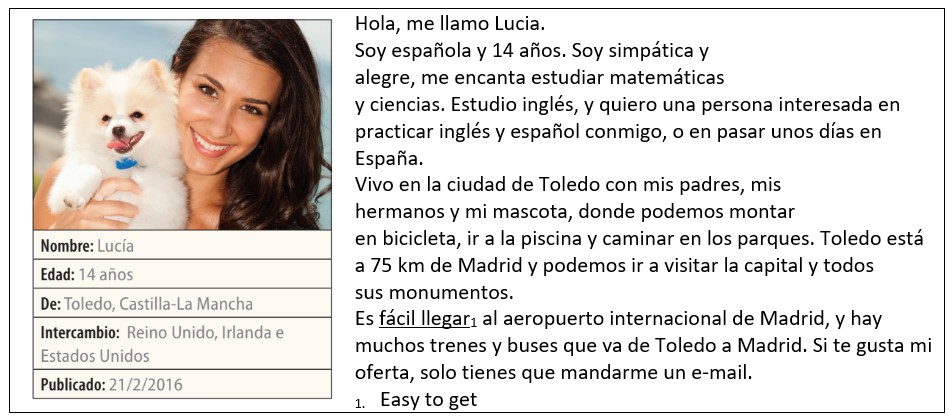
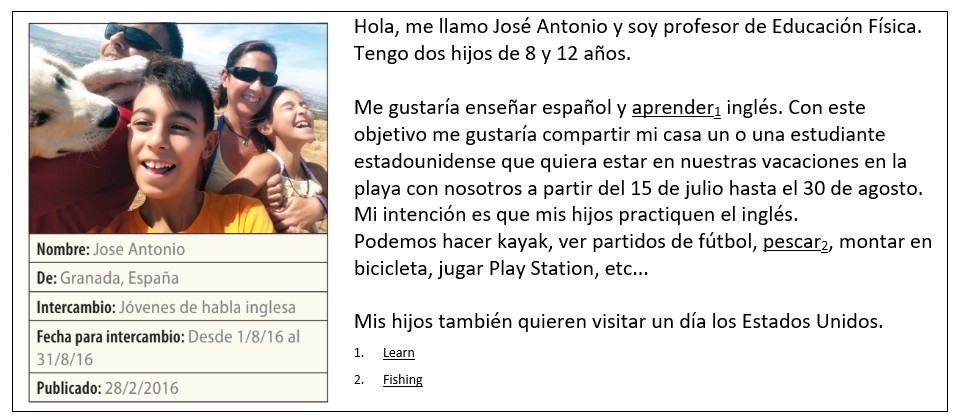
The following posts appeared on the website of the organization <Quiero aprender idiomas> dedicated to facilitating family exchange programs between families of different languages and cultures.

Answer the following questions in complete sentences based on the two blogs from the Organization quieroaprenderidiomas.com.

*idiomas: languages

1
Pitanje 29
29.

¿Cuántos años tiene Lucía?

1
Pitanje 30
30.

¿Cómo es Lucí

a?

1
Pitanje 31
31.

¿Dónde vive Lucía?

1
Pitanje 32
32.

¿Qué actividades hace Lucía con su familia?

1
Pitanje 33
33.

¿Cuál es la profesión de José Antonio?

1
Pitanje 34
34.

¿De dónde es José Antonio?

1
Pitanje 35
35.

¿Cuántos años tienen sus hijos?

1
Pitanje 36
36.

¿Cuándo son sus vacaciones en la playa?

1
Pitanje 37
37.

¿Qué actividades prefiere la familia de José?

PARTE 3.2 - Lectura interpretativa

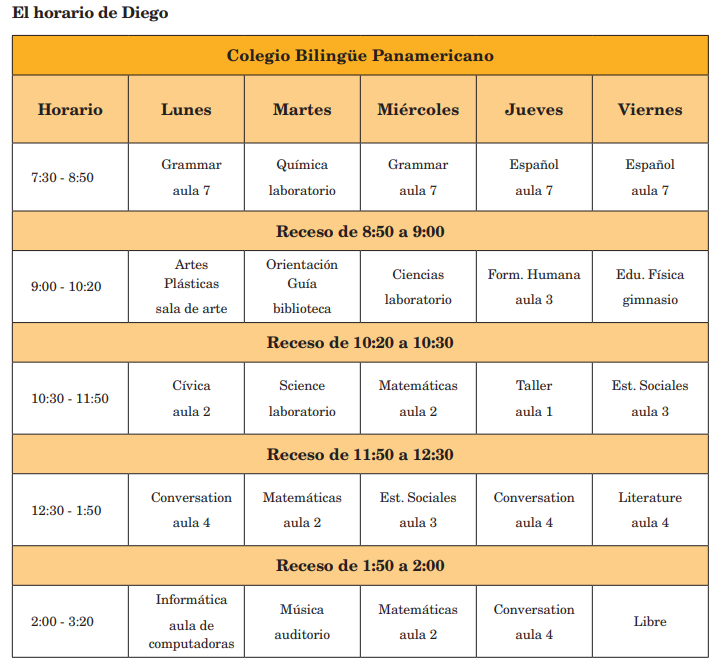
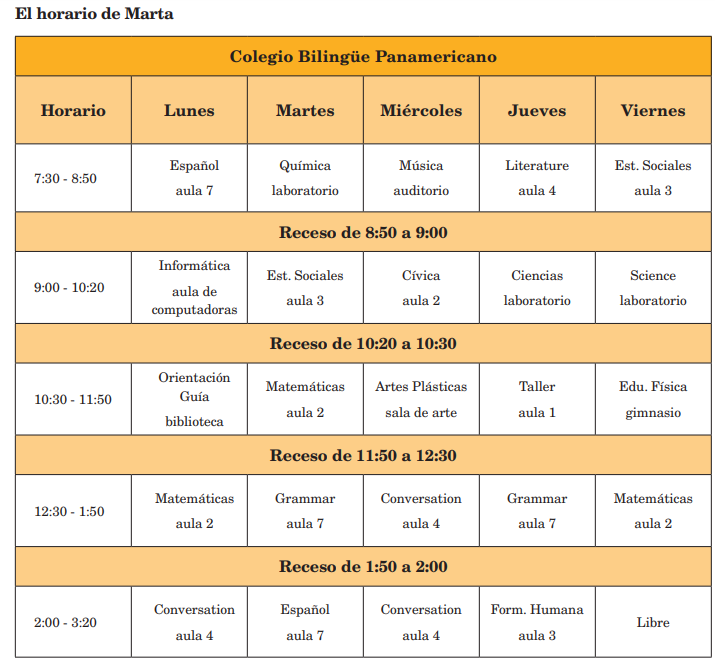
Marta and Diego son estudiantes en una escuela bilingue en Costa Rica. Lee sus horarios (schedules).

Important vocabulary:

  • Aula= Salón de clase

  • Termina - ends

  • Algunas - some

Pitanje 38
38.

Lee el horario de Diego y Marta e indica si la frase es Verdadera o Falsa.

Verdadero

Falso

Marta tiene matemáticas los lunes, martes y jueves.

Marta tiene clases de conversación por la tarde.

Diego tiene la clase de Estudios Sociales a las 12:30 en aula tres.

Para Diego, la clase de Español termina a las 8:50 los jueves.

Los martes, Marta y Diego tienen la clase de química a las 7:30.

Marta y Diego tienen algunas clases en inglés.

Hay dos recesos todos los días.

En este colegio, las clases empiezan a las 7:30 y terminan a las 3:20.

Part 4 - Interpretive listening

You are going to watch two videos in which Isaac de Costa Rica y María Laura de Uruguay talk about their breakfast. Watch the videos and answer the questions.

Vídeo de Isaac de Costa Rica

4
1
Pitanje 40
40.

¿A qué hora comen el desayuno en Costa Rica?

2

1
Pitanje 42
42.

¿A qué hora come Maria Laura el almuerzo?

3
4
2

PARTE 5 - Presentational writing

The local chamber of commerce is creating a webpage to attract Spanish-speaking visitors

to your community. To attract families, they have asked young people like you to write about

the community.

Write an article to communicate some great things about your community/neighborhood. You may include the following topics, and add any other information that would make your community an attractive destination for visitors:

• Title

• Location

• Food

• Weather

• Main attractions/places to visit in the area. Hay... (At least 3)

• Activities people can do. Puedes... (At least 3)

• What to pack for their trip. Necesitas... (5 items)

*Be careful with spelling, agreement of gender and number, and verb conjugation.

Linking words: y, pero, también, porque, a veces, nunca, siempre

Pitanje 46
46.

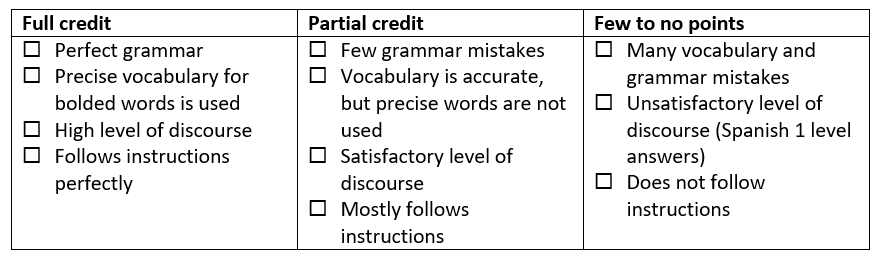
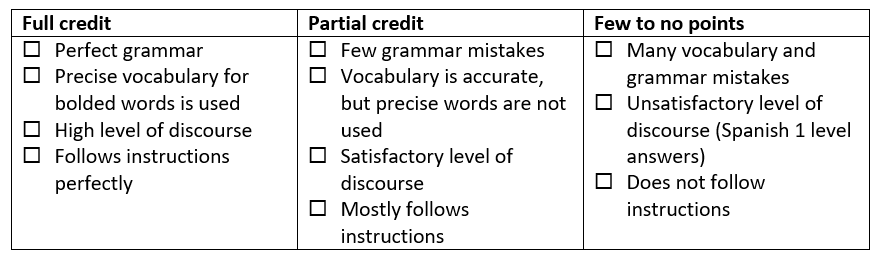
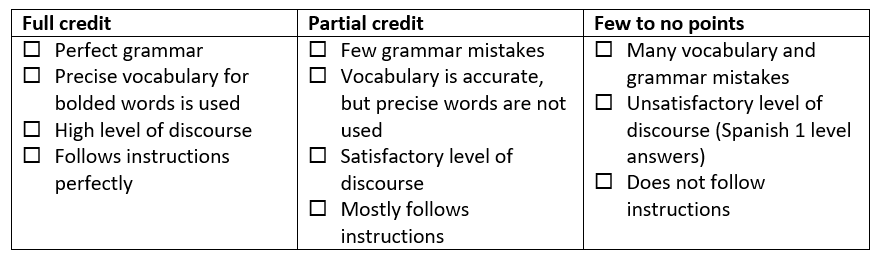
You will be graded based on the following rubrics:

Parte 6.1 - Presentational speaking

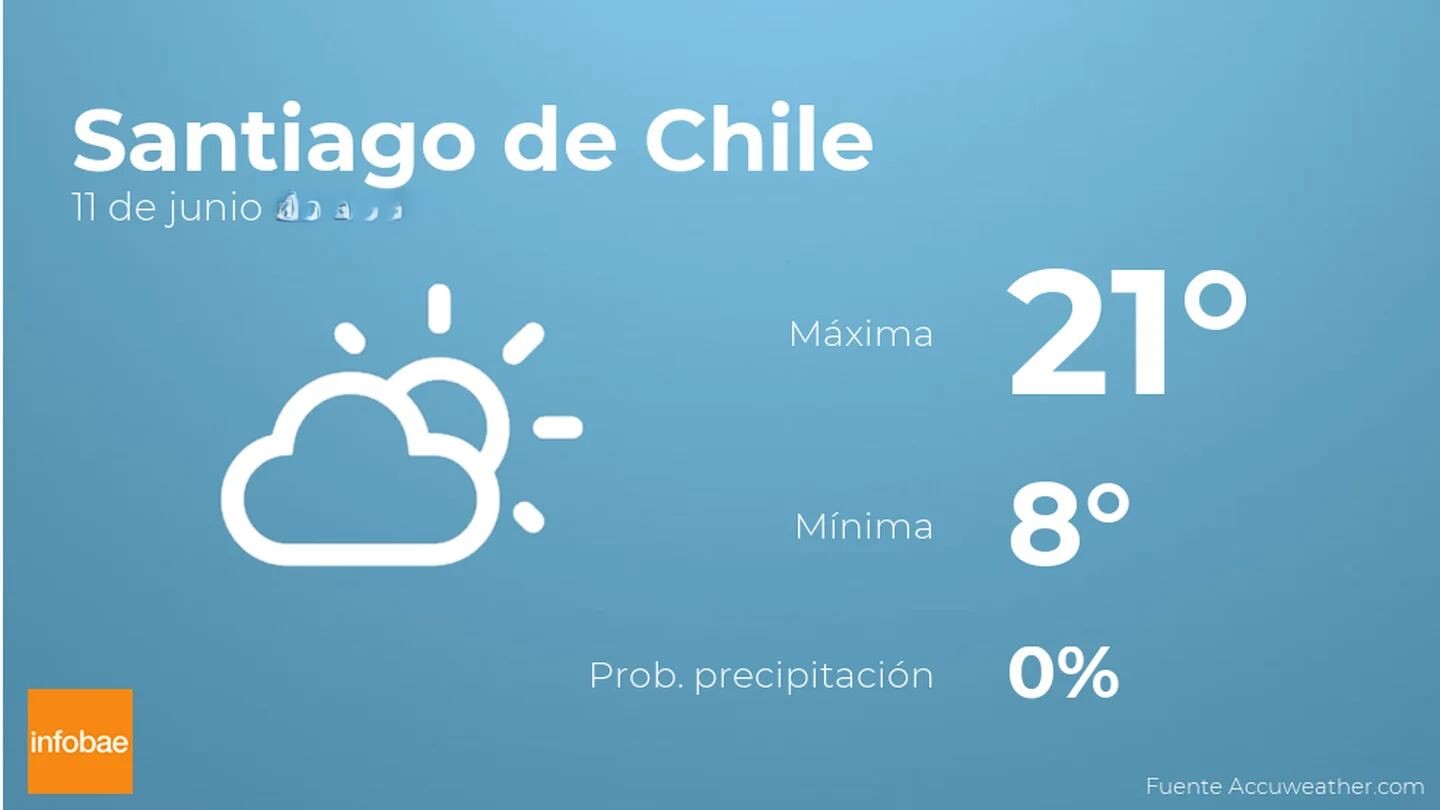
You are on an internship at a radio station in Santiago, Chile. As part of your responsibilities, you need to inform people about:

  • what the weather is like today

  • what people can wear based on this weather.

At least 5 sentences

Nota: Be mindful that the temperature is in degrees Celsius.

5

PARTE 6.2 - Presentational speaking

You know you’ll want to be able to talk about family when you meet Spanish speakers. Show that you are ready, by preparing and making a one to two minute oral presentation about a family member.

10

PARTE 7 - Interpersonal speaking

You are the phone with your pen-pal José. You are getting to know each other so he asks you some questions and you ask him some questions as well. Please answer his questions in the most complete possible and detailed way.

Pitanje 54
54.

Ask José a question to learn more about him

-what

-when

-where

-how

-who

-how many

Pitanje 55
55.

Invite José to do something this weekend

You have reached the end of the final exam! PLEASE go back through your exam and look over ALL of your responses CAREFULLY. Things to check for:

  • Make sure your verb endings match the subject they describe.

  • Make sure adjectives match their noun with the appropriate gender and singular/plural ending.

  • Look for small spelling errors, make sure you have included all necessary punctuation marks (question marks, exclamation points, accent marks).

  • See if you can add any more details to your directives and extended response questions.

  • Make sure you've responded ALL PARTS of each question.

Pitanje 39
39.

Pitanje 41
41.

A veces Isaac también come...

Pitanje 43
43.

¿Qué tiene el vorí vorí de pollo? (la sopa tradicional de Paraguay)

Pitanje 44
44.

¿Qué le gusta comer a María Laura?

Pitanje 45
45.

¿Qué NO le gustar comer a María Laura?

El gallo pinto es un plato tradicional de Costa Rica ¿Qué tiene el gallo pinto? Check all that apply