This is a two part screener.
Part I contains: 10 two-part questions and 1 constructed response
Part II contains: 8 two-part questions and 1 constructed response
Part A
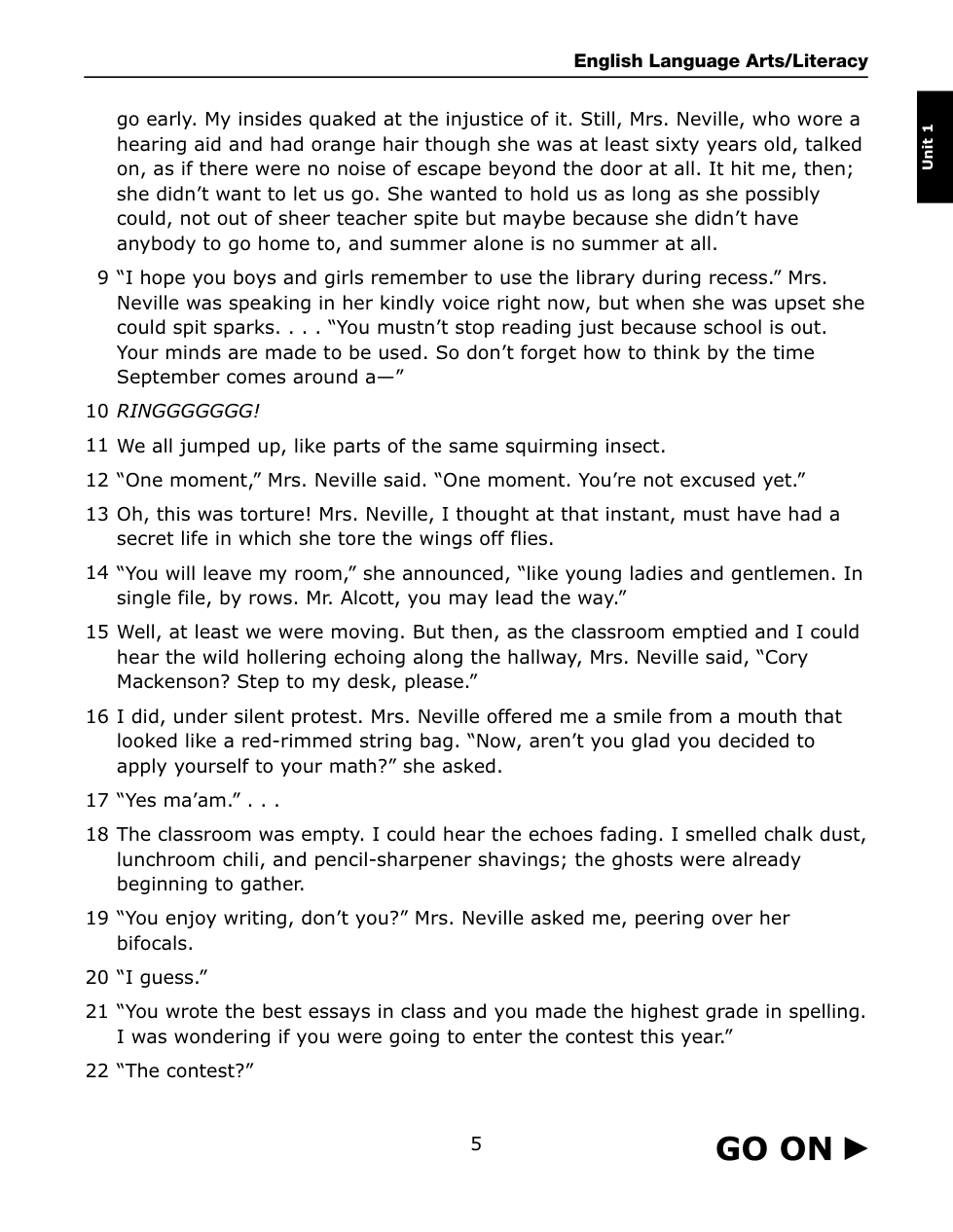
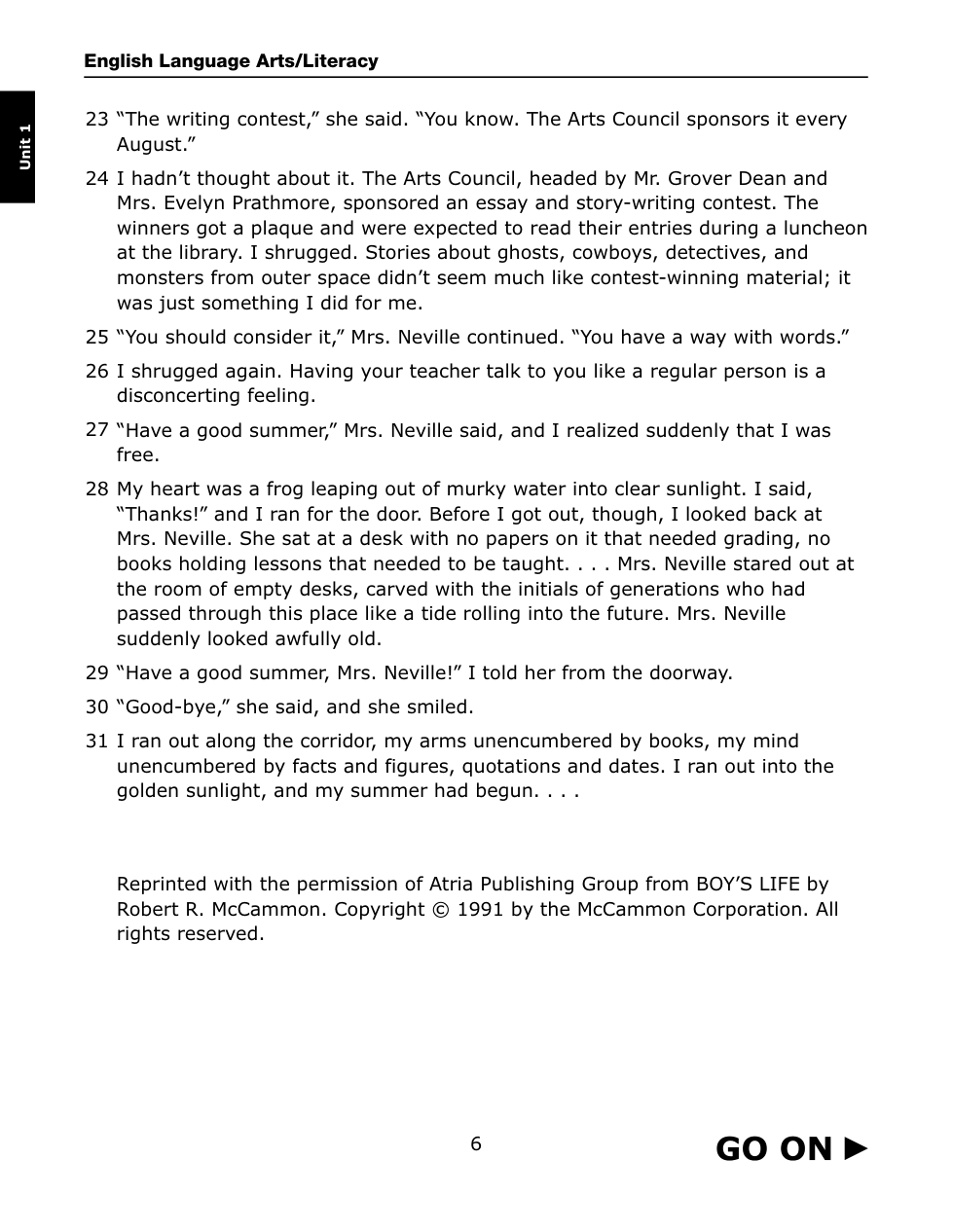
In the passage from Boy’s Life, how does the narrator’s attitude toward Mrs. Neville gradually change?
Part A
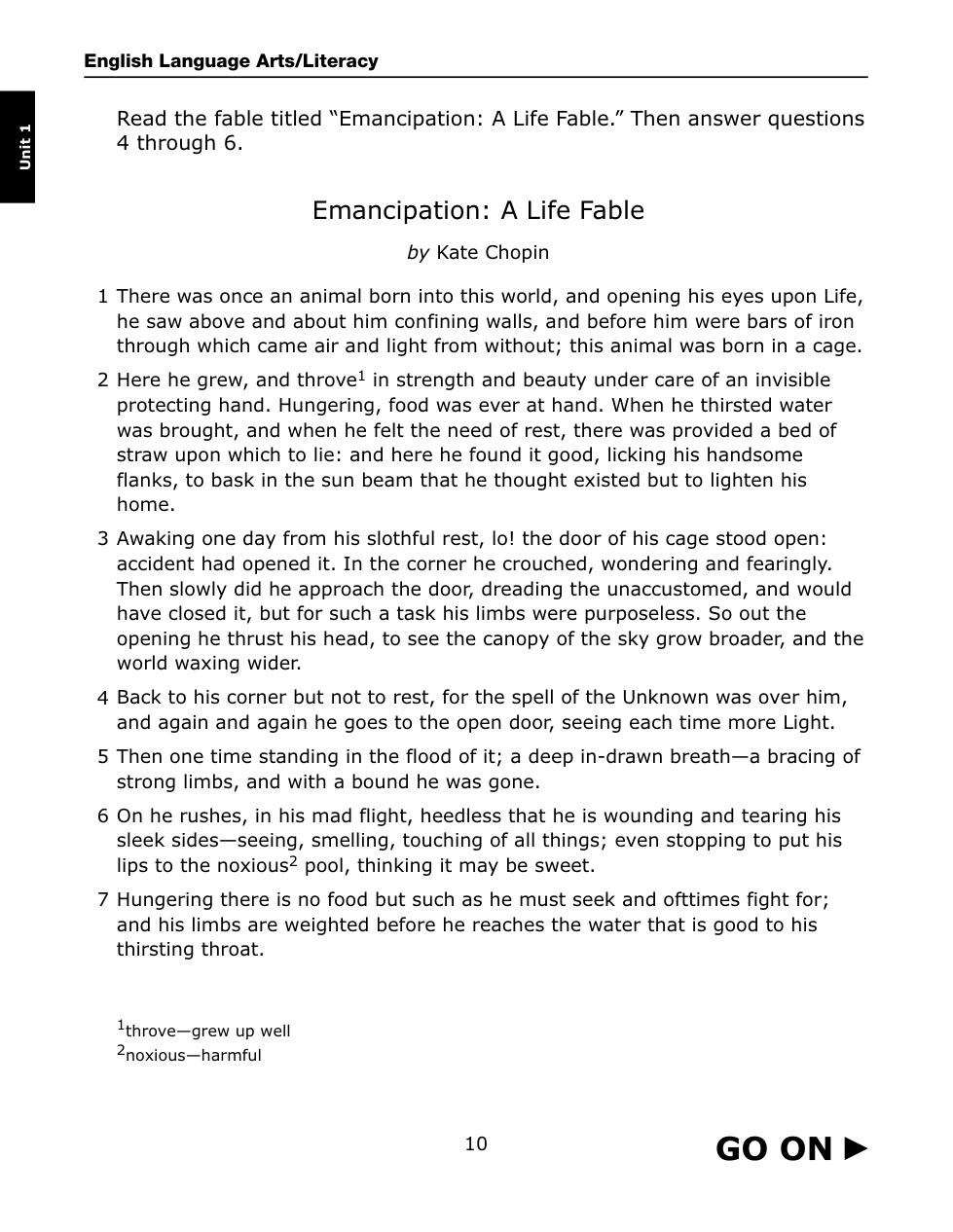
Which statement expresses a theme in “Emancipation: A Life Fable”?
Refer to the passage from the novel titled Boy’s Life and the fable titled “Emancipation: A Life Fable.” Then respond to the following prompt:
You have read the passage from Boy’s Life and “Emancipation: A Life Fable.” Write an essay that identifies a similar theme in each text and compares and contrasts the approaches each text uses to develop this theme. Be sure to support your response with evidence from both texts.
Part A
What is the meaning of sensor as it is used in paragraph 9 of the article?
Part A
Which statement best summarizes the process Dr. Soares follows in her laboratory experiment?
Part A
The author makes the claim that steps have been taken to help endangered tigers. Select the main strategy used throughout the article to develop the claim.
Part A
What is the author’s main purpose in “The Stripes Will Survive”?
Part A
Choose a central idea that is developed in both “The Stripes Will Survive” and “The Zoos Go Wild.”
Part B
Choose one detail from each passage that supports the answer to Part A.
Part A
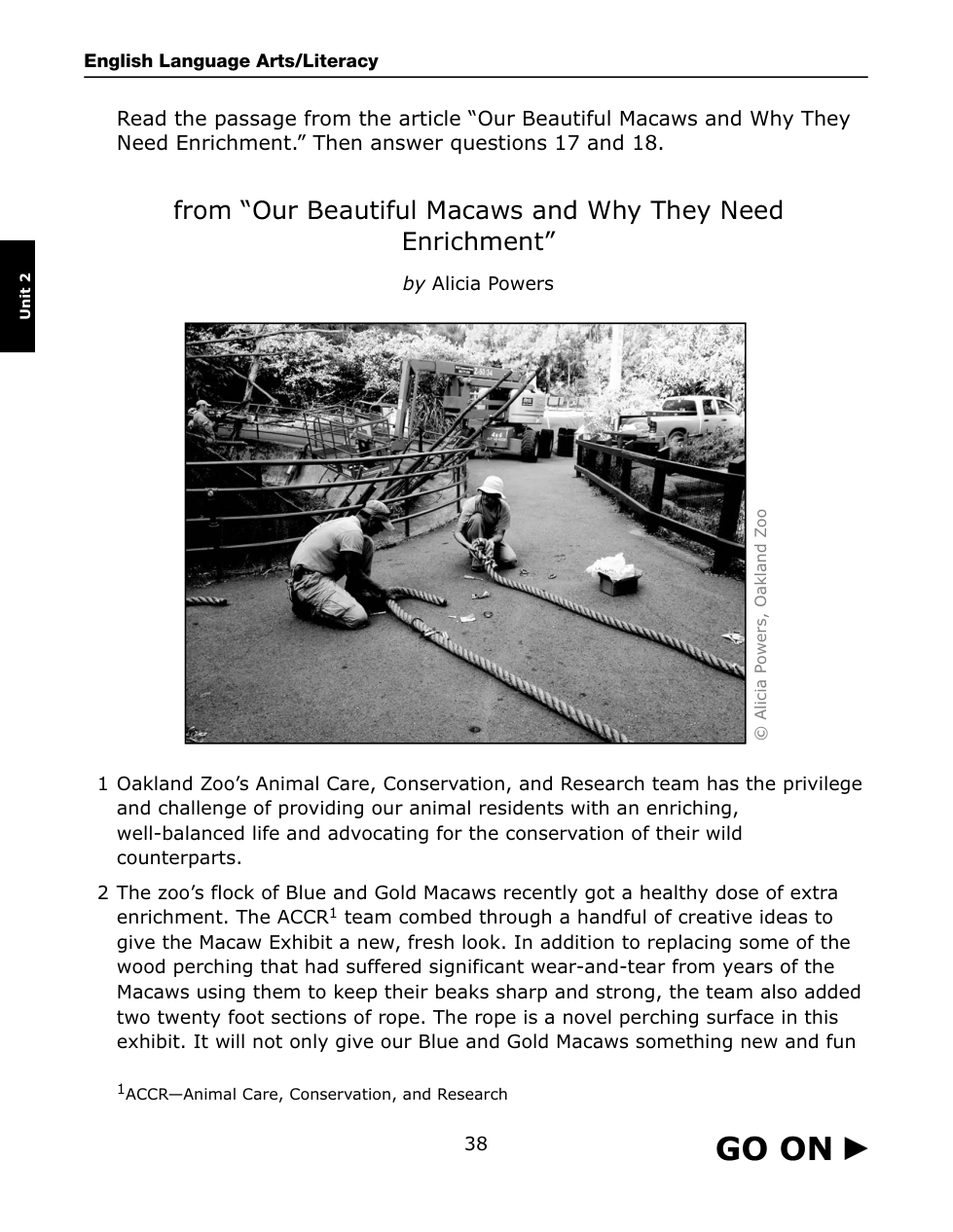
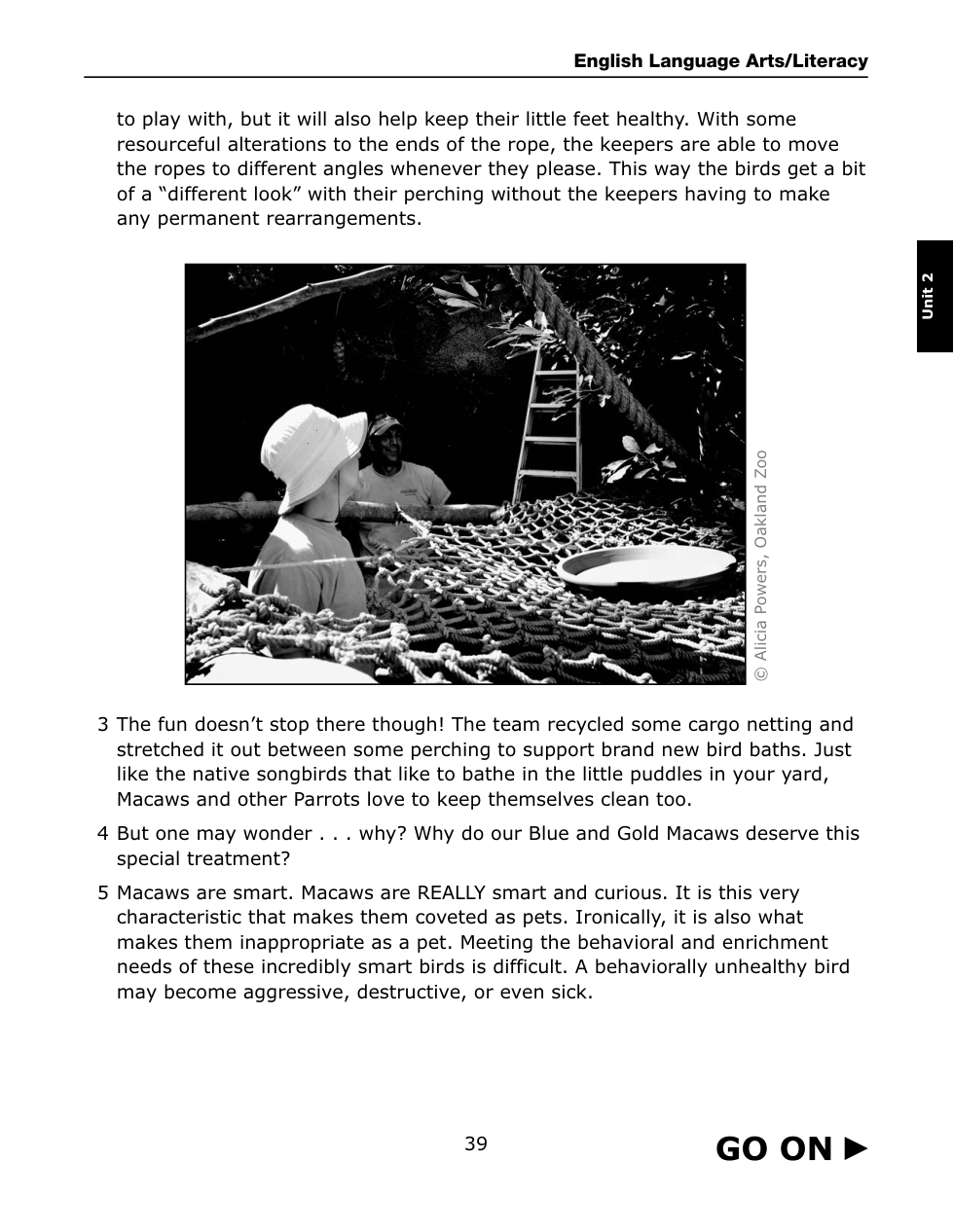
What is the meaning of novel as it is used in paragraph 2?
Part A
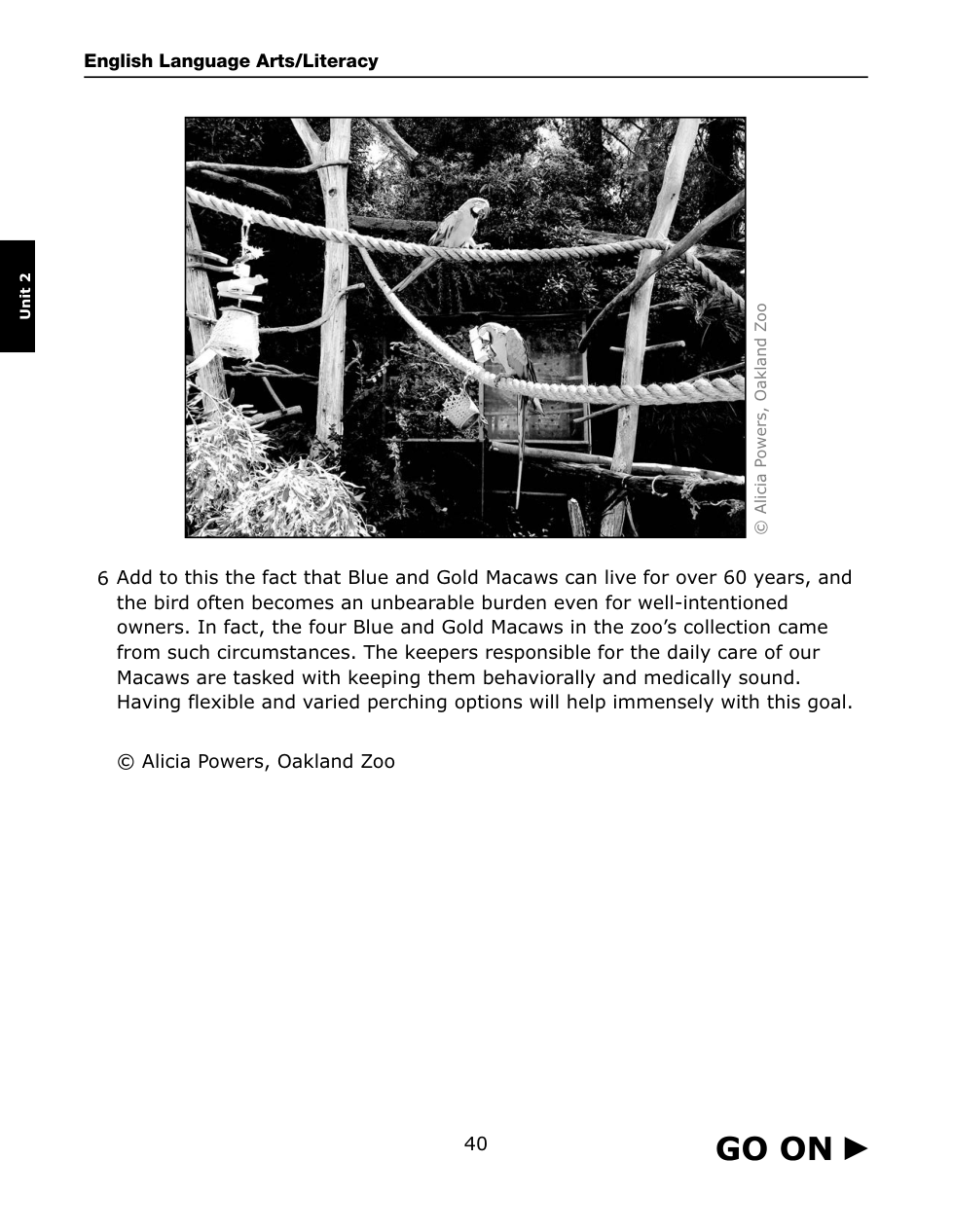
What is the author’s main purpose in “Our Beautiful Macaws and Why They Need Enrichment”?
Part A
Which sentence describes how central ideas are introduced in “The Stripes Will Survive” and “Our Beautiful Macaws and Why They Need Enrichment”?
Part B
Select one detail from each text that supports the answer to Part A.
You have read three texts that claim that the role of zoos is to protect animals. Write an essay that compares and contrasts the evidence each source uses to support this claim. Be sure to use evidence from all three sources to support your response.
Part A
Read the sentence from paragraph 31 in the passage from Boy’s Life.
I ran out along the corridor, my arms unencumbered by books, my mind unencumbered by facts and figures, quotations and dates.
What does the word I ran out along the corridor, my arms unencumbered mean as it is used in the sentence?
Part B
Which sentence from the passage best supports the answer to Part A?
Part A
Read the sentence from paragraph 5 in the passage from Boy’s Life.
The world was out there, waiting beyond the square metal-rimmed windows.
How does the sentence help develop the plot of the passage?
Part B
Which detail from the passage best supports the answer to Part A?
Part B
Which two sentences from the passage best support the gradual change in the answer to Part A?
Part A
As used in paragraph 1, what does the word confining suggest about the walls?
Part B
Which detail from the fable best supports the answer to Part A?
Part A
Read this sentence from the passage.
Back to his corner but not to rest, for the spell of the Unknown was over him, and again and again he goes to the open door, seeing each time more Light.
Which statement best describes how this sentence contributes to the development of the plot?
Part B
Which sentence from the passage contributes to the plot in a similar way?
Part B
Which sentence from the fable best supports the answer to Part A?
Part A
How do paragraphs 1 through 5 contribute to the development of ideas in the article?
Part B
Which piece of evidence best supports the answer to Part A?
Part A
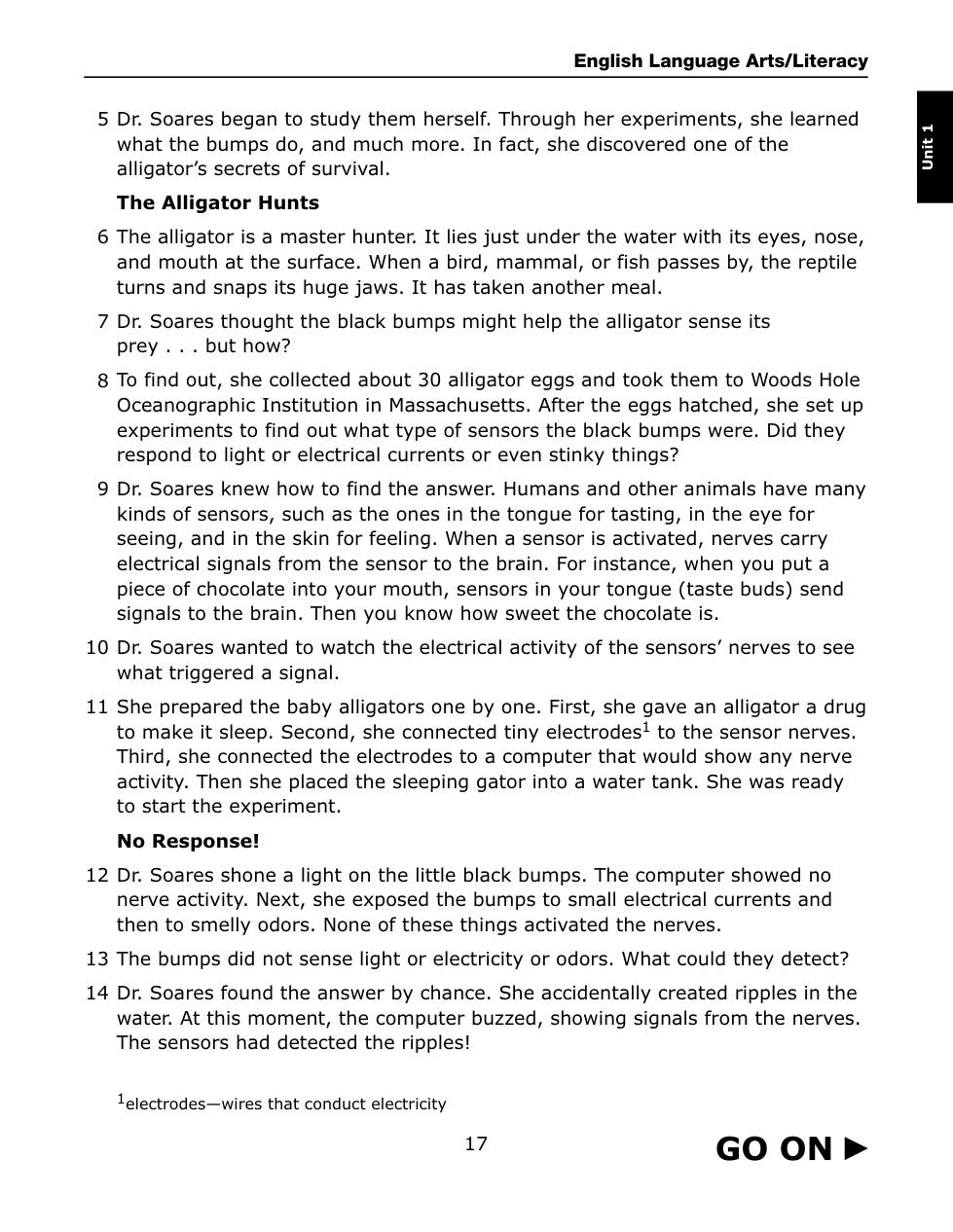
Which information from the article does the author intend to support by including the photograph?
Part B
Which sentence from the article best supports the answer to Part A?
Part B
How do the alligators’ sensors function according to the article?
Part B
Which two paragraphs from the article best support the answer to Part A?
Part B
Select three pieces of evidence that support the answer to Part A.
Part B
Which sentence from the article supports the answer to Part A?
Part A
Read the sentence from paragraph 14 of the passage “The Zoos Go Wild.”
Housing animals in spaces that were as close to the animals’ habitats as the designers could make them was an important step in the struggle to save endangered species.
What does the word endangered mean as it is used in the sentence?
Part B
Which detail from paragraph 14 of the passage supports the answer to Part A?
Part A
Which detail from the passage “The Zoos Go Wild” supports the idea that Willie changed after being moved into his new home?
Part B
Which paragraph from the passage best supports the answer to Part A?
Part B
Which phrase from paragraph 2 supports the answer to Part A?
Part B
Which sentence from the article best supports the answer to Part A?