Cell Cycle Regulation

Last updated 7 months ago
6 questions
Cell Cycle Regulation

Cells have specific instructions for completing the cell cycle, and although cells have a system of quality controls in place, the process sometimes fails.

Normal Cell Cycle
The timing and rate of cell division are important to the health of an organism. The rate of cell division varies depending on the type of cell. A mechanism involving proteins and enzymes controls the cell cycle.
The Role of Cyclins
The cell cycle in eukaryotic cells is driven by a combination of 2 substances that signal the cellular reproduction processes. Proteins called cyclins bind to enzymes called cylin-dependent kinases (CDKs) in the stages of interphase and mitosis to start the various activities that take place in the cell cycle. Different cyclin/CDK combinations control various activities at different stages in the cell cycle.
In the Gap 1 stage of interphase, the combination of cyclin with CDK signals that start of the cell cycle. Different cyclin/CDK combos signal the other cell cycle activities.
Quality Control Checkpoints

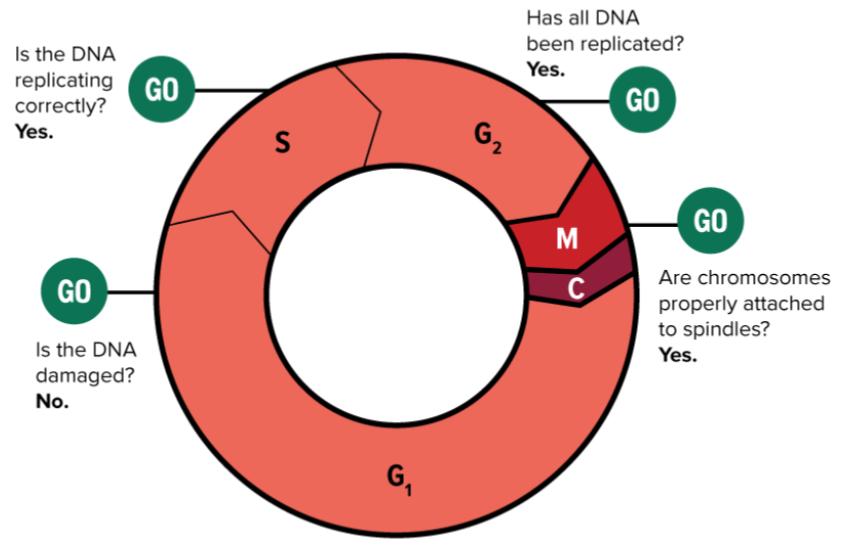
The cell cycle has built-in checkpoints that monitor the cell cycle and can stop it if something goes wrong. For example, there's a checkpoint that occurs near the end of the Gap 1 stage of Interphase that monitors the DNA for damage and can stop the cycle before it enters the Synthesis stage of Interphase. There are more quality control checkpoints throughout the cell cycle.
Apoptosis

If a cell is unable to pass a checkpoint during the cell cycle, it should enter into a process called Apoptosis, or programmed cell death. Cells going through apoptosis will shrink and shrivel in a controlled process.
One example of apoptosis occurs during the development of the human hand and foot. When the hands and feet begin to develop, cells occupy the spaces between the fingers and toes. Normally, this tissue undergoes apoptosis, with the cells shriveling and dying at the appropriate time so that the webbing is not present in the mature organism.
In plants, we can see apoptosis occurring each fall when localized cell death occurs and results in the leaves falling from the trees.
1

What is the role of cyclins in a cell?

1

What substances form the cyclin/cyclin-dependent kinase combinations that control the stages in the cell cycle?

1

Which of the following describes apoptosis?

Abnormal Cell Cycle: Cancer

When cells do not respond to the normal cell cycle control mechanisms, cancer can occur. Cancer is the uncontrolled growth and division of cells. When unchecked, cancer can kill an organism by crowding out normal cells, and results in the loss of tissue function.
Cancer cells spend less time in interphase than normal cells do, which means cancer cells grow and divide unrestrained, as long as they are supplied with essential nutrients.

Causes of Cancer

Cancer does not just occur in weak or old organisms. The changes that occur in the cell cycle and result in cancer can happen to anyone. These changes can be passed down genetically from parent to offspring, or they can be caused by environmental factors.
Carcinogens are substances or agents that are known to cause cancer. Exposure to carcinogens can result in cancer.

The Food & Drug Administration (FDA) is responsible for keeping us safe. They make sure any products that contain carcinogens have a warning on them. They also make sure that laws are in place to require proper safety equipment for jobs that require people to have contact with carcinogens.
1

Which of the following is a characteristic of cancer cells?

1

Cancerous cells & normal cells grow exactly the same.

1
In the fall, plants exhibit localized death of cells that result in leaves falling from the trees. This is an example of __________