Which abiotic factor affects organisms living in the tundra?
Required
1 point
1
Question 2
2.
Most of the nutrients in a tropical rain forest are returned very quickly to plants, so
Required
1 point
1
Question 3
3.
Which statement describes the taiga?
Required
1 point
1
Question 4
4.
Which of the following is a characteristic of the deciduous forest?
Required
1 point
1
Question 5
5.
Trees in which biome have thick bark and thin waxy leaves to provide protection from the cold and their branches are flexible to cope with heavy snowfall?
Required
1 point
1
Question 6
6.
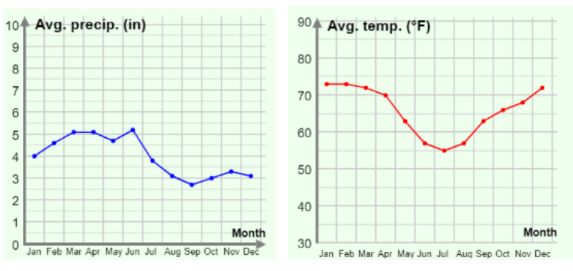
Analyze the average precipitation and temperature graphs for a given location in the month of January. Which biome would you find present at this location?
Required
1 point
1
Question 7
7.
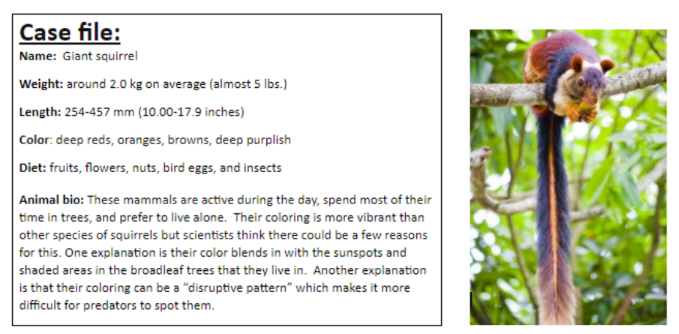
Based on the case file and photograph provided, we can infer that the Giant squirrel is found in a forest biome. Which TWO arguments best support that the tropical rainforest would be the most likely forest biome that the Giant squirrel lives in instead of a coniferous forest biome?
Required
1 point
1
Question 8
8.
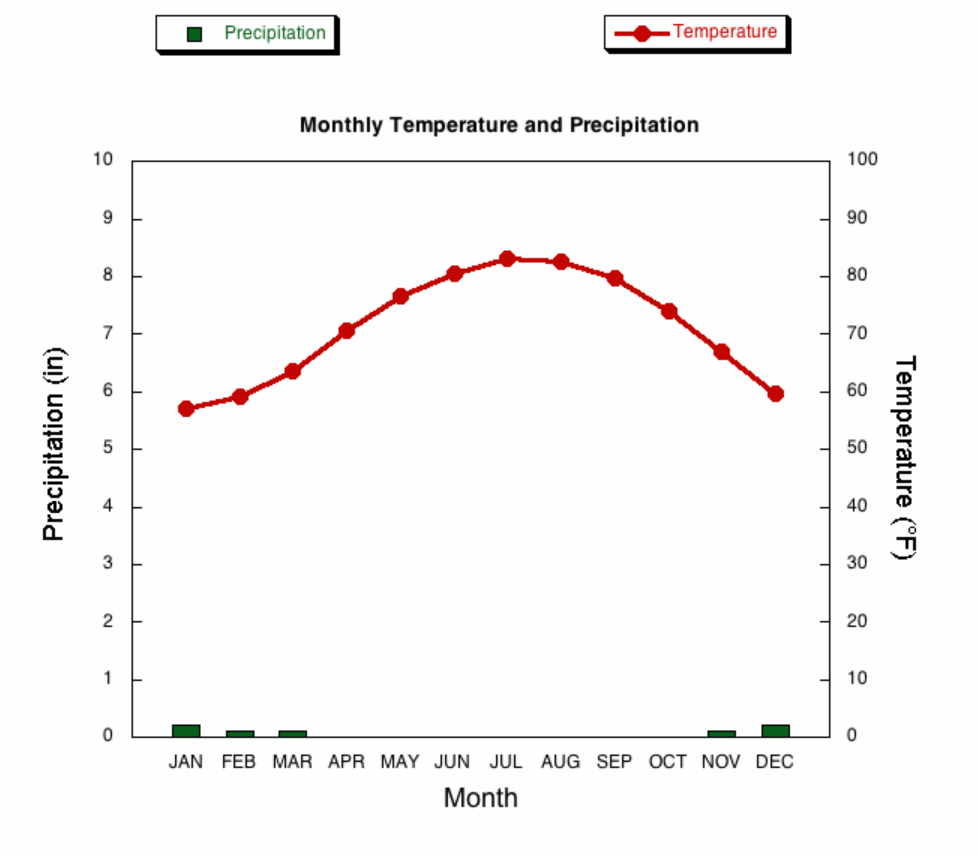
Using the evidence of the patterns of the abiotic factors from the climograph below, identify the correct biome.
Required
1 point
1
Question 9
9.
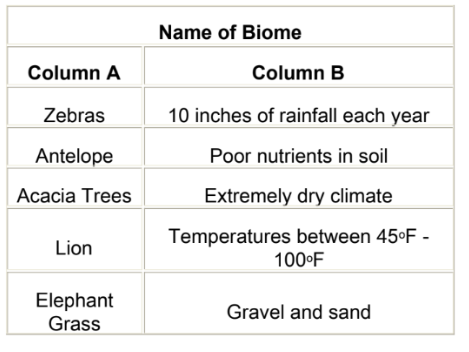
The table below lists abiotic and biotic factors of a particular biome.
Which of the following labels would correctly identify the columns and title?
Required
1 point
1
Question 10
10.
Which statement about the deep ocean zone is true?