CFU on 6.LS2.1 Impact of Environmental Variables and 6.LS2.6 Change Over Time (6/19/2024)
star
star
star
star
star
Last updated over 1 year ago
10 questions
1 point
1
Question 1
1.
This graph shows the carrying capacity for a population of grass eating animals on the Great Plains of the United States.
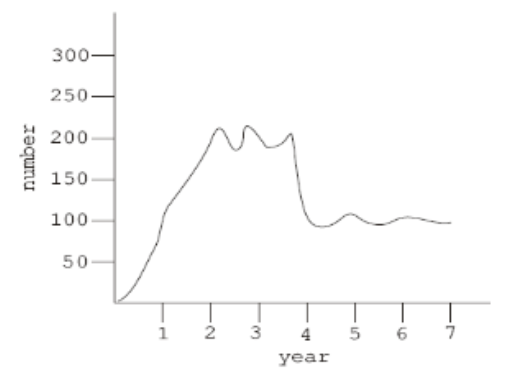
Which explanation below is the best reason why the carrying capacity dropped during years 4 to 7?
1 point
1
Question 2
2.
A population of small fish and a population of small squids eat the same type of krill in the same ecosystem. Krill is the main source of food for both fish and squid. If the squid grows faster than the fish population, what will most likely happen to the fish population?
1 point
1
Question 3
3.
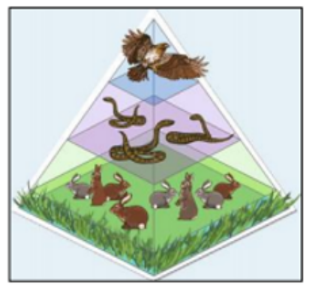
Below is an energy pyramid model for an ecosystem. If an ecosystem is in equilibrium, the
population of each organism will not change much from year to year. However, in this
ecosystem the rabbits became infected with a disease. Which graph shows the effect on the
organisms in the ecosystem?
1 point
1
Question 4
4.
An environmental change drastically reduced the population of milkweed plants in an area. The milkweed plants provided the only source of food for a nearby population of monarch butterfly caterpillars. Which statement describes the most likely effect of this environmental change on this population of monarch butterflies?
1 point
1
Question 5
5.
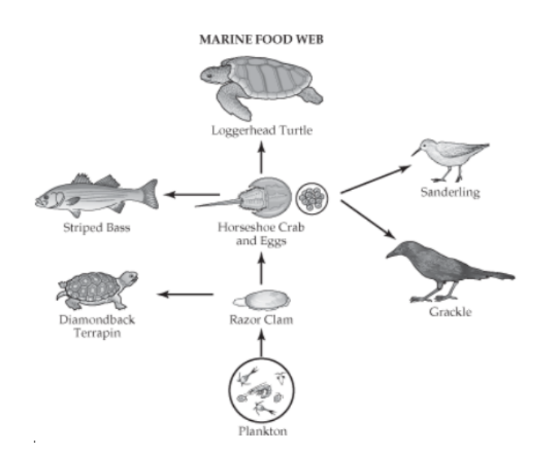
If the Razor Clam population decreased due to an oil spill, which populations in the food web
would decrease because they are DIRECTLY affected by the clam? Choose TWO answers.
1 point
1
Question 6
6.
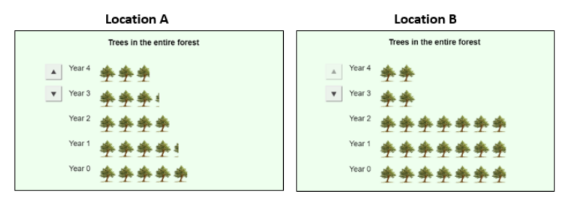
The graphs below show the decrease of tree populations in two different locations. Each
picture of a tree represents 10,000 trees in the forest.
1 point
1
Question 7
7.
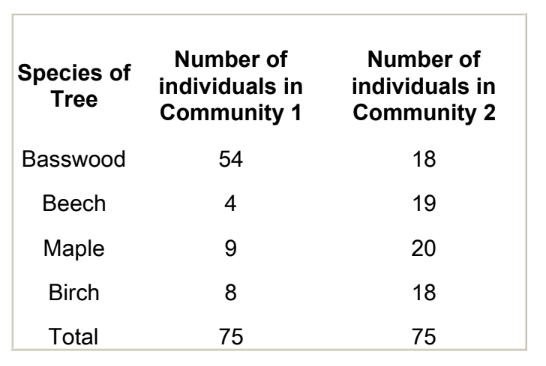
In Community 1, the majority of individuals come from just one of the species. In Community 2, the individuals are spread more evenly across different species. Which community would you consider to be a resilient ecosystem and why...
1 point
1
Question 8
8.
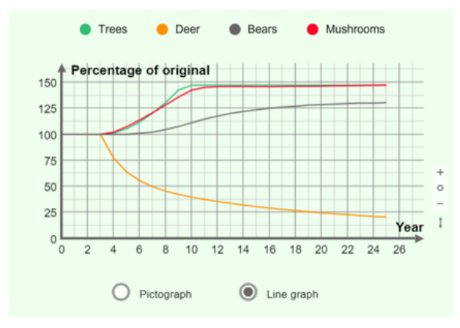
Analyze and interpret the graph.
This ecosystem was in equilibrium until year 3. Determine the most likely reason this
ecosystem began changing over time.
1 point
1
Question 9
9.
A farmer stops cultivating a large tract of farmland and abandons it. The natural changes taking place soon afterwards, such as the growth of wild grasses and weeds, can be considered secondary succession because
1 point
1
Question 10
10.
How do pioneer species make ecological succession possible on an island following a volcanic eruption?