
In this lesson, you will explore the flow of energy among living and nonliving parts of an ecosystem.
Essential Question: How does energy flow through an ecosystem?
In this lesson, you will explore the flow of energy among living and nonliving parts of an ecosystem.
Essential Question: How does energy flow through an ecosystem?
Define the term 'trophic level' in the context of energy flow through ecosystems.
Energy is lost as it passes through each trophic level in an ecosystem.

Drag the tropic level to the correct part of the energy pyramid to show how the energy flows in an ecosystem.
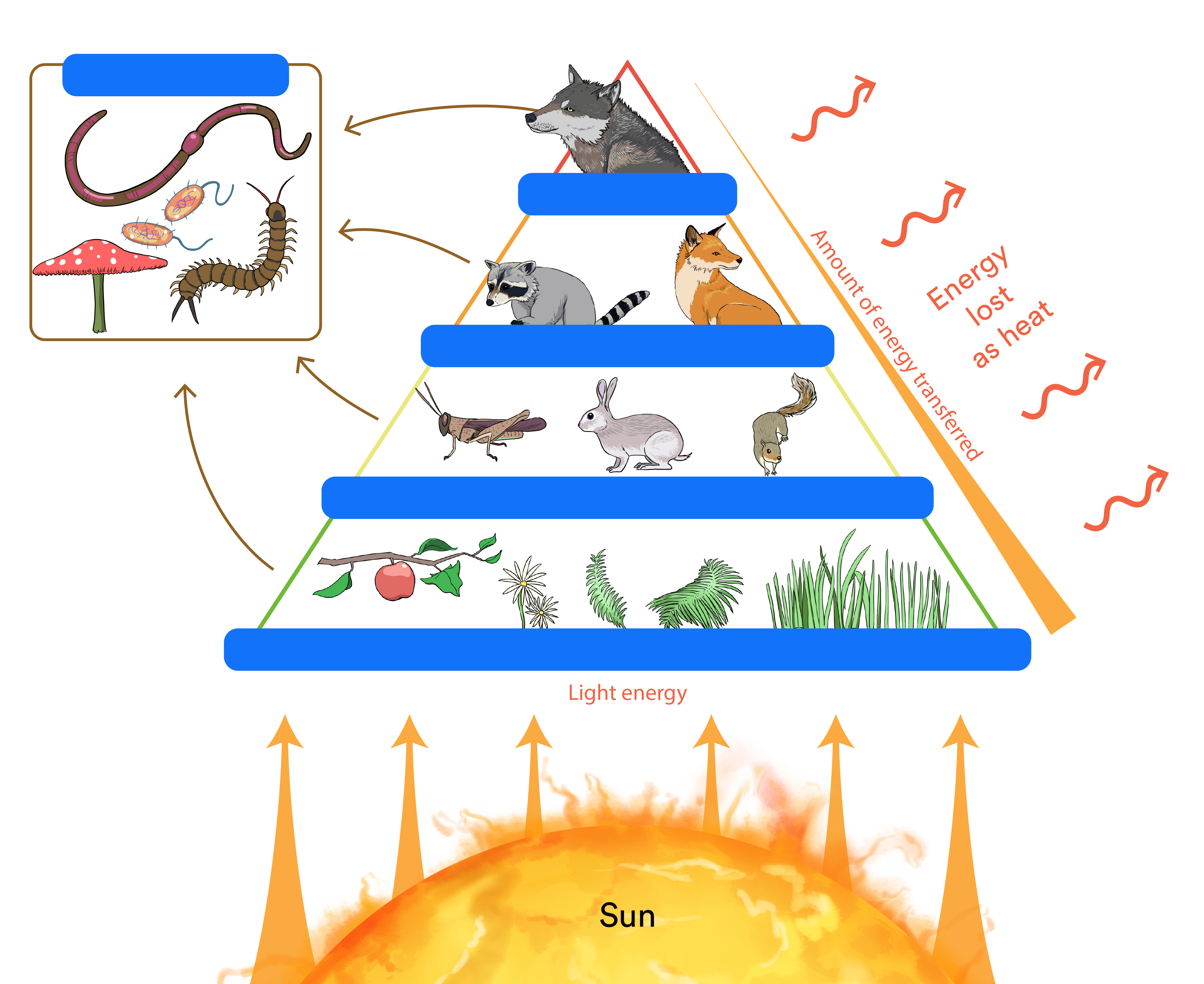
Which organism is always the first in the energy flow through an ecosystem?
Drag each organism into the correct box that matches its trophic level.
moss
phytoplankton
rabbit
owl
butterfly
deer
hawk
Primary producers
Primary consumers
Secondary consumers
Tertiary consumers
Which of the following best describes the role of decomposers in an ecosystem?
Which are true about trophic levels and the food chain? Select three correct answers.
Drag each organism category into the correct box to match its energy-related description.
consume both plants and animals for energy
convert sunlight into energy through photosynthesis
recycle energy by breaking down nonliving plant and animal remains
obtain energy by consuming plants
Producers
Herbivores
Omnivores
Decomposers