Log in
Sign up for FREE
arrow_back
Library

Lesson 0.2 Preventing Lab Accidents

star
star
star
star
star
Last updated 10 months ago
7 questions
When things go wrong in the lab
Learn about RAMP
Required
10
Check Your Understanding of Ramp
Required
10
Required
1
Required
1
1
Question 1
1.

Take a look at her experiment. What could she do to make the demonstration safer.

1
Question 2
2.

What do you think is going to happen?

1
Question 3
3.

What mistake did she make?

Question 4
4.

Question 5
5.

Question 6
6.

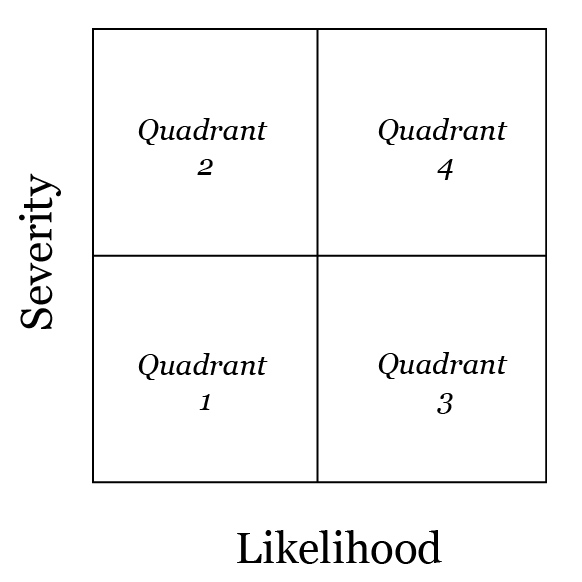
Select the quadrant for the following activity and write your reasoning in the box below. Handling broken glassware contaminated with a corrosive chemical like hydrochloric acid (HCl).
Question 7
7.

Select the quadrant for the following activity and write your reasoning in the box below. Boiling water on a hot plate.

Mark each statement whether it is true or false.
True
False
RAMP is only used for teachers to plan lab experiments.
RAMP stands for recognize hazards, assess risks, minimize risks, and prevent emergencies.
The terms hazard and risk are synonyms.
Lightning is an example of a hazard.
The four-quadrant approach is used to analyze risks.
If an activity poses any risk, it should not be carried out in the lab.
PPE stands for Personal Protective Equipment.
Goggles are the only kinds of PPE necessary in the lab.
There are five strategies to minimize risk.
One way to minimize risk is to substitute or eliminate chemicals that could be hazards.
Drag the actions into the appropriate category
Hiding broken glass in a lab sink
Leaving a hot plate plugged in after use
Wearing close-toed shoes in the lab
Reading the safety information in the pre-lab
Washing hands before removing goggles
Promptly cleaning up spilled chemicals
Asking questions about lab procedures
Paying attention to what is happening around you
Spilling water on the floor
Wearing clothes that completely cover your legs
Creating a Hazard
Minimizing Risk
Assessing Risk
Prepare for Emergencies