Rates of reaction -effects of changes
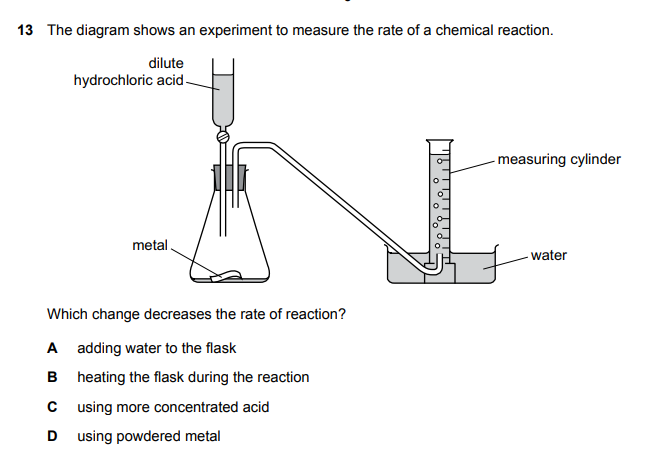
Rates of reaction -effects of changes
State and explain how increasing surface area affect the rate of reaction.
Your answer must include the words - particles / collisions / frequency / surface area / volume.
State and explain how increasing concentration affects the rate of reaction.
Your answer must include the words - particles / collisions / frequency / volume.
State and explain how increasing gas pressure affects the rate of reaction.
Your answer must include the words - collisions / frequency / volume.
State and explain how increasing temperature affects the rate of reaction.
Your answer must include the words - particles / collisions / frequency / speed (or kinetic energy) sucessful.
Rates of reaction -effects of changes
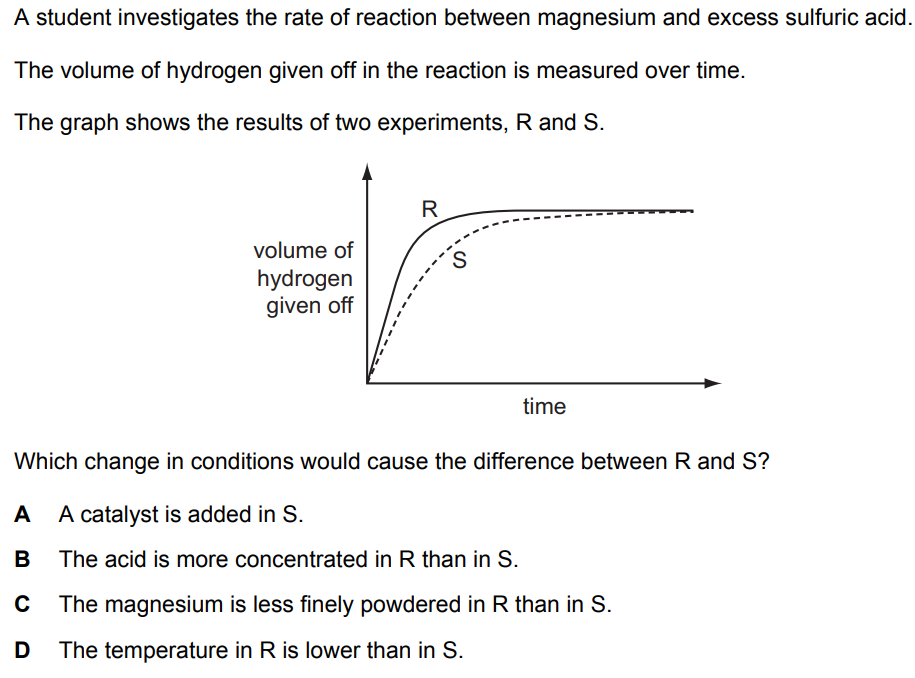
Rates of reaction -graph interpretation
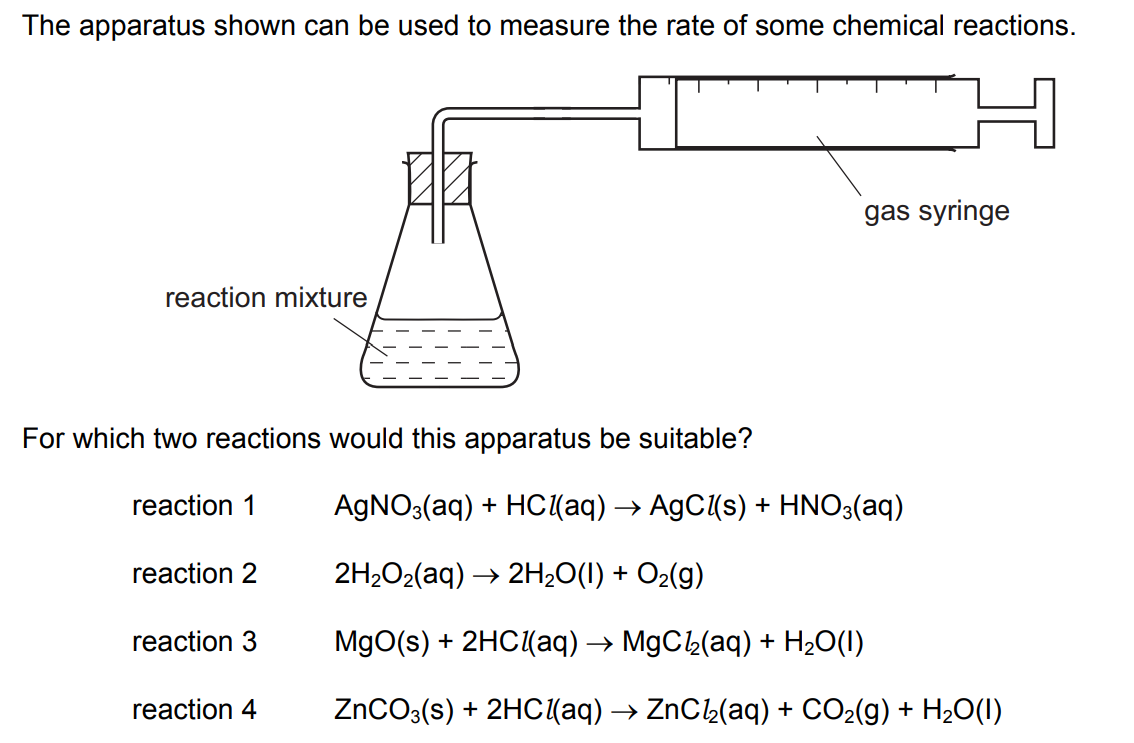
Rates of reaction Note you need to tick two boxes
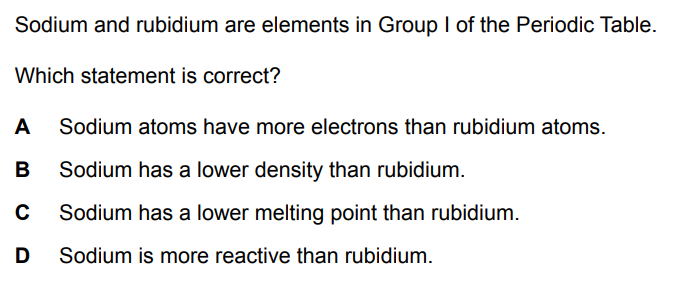
Group I
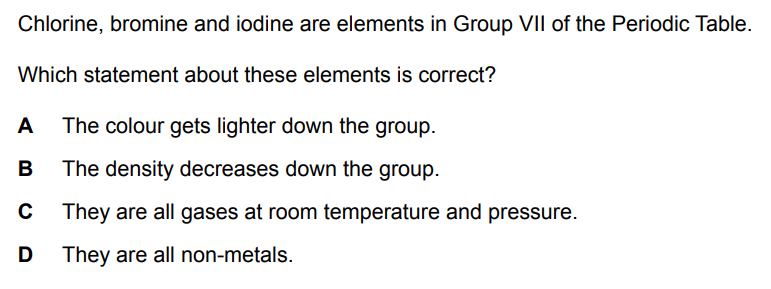
Group VII
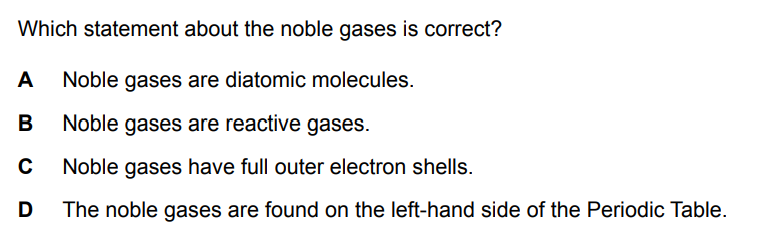
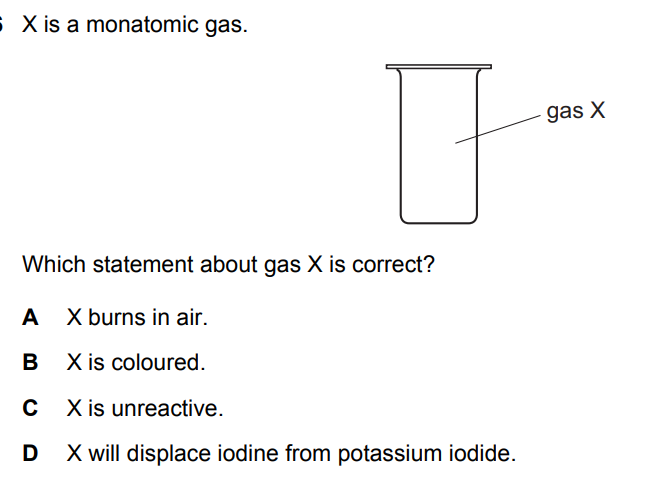
Noble gases
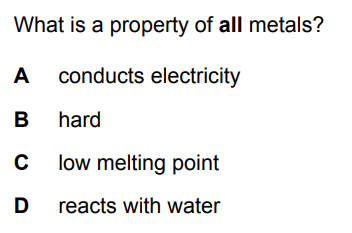
Property of metals
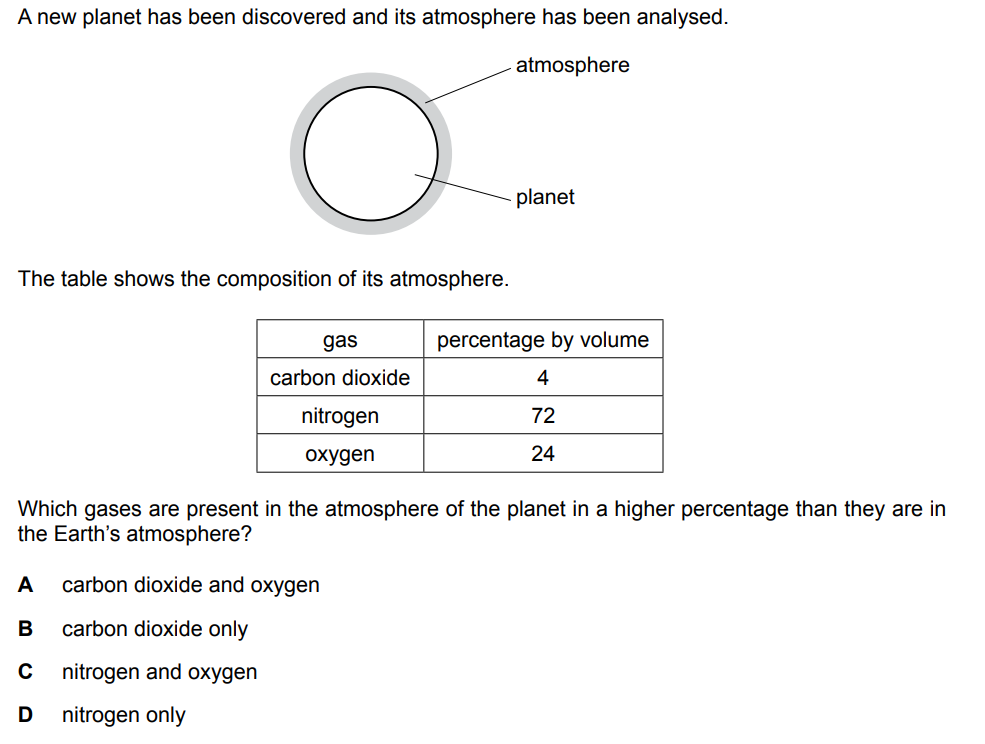
The atmosphere
Periodic table
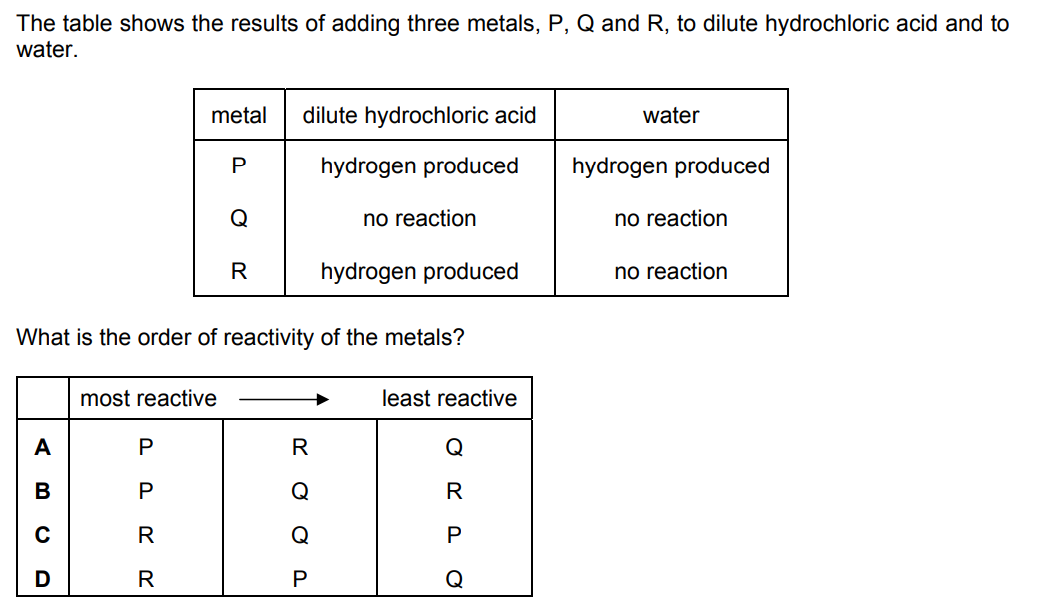
Reactivity series
What is always true for a pure substance?
A It always boils at 100 °C.
B It contains only one type of atom.
C It has a sharp melting point.
D It is solid at room temperature.
The equation represents the reaction between solid magnesium oxide and dilute hydrochloric acid to form magnesium chloride and water:
MgO + 2HCl → MgCl₂ + H₂O
Which row shows the state symbols for hydrochloric acid, magnesium chloride, and water?
What is the equation for the reaction between calcium and chlorine?
Calcium nitrate has the formula Ca(NO₃)₂. What is the relative formula mass, Mr, of calcium nitrate?