Asemmisa {{asɛmmisaAhyɛnsode}}
11.
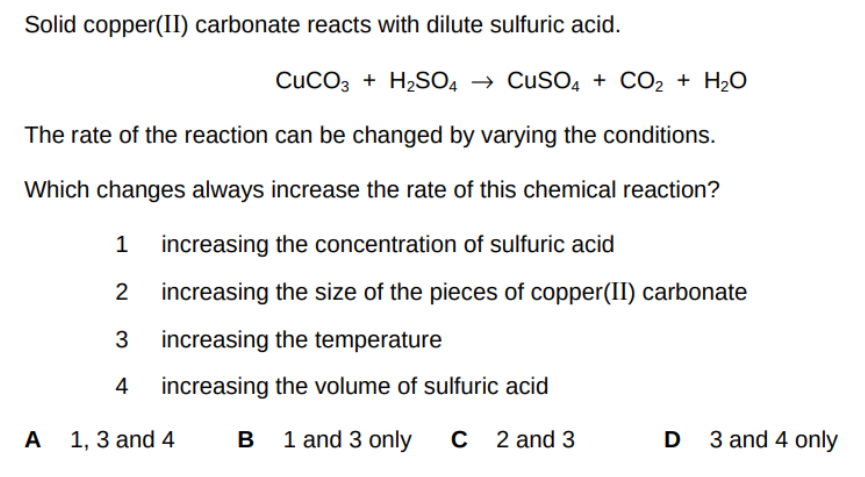
Reactions occur when particles and that rates of reaction are increased when the and / or energy of collisions is increased.
Increasing concentration means that there are particles in a given . This means that the collision increases so the rate of reaction increases.
Increasing pressure means that there are particles in a given . This means that the collision increases so the rate of reaction increases.
Decreasing the size of solid samples e.g. from granule to powder means that the surface to volume ratio , therefore there are more particles of the solid that are available for collisions so collision increases and the rate of reaction increases.
Increasing temperature means that there the particles move more so they collide more they also have more kinetic energy so they collide more both of these factors so the rate of reaction.
A catalyst as a substance that up the rate of a reaction without altering the products of the reaction, being itself chemically and in mass at the end of the reaction
Explain how the addition of a catalyst increases the rate of a reaction by providing an reaction route of activation energy.
Increases collision frequency | Increases the proportion of the collisions that exceed the activation energy | |
|---|---|---|
Concentration increase | ||
Temperature increase | ||
Adding a catalyst | ||
Making solids finer grained |
Recall that enzymes are catalysts and that enzymes such as are used in the production of alcoholic drinks.
Note enzymes work best at moderate temperatures as temperatures denature the while temperatures would cause the collision frequency to be decreased and mean that fewer collisions can exceed the activation energy.
Recall the conditions for the Haber process as:
a temperature °C
b pressure atmospheres
c catalyst
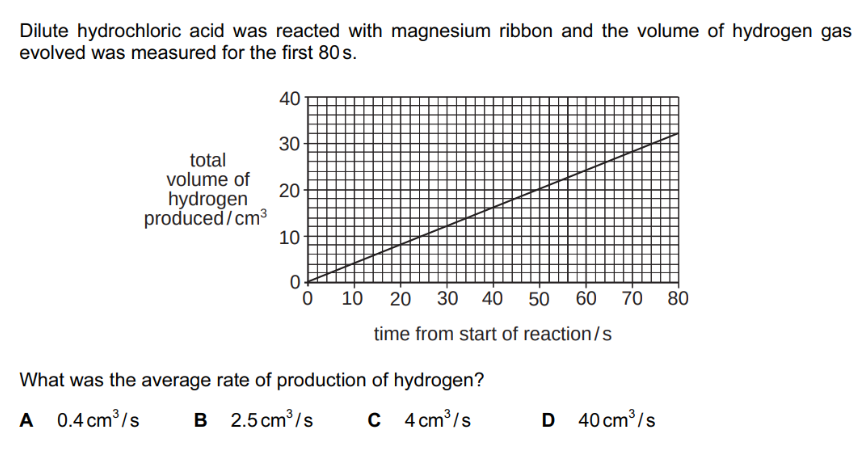
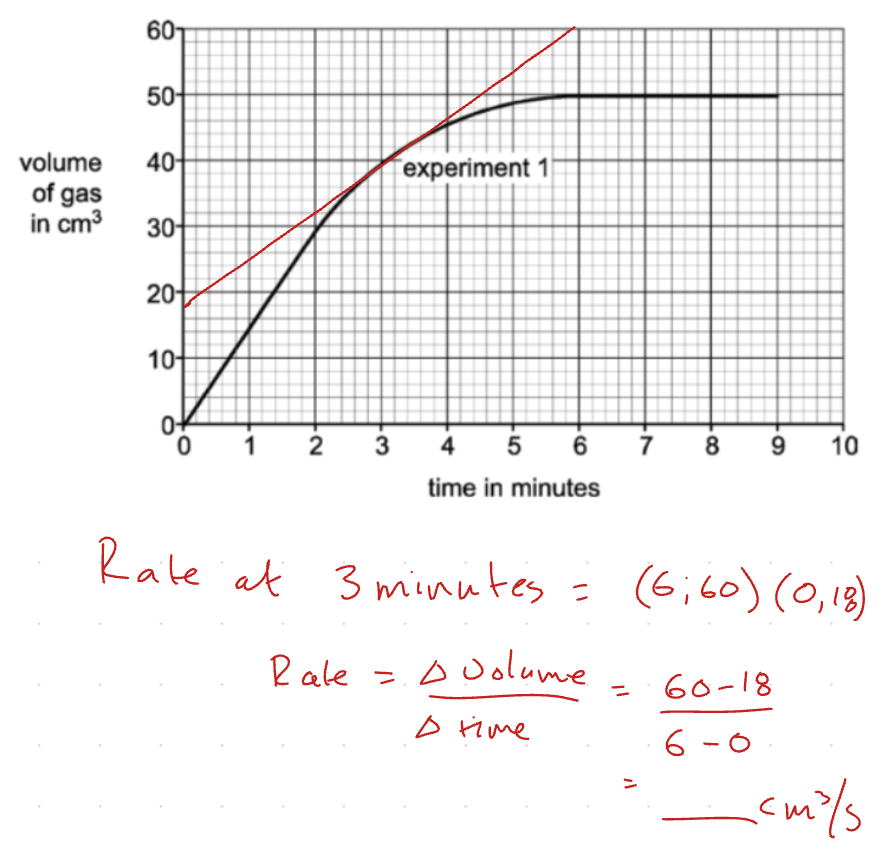
What is the rate of reaction at 3 minutes
What is the rate of reaction at 8 minutes
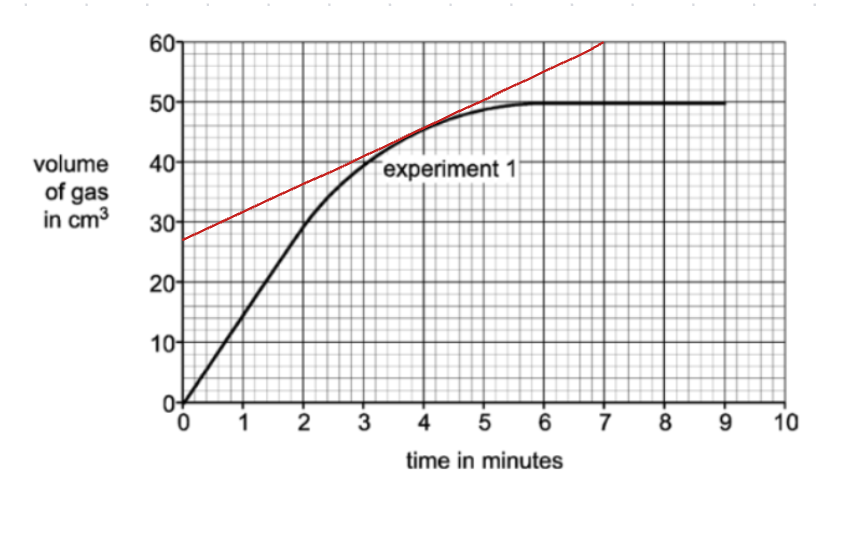
What is the rate of reaction at 4 minutes
Rate =