Log in
Sign up for FREE
arrow_back
Library

Year 10 Energy changes

star
star
star
star
star
Last updated 10 months ago
31 questions
1
1
1
1
1
1
1
1
1
1
1
1
4
1
1
1
1
1
1
1
1
1
1
1
1
1
1
1
1
6
1
Question 1
1.

Identify the type of change for the reaction: NaCl(s) + H₂O(l) → NaCl(aq)

a salts dissolving in water b neutralisation reactions c displacement reactions d precipitation reactions

Question 2
2.

Identify the type of change for the reaction: NaOH + HCl → NaCl + H₂O

a salts dissolving in water b neutralisation reactions c displacement reactions d precipitation reactions

Question 3
3.

Identify the type of change for the following reaction: Cl₂ + 2NaBr → 2NaCl + Br₂

a salts dissolving in water

b neutralisation reactions

c displacement reactions

d precipitation reactions

Question 4
4.

Identify the type of change for the following reaction: Fe + CuSO₄ → FeSO₄ + Cu
a salts dissolving in water b neutralisation reactions c displacement reactions d precipitation reactions

Question 5
5.

Question 6
6.

Question 7
7.

Question 8
8.

Question 9
9.

Question 10
10.

Question 11
11.

Question 12
12.
What is the minimum energy needed to break the bonds in the reactants is called _______________energy.
Other Answer Choices:
activation
Question 13
13.

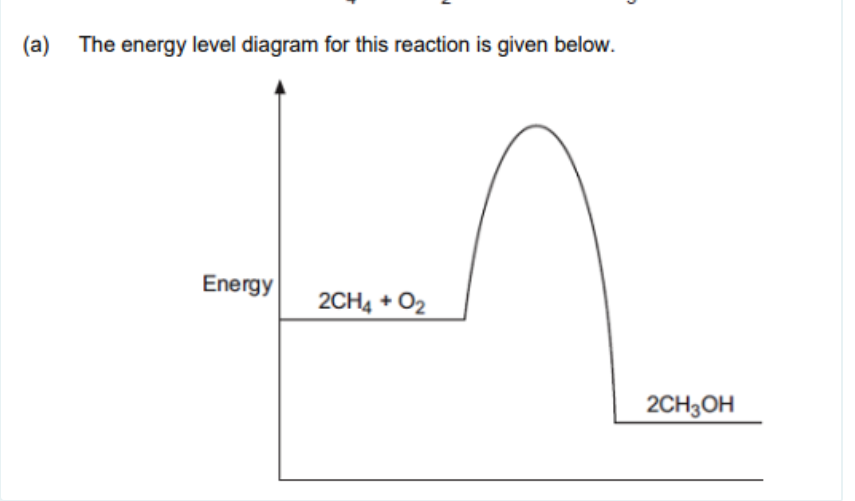
Combustion of methane

This is a reaction profile diagram for an _______________ reaction. (1 Point)
Energy needed to break the bonds in the ______________(the _______________energy)
is less than the energy released when the bonds form in the _____________.
Copy this diagram and explanation into your exercise books.
Other Answer Choices:
reactants
products
exothermic
endothermic
activation
Question 14
14.

Respiration

This is a reaction profile diagram for an _______________ reaction. (1 Point)
Energy needed to break the bonds in the ______________(the _______________energy)
is less than the energy released when the bonds form in the _____________.

Other Answer Choices:
exothermic
endothermic
products
activation
reactants
Question 15
15.

Question 16
16.


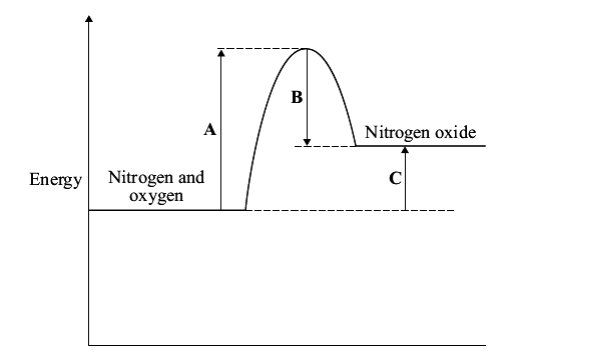
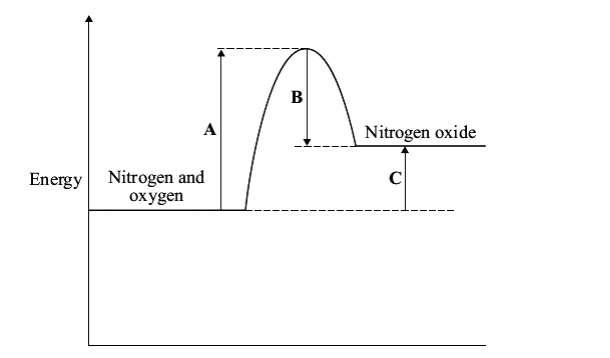
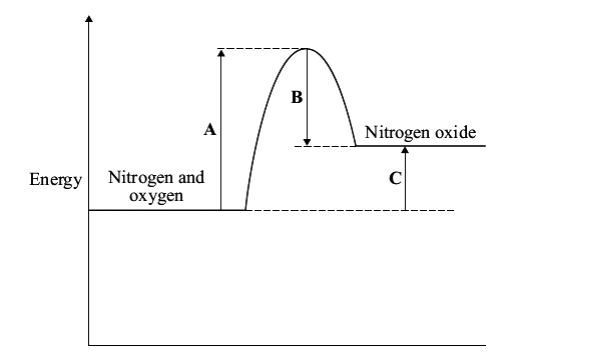
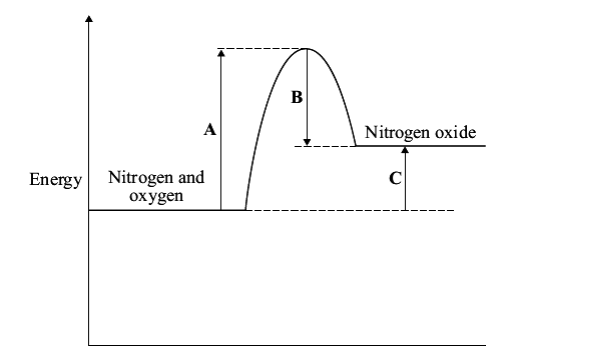
Which letter represents the overall energy change? (1 Point)

Question 17
17.

Question 18
18.

Question 19
19.

The energy change is endothermic or exothermic. (1 Point)

Question 20
20.

In this change, would the surroundings get hotter or cooler?
exothermic

Question 21
21.

Question 22
22.
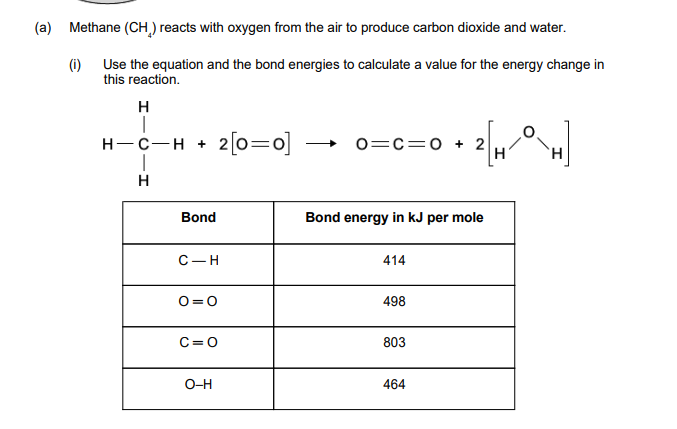
Calculate the energy change.

Total energy taken in to break bonds in the reactants

= 4 x C-H + 2 x O=O
= 4 x 414 + 2 x 498 = 2652_______ kJ / mol
Total energy given out when bonds form in products

= 2x C=O + 4 x O-H
= 2 x 803 + 4 x 464
= _______ kJ/mol
Energy change = energy to break bonds - energy to make bonds
= 2652 - 3462 = sign _______ value _______ kJ/mol.
Note this is an _______ reaction so energy is released to the surroundings and the temperature of the surroundings _______
Question 23
23.
Other Answer Choices:
A
exothermic
decrease
endothermic
B
B
increase
Question 24
24.

Question 25
25.

Question 26
26.

Question 27
27.

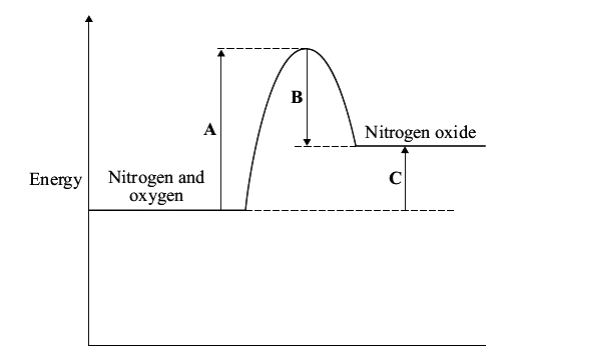
Which letter represents the energy change for the reaction? (1 Point)

Question 28
28.

Question 29
29.

Question 30
30.

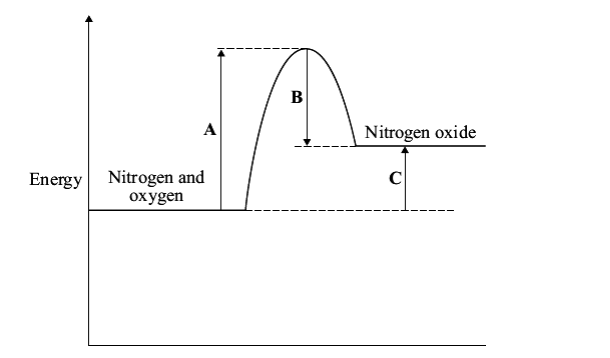
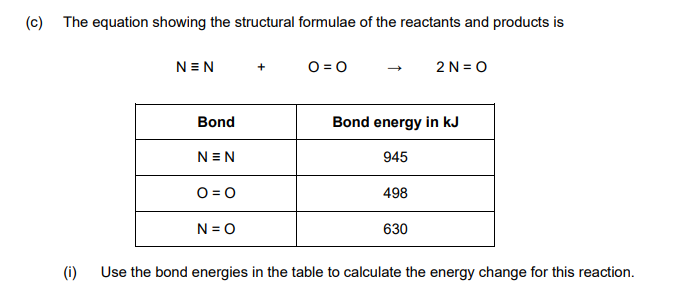
Energy needed to break the bonds in the reactants
= 1 x N=N + 1 x O=O
= 945 + 498
= _______ kJ/mol
Energy given out when bonds form in the products
= 2 x N=O
= 2x 630
= _______ kJ/mol
Energy change = energy needed to break bonds - energy released when bonds form
= 1413 - 1260
= sign _______ value _______
The energy change is positive so the reaction is _______ and the temperature of the surroundings will _______
Question 31
31.

Draggable itemarrow_right_altCorresponding Item
arrow_right_alt
arrow_right_alt
arrow_right_alt
arrow_right_alt
arrow_right_alt
arrow_right_alt
arrow_right_alt
arrow_right_alt
arrow_right_alt
arrow_right_alt
Identify the type of change for the reaction: AgNO₃(aq) + NaCl(aq) → NaNO₃(aq) + AgCl(s)

Hint - look at the state symbols
a) salts dissolving in water
b neutralisation reactions
c) neutralisation reactions
d precipitation reactions
In an exothermic reaction, heat energy is:_________________ to the surroundings.
Given out
Taken in
Unchanged
In an endothermic reaction, heat energy is:________________________ from the surroundings.
Given out
Taken in
Unchanged
Bond breaking is:
Endothermic
Exothermic
Bond forming is:
Endothermic
Exothermic
In an exothermic reaction:
Bond breaking energy > bond making energy
Bond breaking energy < bond making energy
In an endothermic reaction:
Bond breaking energy > bond making energy
Bond breaking energy < bond making energy
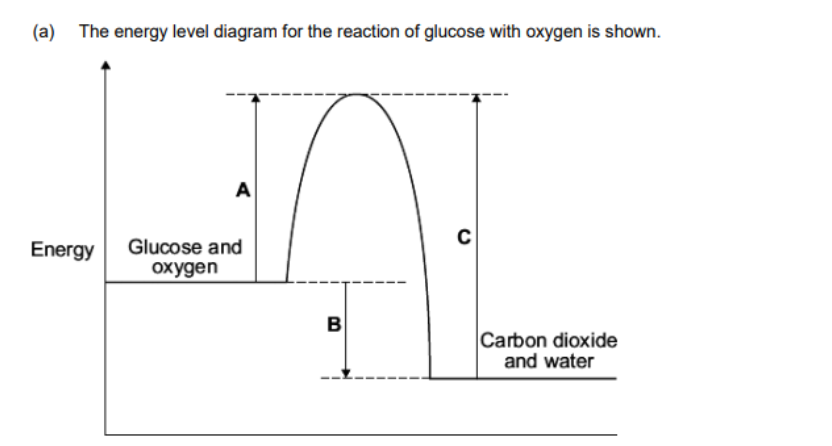
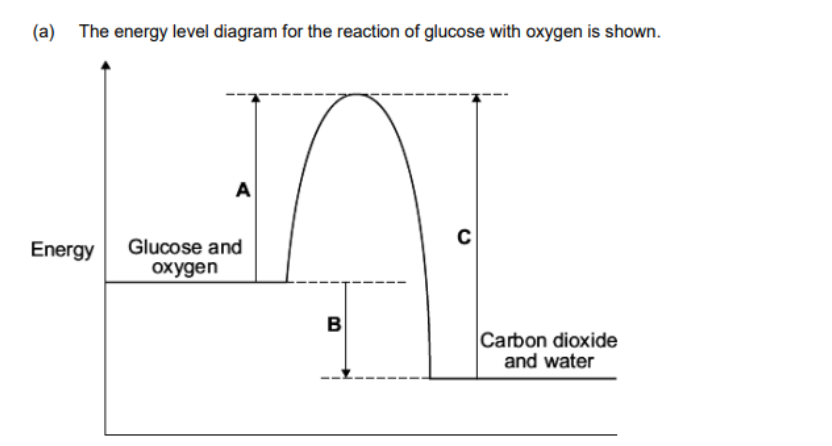
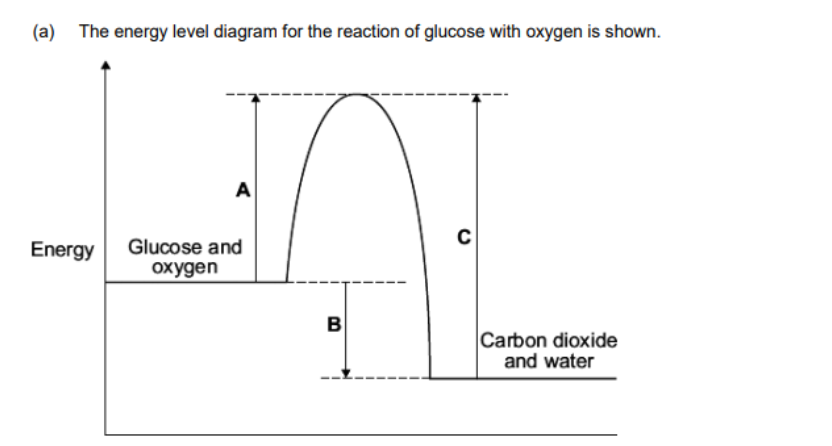
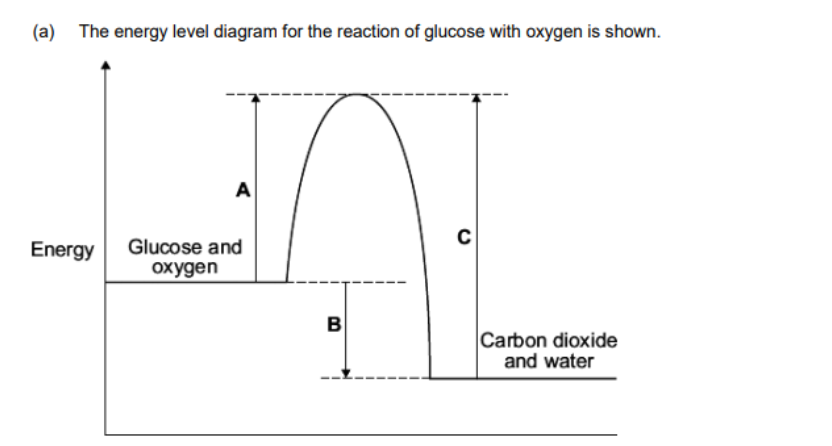
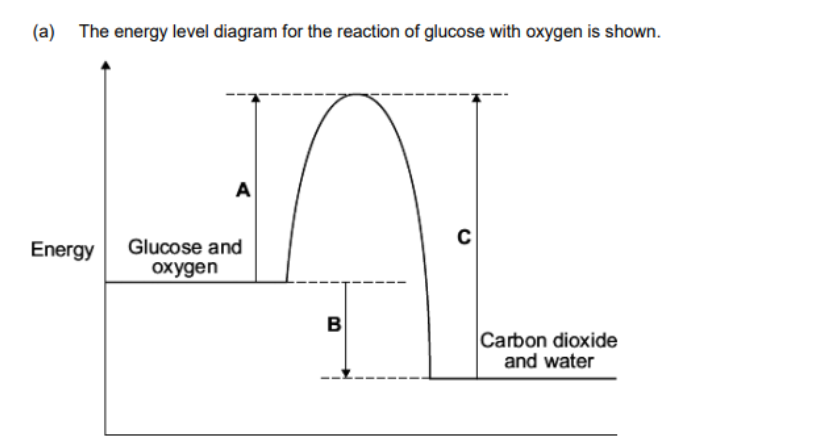
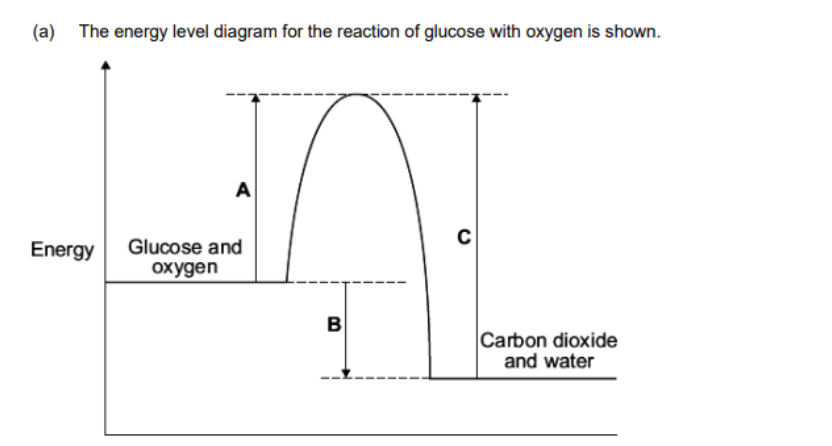
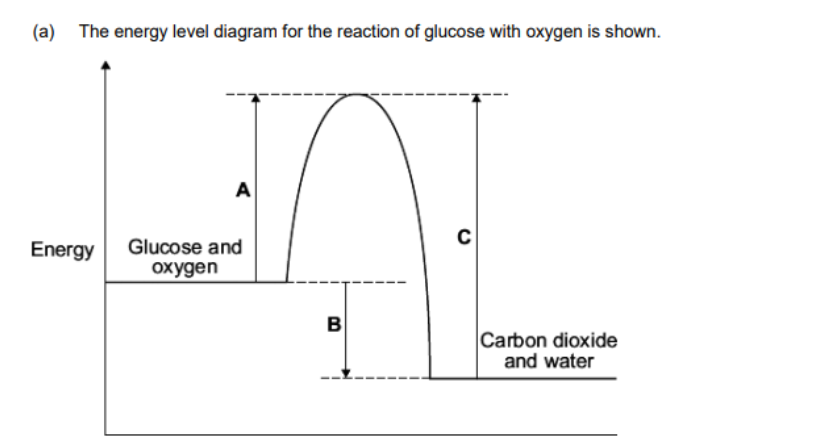
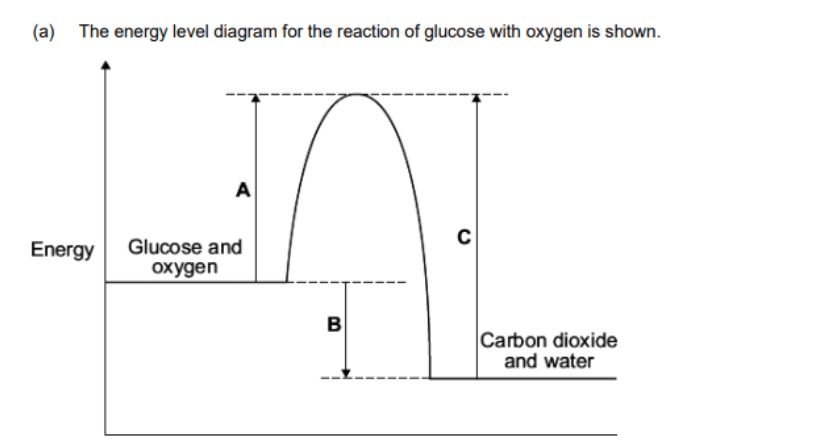
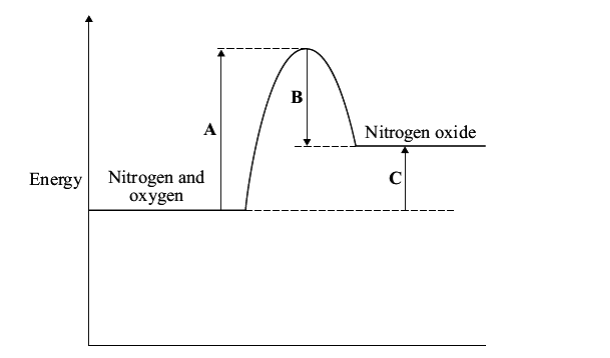
Which letter represents the activation energy? A, B, or C? (1 Point)

A
B
C
Which letter represents the energy change for breaking bonds? A, B, or C? (1 Point)

A
B
C
Which letter represents the energy change for making bonds?
Note the arrow should be going downwards but this was a multiple choice question.

A
B
C
In this change, the temperature of the surroundings would (1 Point) increase or decrease?

increase
decrease
This reaction profile shows an ________________ reaction.
Activation energy = ______
Energy needed to break bonds in reactants = ______
Energy released when new bonds form in the products = ______
Energy change in the reaction = ______
Energy in to break bonds is less than energy released to make bonds so the reaction is ________________.
The reaction takes in energy so the surrounding will lose energy and the temperature will _____________

Which letter represents the activation energy?
A
B
C
D
Which letter represents the energy needed to break the bonds in the reactants? A, B, or C? (1 Point)

A
B
C
Which letter represents the energy needed to form the bonds in the products? (1 Point)

A
B
C
The temperature of the surroundings will:

Increase
Decrease
Remain the same
Please choose the correct statement.
Energy taken in to break bonds in the reactants is greater than the energy released when new bonds form in the products.
Energy taken in to break bonds in the reactants is less than the energy released when new bonds form in the products.
Reaction is
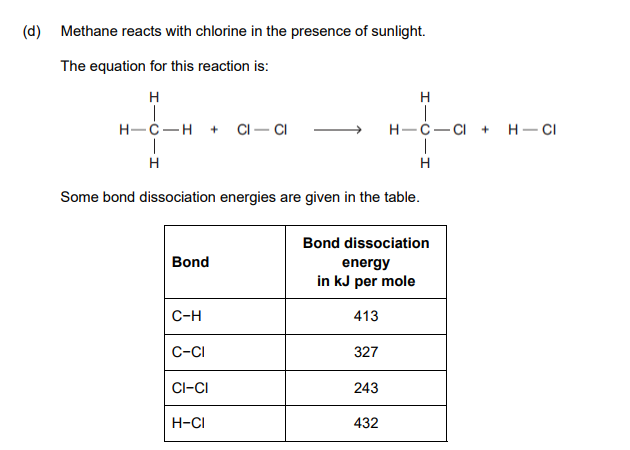
4 x C-H + Cl-Cl
Sum of energy to make bonds
= 4 x 413 + 243
Energy change calculation
= 1895 kJ / mol
Energy to break bonds
3 x C-H + 1 x C-Cl + H-Cl
Bonds made =
= 3 x 413 + 327 + 432
Bond broken =
= 1998
Sum of energy to break bonds
= bonds broken - bonds made
Energy to make bonds
1895 - 1998
Energy change formula
-103 kJ/mol
Energy change value
exothermic