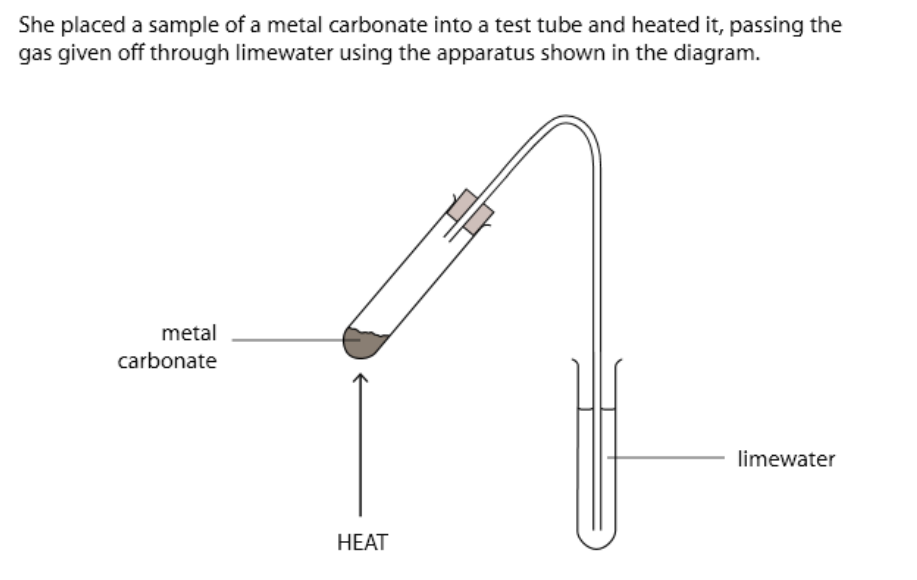
The limewater will go
This is an reaction.
Mmuae Afoforo a Wobɛpaw:
endothermic
cloudy
exothermic
clear
The limewater will go
This is an reaction.
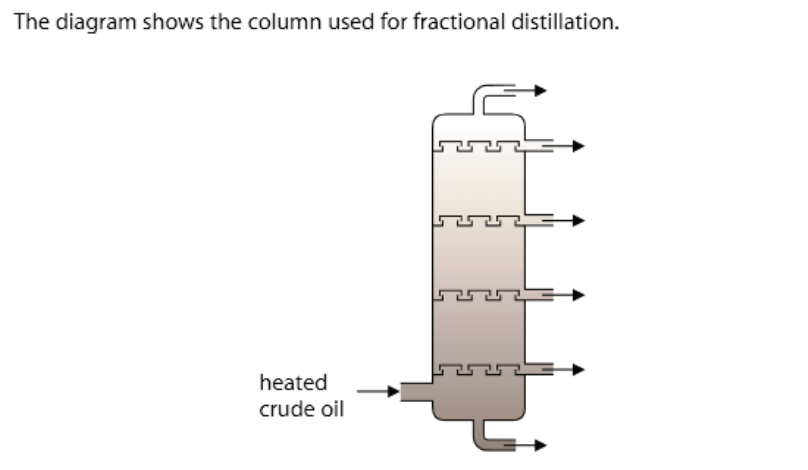
Crude oil is a of alkanes with different boiling points.
The crude oil is heated to form a .
The fractionating column gets with height.
The chain molecules condense and are removed as liquids lower down the column.
The remaining chain molecules continue up the column as gasses until they get to their condensation temperature.
Note each fraction is a mixture of hydrocarbons with similar boiling points.
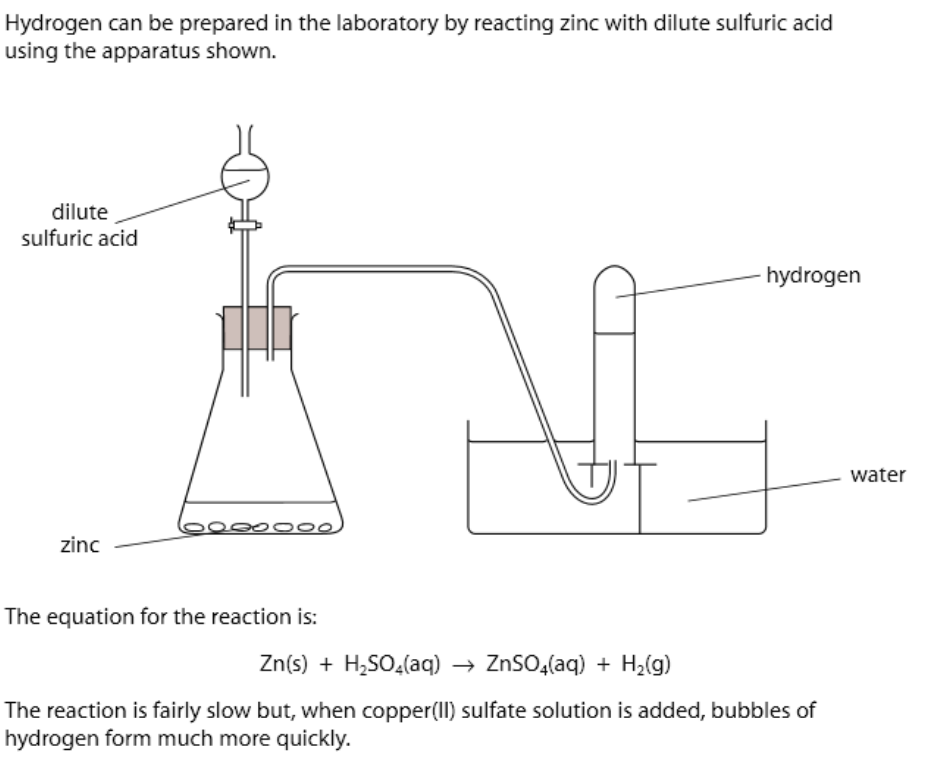
The copper (II) sulfate solution is not used up but does increase the rate of raction.
The copper sulfate is acting as a by providing an alternate of lower .
The test for hydrogen gas is to use a splint and the positive results is that (note water is also formed).
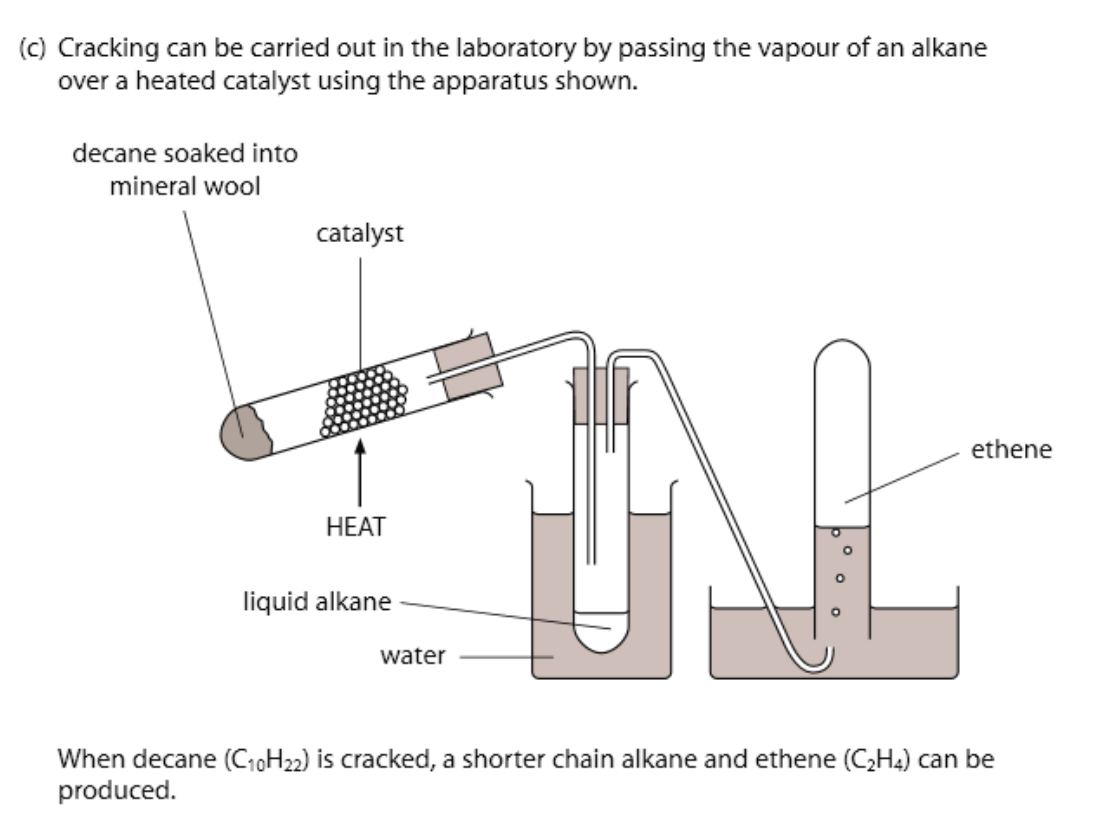
Decane is a and is therefore a hydrocarbon.
Decane has a simple molecular substance and is a at room temperature.
The catalyst is a tile or powder.
The gases are passed through water to alkane.
The ethene has a boiling point below room temperature and remains as a gas that can be collected .
When a few drops of bromine water are added to either decane or the liquid alkane there would be .
When a few drops of bromine water are added to ethene the bromine water would decolourise ( to
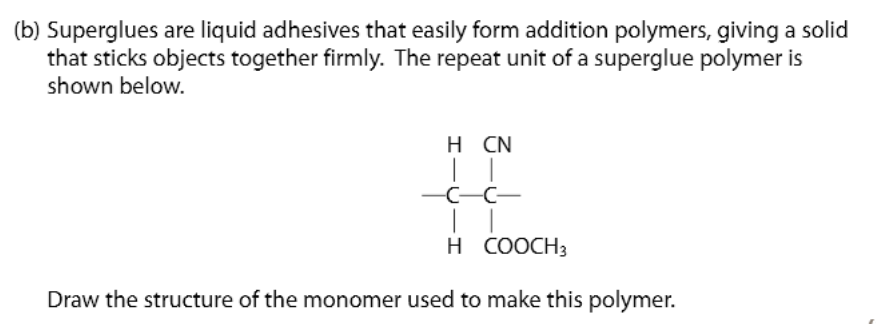
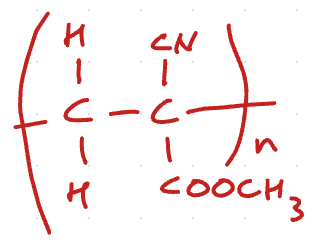
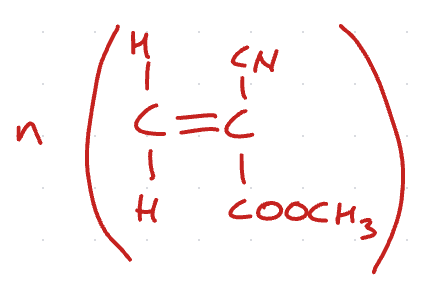
Check monomer
a) n in front,
b) double bond
Check polymer
a) n as subscript
b) single bond
c) bonds extend through the brackets.
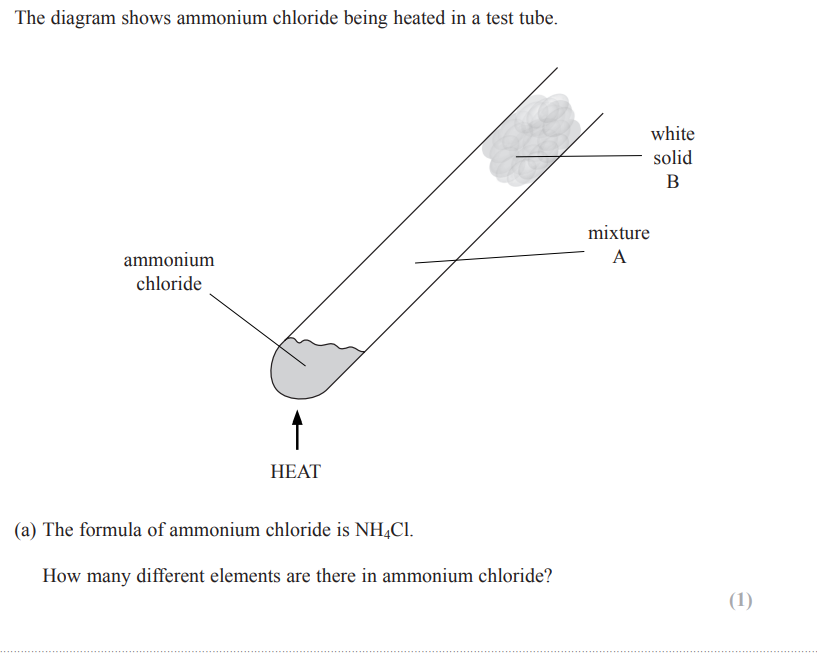
Number of elements =
Number of atoms =
What type of structure is present (be careful)!
(Hint NH4+ and Cl-)
This process is
This process is called
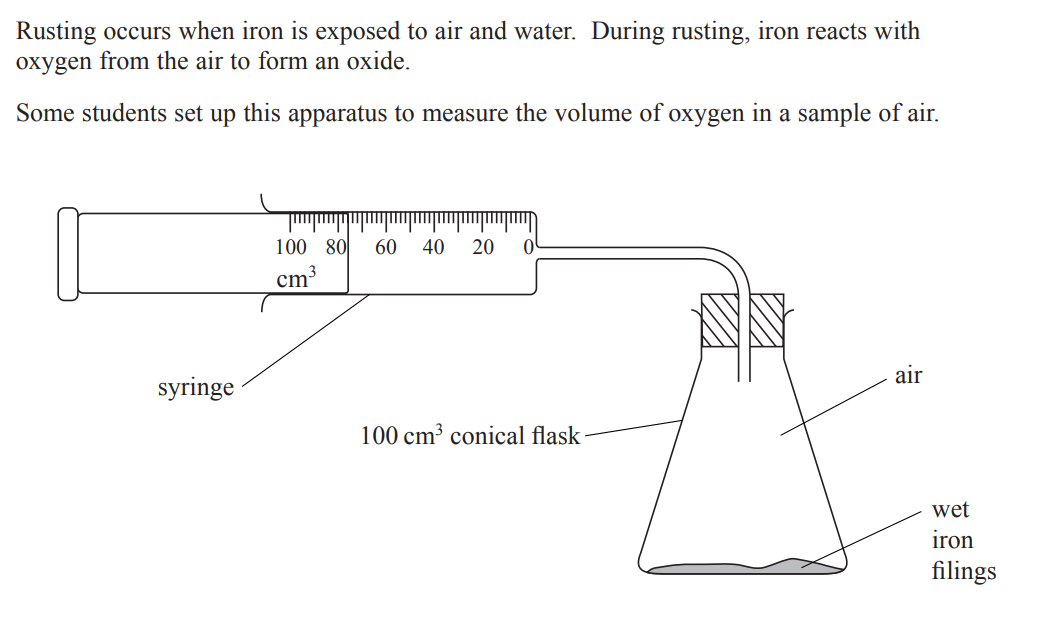
What is the final volume reading = cm3
What is the predicted volume reading if the original volume was 100cm3 = cm3
What has happened to percentage volume of O2 in the atmosphere over time = due to
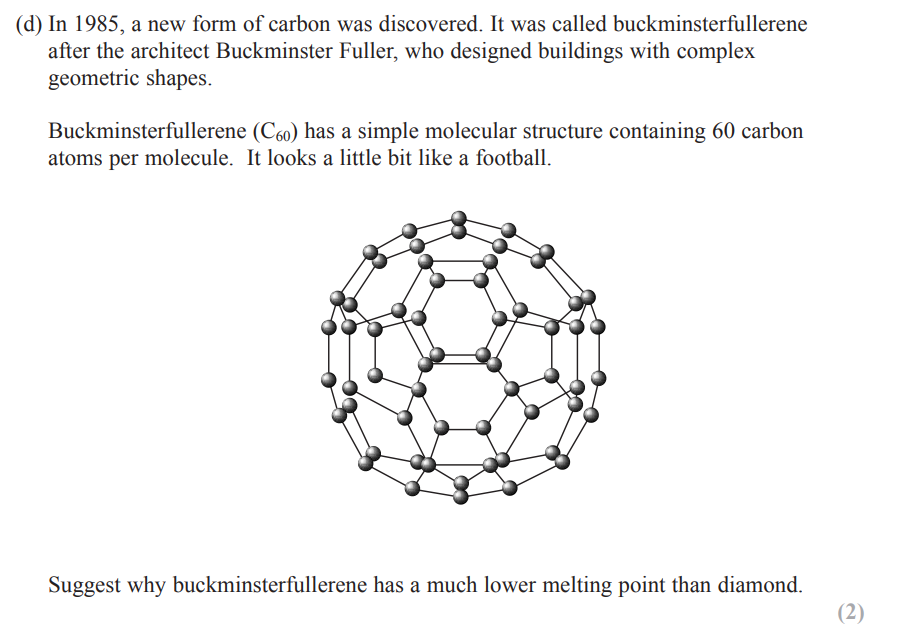
buckminsterfulerine has a structure while diamond has a has a structure.
The that must be overcome when melting buckminsterfulerine are weaker than that need to be broken when melting diamond. This means that less energy is required and the melting point is lower.
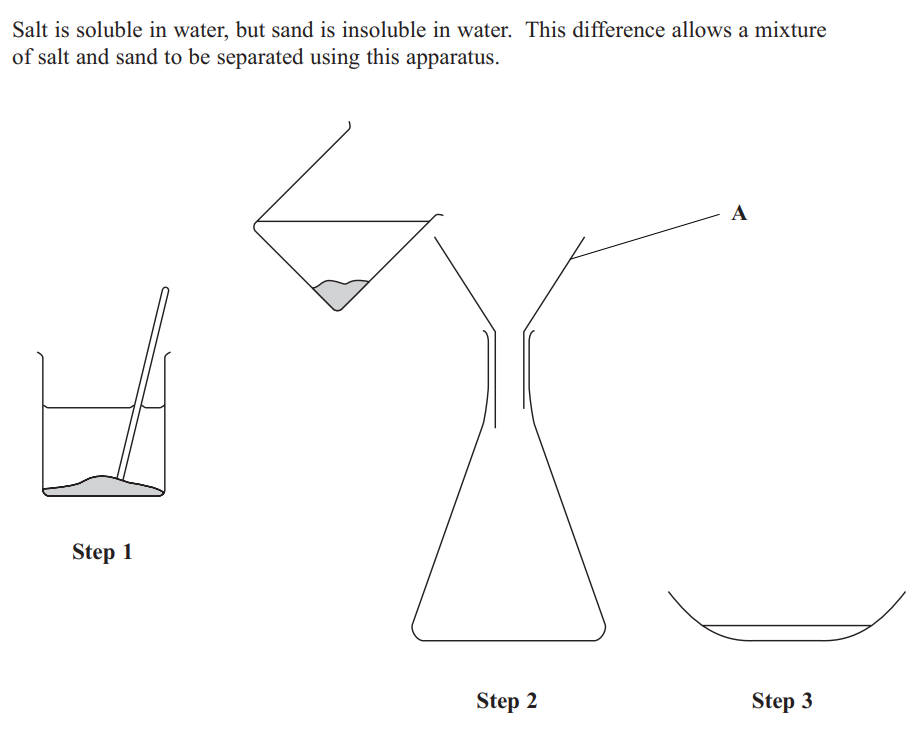
What is missing from the funnel in step 2?
step 1 =
Step 2 = collect the NaCl(aq) as the discard the SiO2 as the
Step 3 = (note we would use a water bath to evaporate some of the water before leaving the saturated solution in a warm dry place. Finally the crystals would be rinsed with a minimum volume of cold distilled water
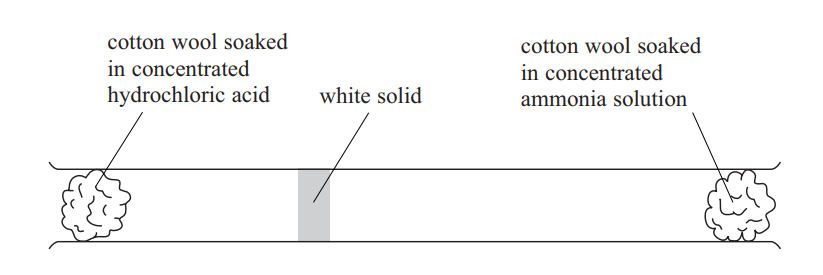
This process is called .
What is the RFM of HCl ( )
What is the RFM of NH3
What is the relationship between the RFM and the rate of diffusion?
As the RFM increases the rate of diffusion .
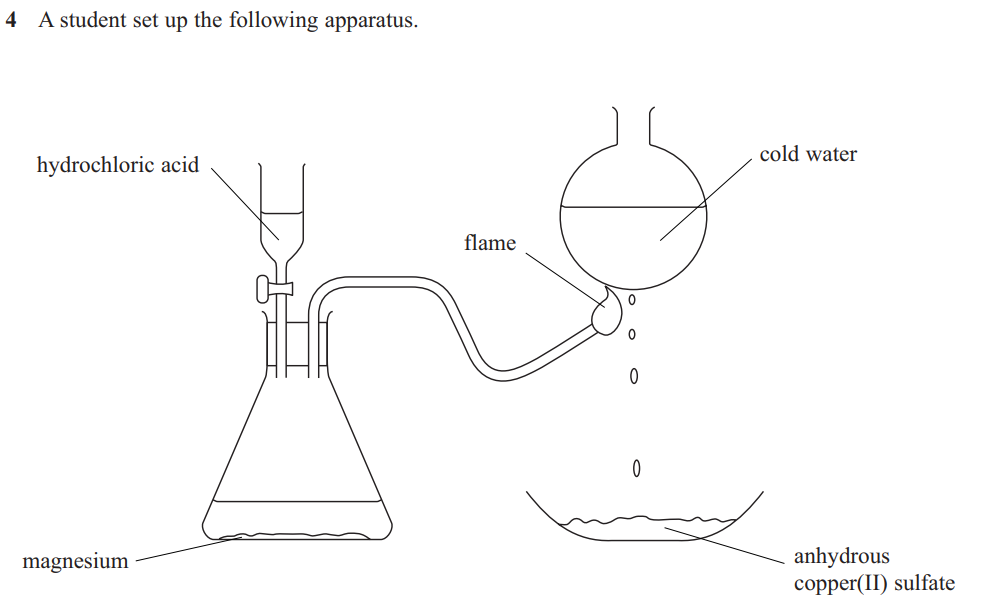
What is the product of the combustion of hydrogen .
The cold water is used to make the condense.
makes anhydrous copper sulfate turn from to .
Combustion of hydrogen is an process. (note if the (blue) hydrated copper sulfate is heated (white) anhydrous copper sulfate is formed). This is known as a reversible reaction.
P
Q
R
S
T
u
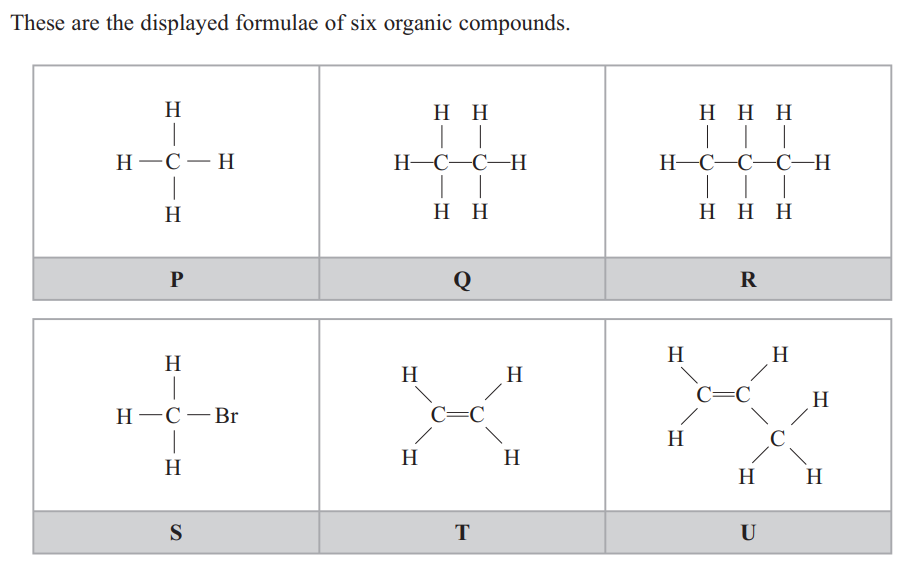
is a hydrocarbon
is not a hydrocarbon
P
Q
R
S
T
u
is an alkane
is an alkene
Contains a halogen
P
Q
R
S
T
u
would not turn bromine water from orange to colourless
Would turn bromine water from orange to colourless
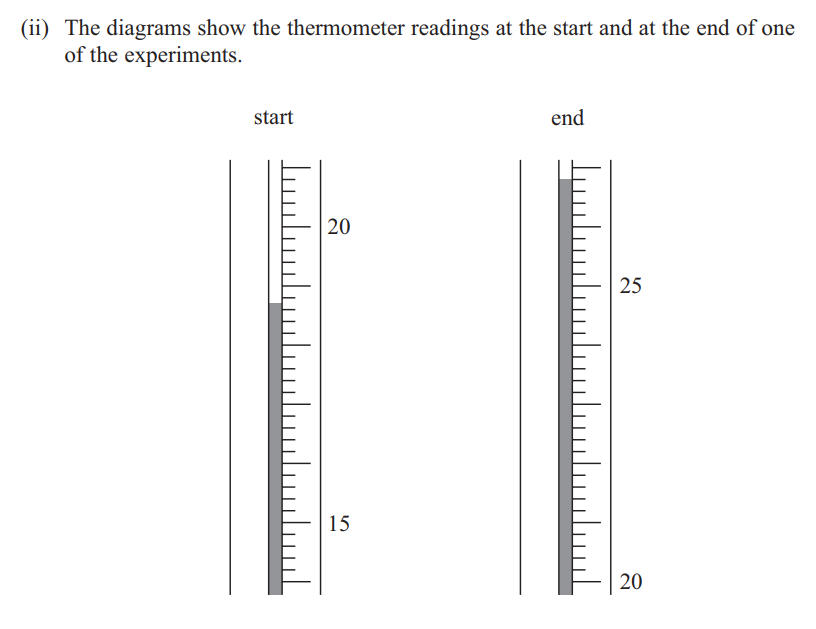
This reaction is as the temperature has
The energy needed to break the bonds in the reactants is than the energy released when the new bonds form in the products.
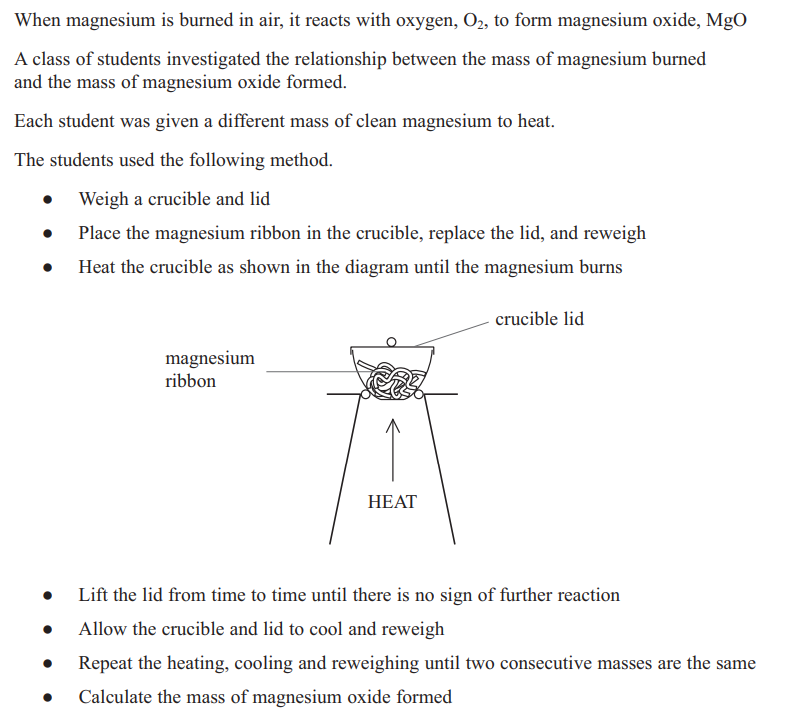
The magnesium has a structure
The O2 has a structure
The MgO has a structure.
This reaction magnesium is heated to overcome the .
Once the combustion reaction starts (if enough oxygen is allowed to enter the crucible) the reaction continues without additional heating. This shows that the reaction is .