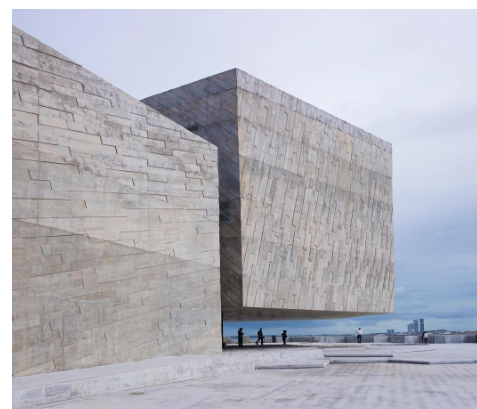
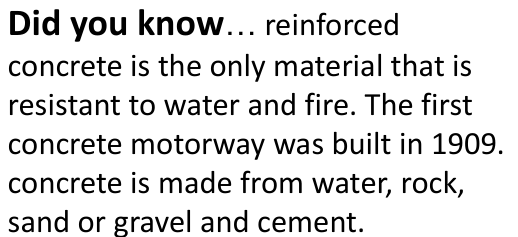
Cement is the
The rocks or iron bars are used for the .
Mmuae Afoforo a Wobɛpaw:
Matrix
reinforcement
A Formative about composite and smart materials with drag and drop questions and embedded vieos.
Complete the formative and make a set of bullet points on
a) composite materials - include descriptions and examples and their uses.
b) smart materials - include descriptions and examples and their uses.
14.2 Know that are made from materials that have different that combine to make a more useful material
14.3 Know that a composite is formed of a material and a reinforcement material
Cement is the
The rocks or iron bars are used for the .
Label the diagram.
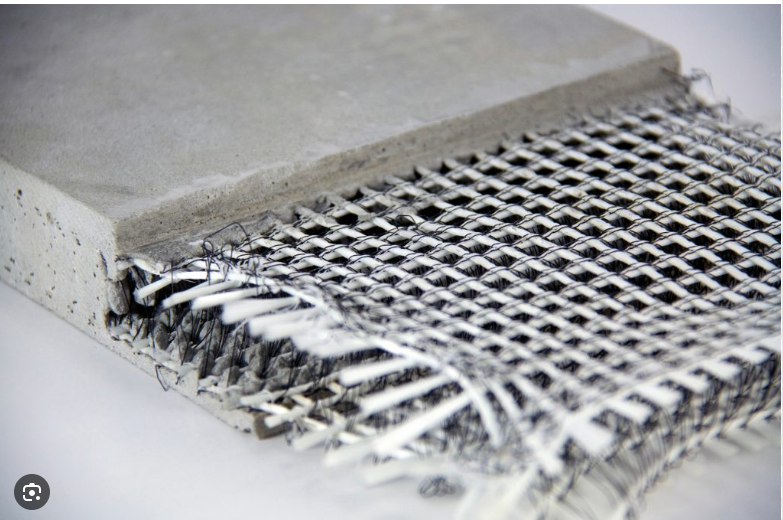
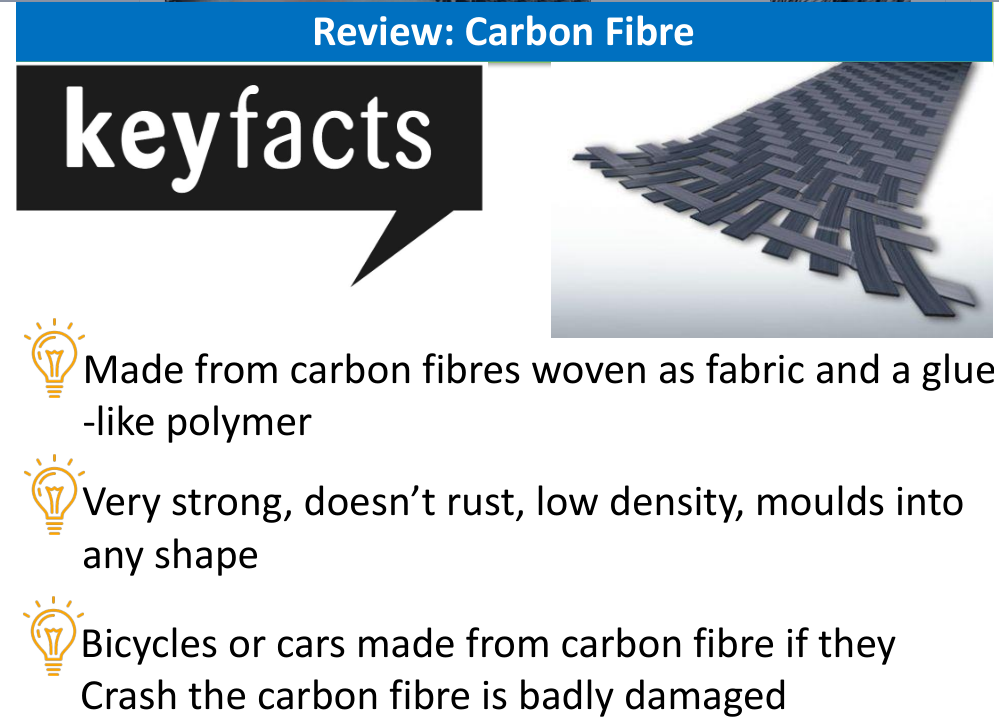
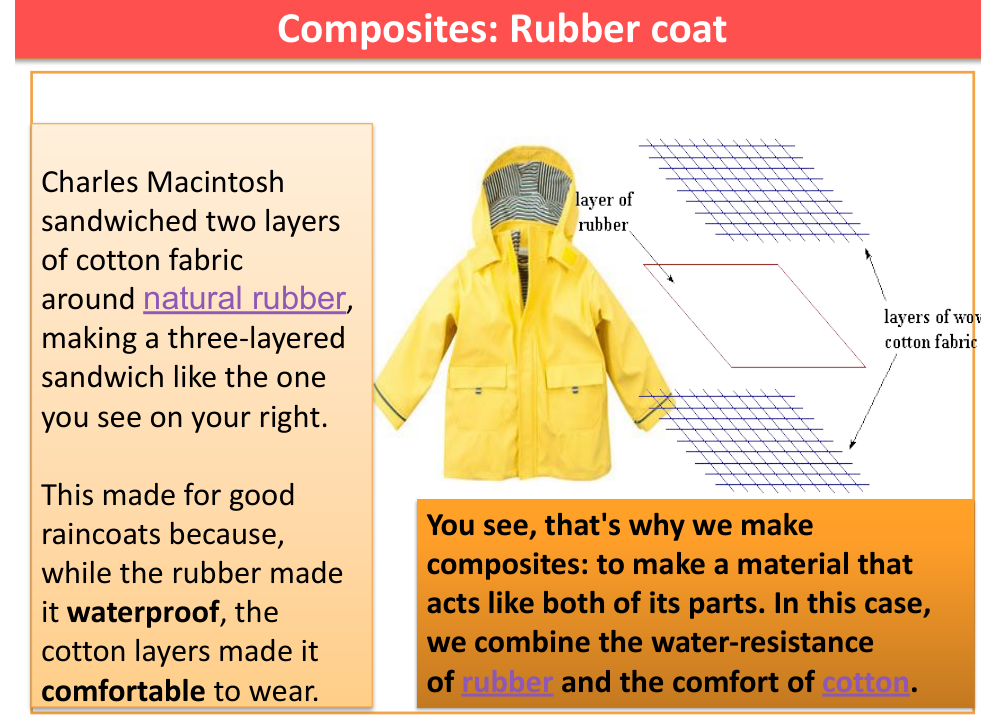
A composite is any material made of at least two other materials.

The carbon fibres are the .
The glue (polymer) is the
Other types of composites exist.
Change colour
Affected by heat
Affected by light
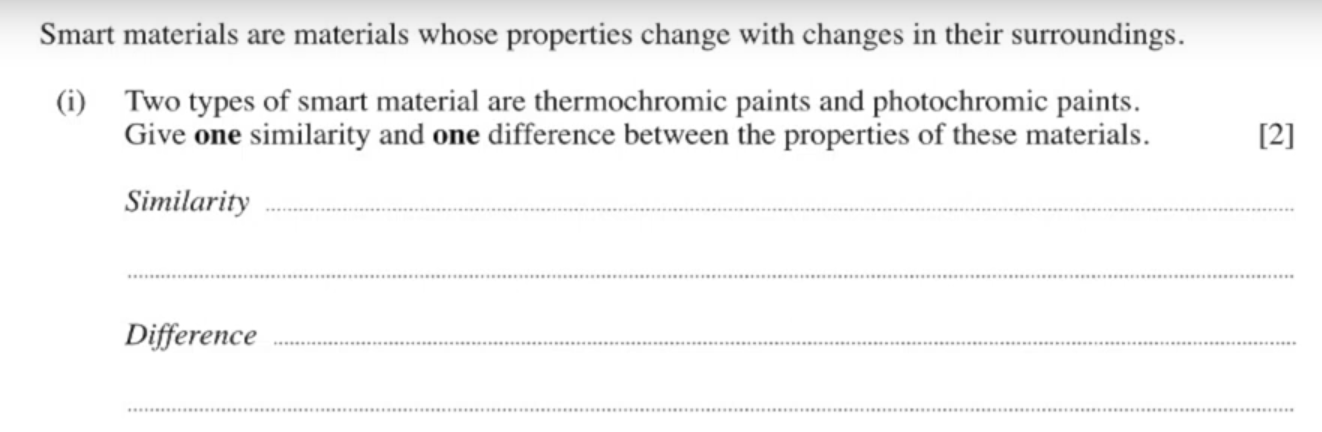
Similarity
Differences
are metal alloys that can remember their shape when heated. These alloys have been utilised on frames that spring back to shape if they are squashed.
Nickel titanium (nitinol) is a type of SMA, and it contracts when heated, whereas most metals expand. When braces are made from nitinol, they heat up in the mouth and ‘pull’ on the teeth, so they move with the nitinol. (https://youtu.be/XPrg8EZlD1E)
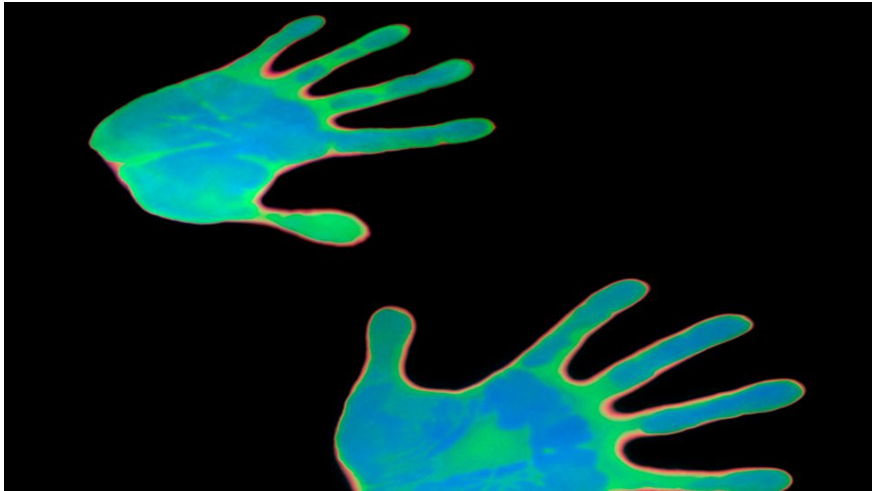
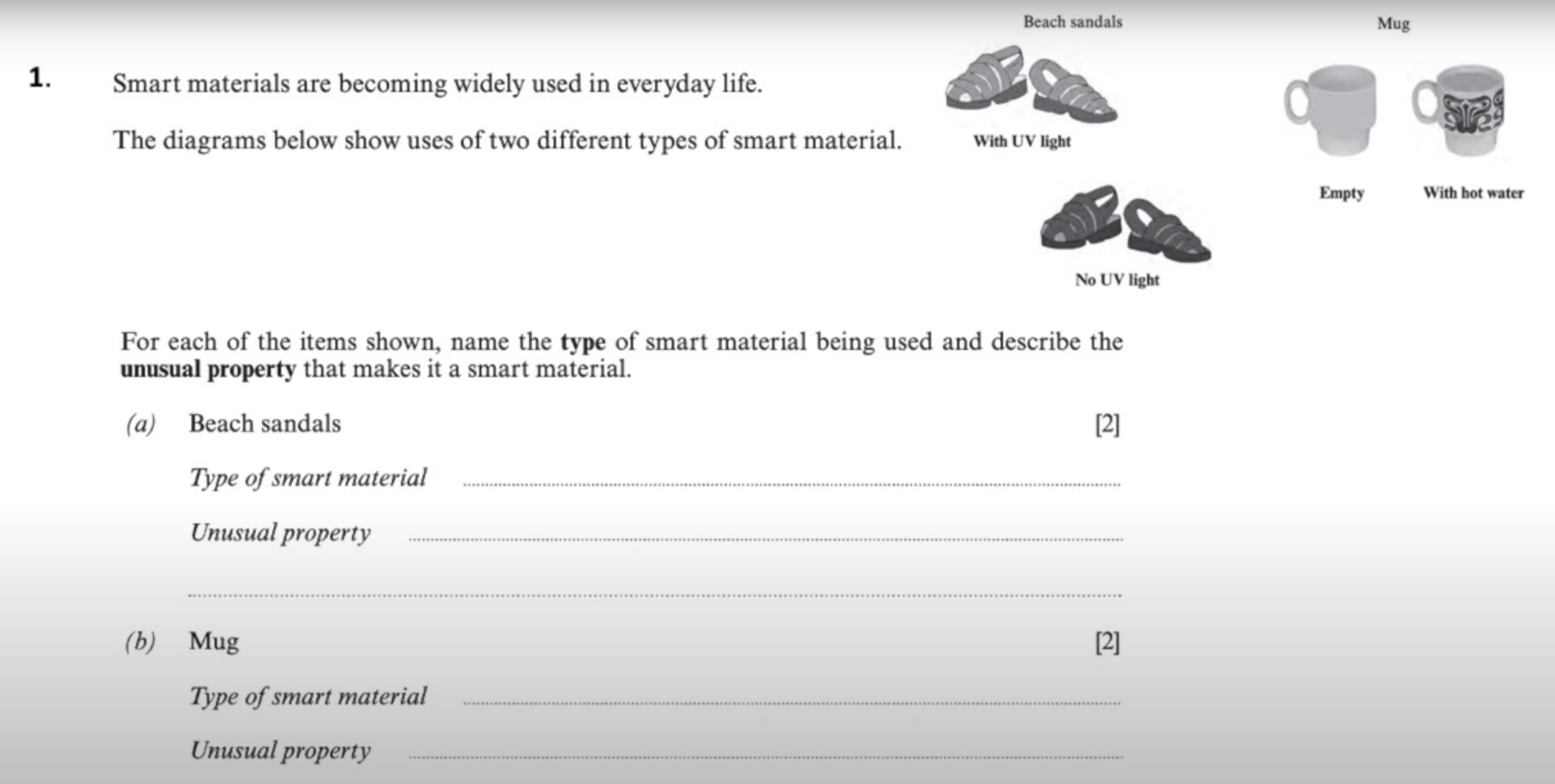
(https://youtu.be/VqSYnEBAL-c) pigments change colour when their temperature changes. The term ‘thermo’ relates to heat, and chroma means colour - so thermochromic pigments change colour when they are heated up. These pigments can be mixed with paint or polymers to give the materials the same colour-changing properties as the pigment. An example of this technology is seen on or bath items for children.
Shape-memory alloys (SMA)
pigments ( https://youtu.be/xdND71k8Rvw ) work in a similar way but 'photo' refers to light - so these pigments change their properties when exposed to ultraviolet (UV) light. A well-known example would be glasses where the lenses are clear when worn inside a building, but become more like when exposed to bright sunlight outside. The same technology has been used in windows to prevent rooms from getting too hot in warm weather.
(QTC) ( https://youtu.be/DNpIPdvZ91k ) is an insulating rubber containing tiny particles of metal. When squashed, the metal particles meet and allow the flow of electrical current. As a result, QTC is an when resting and a when pressure is applied. It is often used in outdoor applications where water might otherwise damage tiny microswitches. It has been used in clothing to control and portable music players, in power tools to give variable speed controls and in touch-sensitive pads.
Quantum-tunnelling composite
Photochromic
have the ability to repair themselves, which can extend the lifespan of the products that use them. These include polymers that can heal knife cuts in themselves, metals that resist and concrete that can heal when cracked.
can be formed by a magnetic field and are being used in hydraulic suspension pistons, with the strength of the field allowing the suspension to be hard or soft depending on what is necessary. They also have friction reducing properties allowing magnetic objects to glide across the surface.
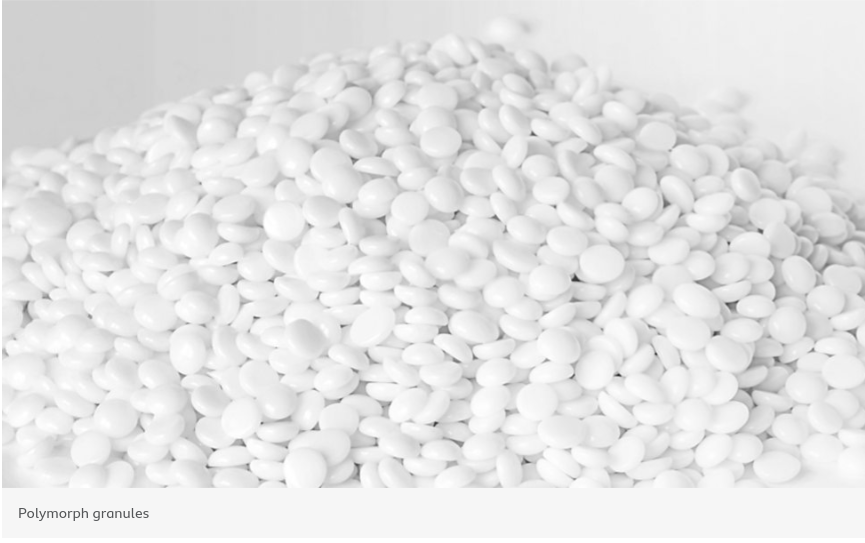
(https://youtu.be/lEvVcaEmjjo) is a polymer that becomes malleable when heated to about 62°C. When it cools down it becomes hard enough to drill and cut. This makes it perfect for as it can be reheated and formed again. It is also excellent for creating ergonomic handles.
Polymorph
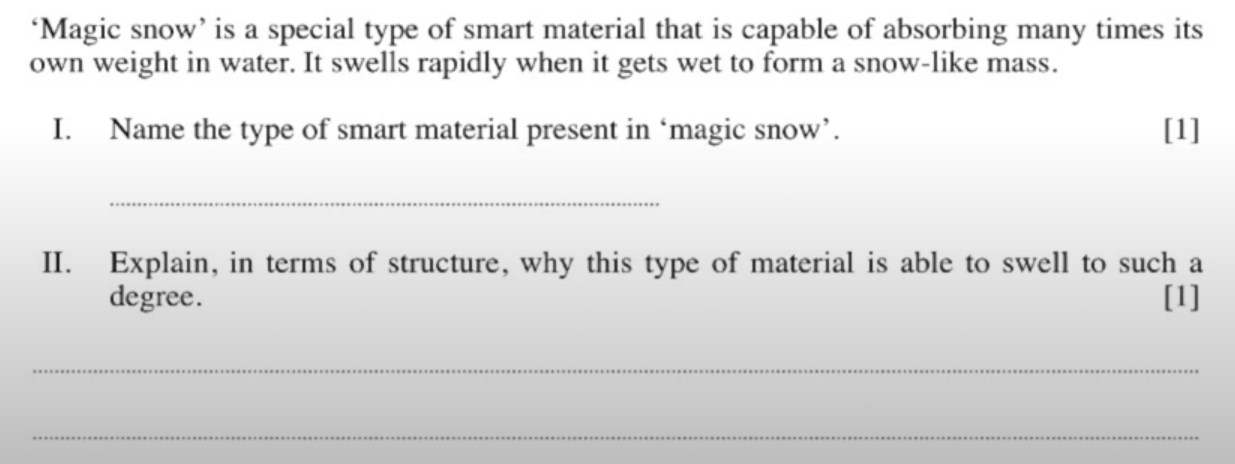
Self-healing materials
Ferrofluids
https://youtu.be/p1Ggc8anKm4