Honors Gravity Quiz
star
star
star
star
star
Last updated about 2 years ago
5 Nsɛmmisa
1
1
1
1
1
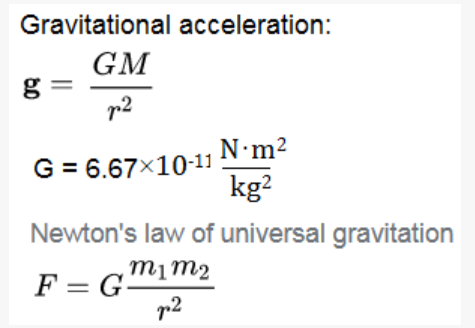
Objects on the surface of Earth experience a large downward force although the universal gravitational constant is very small. Which of the following best explains this phenomenon?
The force of gravity on the surface of the moon is about one-sixth the force of gravity on the surface of Earth. Which describes the relationship of mass and weight of an object on the moon compared to that on Earth?
At a certain distance from the center of Earth, a satellite experiences a gravitational force, F. If the mass of the satellite was doubled and placed into the same orbit, what gravitational force would the satellite have acting on it?
For Asteroid X, which has one-half the mass and radius of Earth, scientists calculated the acceleration of gravity using the law of universal gravitation. What is the acceleration of gravity on the surface of Asteroid X?
Two spheres, 1.00 kg each, whose centers are 2.00 m apart, would have what gravitational force between them?