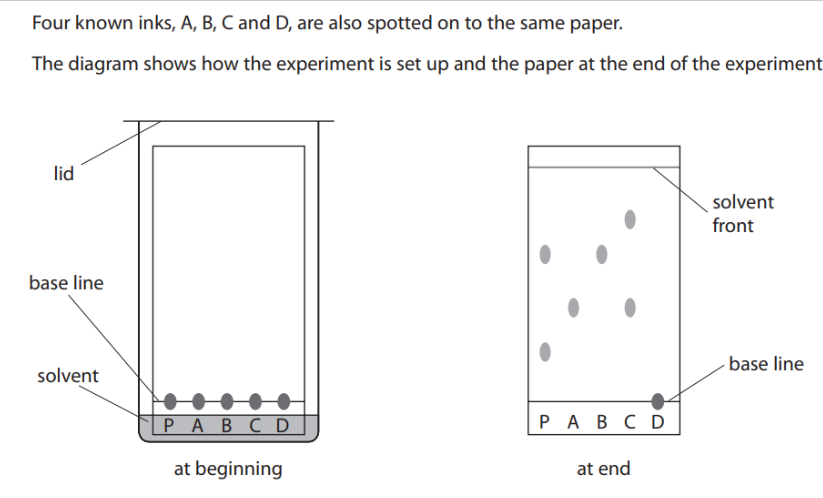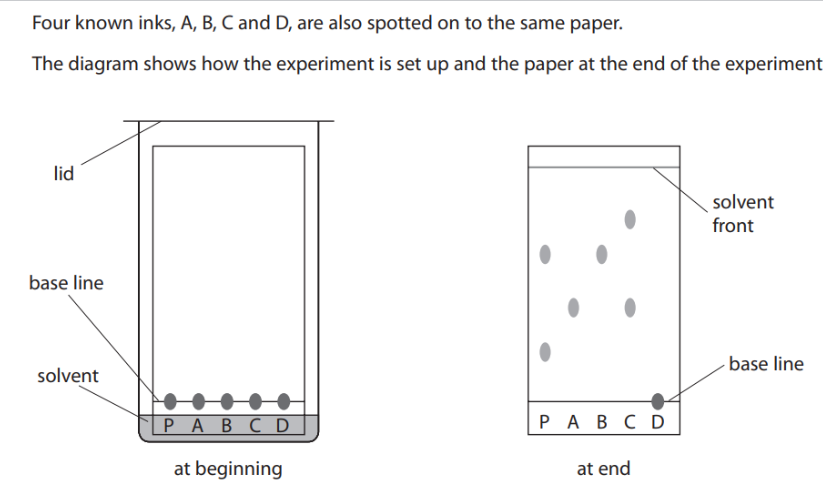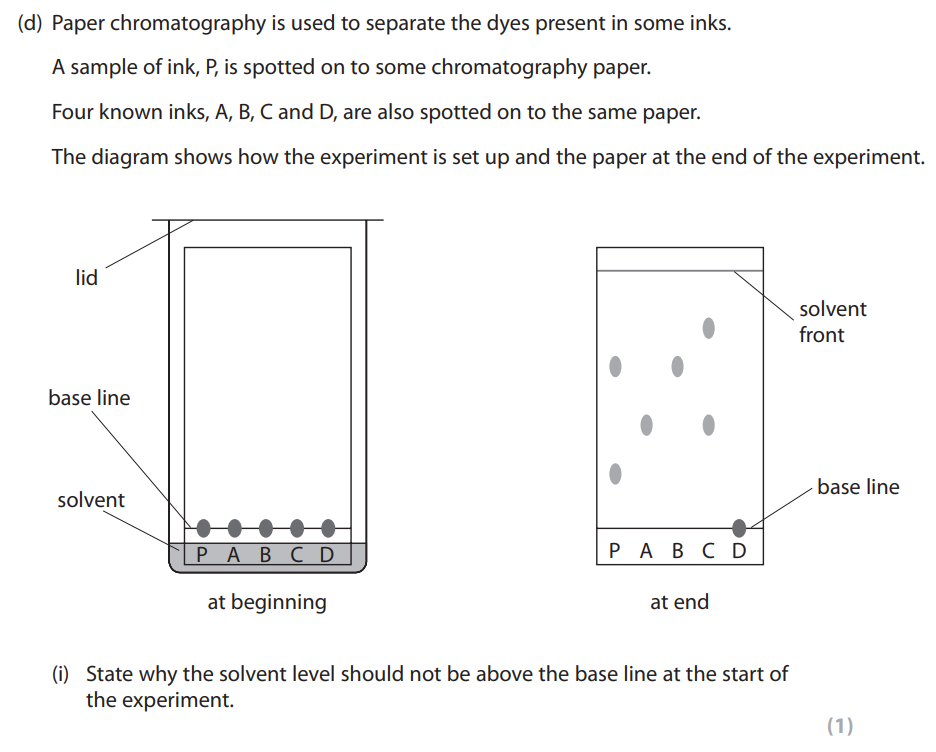
(i) State why the solvent level should not be above the base line at the start of the experiment.
To prevent the in the .
Mmuae Afoforo a Wobɛpaw:
solvent
dissolving
inks
https://www.focuselearning.co.uk/s/27wzak56mghd
Method for making a chromatogram.
Take the paper out of the beaker
use a pencil to mark the location of the solvent front
the level the water has reached
Leave the paper in the beaker until the water reaches near the top of the paper.
Leave the chromatogram to dry.
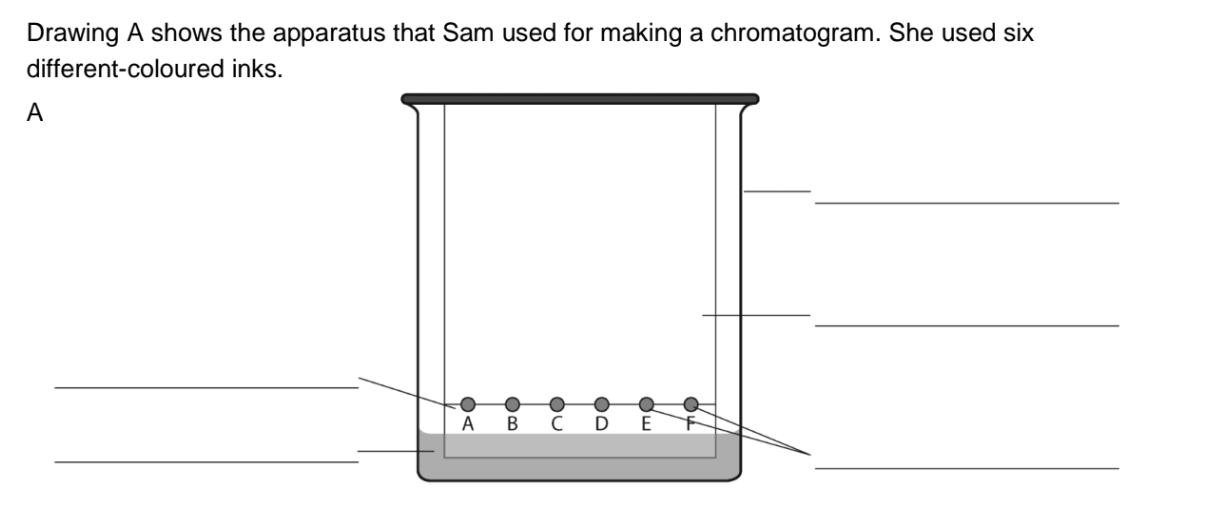
Pour some water into the beaker to a depth of about 1 cm.
Lower the chromatography paper into the beaker
The bottom of the paper is in the water
The water level is below the spots.
Draw a pencil line on the paper, about 2 cm from the bottom.
Put a small spot of ink from each pen on your pencil line.
Method to determine a Rf value
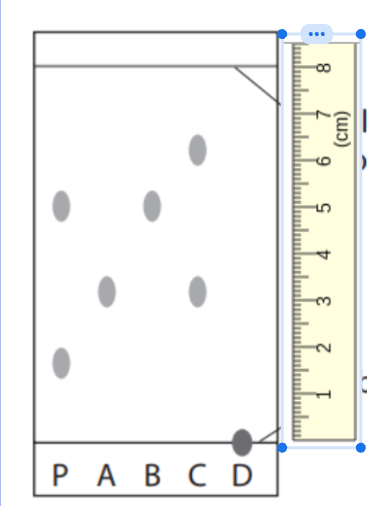
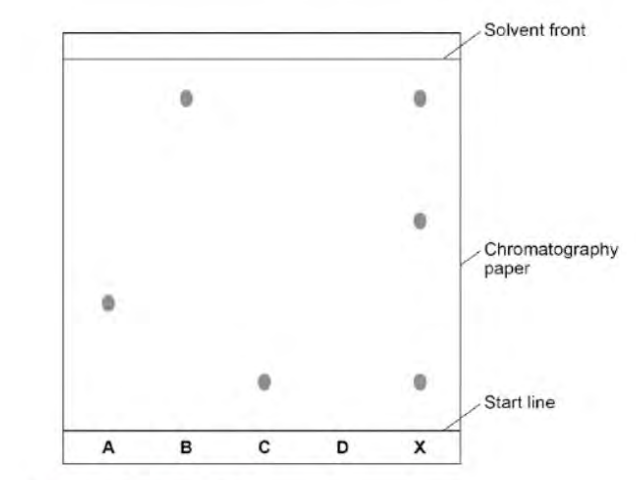
First measure the distance from the pencil line to the solvent front (with a ruler).
Then measure the distance from the pencil line to the centre of the dot (with a ruler)
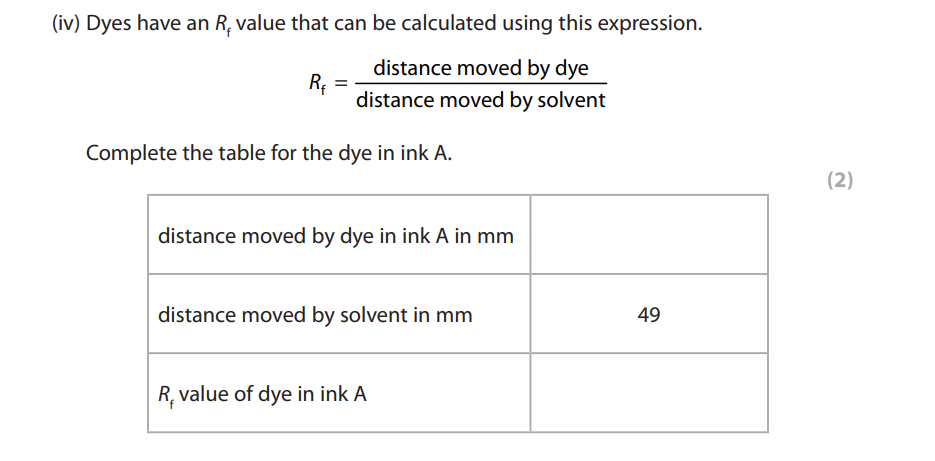
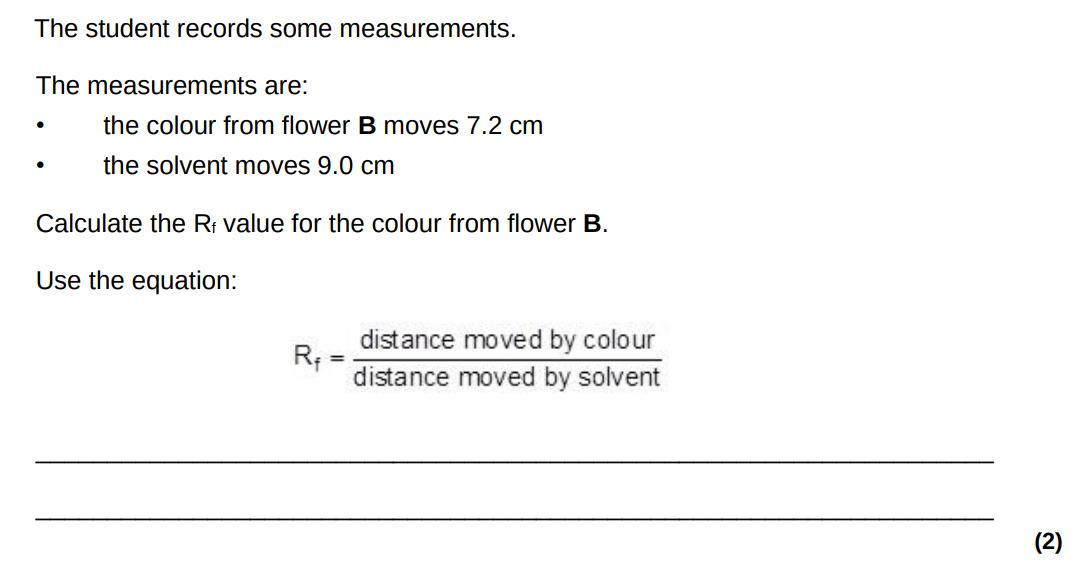
To calculate the Rf value use the expression Rf = distance travelled by dot / distance travelled by solvent front.
(i) State why the solvent level should not be above the base line at the start of the experiment.
To prevent the in the .
(ii) Explain which dye, present in one of the inks A, B, C, or D, is also present in ink P.
(iii) State why ink D does not move during the experiment.
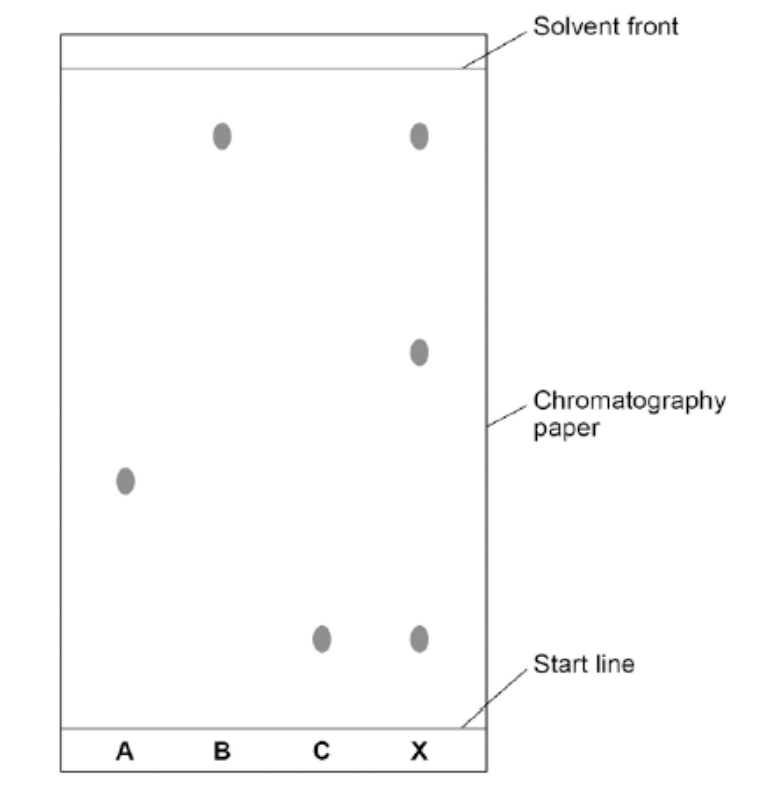
Calculate the Rf values
Distance travelled by A =
Calculate the Rf values
What is the Rf value?
Match the labels
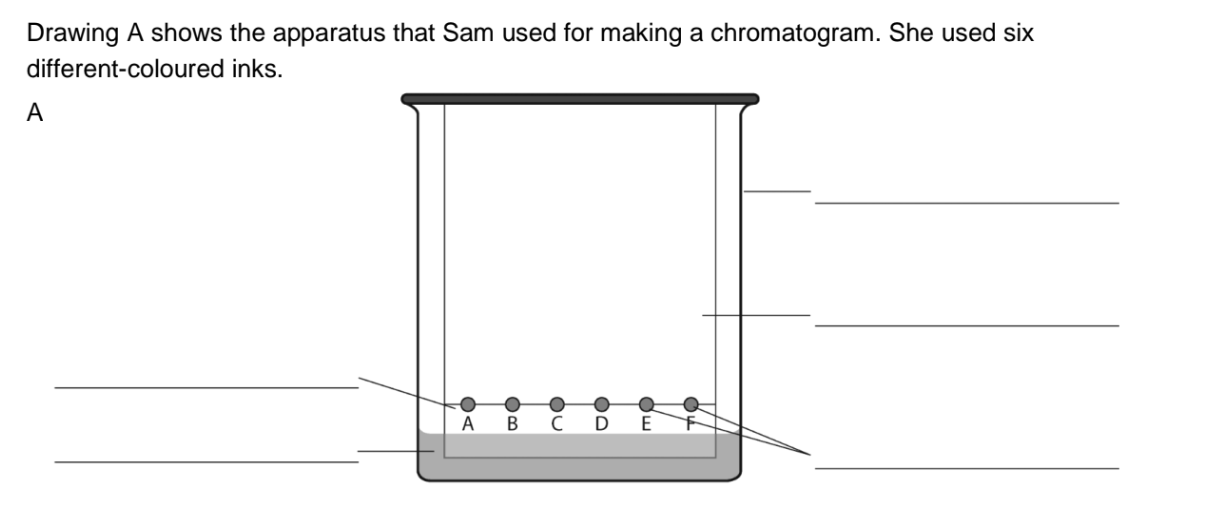
The bottom of paper must be
The pencil line must be
A
B
C
X
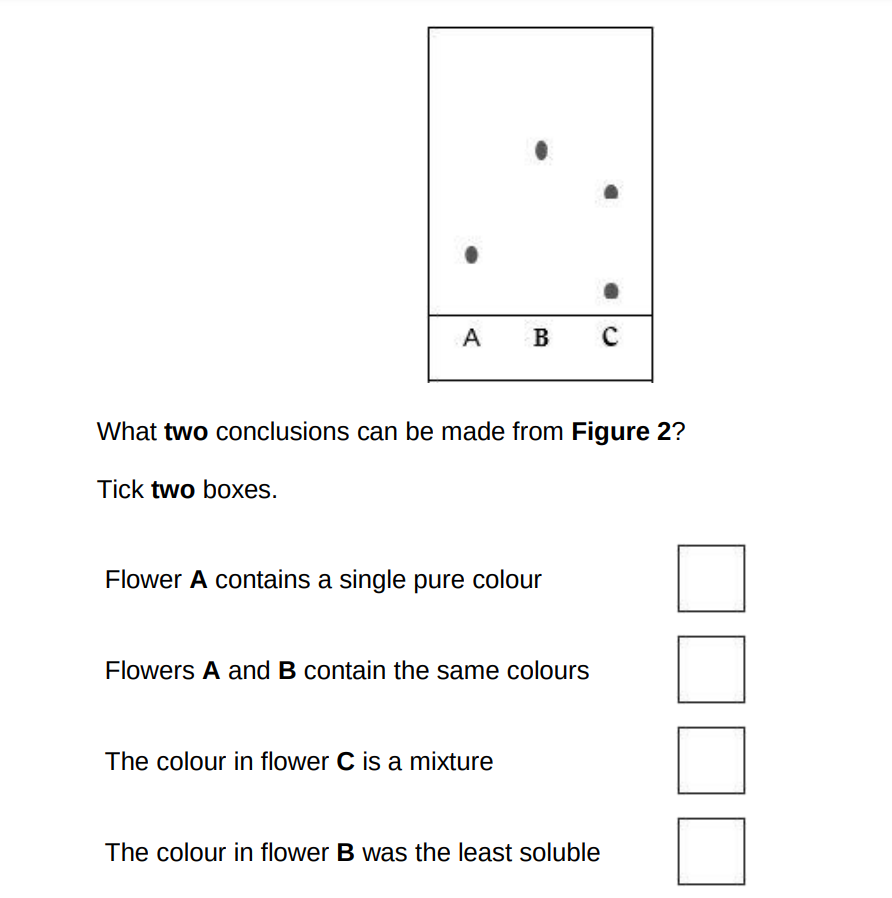
one dot only
two or more dots
Pure sample
Mixture
Sample
A
B
C
D
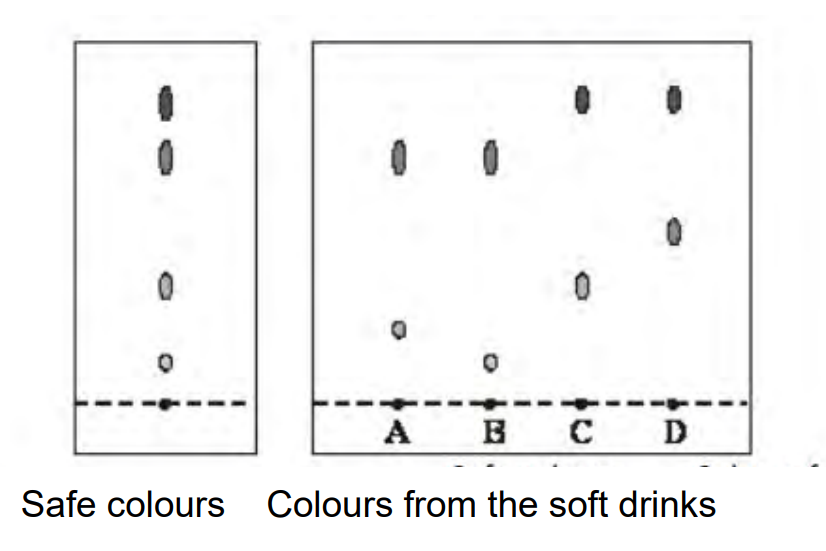
Safe to drink
Not safe to drink
Select the correct option.
Note - the more soluble a dye is the further the dot will move.
Note - the more soluble the dye the larger the Rf value will be.
Note - the Rf value can not be more than 1.
Rf =
Rf =
Note - the soluble a dye is the further the dot will move.
Note - the more soluble the dye the the Rf value will be.
Note - the Rf value can not be more than .
How many dyes are there is A
How many dyes are there in B
How many dyes are there in D
How many dyes are there in X
Which dye is not found in sample X
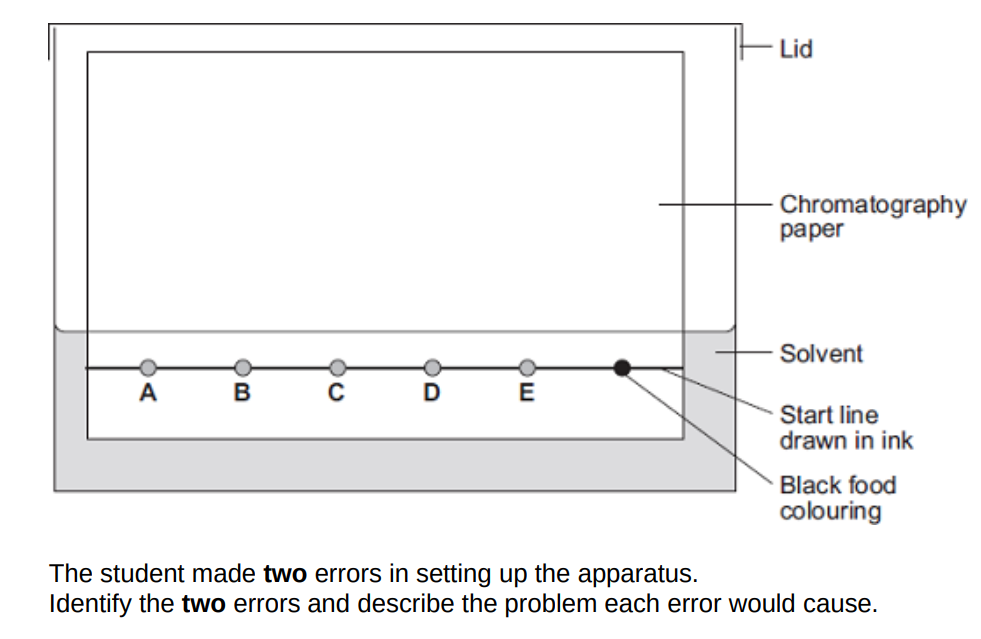
Start line not drawn in so line will
Samples are in the so the samples will in the water instead of moving up the .
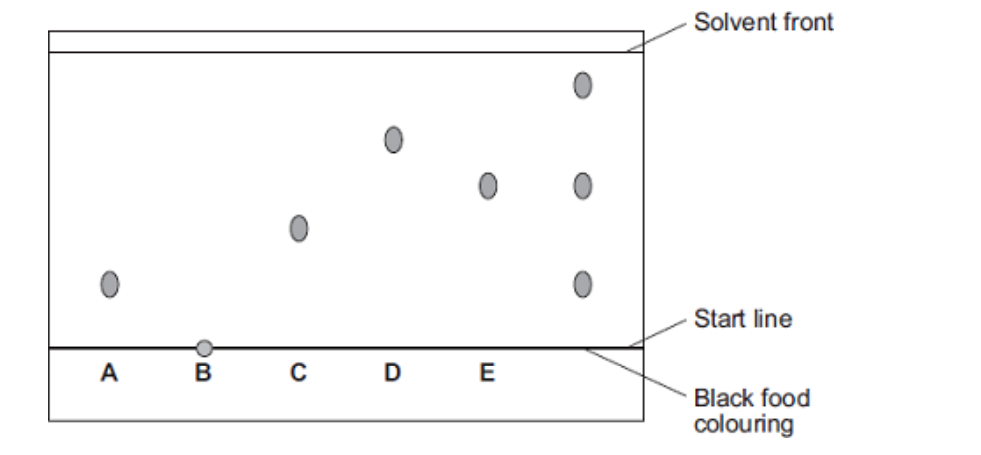
Sample B did not move as sample is soluble in the solvent used.
To fix this we would use a solvent, for example alcohol or propanol in which sample B soluble