Answer each question to the best of your ability. There is only one correct answer to each. Use the following charts to help you along your way. You may also use a calculator.
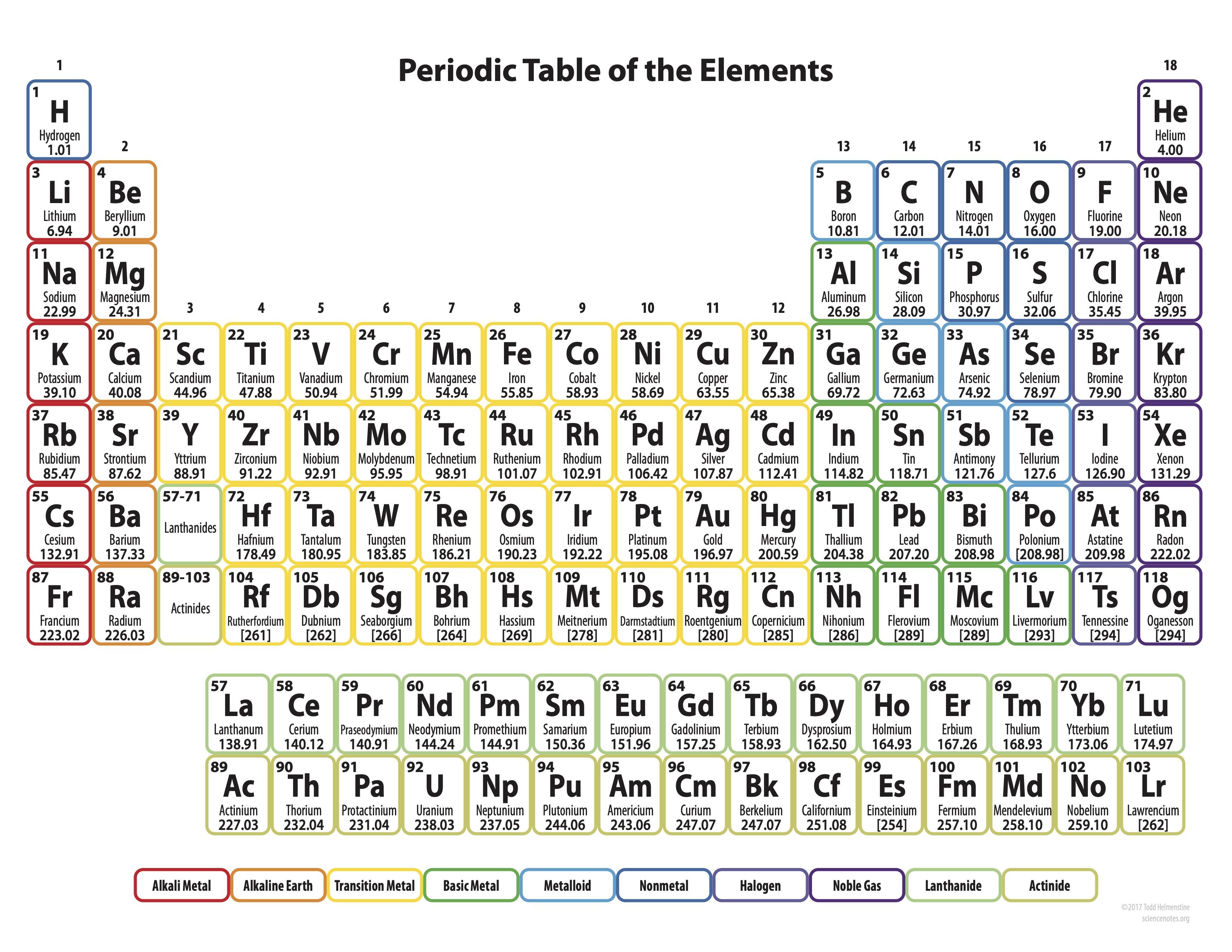
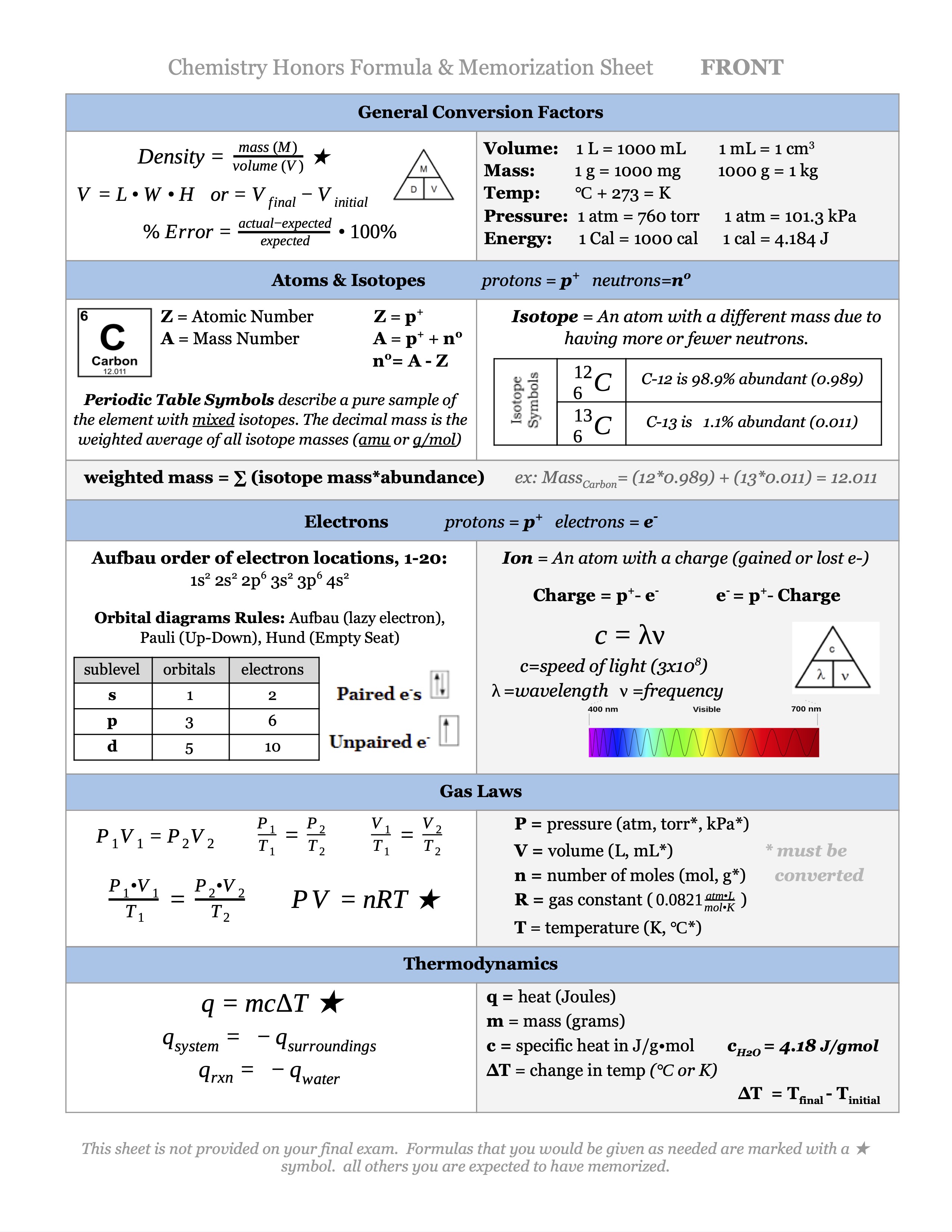
Answer each question to the best of your ability. There is only one correct answer to each. Use the following charts to help you along your way. You may also use a calculator.
Use the diagram to answer the following question.
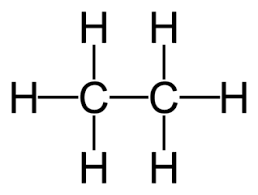
How many bonds are made by each carbon atom in the molecule shown above?
Two elements in a molecule have the same electronegativity values. Which of the following most likely holds the elements together and why?
Categorize the following items as being either endothermic or exothermic.
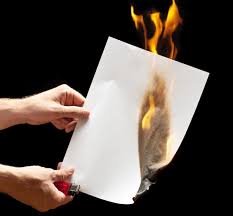
combustion
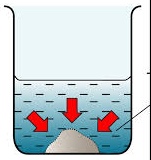
solution feels cold
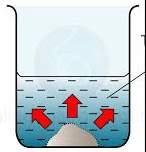
solution feels hot
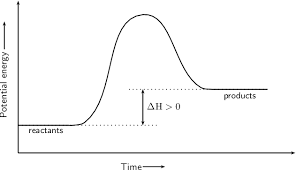
Bond Formation
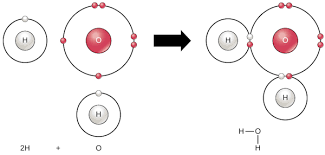
melting of water
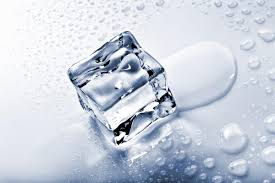
photosynthesis
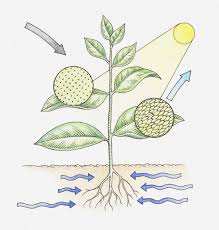
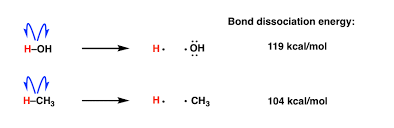
Bonds Breaking
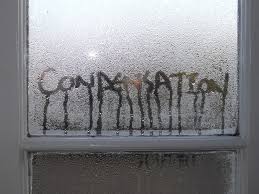
condensation of water
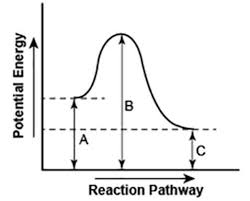
Endothermic
Exothermic
Match the element to the correct number of valence electrons
| Draggable item | arrow_right_alt | Corresponding Item |
|---|---|---|
C (Carbon) | arrow_right_alt | 8 |
Fr (Francium) | arrow_right_alt | 2 |
Kr (Kypton) | arrow_right_alt | 5 |
I (Iodine) | arrow_right_alt | 1 |
As (Arsenic) | arrow_right_alt | 6 |
Ca (Calcium) | arrow_right_alt | 4 |
S (Sulfur) | arrow_right_alt | 7 |
In the molecule below, which atom has the largest partial negative charge __________?
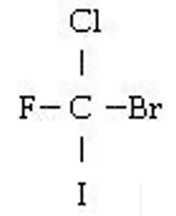
As you move to the right in the Periodic Table, electronegativity and as you go down the columns, it . Column is not included in the trend for electronegativity because these elements don't usually form bonds.
When sodium (Na) forms an ion, it an electron and has a charge. It does this in order to achieve valence electron(s) and form a(n) bond.
Balance the following equation, and identify its type.
AgNO3(aq) + Cu(s) --> Cu(NO3)2(aq) + Ag(s)
It is a(n) reaction.
The balanced equation for the decomposition of sodium azide is:
NaN3 --> Na + N2
Show how to calculate how many moles of carbon dioxide there are when you have 52.06 g of carbon dioxide (CO2), and choose the correct answer. (Choose 2 selections from below)
The combustion of propane (C3H8) produces CO2 and H2O according to the following balanced reaction:
C3H8 (g) + 5O2 (g) --> 3CO2 (g) + 4H2O (g)
Given 2.5 mol propane, how many moles of CO2 will be produced?
2.5 mol = =
1 mol C3H8 / 32 g C3H8
0.83 mol CO2
7.5 mol CO2
1 mol C3H8 / 3 mol CO2
32 g C3H8 / 1 mol C3H8
3 mol CO2 / 1 mol C3H8
Determine how the following actions will affect reaction rate by choosing the correct response.
a. Platinum is used in catalytic converters in cars to convert toxic gases to carbon dioxide and water. If much less platinum is used to make the catalytic converter, the conversion of the gases would
b. Magnesium metal is reacted with hot water in two beakers to produce magnesium hydroxide and hydrogen gas. Beaker 1 had a one-inch strip of magnesium and beaker 2 has a one-inch strip cut into tiny pieces. The rate of reaction in beaker 2 is beaker 1.
c. An experiment is carried out at 40oC and 70oC. The experiment carried out at 70oC occurs faster. This is because
Which reaction diagram shows the effect of using the appropriate catalyst in a chemical reaction?
In a sealed bottle that is half full of water, equilibrium will be reached when water molecules
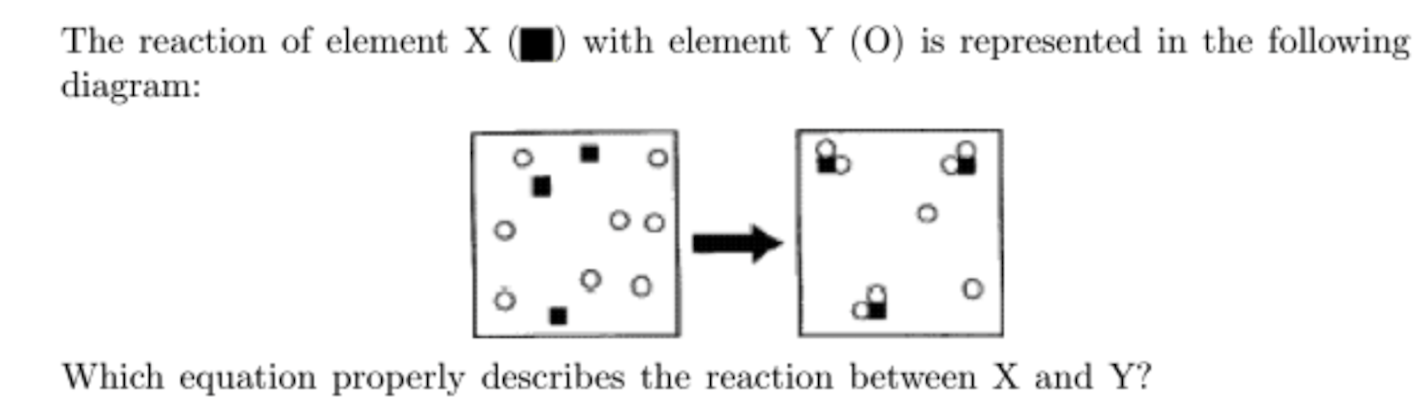
In the chemical reaction shown below, all of the HCl and Zn will react to form H2 and ZnCl2

Which of the following statements describes the result of this reaction?
When a steel block at 100oC is placed on top of a copper block at 20oC, the thermal energy of the copper begins to increase. Which of the following is the source of this increase in energy?
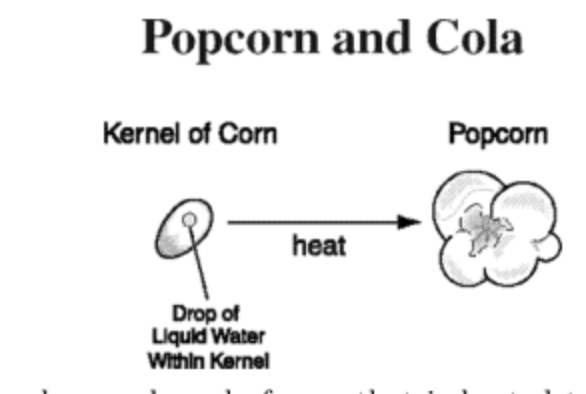
A popcorn kernel is up to 13% water. The drawing above shows a kernel of corn that is heated until it pops. Which of the following best explains what happens to the liquid water stored inside the kernel that leads to the popping process?
The diagram shown represents a closed energy system. The system contains equal masses of air, copper, and water in a perfectly insulated container. The temperatures were taken at the time the materials were placed in the closed system.
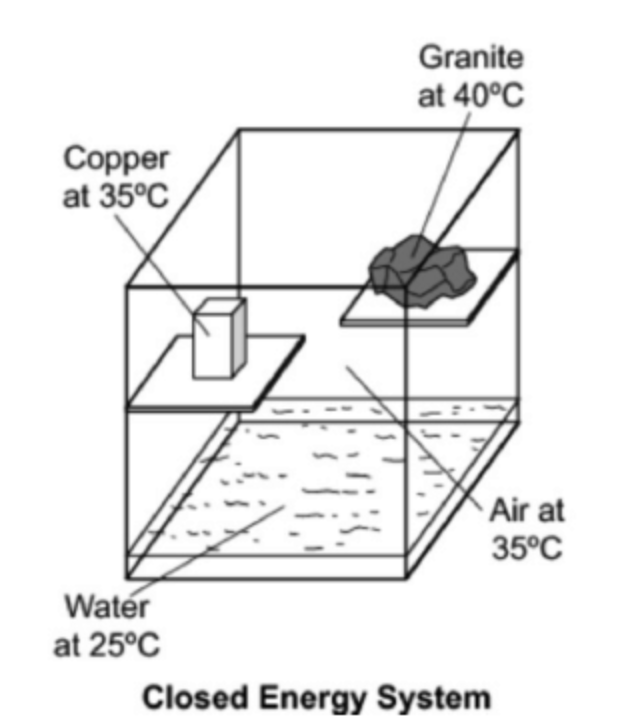
How will the temperatures of the materials change over an extended period of time?
Select which type of bond is being formed in the following substances.
Ionic | Covalent | Both Ionic and Covalent | |
|---|---|---|---|
AlCl3 | |||
Iron (II) Oxide | |||
NO2 | |||
H2SO4 | |||
CaCO3 | |||
C2H5OH |
AB | BC | CD | DE | EF | |
|---|---|---|---|---|---|
Boiling point | |||||
Gas | |||||
Solid | |||||
Liquid | |||||
mixture of solid and liquid | |||||
1500 oC | |||||
2500 oC |
Which of the following objects transfers its energy primarily by radiation?
Which of the following is the best example of heat transfer by convection?
Which of the following has the lowest average molecular kinetic energy?
According the the kinetic molecular theory of gases, the particles of a gas have
Which substance is a good conductor of electricity in both the solids and liquid phases?
A chemist performs the same tests on two homogeneous white crystalline solids, A and B. The results are shown in the accompanying table.
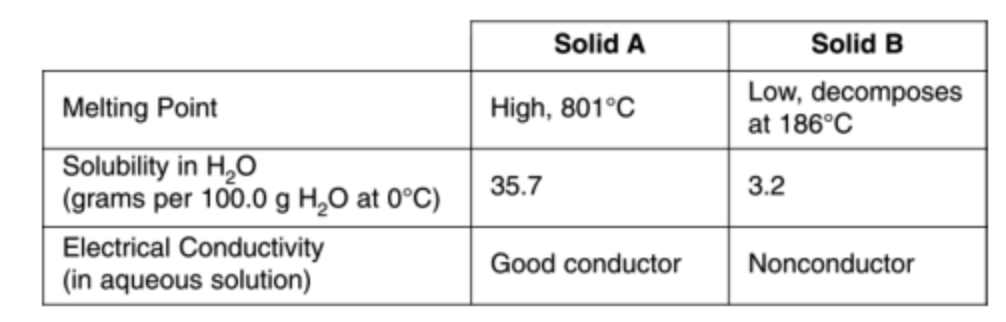
The results of these test suggest that
Which kind of energy is stored in a chemical bond?
Given the reaction:
Zn(s) + 2HCl(aq) --> ZnCl2(aq) + H2(g)
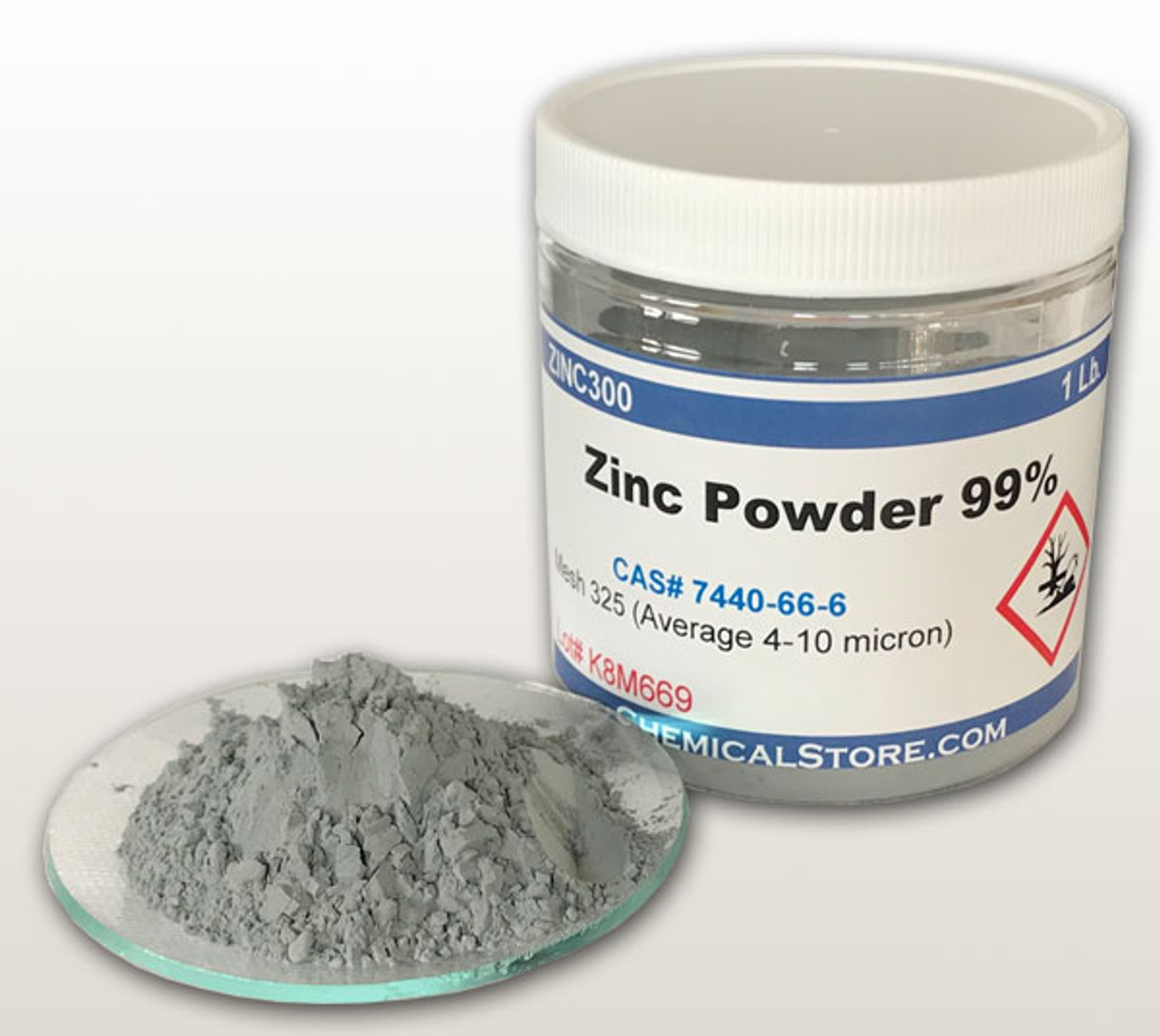
Where solid zinc reacts with hydrochloric acid to produce zinc chloride and hydrogen gas, the reaction occurs more slowly when a single piece of solid zinc is used instead of the same mass of powdered zinc. Why is this the case?
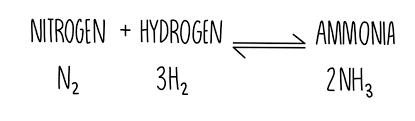
Given the above reaction, what is the ratio of moles of H2 consumed to moles of NH3 produced?
Given the balanced equation:
NaOH + HCl --> NaCl + H2O
What is the total number of grams of H2O produced when 115 grams of the product, NaCl, is formed?
What is the total mass of oxygen in 1.00 mole of Al2(CrO4)3?
The specific heat of wood is about 1,700 J/kgoC. How much energy is required in joules to heat a 12 kg piece of wood from 20oC to 30oC?
If a 500.0-g block of metal absorbs 5,016 J of heat when its temperature changes from 20.00oC to 45.00oC, what is its specific heat?
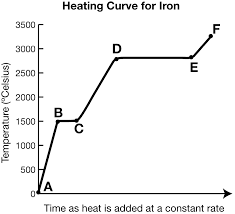
Correctly answer the questions about the heating curve below. There are 5 columns to categorize. You need to scroll over to see them all.