what is the limit of the following graph as x approaches 0?
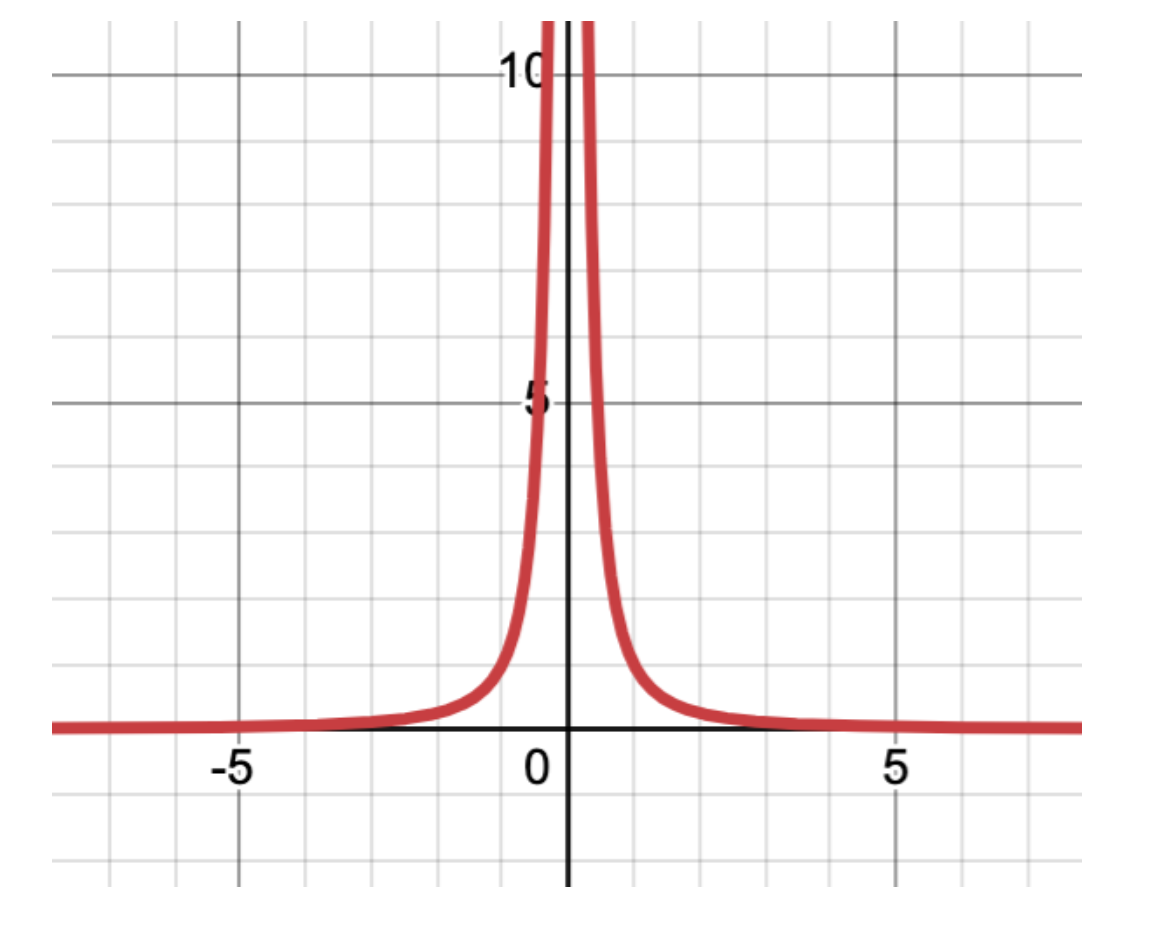
what is the limit of the following graph as x approaches 0?
what are the end conditions to even polynomial functions with a negative leading coefficient?
List some ways to categorize or analyze functions
Watch the following video link about limits https://precalculus.flippedmath.com/23-limits-graphically.html
Do you have any questions, or want anything in particular clarified?
You may have used limits last year to express end conditions. What is the following limit
It may be easier to be able to read this aloud as "the limit as x approaches infinity of negative three x to the fifth minus 7"
Same exact question as the q1, but with limits in the answers. what are the end conditions to even polynomial functions with a negative leading coefficient?
continuous and discontinuous are another way to analyse and categorize functions. Think through the graph for y=1/x (put it in desmos, if you would like.) which category would you place this graph.
notation exercise: in the following limit notation, what does the + mean in 0+?
A limit does not exist if the limit of the function coming from one direction doesn't equal the limit coming from the other direction. Can you think of a scenario where the limit from one side doesn't exist either?
what is the limit of the following graph as x approaches 0?
We still have some review to cover. Watch this video on transformations
https://precalculus.flippedmath.com/41-transformations.html
Do you have any questions or have concepts you would like clarified?
How does
How does 2f(x) transform
For 2f(x) +3 would you stretch first and then shift, or would you shift first and then stretch? explain why.
Mathematically speaking, what are the criteria for a function to be continuous? Honors, you should be able to answer this without the hint.
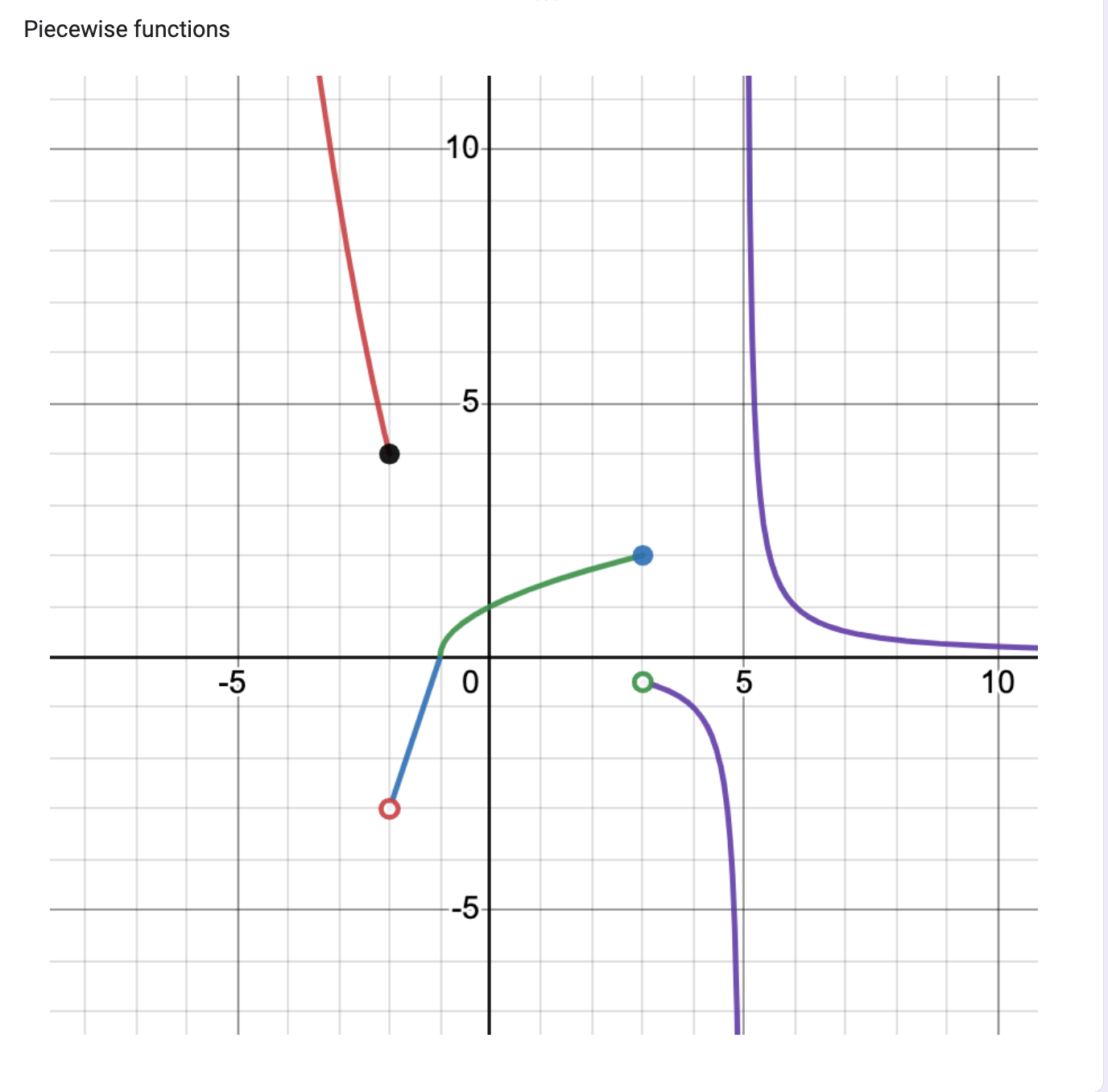
Remember piecewise functions? they are like frankenstein functions: pieces of different functions stitched together across your domain. Which color part of the graph would you follow to find the limit of y as x approaches -1+
Sort the topics from this week into where you understand them
What is a limit
how can you tell if a limit exists
when it is clear that a limit does not exist
what is the purpose of a limit
what are discontinuities
what is the difference between a jump discontinuity, a removable discontinuity and an infinite discontinutity
what is the difference between continuous and smooth
what do you do to a function to make it shift up or down
what do you do to stretch or compress a function horizontally or vertically
how do you read or right limits
What does it mean to take a one-sided limit
I've got this
I'm fuzzy
so confused
Piecewise functions are written with brackets like so:
if you were looking to find the limit as x approaches -1+ would you be looking at
Where in the graph are there jump discontinuities?
Where is there an infinite discontinuity?
Honors: Give an example of a function with a removable discontinuity.