Log in
Sign up for FREE
arrow_back
Library

Done Honors Biology BM4 Photosynthesis

star
star
star
star
star
Last updated 10 days ago
18 questions
Note from the author:
NGSS Standards: HS-LS 1-5, 7 CCC Energy and Matter
DCI: LS-1.C

Multiple Choice 3 pts each.
NGSS Standards: HS-LS 1-5, 7 CCC Energy and Matter
DCI: LS-1.C

Multiple Choice 3 pts each.
Please read carefully before choosing your answer.
Required
3
Required
3
Required
3
Required
3
Required
3
Required
3
Required
3
Required
3
Required
3
Required
3
Required
3
Required
3
Required
3
Required
15
Required
7.5
Required
6
Question 1
1.

What is the primary purpose of ATP and NADPH produced during the light-dependent reactions of photosynthesis?

Question 2
2.

How does the electron transport chain contribute to ATP production?

Question 3
3.

The Calvin cycle is a series of reactions that _____.

Question 4
4.

The "photo-" part of the word photosynthesis refers to the _____, whereas "-synthesis" refers to _____.

Question 5
5.

The conversion of NADP+ to NADPH occurs with the assistance of an enzyme. Where do the electrons and energy for this process ultimately come from?

Question 6
6.

A redox reaction involves the transfer of

Question 7
7.

Hydrogen is a likely candidate in the search for a replacement for petroleum. However, removing hydrogen from water requires the investment of a great deal of energy. Why are plants considered to be one step ahead in the utilization of hydrogen as an alternative fuel source?

Question 8
8.

A student is using a spectrophotometer to analyze the chemical composition of organelles isolated from a plant cell. They are given two samples, one from a granum and one from an inner mitochondrial membrane. How could the student most effectively determine which sample came from the granum?

Question 9
9.

What is the likely origin of chloroplasts?

Question 10
10.

Photoautotrophs are organisms that are critical to most ecosystems because they:

Question 11
11.

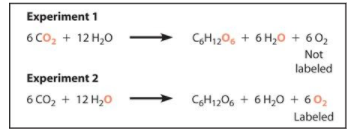
In photosynthesis, experiments using radioactive tracers have definitively shown that the oxygen gas released as a byproduct comes from which reactant?


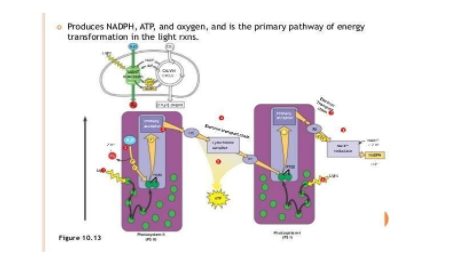
Use the diagram to answer numbers 12 and 13.
Required
3
Required
3
Question 14
14.

Which of the following statements most accurately describes the transformations of energy and matter that occur during photosynthesis?

Question 15
15.

It has been suggested that scientists should attempt to genetically engineer a plant to have black leaves so that it would perform photosynthesis more efficiently. What is the likely reason behind this idea?

Question 16
16.

CER (Claim, Evidence, and Reasoning) (worth 15 pts)

Information: The leading scientific hypothesis for the extinction of the non-avian dinosaurs and a wide variety of other species 65 million years ago is a massive asteroid impact. Evidence from this period includes a global layer of iridium, an element rare on Earth but common in asteroids. This event is believed to have ejected vast amounts of dust, ash, and aerosols into the atmosphere, causing a prolonged "impact winter." Historical events, such as the 1815 eruption of Mt. Tambora, provide a small-scale analogue: this massive volcanic eruption ejected so much debris into the atmosphere that it significantly blocked sunlight, leading to global cooling, crop failure, and famine for over a year. Dinosaurs, being large ectothermic reptiles, would have been particularly vulnerable to sudden environmental changes.

Question: Using the provided information and your knowledge of biology, evaluate the hypothesis that a large asteroid impact led to the mass extinction of the dinosaurs.

A. Claim State your claim by answering the question. Use the word "because" in your answer to provide a brief rationale. (3 pts)

B. Evidence Provide at least three distinct pieces of evidence from the provided information that support your claim. You may use bullet points. (6 pts)

C. ReasoningUsing scientific principles, explain how your evidence supports your claim. Your reasoning must connect the effects of an asteroid impact to the concept of photosynthesis and the structure of food webs to explain the chain of events that could have led to a mass extinction. (6 pts)

See the rubric to ensure you get the greatest amount of points for your answer.

Question 17
17.

CCC: Matter and Energy

Information: You are designing an experiment to investigate how different wavelengths of light affect the rate of photosynthesis. Your setup includes three containers, each with a small aquatic plant in water with a known initial concentration of dissolved carbon dioxide.
  • Container A: Placed under normal sunlight (as a control).
  • Container B: Placed under green light.
  • Container C: Placed under red light.
The experiment will be conducted for a 24-hour period, and the decrease in dissolved
CO2​ concentration will be used as a substitute for the rate of photosynthesis.

A. Explain the Process (3 points)

Explain the biological process by which these different wavelengths of light will create differences in the amount of chemical energy (glucose) produced in each container. In your answer, reference the role of photosynthetic pigments and the concept of an absorption spectrum.

B. Add a Fourth Container and Predict Results (4.5 points)

Suggest a fourth container (Container D) using a wavelength of light different from A, B, or C. Explain which specific color of light you would choose and why it would be valuable for fully testing how light color affects photosynthesis.

Then, rank the four containers (A, B, C, and D) from highest to lowest predicted rate of photosynthesis (i.e., the greatest to least decrease in $\text{CO}_2$ concentration). Justify your ranking using the concepts of photosynthetic pigments and the absorption spectrum.
Question 18
18.

PE: Photosynthesis System/Data


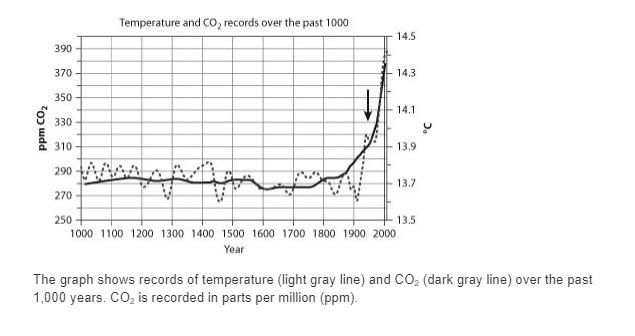
Information: The graph displays a correlation between atmospheric carbon dioxide levels and global temperatures over the past 1,000 years. The dashed line represents
CO2​ concentration (in ppm), and the solid line represents temperature. Following the industrial era (post-1800), a sharp increase in both variables is evident.

Plants and algae play a crucial role in the global carbon cycle by absorbing atmospheric CO2 during photosynthesis.

a. Cause and Effect (4 points)
Part 1: Describe the relationship between CO2​ levels and temperature shown in the graph. (2 points)

b. Predicting Consequences (4 points)
Part 1: Explain the effect that the increase in atmospheric CO2​ shown in the graph would have on the rate of photosynthesis. (2 points)

Part 2: How would a sustained increase in global temperature then affect aquatic ecosystems and the primary producers (algae) that live there? (Hint: homeostasis) (2 points)

Question 12
12.

Refer to diagram: A biologist analyzing the structure of a chloroplast would locate the primary site of light absorption and electron transport in a:

Question 13
13.

The initial energy source for the light-dependent reactions of photosynthesis directly drives which of the following processes?