Log in
Sign up for FREE
arrow_back
Library

New Jersey Grade 9 Unit 1 ELA Literary Analysis Practice Assessment

star
star
star
star
star
Last updated over 1 year ago
21 questions
Required
1
RL.CR.9–10.1
Required
1
RL.TS.9–10.4
Required
1
RL.CR.9–10.1
Required
1
RL.IT.9–10.3
Required
1
RL.CR.9–10.1
Required
1
RL.CI.9–10.2
Required
1
RL.CR.9–10.1
Required
1
RL.TS.9–10.4
Required
1
RL.CR.9–10.1
Required
1
RL.IT.9–10.3


Required
1
RL.CR.9–10.1
Required
1
RL.CI.9–10.2
Required
16
NJSLSA.W4
NJSLSA.W5
Required
1
RL.CR.9–10.1
RL.PP. 9–10.5
Required
1
RL.MF.9–10.6
Required
1
RL.CR.9–10.1
Required
1
RL.IT.9–10.3
Required
1
RL.CR.9–10.1
Required
1
RL.TS.9–10.4
Required
1
RL.CR.9–10.1
Required
1
RL.CI.9–10.2


Question 1
1.

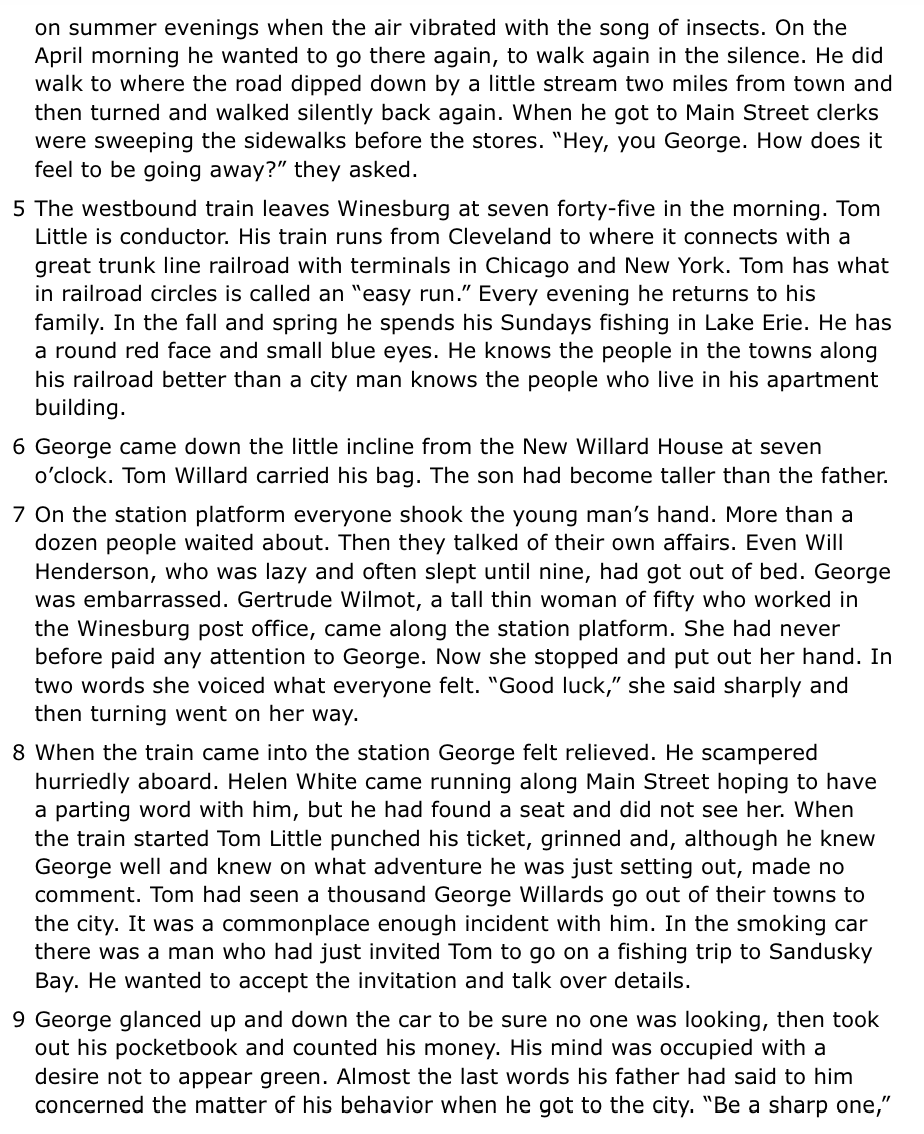
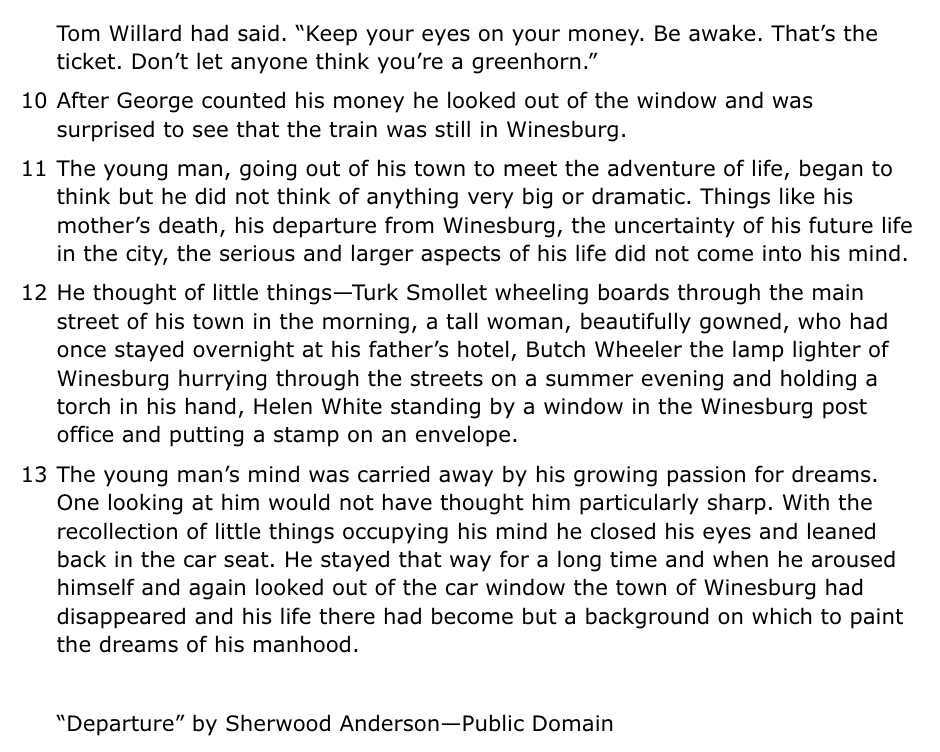
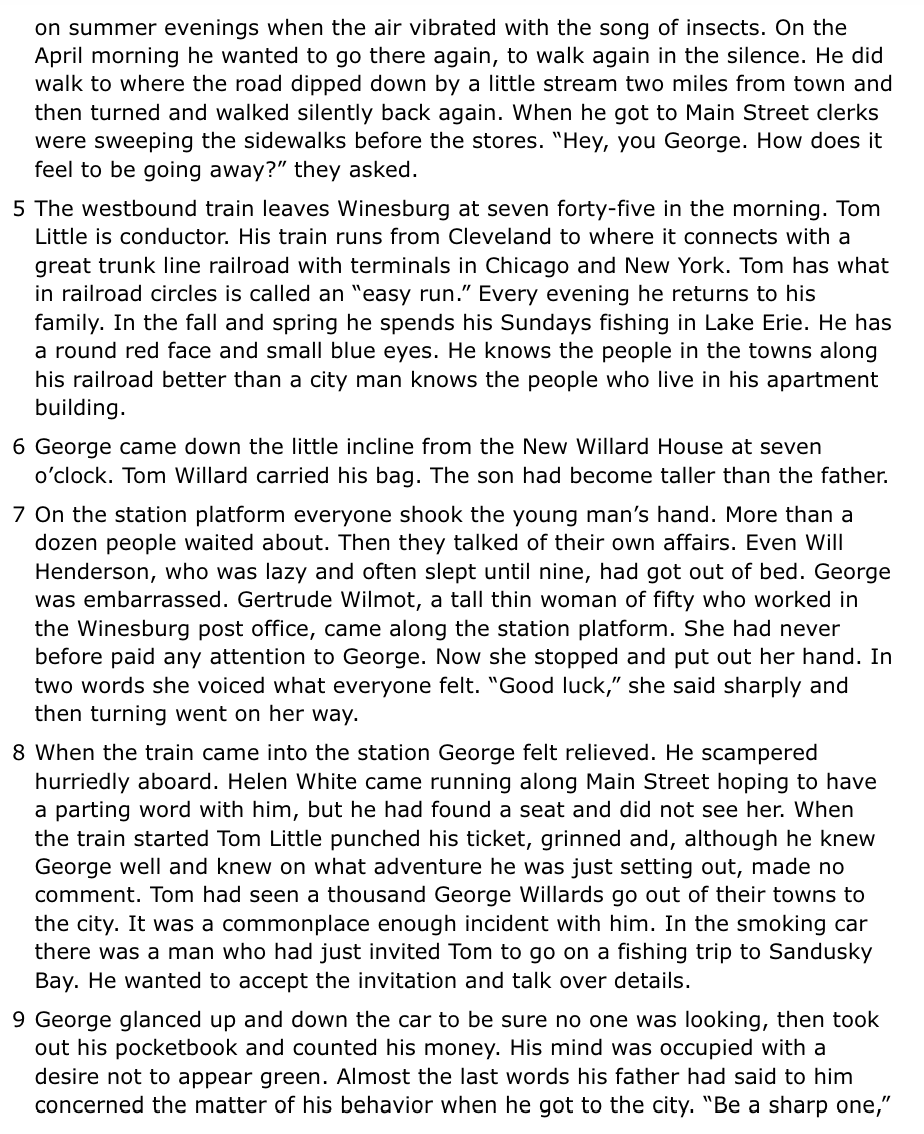
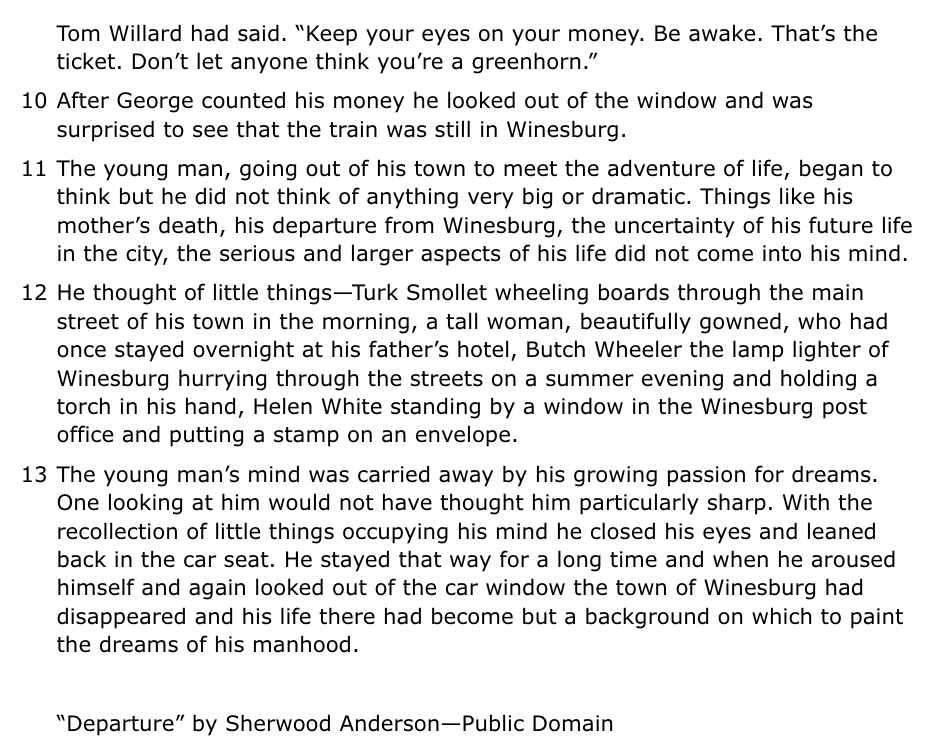
In paragraph 9, what does the phrase "a desire not to appear green" suggest about George?

Question 2
2.

Which quotation provides evidence that contradicts the answer to Question 1?

Question 3
3.

Which statement describes George’s interaction with the townspeople in paragraphs 7 and 8 of the story?

Question 4
4.

Question 5
5.

Which statement best describes a central theme of the story?

Question 6
6.


Question 7
7.

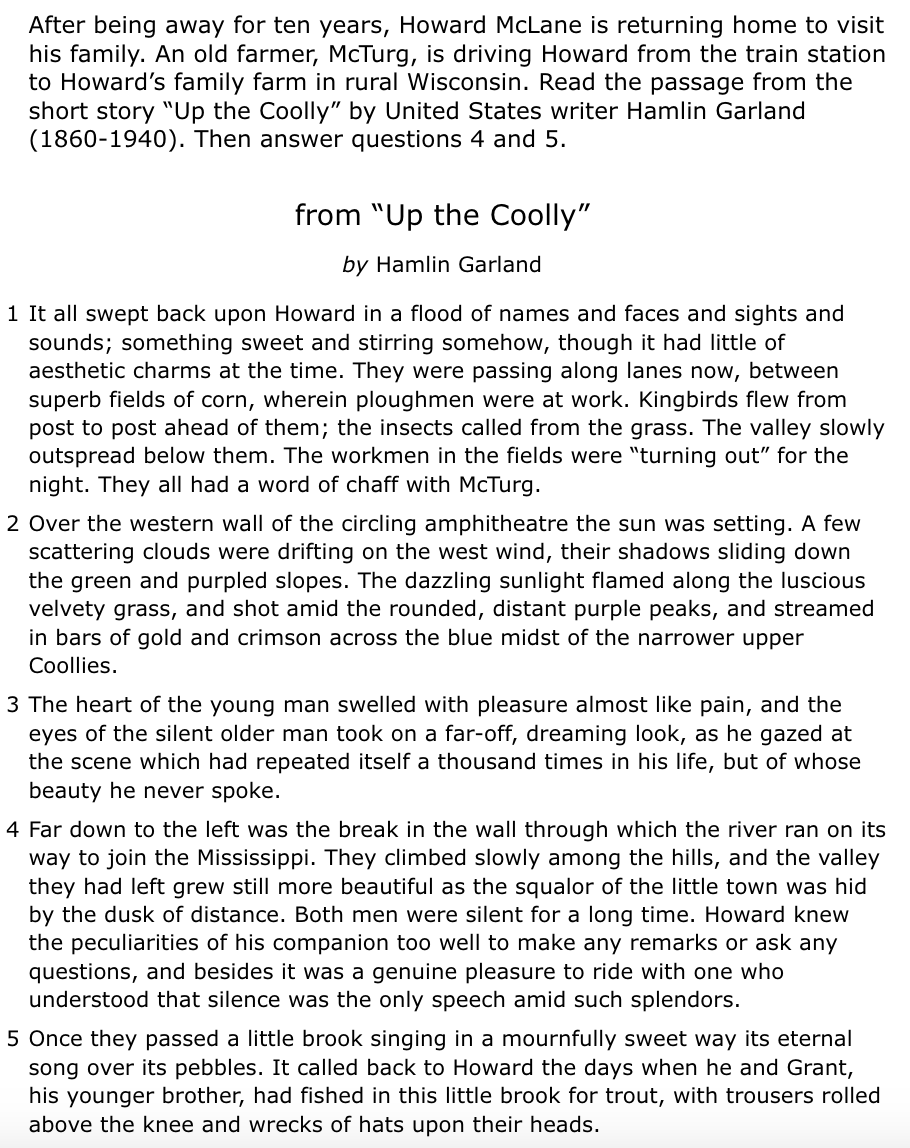
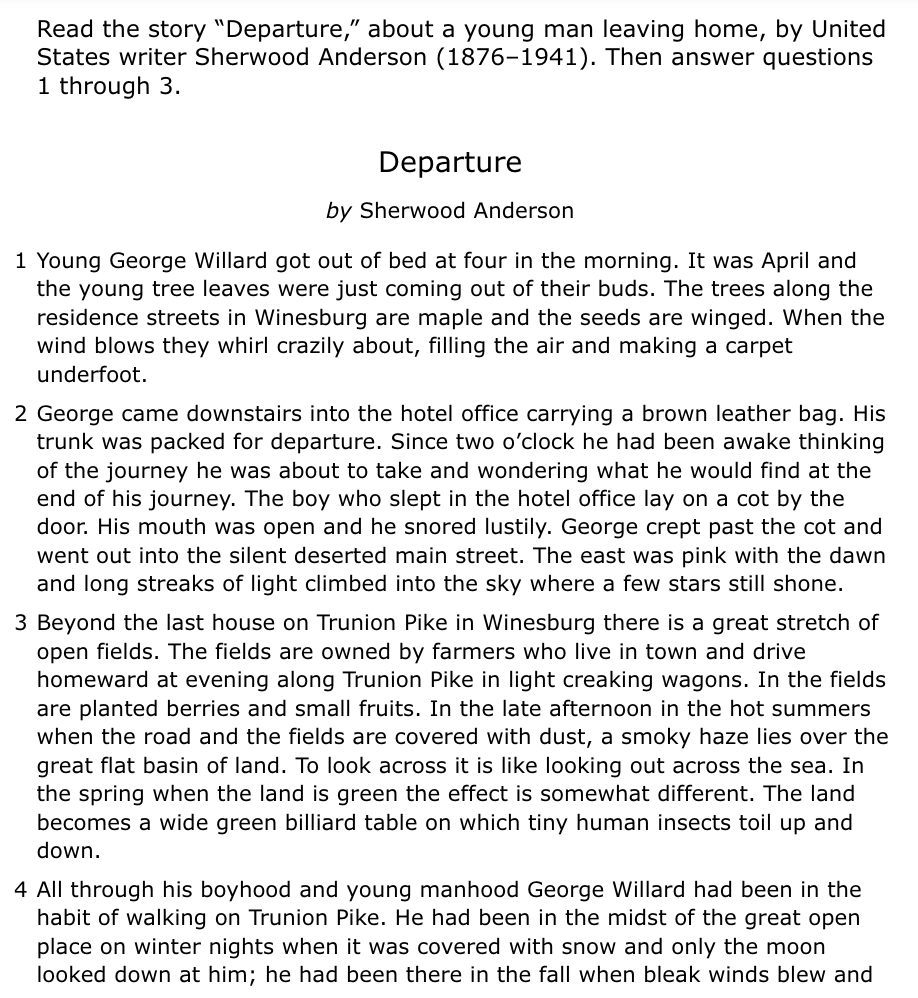
What does the term 'endless drudgeries' mean as it is used in paragraph 37?

Question 8
8.

Which quotation shows the best example of 'endless drudgeries' as defined in Question 7?

Question 9
9.

How does the author most develop Howard’s character over the course of the passage?

Question 10
10.

Question 11
11.

Which is a theme reflected in both the passage from “Departure” and the passage from “Up the Coolly”?

Question 12
12.

Question 13
13.

Write an essay that analyzes how the narrators relate the events about the journeys in a manner that builds mystery and/or tension. Be sure to use support from both texts in developing your response.

Question 14
14.

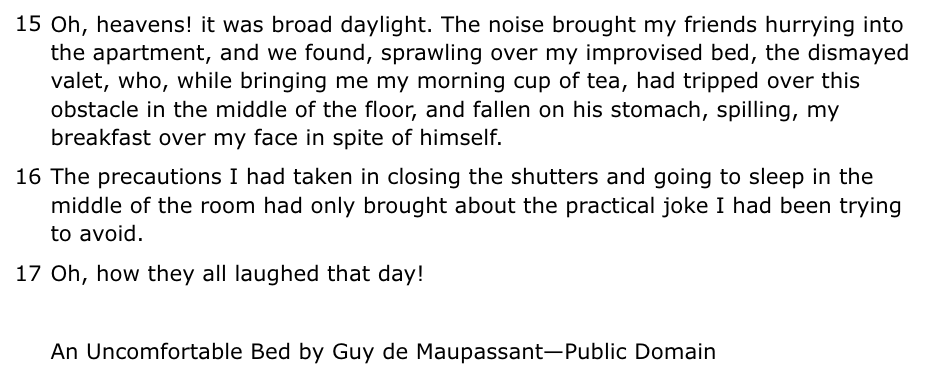
Which statement describes the narrator’s point of view in the story?

Question 15
15.

Select the sentence from the story that best supports the answer to Question 14.

Question 16
16.

Which sentence best describes the narrator’s actions that advance the plot?

Question 17
17.

Which sentence from the story best supports the answer in Question 16?

Question 18
18.

In paragraph 6, what is the impact of the phrase "an object of suspicion" on the tone of the story?

Question 19
19.

In paragraph 6, which detail has a similar impact on tone as the phrase "an object of suspicion"?

Question 20
20.

Which sentence states a theme the author develops over the course of the story?

Question 21
21.

Which detail best helps to refine the theme the author develops over the course of the story?

Select one quotation from paragraph 7 and one quotation from paragraph 8 that best support the answer to Part A.
A. “Then they talked of their own affairs.” (paragraph 7)
B. “Even Will Henderson, who was lazy and often slept until nine, had got out of bed.” (paragraph 7)
C. “In two words she voiced what everyone felt. ‘Good luck,’ she said sharply and then turning went on her way.” (paragraph 7)
D. “When the train came into the station George felt relieved. He scampered hurriedly aboard.” (paragraph 8)
E. “Helen White came running along Main Street hoping to have a parting word with him, but he had found a seat and did not see her.” (paragraph 8)
F. “It was a commonplace enough incident with him.” (paragraph 8)
Which two statements from the passage provide the best support for the answer to Question 5?
A. “George crept past the cot and went out into the silent deserted main street.” (paragraph 2)
B. “All through his boyhood and young manhood George Willard had been in the habit of walking on Trunion Pike.” (paragraph 4)
C. “‘Hey, you George. How does it feel to be going away?’ they asked.” (paragraph 4)
D. “Tom had seen a thousand George Willards go out of their towns to the city.” (paragraph 8)
E. “George glanced up and down the car to be sure no one was looking, then took out his pocketbook and counted his money.” (paragraph 9)
F. “The young man’s mind was carried away by his growing passion for dreams.” (paragraph 13)
Which two quotations best support the answer to Question 9?
A. “They climbed slowly among the hills, and the valley they had left grew still more beautiful as the squalor of the little town was hid by the dusk of distance.” (paragraph 4)
B. “It called back to Howard the days when he and Grant, his younger brother, had fished in this little brook for trout, with trousers rolled above the knee and wrecks of hats upon their heads.” (paragraph 5)
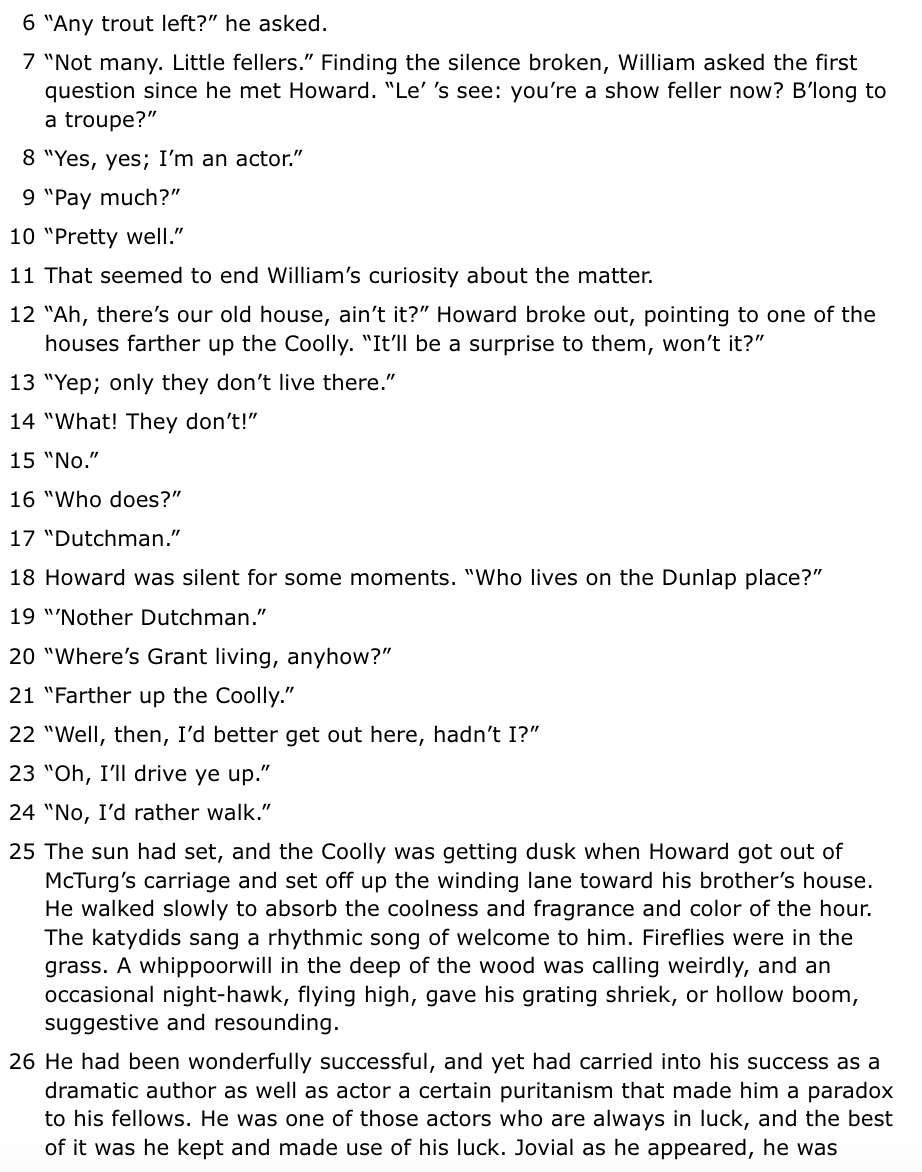
C. “Finding the silence broken, William asked the first question since he met Howard. ‘Le’ ‘s see: you’re a show feller now?’” (paragraph 7)
D. “Howard broke out, pointing to one of the houses farther up the Coolly. ‘It’ll be a surprise to them, won’t it?’” (paragraph 12)
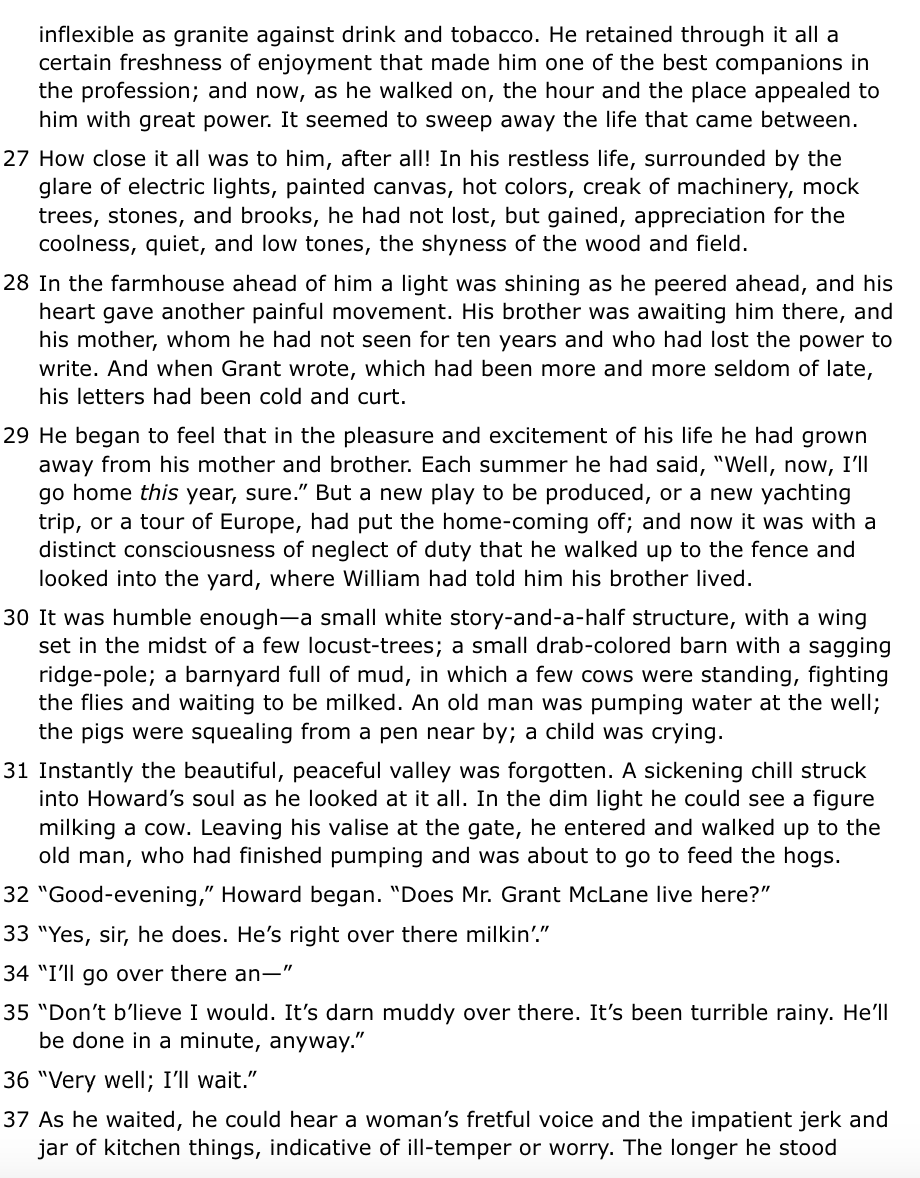
E. “His brother was awaiting him there, and his mother, whom he had not seen for ten years and who had lost the power to write.” (paragraph 28)
F. “As they gazed in silence at each other, Howard divined something of the hard, bitter feeling that came into Grant’s heart, as he stood there, ragged, ankle-deep in muck, his sleeves rolled up, a shapeless old straw hat on his head.” (paragraph 42)
Choose two quotations, one from each passage, that best support the answer in Question 11.
A. “On the April morning he wanted to go there again, to walk again in the silence.” (from “Departure”)
B. “When the train started Tom Little punched his ticket, grinned and, although he knew George well and knew on what adventure he was just setting out, made no comment.” (from “Departure”)
C. “The young man, going out of his town to meet the adventure of life, began to think but he did not think of anything very big or dramatic.” (from “Departure”)
D. “It called back to Howard the days when he and Grant, his younger brother, had fished in this little brook for trout . . . .” (from “Up the Coolly”)
E. “He retained through it all a certain freshness of enjoyment that made him one of the best companions in the profession . . . .” (from “Up the Coolly”)
F. “All the joy of the home-coming was gone, when the figure arose from the cow and approached the gate . . . .” (from “Up the Coolly”)
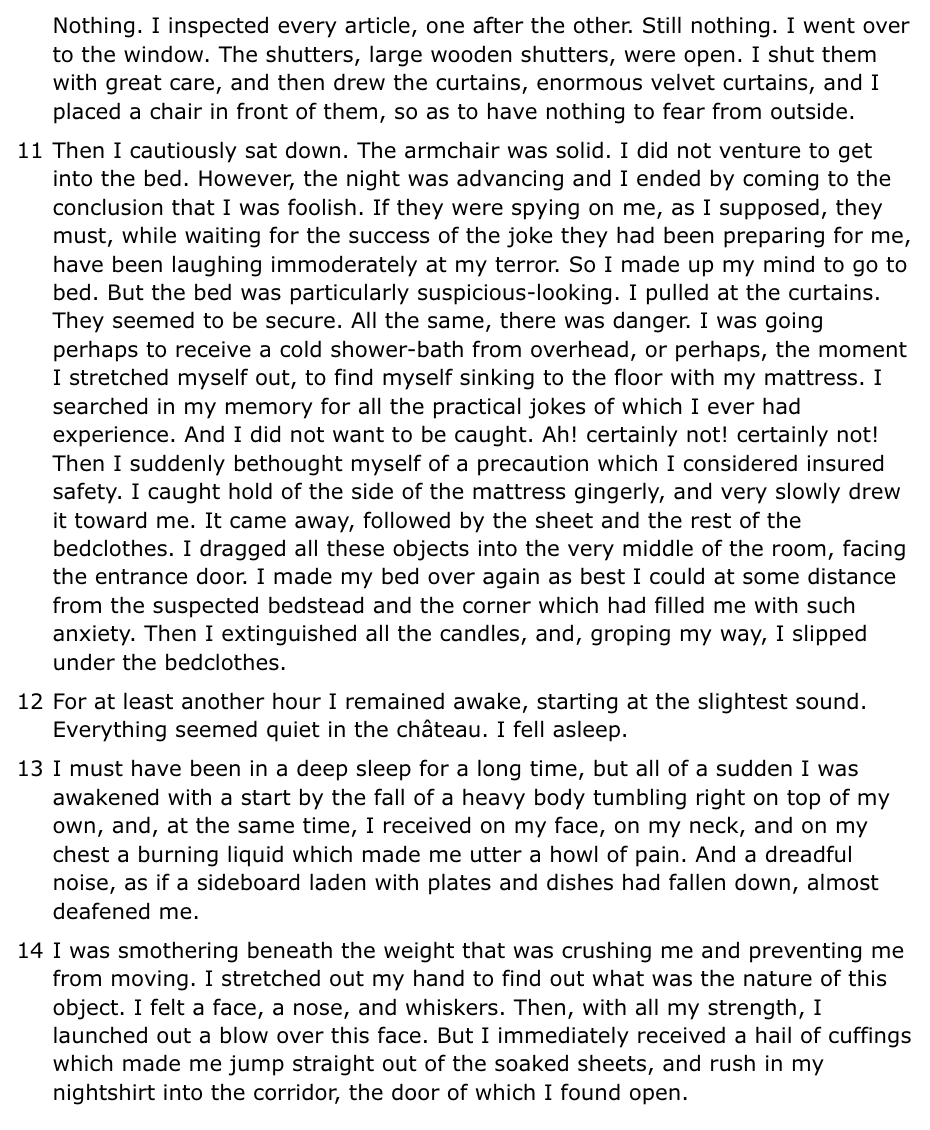
“Everything seemed quiet in the château.” (paragraph 12)