Mmuae Afoforo a Wobɛpaw:
natural selection
unity
modification
diversity
offspring
adaptations
inherited traits
CCC: Patterns and Cause/Effect
NGSS Standards: HS-LS4-1,2,4,5
Multiple Choice are worth 3 points each.
CCC: Patterns and Cause/Effect
NGSS Standards: HS-LS4-1,2,4,5
Multiple Choice are worth 3 points each.
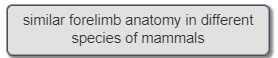
Observation of natural selection in action
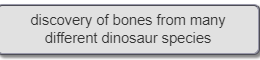
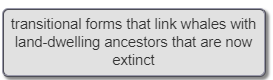
Fossil record
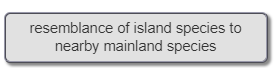
Biogeography
Anatomical and molecular homologies
Why was Darwin's acceptance of an ancient, continuously changing Earth so important in his development of his ideas about evolution?
Which of the following statements regarding natural selection is false?
Which of the following best expresses the concept of natural selection?
A dog breeder wishes to develop a breed that does not bark. She starts with a diverse mixture of dogs. Generation after generation, she allows only the quietest dogs to breed. After 30 years of work she has a new breed of dog with interesting traits, but on average, the dogs still bark at about the same rate as other dog breeds. Which of the following would be a logical explanation for her failure?
During the 1950s, a scientist named Lysenko tried to solve the food shortages in the Soviet Union by breeding wheat that could grow in Siberia. He theorized that if individual wheat plants were exposed to cold, they would develop additional cold tolerance and pass it to their offspring. Based on the ideas of artificial and natural selection, do you think this project worked as planned?
The finches on the Galapagos island were similar in form except for variations of their beaks. Darwin observed that these variations were useful for:
Under the biological species concept, a species is a group of organisms that
Which of the following is a true statement about Charles Darwin?
Any variation that can help an organism survive in its environment is called a(n):
Humans share several features with salamanders. Certain genes and proteins are nearly identical between the two species; both species have four limbs with a similar skeletal structure; the species' early embryos are similar; and where the salamander has a functional tail, humans have a vestigial tailbone. In evolutionary terms, these are examples of _______________________________.
Which of the following assumptions or observations is not part of Darwin's idea of natural selection?
Which of the following is NOT a component of the Theory of Evolution by Natural Selection?
A structure that seems to serve no purpose in an organism is called:
CCC: Patterns
Reflect on the statement, "By studying the evidence of evolution, scientists continue to deepen our understanding of how life on Earth has evolved and diversified over millions of years."
a. Explain how scientists have used the patterns they have observed in the evidence of evolution to deepen our understanding of the past and future on Earth..
CER/Data:
Listed below is a segment of an amino acid sequence for the protein hemoglobin, which is found on our blood cells. Hemoglobin transports oxygen in our bloodstream. Included is a portion of the sequences for humans, gorillas, horses, and kangaroos, and chickens.
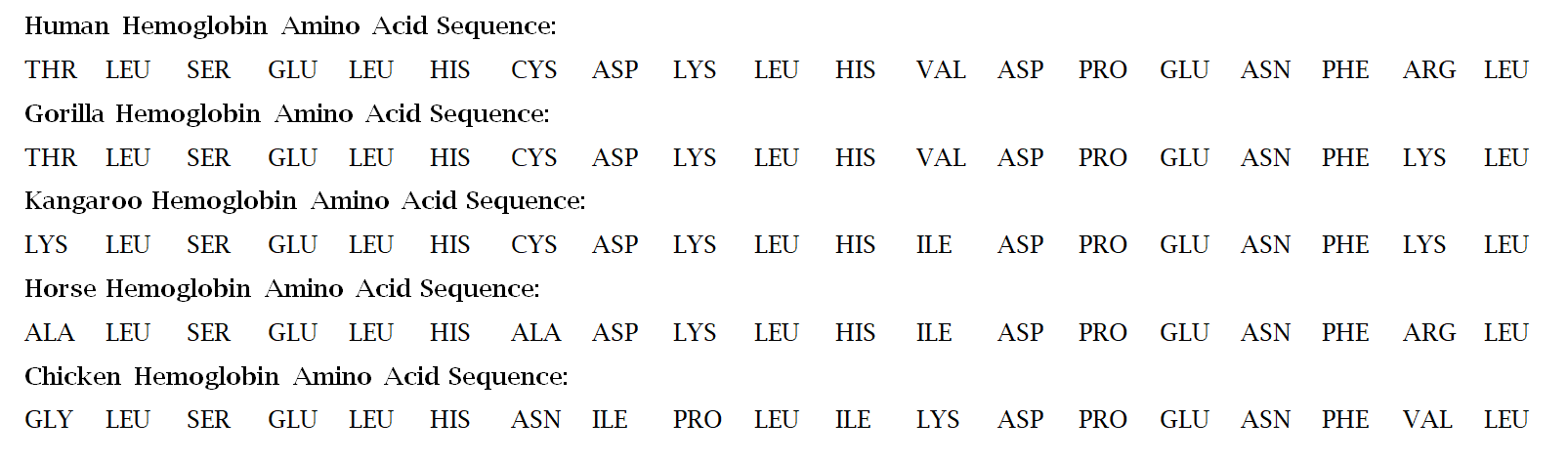
Under Show Your Work is the same list and a chart for you to complete to help you answer the following question.
Which two organisms are the most closely relate?
Claim: Answer the question above.
Evidence: Use the information given (list and chart) as your evidence.
Resonsing: Explain why your data supports your claim. This question would be most
complete if you compare the "most closely" to other data.
See the rubric to ensure you get the greatest amount of points for your answer.