There are several ways to write vectors. which of the following will not work for this vector
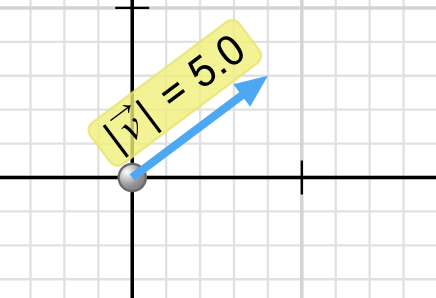
There are several ways to write vectors. which of the following will not work for this vector
Kepler's laws and milankovitch cycles
Kepler's laws and milankovitch cycles
Review from last week: Consider a comet, with a far more eccentric orbit than a planet like earth. Can you explain in terms of Kepler's law why the comet must move much slower when it is at the outer edge of the solar system than when it is close to the earth?
The center of the sun is always where in a planet's orbit?
There are several ways to write vectors. which of the following will not work for this vector
A vector requires
One of the main differences between the speed and the velocity is that speed is a scalar (magnitude, no direction) and velocity is a vector (magnitude and direction). So if a car is moving at a constant miles/hour but is traveling on this road

you would say that car has
A car moving north with constant speed has
A planet moving in a circular orbit at constant speed as
Step 1: read chapter 2.1-2.4 in your book. Note any questions you have here.
Which of the following is newtons first law of motion
So if I am floating in space and I throw a ball what will happen
Newton's second law is Force = Mass x acceleration. What is acceleration?
the force of gravity close to a large star is going to be
Consider a comet, with a far more eccentric orbit than a planet like earth.
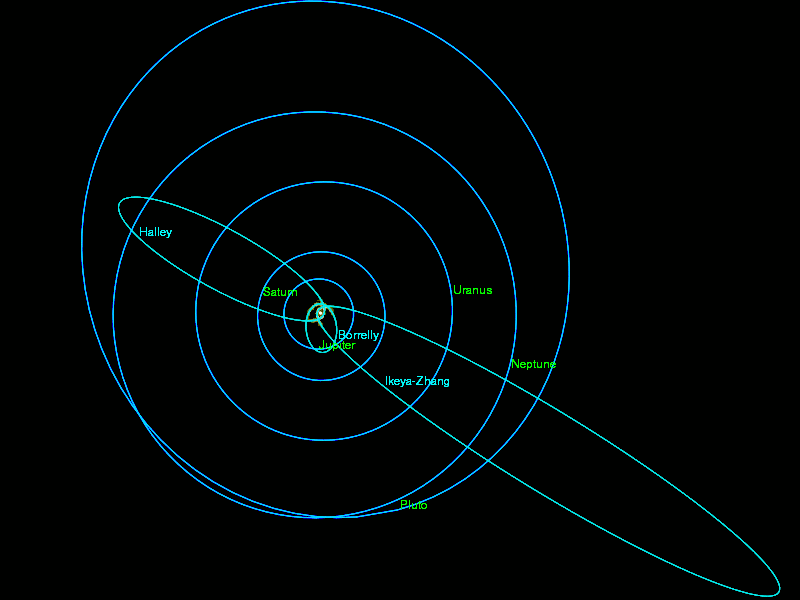
You already explained above why Kepler's law says it moves faster close to the sun and slower away from the sun. Can you explain in terms of Newton's law of universal gravitation why the comet must move much slower when it is at the outer edge of the solar system than when it is close to the sun?
Explain newton's third law in your own words.
A cinder block can be weightless in space. Does this mean it does not have mass?
You are floating in space again, throwing a ball. what happens to you when you throw the ball? how would that change if the ball is significantly heavier (assume you throw both balls at the same speed?)
Your measurements for your parallax lab asked you to calculate to the nearest tenth of a degree. how many significant figures would that be?
0.0003400 has four significant figures. Can you explain why two of the zeros counted as sig figs, and four of them did not?
how to find significant digits
what is the purpose of significant digits
what is a vector
what is a scalar
the difference between velocity and speed
newtons first law
newtons second law
newtons third law
I've got this
I'm fuzzy
so confused