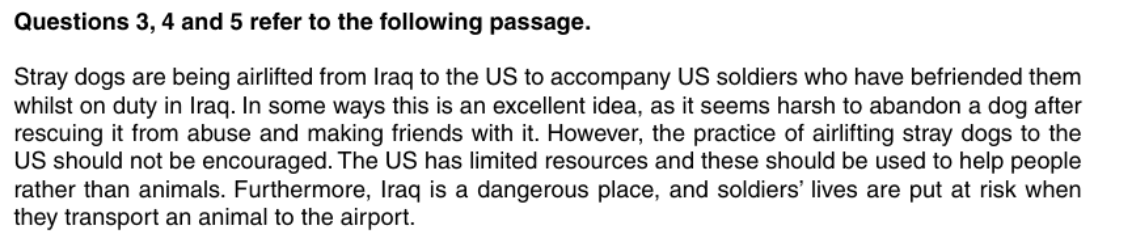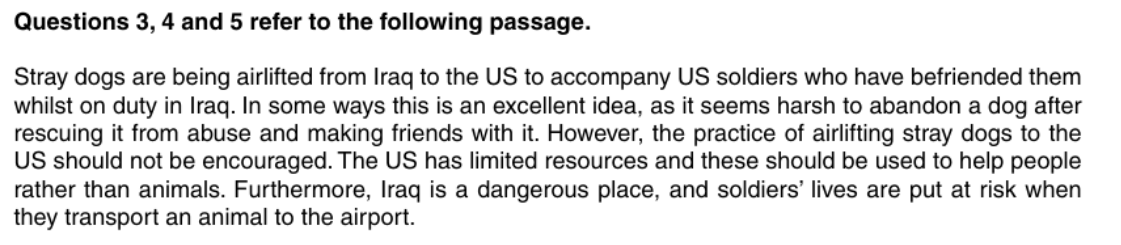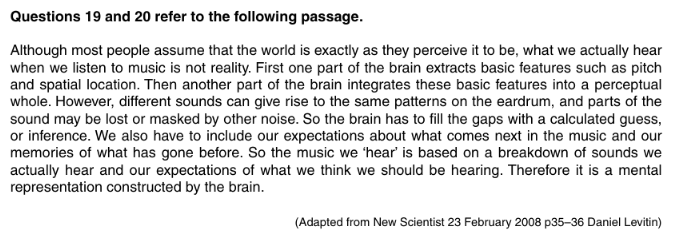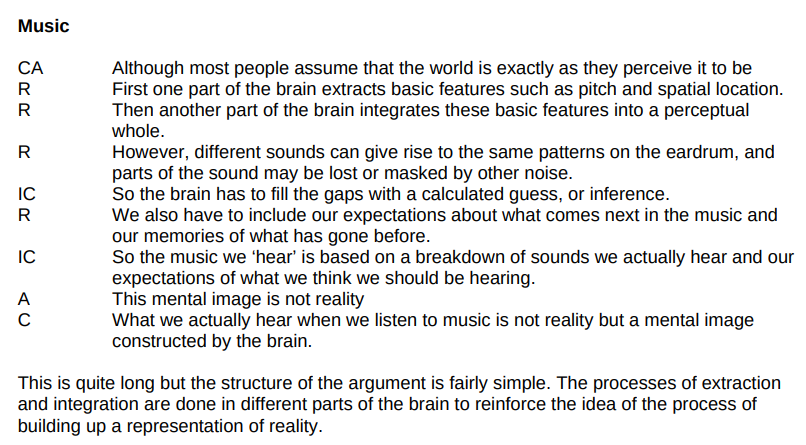
Which of the following is the main conclusion of the argument?
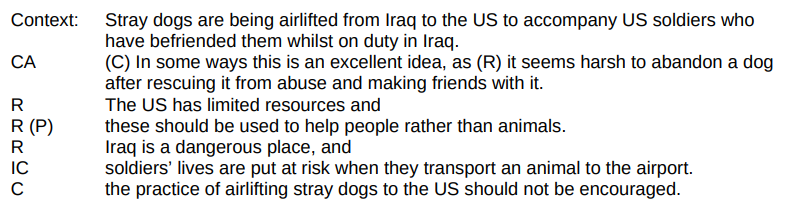
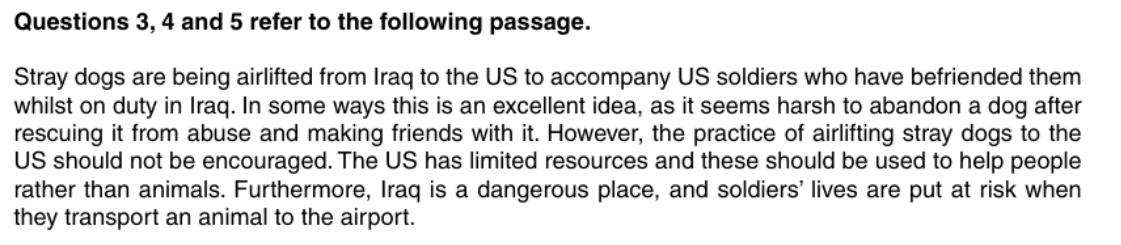
Which of the following is the main conclusion of the argument?
Which of the following is an argument?
Which of the following is a valid argument?
Which of the following is the main conclusion of the argument?
Which of the following, if true, most weakens the support for the conclusion?
Which of the following is a principle that would counter the argument?
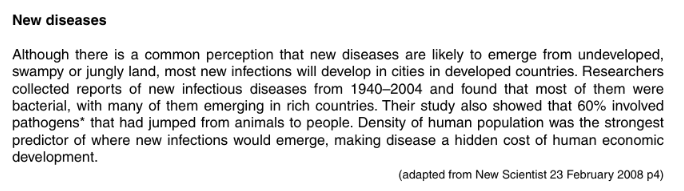
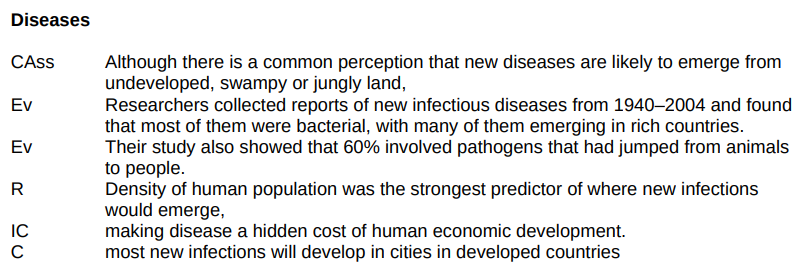
‘
There is a common perception that new diseases are likely to emerge from undeveloped, swampy, or jungly land.’ What is the function of this element in the structure of the argument?
‘60% (of new infectious diseases) involved pathogens that had jumped from animals to people.’ What is the function of this element in the structure of the argument?
If I buy that magazine, I won’t have enough money to buy my friend’s birthday present. It is important to buy my friend a birthday present. So I shouldn’t buy the magazine. Which of the following most closely parallels the reasoning used in the argument?
Question removed
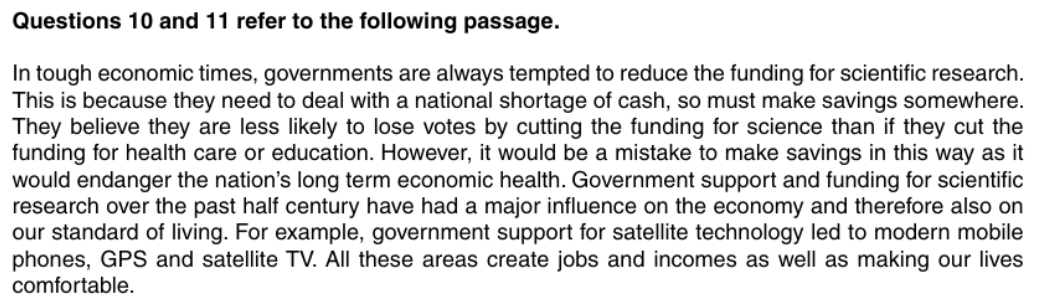
'It would be a mistake to make savings in this way as it would endanger the nation’s long-term economic health.' What is the function of this sentence in the structure of the argument?
Which of the following is an assumption underlying the argument?
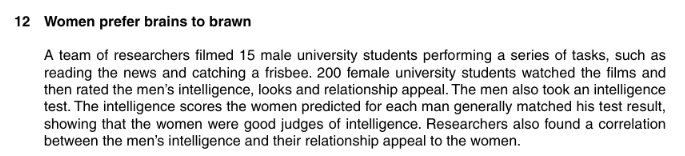
Which of the following is a reason why the headline 'Women prefer brains to brawn' does not follow from the evidence in the passage?
The Templeton Foundation asked leading scientists and Christians to answer the question, 'Does science make God obsolete?' This question does not make sense. It is like asking, 'Do cars make houses obsolete?'
This analogy:

Which of the following can be inferred from the argument?
If a chimp sees an actor turn on a light switch with his forehead even though his hands are free, the chimp is likely to use its own forehead to turn the switch. Yet if the actor uses his forehead to turn the switch only because his hands are full, the chimp imitates the task by using its hands and not its forehead. (New Scientist 2 February 2008 p8 extract) 'This shows that chimps are able to make rational inferences, just like people.' This is:
Lemons are fruit.
Ripe fruit is yellow.
Therefore ripe lemons are yellow. Which one of the following is the most accurate evaluation of this argument?
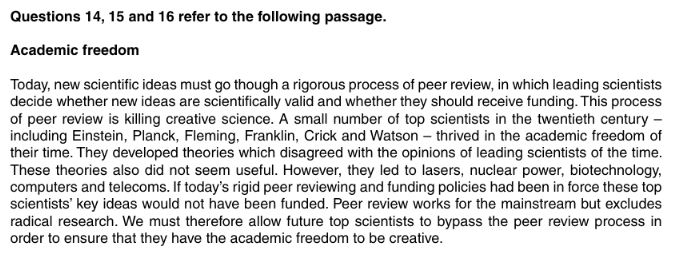
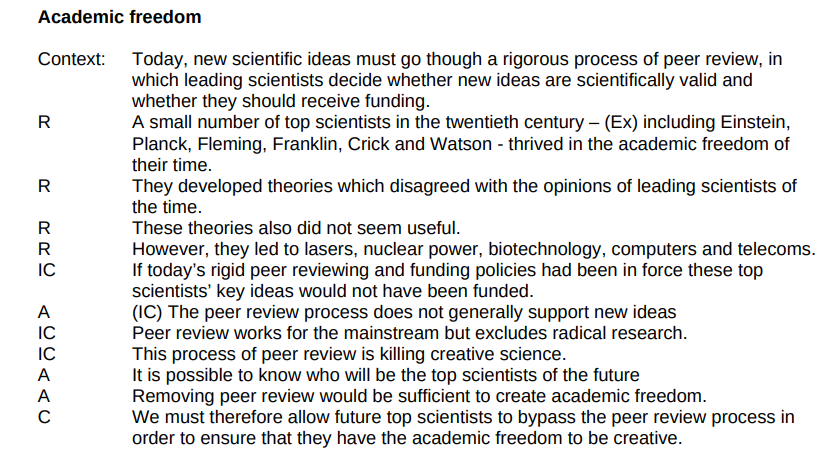
Which of the following is the main conclusion of the argument?
Which of the following is an assumption underlying the argument?
Which of the following is an assumption underlying the argument?
(i) It is possible to know who will be the top scientists of the future. (ii) The peer review process does not support new ideas.
According to this author, academic freedom is: