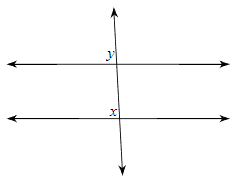
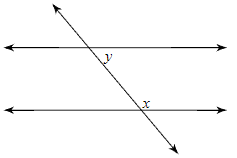
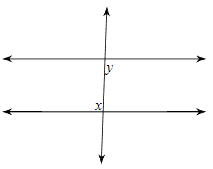
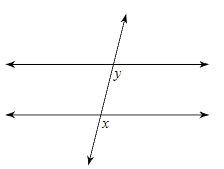
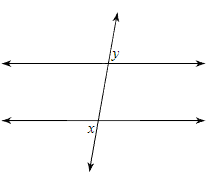
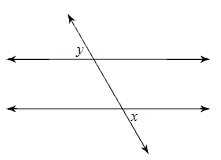
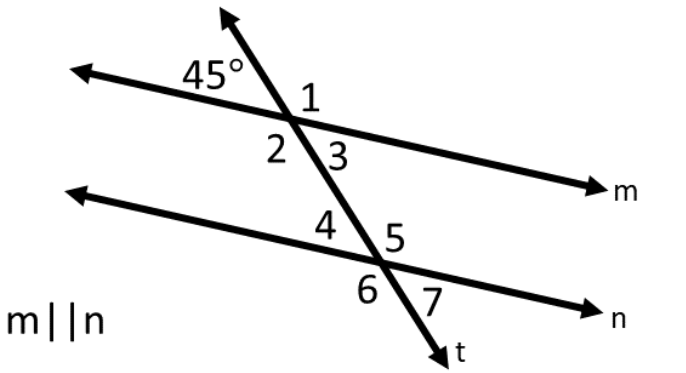
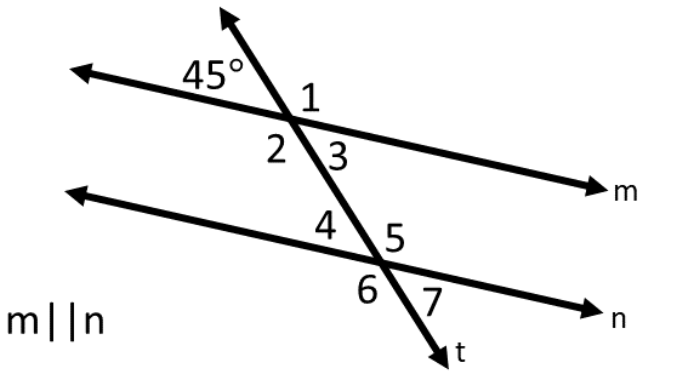
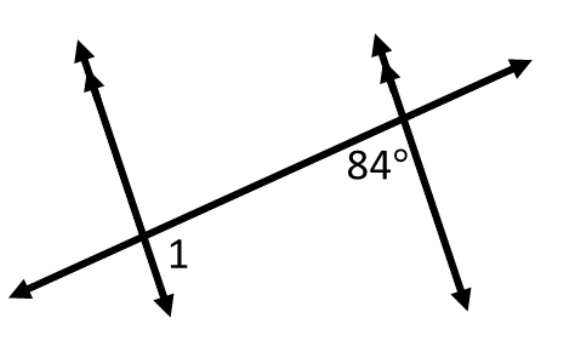
Name the angle relationship between the two indicated angles in the diagram:
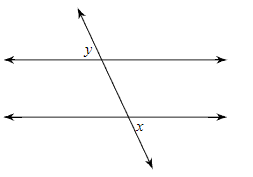
These angles are on side(s) of the transversal and the other two lines. Therefore these angles are .
Essential Question: How do I identify angle relationships when lines are cut by a transversal?
Learning Target: Students will be able to identify angle relationships when lines are cut by a transversal.
Complete the entire assignment and show work for full credit.
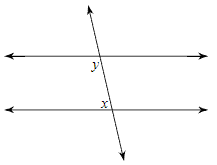
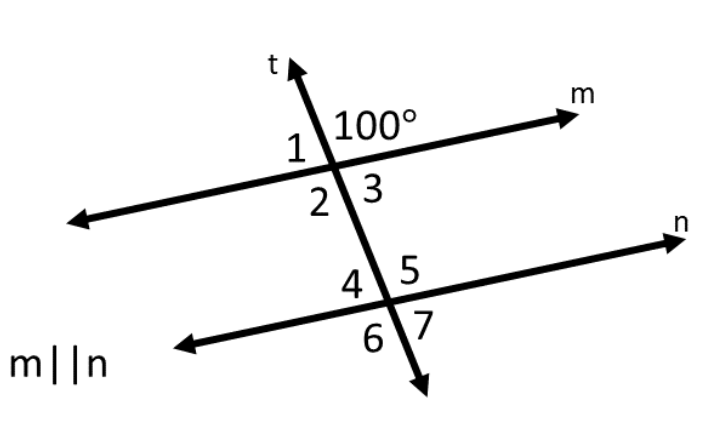
Name the angle relationship between the two indicated angles in the diagram:
These angles are on side(s) of the transversal and the other two lines. Therefore these angles are .
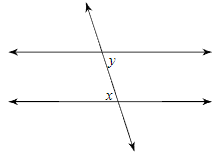
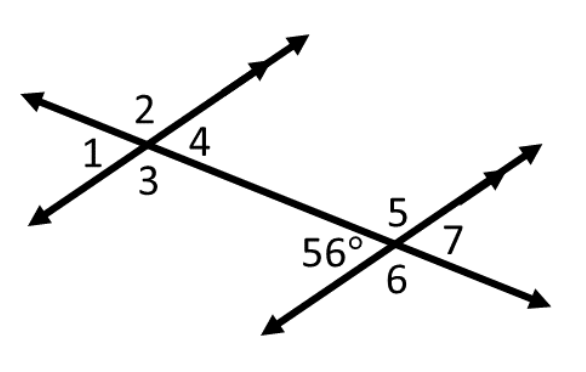
Name the angle relationship between the two indicated angles in the diagram:
These angles are on side(s) of the transversal and the other two lines. Therefore these angles are .
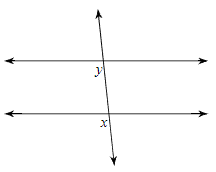
Name the angle relationship between the two indicated angles in the diagram:
These angles are on side(s) of the transversal and the other two lines. Therefore these angles are .
Name the angle relationship between the two indicated angles in the diagram:
These angles are on side(s) of the transversal and the other two lines. Therefore these angles are .
Name the angle relationship between the two indicated angles in the diagram:
These angles are on side(s) of the transversal and the other two lines. Therefore these angles are .
Name the angle relationship between the two indicated angles in the diagram:
These angles are on side(s) of the transversal and the other two lines. Therefore these angles are .
Name the angle relationship between the two indicated angles in the diagram:
These angles are on side(s) of the transversal and the other two lines. Therefore these angles are .
Name the angle relationship between the two indicated angles in the diagram:
These angles are on side(s) of the transversal and the other two lines. Therefore these angles are .
Name the angle relationship between the two indicated angles in the diagram:
These angles are on side(s) of the transversal and the other two lines. Therefore these angles are .
Name the angle relationship between the two indicated angles in the diagram:
These angles are on side(s) of the transversal and the other two lines. Therefore these angles are .
Draw an example of alternate interior angles.
Draw an example of alternate exterior angles.
Draw an example of same-side exterior angles.
Draw an example of same-side interior angles.
Draw an example of corresponding angles.
△ABC has coordinates of A(0,4), B(-3,4), and C(-3, -1). What are the new coordinates of △ABC when the figure is moved 3 units left and 1 unit up?
A'
B'
C'
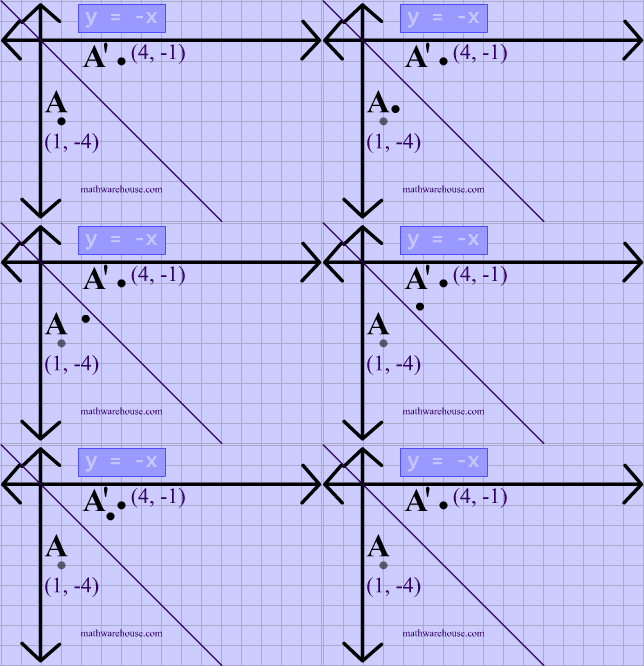
Graph and label each figure and its image under a reflection in the given line. Give the coordinates of the image. Be sure your answer is in coordinate form (x,y). No spaces
M'
N'
O'
P'
Protip: Transform the points first then graph them.
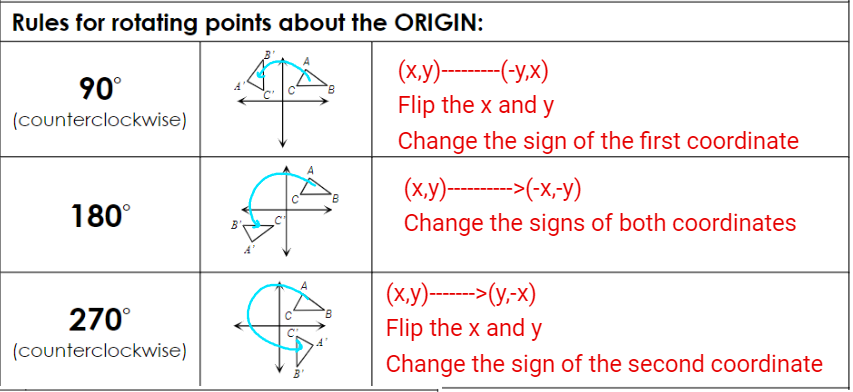
Graph and label each figure and its image under the given rotation.
Identify the coordinates of the image. (Be sure to use parenthesis in your answer.)
S'
T'
U'
V'
Which is an example of alternate interior angles
Which is an example of alternate exterior angles
Which is an example of same-side exterior angles
Which is an example of same-side interior angles
Which is an example of corresponding angles
If m∠1 = 65°, find each measure.
m∠2=
m∠3=
m∠4=
m∠5=
m∠6=
m∠7=
m∠8=
If m∠6 =142°, find each measure.
m∠1=
m∠2=
m∠3=
m∠4=
m∠5=
m∠7=
m∠8=
If m∠12 = 121° and m∠6 = 75°, find each measure. Don't be an NPC use the degree symbol.
m∠1=
m∠2=
m∠3=
m∠4=
m∠5=
m∠7=
m∠8=
m∠9=
m∠10=
m∠11=
m∠13=
m∠14=
If l ∥ m, then solve for x.
If l ∥ m, then solve for x.
If l ∥ m, then solve for x.
If l ∥ m, then solve for x.
If l ∥ m, then solve for x.
Given the 2 line are cut by a transversal and are parallel:
What is the measure missing angle?
What is the reason? (Use Notes Page 8 and Notes Page 10 to help you).
Given the 2 line are cut by a transversal and are parallel:
What is the measure missing angle?
What is the reason? (Use Notes Page 8 and Notes Page 10 to help you).
Given the 2 line are cut by a transversal and are parallel:
What is the measure missing angle?
What is the reason? (Use Notes Page 8 and Notes Page 10 to help you).
Given the 2 line are cut by a transversal and are parallel:
What is the measure missing angle?
What is the reason? (Use Notes Page 8 and Notes Page 10 to help you).
Given the 2 line are cut by a transversal and are parallel:
What is the measure missing angle?
What is the reason? (Use Notes Page 8 and Notes Page 10 to help you).
Given the 2 line are cut by a transversal and are parallel:
What is the measure missing angle?
What is the reason? (Use Notes Page 8 and Notes Page 10 to help you).
Given the 2 line are cut by a transversal and are parallel:
What is the measure missing angle?
What is the reason? (Use Notes Page 8 and Notes Page 10 to help you).
Given the 2 line are cut by a transversal and are parallel:
What is the measure missing angle?
What is the reason? (Use Notes Page 8 and Notes Page 10 to help you).
Given the 2 line are cut by a transversal and are parallel:
What is the measure missing angle?
What is the reason? (Use Notes Page 8 and Notes Page 10 to help you).
Are the lines u and v parallel?
What is the reason? If they are not parallel write "not parallel". (Use Notes Page 11 to help you).
Are the lines u and v parallel?
What is the reason? If they are not parallel write "not parallel". (Use Notes Page 11 to help you).
Are the lines u and v parallel?
What is the reason? If they are not parallel write "not parallel". (Use Notes Page 11 to help you).
Are the lines u and v parallel?
What is the reason? If they are not parallel write "not parallel". (Use Notes Page 11 to help you).
Are the lines u and v parallel?
What is the reason? If they are not parallel write "not parallel". (Use Notes Page 11 to help you).
Are the lines u and v parallel?
What is the reason? If they are not parallel write "not parallel". (Use Notes Page 11 to help you).
Are the lines u and v parallel?
What is the reason? If they are not parallel write "not parallel". (Use Notes Page 11 to help you).
Are the lines u and v parallel?
What is the reason? If they are not parallel write "not parallel". (Use Notes Page 11 to help you).
Tell which angles are congruent to the given angle measure. Select all that apply.
Tell which angles are congruent to the given angle measure. Select all that apply.
Tell which angles are congruent to the given angle measure. Select all that apply.
Tell why each of the angles indicated are congruent to the angle measure shown.
∠4=45° because
Tell why each of the angles indicated are congruent to the angle measure shown.
∠7=45° because
Tell why each of the angles indicated are congruent to the angle measure shown.
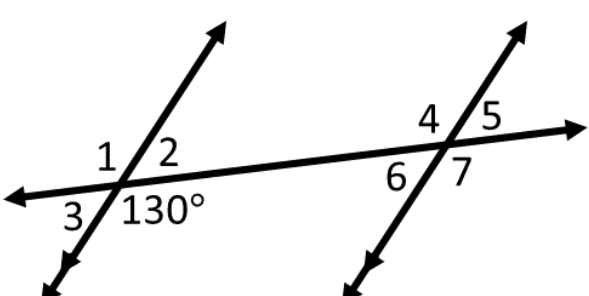
∠1=130° because
Tell why each of the angles indicated are congruent to the angle measure shown.
∠4=130° because
Tell why each of the angles indicated are congruent to the angle measure shown.
∠7=130° because
Tell why each of the angles indicated are supplementary to the angle measure shown.
∠3=50° because
Tell why each of the angles indicated are supplementary to the angle measure shown.
∠6=50° because
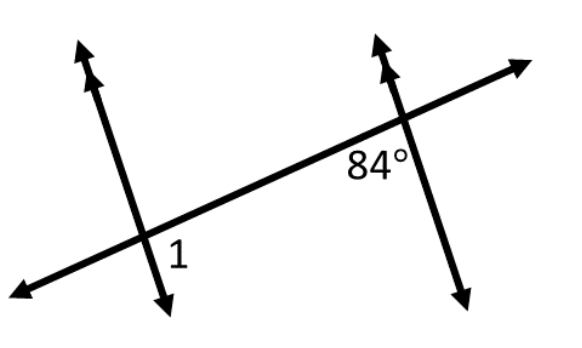
Find the indicated angle measures.
m∠1 = ______°
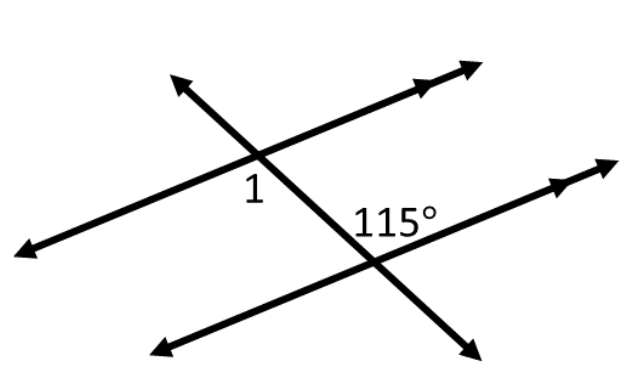
Find the indicated angle measures. Then justify each answer.
m∠1 = 115° because
Find the indicated angle measures.
Find the indicated angle measures.
m∠1 = ______°
Find the indicated angle measures. Then justify each answer.
m∠1 = 96° because
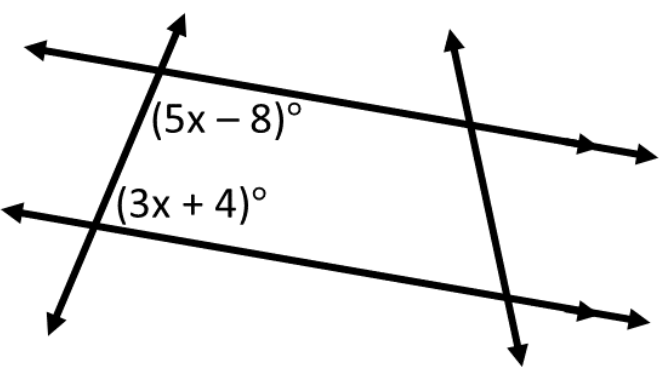
Find the value of x.
x=
Then, find the measure of each labeled angle.
(3x + 4)° =
(5x – 8)° =
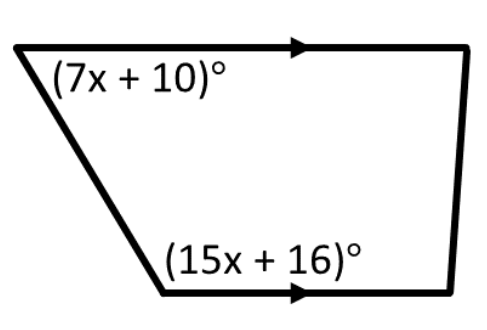
Find the value of x.
x=
Then, find the measure of each labeled angle.
(7x+10)° =
(15x +16 )° =
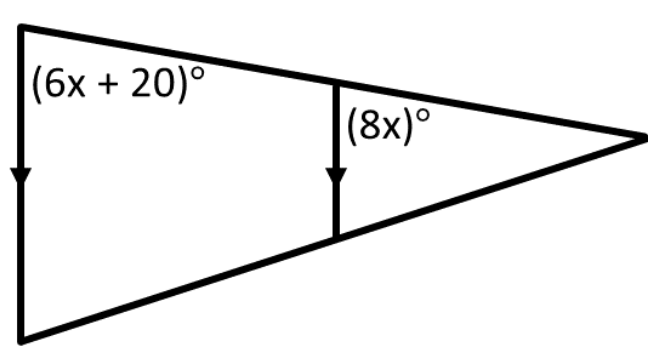
Find the value of x.
x=
Then, find the measure of each labeled angle.
(6x+20)° =
(8x)° =
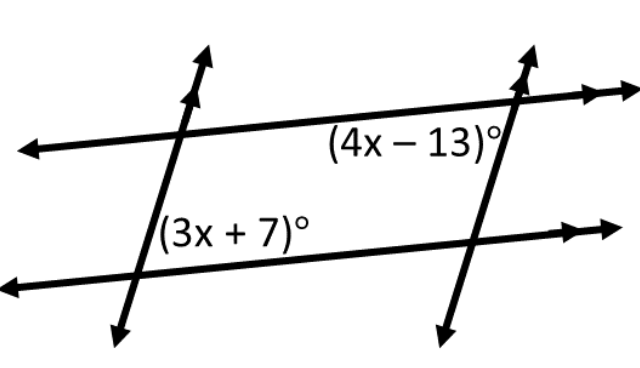
Find the value of x.
x=
Then, find the measure of each labeled angle.
(4x-13)° =
(3x+7)° =