Essential Question: How do different transformations, when applied in sequence, affect the shape, size, and position of a geometric figure?
Learning Target: Students will be able to apply a sequence of transformations, including translations, rotations, and reflections, to a geometric figure and describe their combined effect on its position and orientation.
Complete the entire document and use full sentences when prompted for full credit.
Responses without work will receive no points.
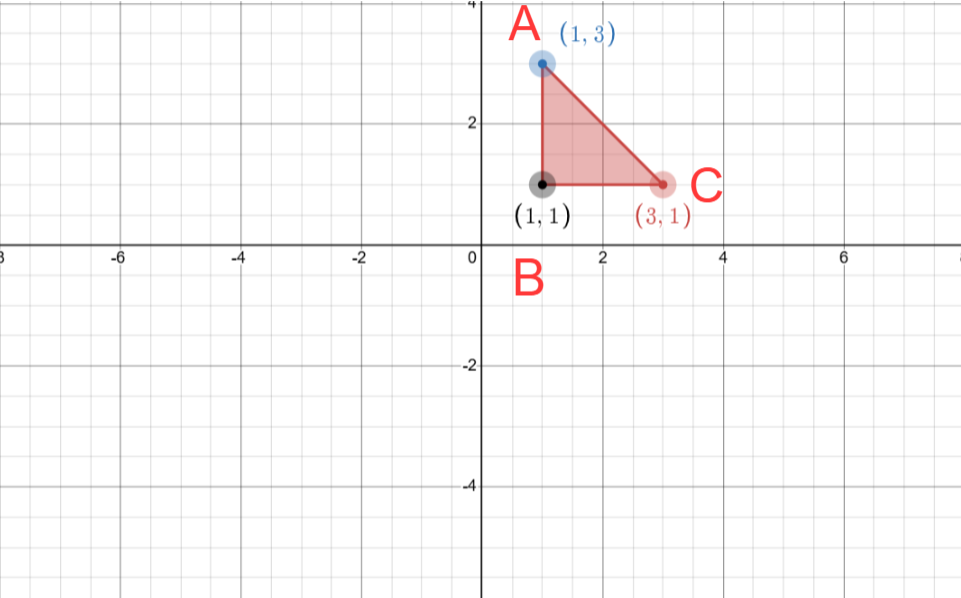
Use this pre-image to show a reflection over the y-axis.
Use this pre-image to show a 90 degree rotation counter-clockwise with respect to origin.
Use this pre-image to show a) a reflection over the y-axis and b) a 90 degree rotation counter-clockwise with respect to origin.
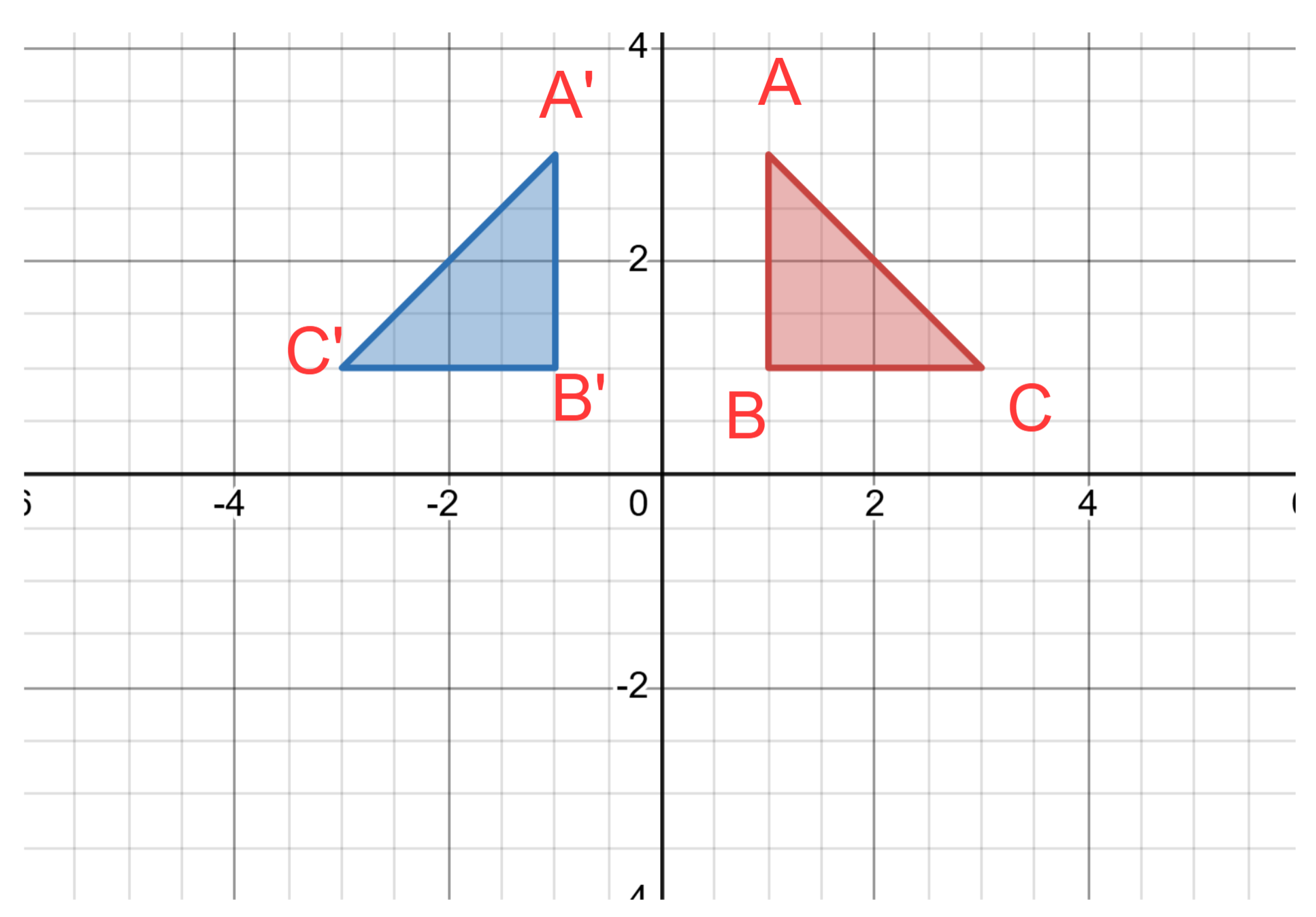
What transformation is happening if the red triangle is the pre-image and the blue triangle is the image?
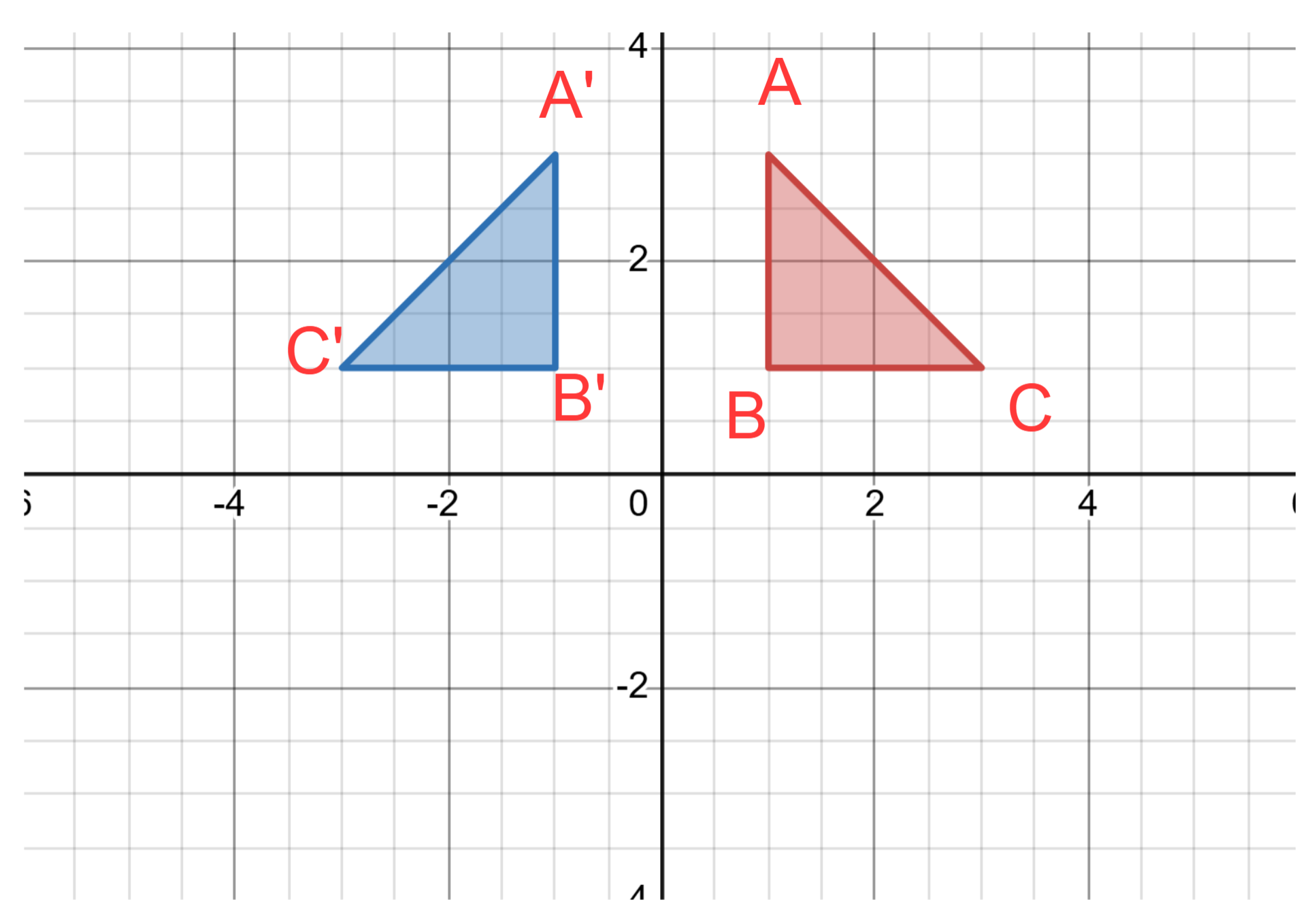
How do you know this is not a translation?
Use evidence from the graph.
How does this reflection show that the red triangle and blue triangle are congruent? Is there a way to prove this is true?
Explain using evidence from the graph.
Name one pair of coordinates that represents one point before and after the transformation?
For example (x,y) ------> (new x, new y)

What's another way we can make this transformation possible? You may need to use more than one to show how it's possible. Sketch out your transformations.