Factor this standard form quadratic expression.

Use the box method to show your work.
Factor this standard form quadratic expression.
Use the box method to show your work.
Factor this standard form quadratic expression.
Use the box method to show your work.
Factor this standard form quadratic expression.
Use the box method to show your work.
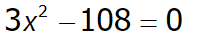
Solve this quadratic equation.
Solution 1:
Solution 2:
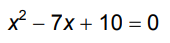
Solve this quadratic equation.
Solution 1:
Solution 2:
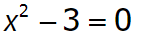
Solve this quadratic equation by taking the square root.
Solution 1:
Solution 2:
Solve this quadratic equation by taking the square root.
Solve this quadratic equation by taking the square root.
Solution 1:
Solution 2:
Use Completing the Square to solve this quadratic equation. Give all solutions in simplest form.
Solution 1:
Solution 2:
Use Completing the Square to solve this quadratic equation. Give all solutions in simplest form.
Solution 1:
Solution 2:
Use Completing the Square to solve this quadratic equation. Give all solutions in simplest form.
Solution 1:
Solution 2:
Use Completing the Square to solve this quadratic equation. Give all solutions in simplest form.
Solution 1:
Solution 2:
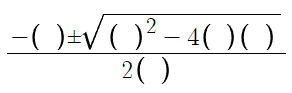
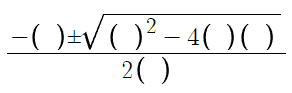
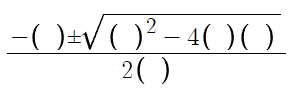
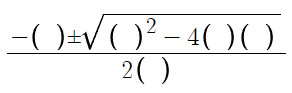
Solve this Quadratic Equation:
a=
b=
c=
Solution 1:
Solution 2:
Solve this Quadratic Equation:
Solution 1:
Solution 2:
Solve this Quadratic Equation:
Solution 1:
Solution 2:
Solve this Quadratic Equation:
Solution 1:
Solution 2:
Solve using the square roots method. Write the answer in simplest form.
Solution 1
Solution 2
Solve using the square roots method. Write the answer in simplest form.
Solution 1
Solution 2
Solve using the square roots method. Write the answer in simplest form.
Solution 1
Solution 2
Solve using the square roots method. Write the answer in simplest form.
Solution 1
Solution 2
Solve using the square roots method. Write the answer in simplest form.
Solution 1
Solution 2
Solve using the square roots method. Write the answer in simplest form.
Solution 1
Solution 2
Solve use completing the square method to solve this quadratic. Write the answer in simplest form.
Solution 1
Solution 2
Solve using the square roots method. Write the answer in simplest form.
Solution 1
Solution 2
Solve this quadratic using any method. Write the answer in the simplest form.
Solution 1
Solution 2
Solve this quadratic using any method. Write the answer in the simplest form.
Solution 1
Solution 2
Solve this quadratic using any method. Write the answer in the simplest form.
Solution 1
Solution 2
Solve this quadratic using any method. Write the answer in the simplest form.
Solution 1
Solution 2
Use the figure below to answer question. Let m∠MQP= 80.
m∠MQN=
m∠NQP=
If m∠DEG = (5x – 4)°, m∠GEF = (7x – 8)°, m∠DEH = (9y + 5)°, find the value of x and y.
x=
y=
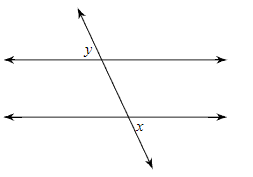
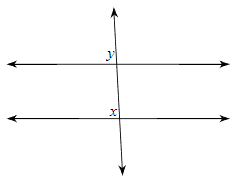
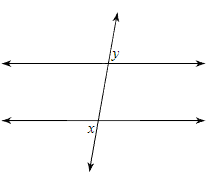
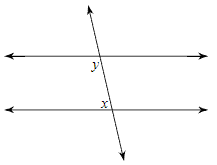
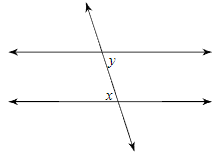
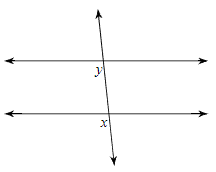
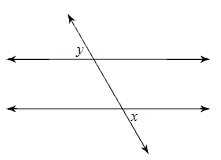
Name the angle relationship between the two indicated angles in the diagram:
These angles are on side(s) of the transversal and the other two lines. Therefore these angles are .
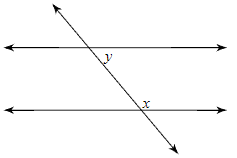
Name the angle relationship between the two indicated angles in the diagram:
These angles are on side(s) of the transversal and the other two lines. Therefore these angles are .
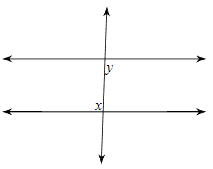
Name the angle relationship between the two indicated angles in the diagram:
These angles are on side(s) of the transversal and the other two lines. Therefore these angles are .
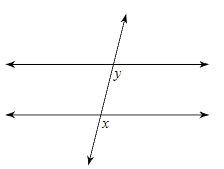
Name the angle relationship between the two indicated angles in the diagram:
These angles are on side(s) of the transversal and the other two lines. Therefore these angles are .
Name the angle relationship between the two indicated angles in the diagram:
These angles are on side(s) of the transversal and the other two lines. Therefore these angles are .
Name the angle relationship between the two indicated angles in the diagram:
These angles are on side(s) of the transversal and the other two lines. Therefore these angles are .
Name the angle relationship between the two indicated angles in the diagram:
These angles are on side(s) of the transversal and the other two lines. Therefore these angles are .
Name the angle relationship between the two indicated angles in the diagram:
These angles are on side(s) of the transversal and the other two lines. Therefore these angles are .
Name the angle relationship between the two indicated angles in the diagram:
These angles are on side(s) of the transversal and the other two lines. Therefore these angles are .
Name the angle relationship between the two indicated angles in the diagram:
These angles are on side(s) of the transversal and the other two lines. Therefore these angles are .
If m∠1 = 62°, find each measure.
m∠2=
m∠3=
m∠4=
m∠5=
m∠6=
m∠7=
m∠8=
Given the 2 line are cut by a transversal and are parallel:
What is the measure missing angle?
What is the reason? (Use Notes Page 3 and Notes Page 4 to help you).
Given the 2 line are cut by a transversal and are parallel:
What is the measure missing angle?
What is the reason? (Use Notes Page 3 and Notes Page 4 to help you).
Given the 2 line are cut by a transversal and are parallel:
What is the measure missing angle?
What is the reason? (Use Notes Page 3 and Notes Page 4 to help you).
Given the 2 line are cut by a transversal and are parallel:
What is the measure missing angle?
What is the reason? (Use Notes Page 3 and Notes Page 4 to help you).
Given the 2 line are cut by a transversal and are parallel:
What is the measure missing angle?
What is the reason? (Use Notes Page 3 and Notes Page 4 to help you).
Given the 2 line are cut by a transversal and are parallel:
What is the measure missing angle?
What is the reason? (Use Notes Page 3 and Notes Page 4 to help you).
Given the 2 line are cut by a transversal and are parallel:
What is the measure missing angle?
What is the reason? (Use Notes Page 3 and Notes Page 4 to help you).
If l ∥ m, then solve for x.
If l ∥ m, then solve for x.
If l ∥ m, then solve for x.
Find the value of x.
x=
Then, find the measure of each labeled angle.
(6x+20)° =
(8x)° =
Find the value of x.
x=
Then, find the measure of each labeled angle.
(7x+10)° =
(15x +16 )° =
Find the sum of the measures of the interior angles in each polygon.
16-gon
20-gon
100-gon
Find the sum of the measures of the interior angles in each polygon.
14-gon
Each angle is
25-gon
Each angle is
85-gon
Each angle is
Find the value of x.
What is the sum of the exterior angles of any polygon?
What is the formula to find one exterior angle of any polygon?
Find the sum of the measures of the exterior angles in each polygon.
14-gon
Each angle is
25-gon
Each angle is
85-gon
Each angle is
Find the value of x.
Find the value of x.
Find each missing angle measures.
m∠1=
m∠2=
m∠3=
m∠4=
m∠5=
Find the value of x.
Find the value:
x=
m∠D=
m∠E=
m∠F=
Given two sides of a triangle, you can set up an inequality using the sum and difference to show the range of possible lengths for the third side:
14 and 22
a) Set up difference and sum that shows the possible range of side lengths for the third side
b) Write the inequality the shows the range of lengths that could be a third side this triangle:
Given two sides of a triangle, you can set up an inequality using the sum and difference to show the range of possible lengths for the third side:
31 and 28
a) Set up difference and sum that shows the possible range of side lengths for the third side
b) Write the inequality the shows the range of lengths that could be a third side this triangle:
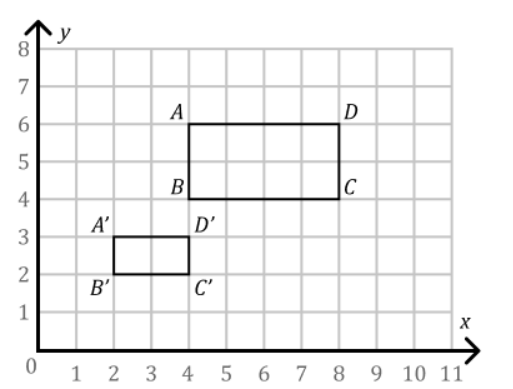
This is an example of what kind of dilation?
Scale factor can be written as (x,y)→(kx, ky)
The scale factor is of this example is (x,y)→
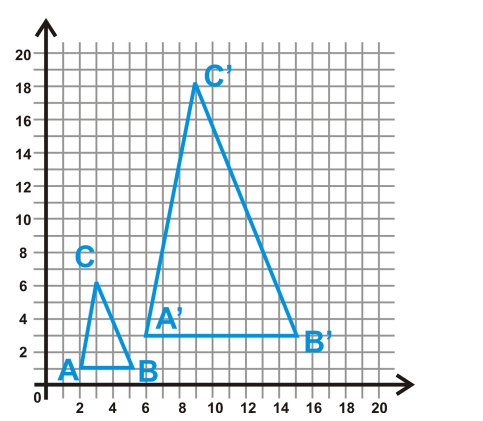
This is an example of what kind of dilation?
Scale factor can be written as (x,y)→(kx, ky)
The scale factor is of this example is (x,y)→
Graph and label each figure and its image under a dilation with the given
scale factor. Assume all dilations use the origin as the center of dilation.
J':
L':
K':
M':
Identify the center of dilation and scale factor of each dilation.
center of dilation (x,y)
scale factor
k=
Identify the center of dilation and scale factor of each dilation.
center of dilation (x,y)
scale factor
k=
What are the three ways to represent a ratio?
1.
2.
3.
Use the given ratios to solve each problem:
The ratio of the measures of two complementary angles is 7:8. What is the measure of the smaller angle?
Use the given ratios to solve each problem:
The ratio of the measures of the three angles in a triangle is 10:3:7. Find the measure of the largest angle.
Solve each proportion.
Solve each proportion.
Use this similarity statement △FGH ~△JKH to list the similar parts.
∠H=∠
∠J=∠
∠G=∠
JH~
GH~
FG~
Write a proportion based on the corresponding sides
The pairs of polygons in the example are similar. Give the scale factor of figure A to figure B.
The pairs of polygons in the example are similar. Give the scale factor of figure A to figure B.
If △JKL ~ △NMP, find the value of x.
x=
Use the Triangle Proportionality Theorem to solve for x.
x=
Use the Triangle Proportionality Theorem to solve for x.
x=
Use the Parallel Lines and Proportional Parts to solve for x.
x=
What is the correct ratio of sides for each trigonometric function?
sin ϴ=
cos ϴ=
tan ϴ=
Find the 3 trigonometric function for θ, Give each trig ratio as a fraction in simplest form.
sin θ=
cos θ=
tan θ=
Find the 3 trigonometric function for θ, Give each trig ratio as a fraction in simplest form.
sin θ=
cos θ=
tan θ=
▱LMNP is a parallelogram.
Solve for x.
What is the length of LM?
▱STUV is a parallelogram.
If TV = 74 and WV = 4x + 1, solve for x.
▱ABCD is a parallelogram.
Solve for x.
Find m∠R
Find m∠Q
If each quadrilateral below is a rectangle, find the missing measures. Do not for get to use the degree symbol in your answers. ( ° )
m∠BCD=
m∠ADE=
m∠ABD=
m∠AEB=
m∠CBE=
m∠DEA=
If each quadrilateral below is a rectangle, find the missing measures.
VW=
WX=
YW=
ZX=
VX=
If each quadrilateral below is a rhombus, use the given information to find the missing measures. Do not for get to use the degree symbol in your answers. ( ° )
m∠KNL=
m∠KJL=
m∠MLK=
m∠JKM=
m∠JML=
If each quadrilateral below is a rhombus, use the given information to find the missing measures.
x=
Do not for get to use the degree symbol in your answers. ( ° )
m∠ADB=
m∠BAD=
If the quadrilateral below is a square, find the missing measures.
Do not forget to use the degree symbol in your answers. ( ° )
m∠EFG=
m∠GDH=
m∠GEF=
m∠DHG=
If the quadrilateral below is a square, solve for x and find the missing measures.
x=
Do not forget to use the degree symbol in your answers. ( ° )
m∠RQT=
m∠PTQ=
If the quadrilateral below is a trapezoid, find the missing measures.
Find x=
Do not forget to use the degree symbol in your answers. ( ° )
m∠VST=
Find WX.
WX=
Find GH.
x=
GH=