Per 3 Unit 4 Solving Real and Complex Quadratic Equations Practice Test (2/6/2026)
star
star
star
star
star
Last updated 5 months ago
12 Nsɛmmisa
Simplify this radical. (Don't forget to split your answer into two parts.)
1st Solution
2nd Solution
Simplify this expression.
Final answers must be in a + bi form.
Simplify this expression.
Final answers must be in a + bi form.
Solve using the square roots method.
Solution 1
Solution 2
Write the answer in simplest radical form. (no decimals)
Solve using the square roots method.
Solution 1
Solution 2
Write the answer in simplest radical form. (no decimals)
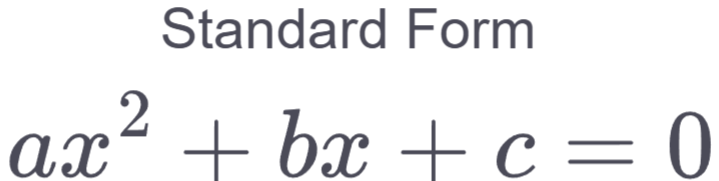
Put this quadratic equation in Standard Form:
Now that you converted the quadratic equation into standard form, what are the coefficients?
Find
a=
b=
c=
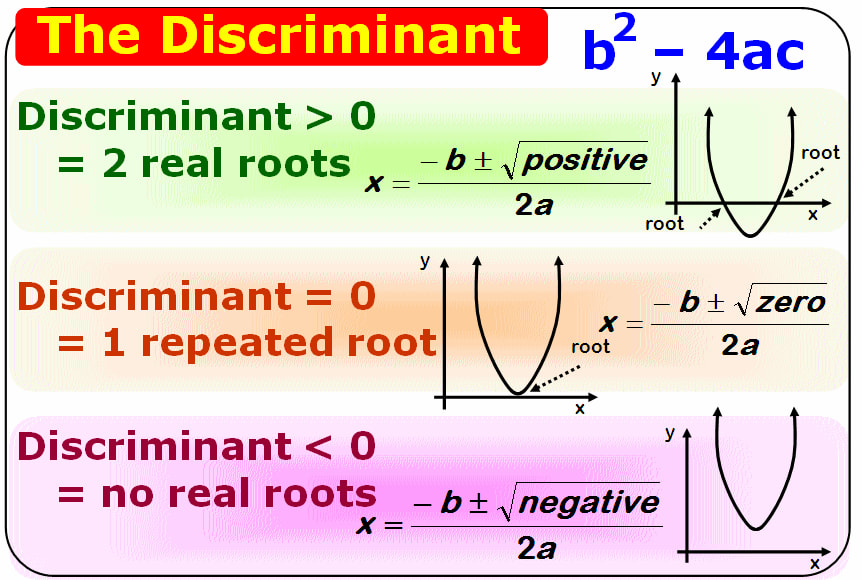
What is the discriminant?
b² - 4ac=
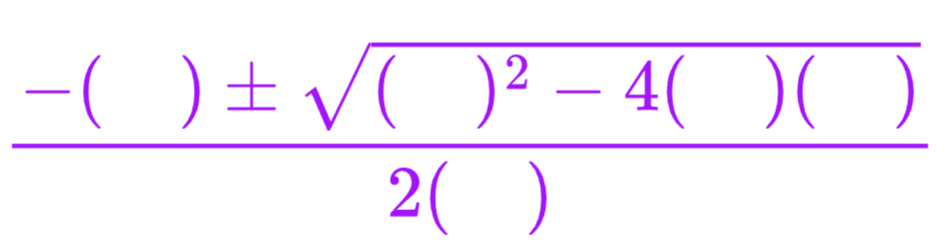
Solve this quadratic equation. You may use any method covered in this unit.
Convert this quadratic equation to standard form:
Use the cofficients to find:
a
b
c
Find the solution(s)
(If the equation only has one answer, then enter it in both boxes.)
Solution 1:
Solution 2:
Solve this quadratic equation. You may use any method covered in this unit.
Convert this quadratic equation to standard form:
Use the cofficients to find:
a
b
c
Find the solution(s)
(If the equation only has one answer, then enter it in both boxes.)
Solution 1:
Solution 2:
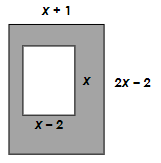
Given the diagram below, if the area of the shaded region is 78 ft², what are the
dimensions of the inside rectangle?
Write an expression that represents the area of the unshaded area.
Write an expression that represents the area of the larger rectangle.
Write an equation for the area of the shaded region.
What is the length of x?
Because the value of the discriminant was , that means the quadratic equation will have solutions.
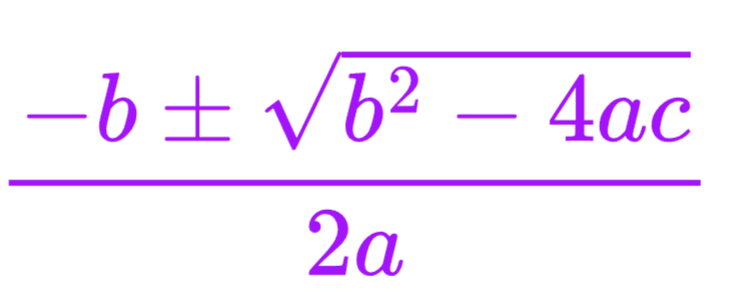
Solve this Quadratic Equation using the quadratic formula:
Remember that you already converted this into Standard Form
solution 1
x=
solution 2
x=