Grade 12 Digi-day assessment: The TRC

Last updated over 1 year ago
5 questions
The TRC sought to uncover the truth about various human rights violations that occurred under the Apartheid regime. Various procedures and processes were involved in the commission, including the opportunity for victims to share their stories and perpetrators to ask for amnesty. While the TRC is amongst the most notable attempts (and the first of its kind) at a justice system attempt to practice forms of restorative and retributive justice. However, there is still ongoing debate about its successes and failures, particularly regarding the legacy of Apartheid and whether the TRC met the aim of bringing to justice the violent racialised Apartheid regime. Analyse the sources below and answer the questions that follow.
Required
2

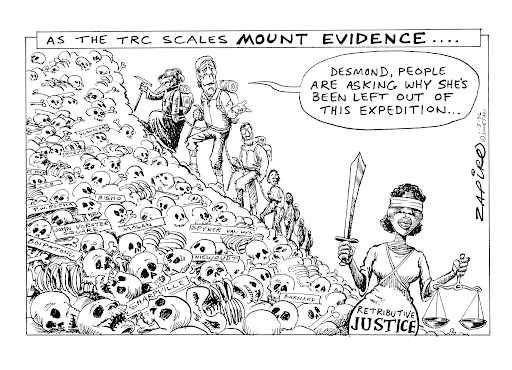
Look at the cartoon and state whether you think the author believed that the TRC provided justice to ALL victims of apartheid? Give a reason for your answer.

Required
1

Name 3 major instances/examples of human rights violations tackled by the TRC that you can see mentioned in the above cartoon.

Read the text below and answer the questions that follow.

"The establishment of a Truth and Reconciliation Commission in 1995 played a fundamental role in this process of historical, political and social redefinition. Authorized by the Promotion of National Unity and Reconciliation Act, the TRC was set up “to provide for the investigation and the establishment of as complete a picture as possible of the nature, causes and extent of gross violations of human rights committed” (Promotion of National Unity and Reconciliation Act, No. 34 of 1995) during a 34-year period of South African history (1960 to 1994). The mandate of the Commission – carried out through three committees: Amnesty, Reparation and Rehabilitation, and Human Rights Violations – specified the following goals: to investigate past gross human rights violations, afford victims an opportunity to relate the violations they suffered, grant amnesty to persons who committed abuses during apartheid – as long as crimes were politically motivated and there was full disclosure by those seeking amnesty –,1 take measures toward restoring human dignity, report to the nation about its findings, and make recommendations aimed at preventing gross violations of human rights in the future."

[Accessed via https://journals.openedition.org/ces/4978 -Engaging with the South African Past: The TRC and How Theatre Performs Back Francesca Mussi]
Required
3

According to the source, what were the three committees that carried out the mandate of the commission?

Required
6

Using your own knowledge and what is mentioned in the source, match the branch of the TRC to its intended purpose/role.

Draggable itemCorresponding Item
Amnesty
Afford victims an opportunity to relate the violations they suffered as well as rant amnesty to persons who committed abuses during apartheid – as long as crimes were politically motivated and there was full disclosure by those seeking amnesty
Reparation and Rehabilitation
Make recommendations aimed at preventing gross violations of human rights in the future.
Human Rights Violations
Investigate past gross human rights violations and report to the nation about its findings
Required
3

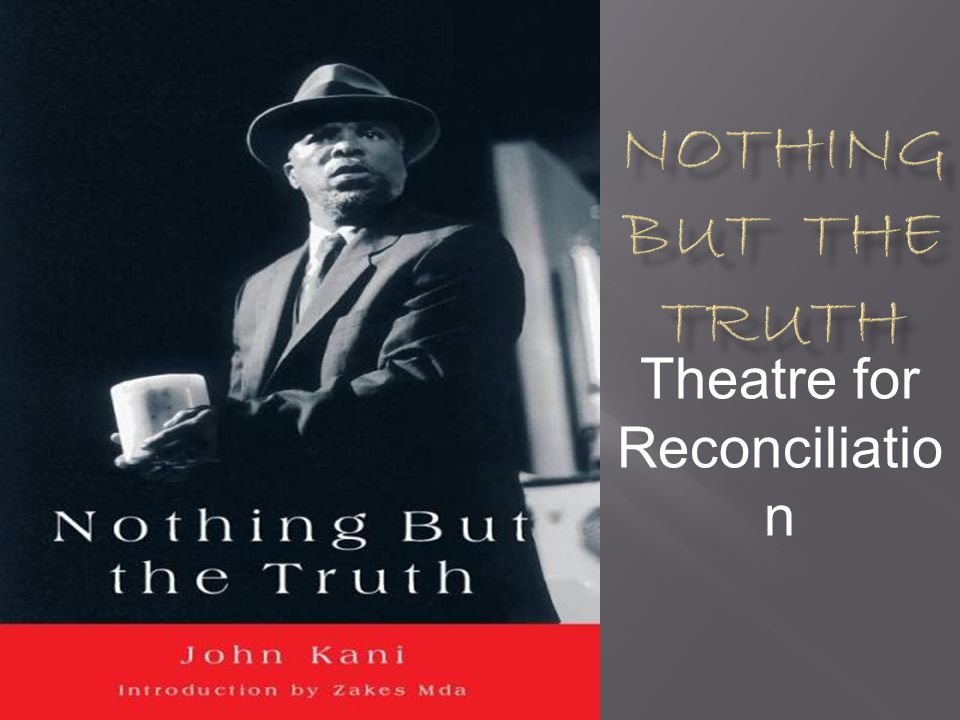
Explain in your own words what the term 'theatre for reconciliation' is and how Nothing but the truth is an example of it.