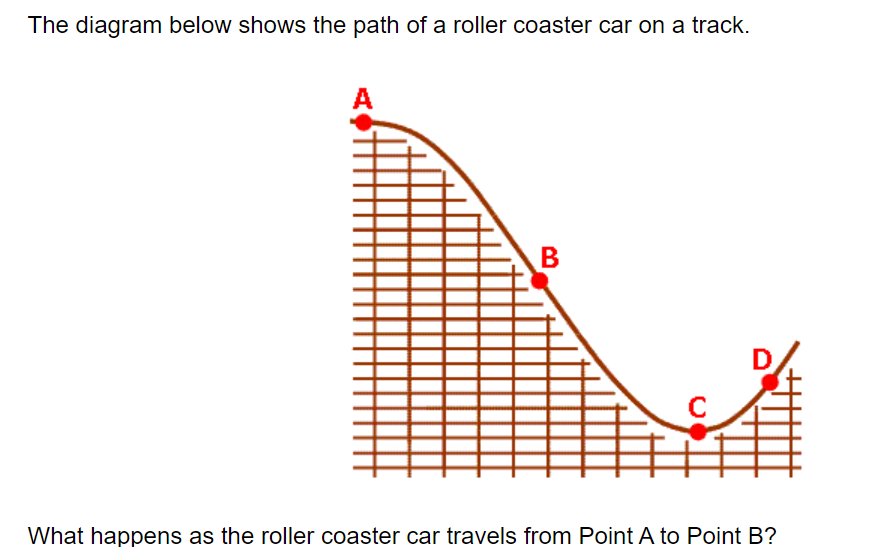
Which location shows the rock with the greatest potential energy?
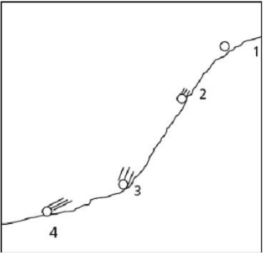
Which location shows the rock with the greatest potential energy?
What type of energy is present in an unused battery?
What is an example of gravitational potential energy?
Which type of energy is being converted into kinetic energy as a marble falls from a shelf?
Jeremy found a pair of swim shorts he lost two years ago. The waistband in the shorts was all stretched out, which made the shorts too big for him.
Which statement is true about the swim shorts?
Which is these is not a way that thermal energy moves among objects
Which of these transforms chemical potential energy into heat?
Which location shows the rock with the greatest potential energy?
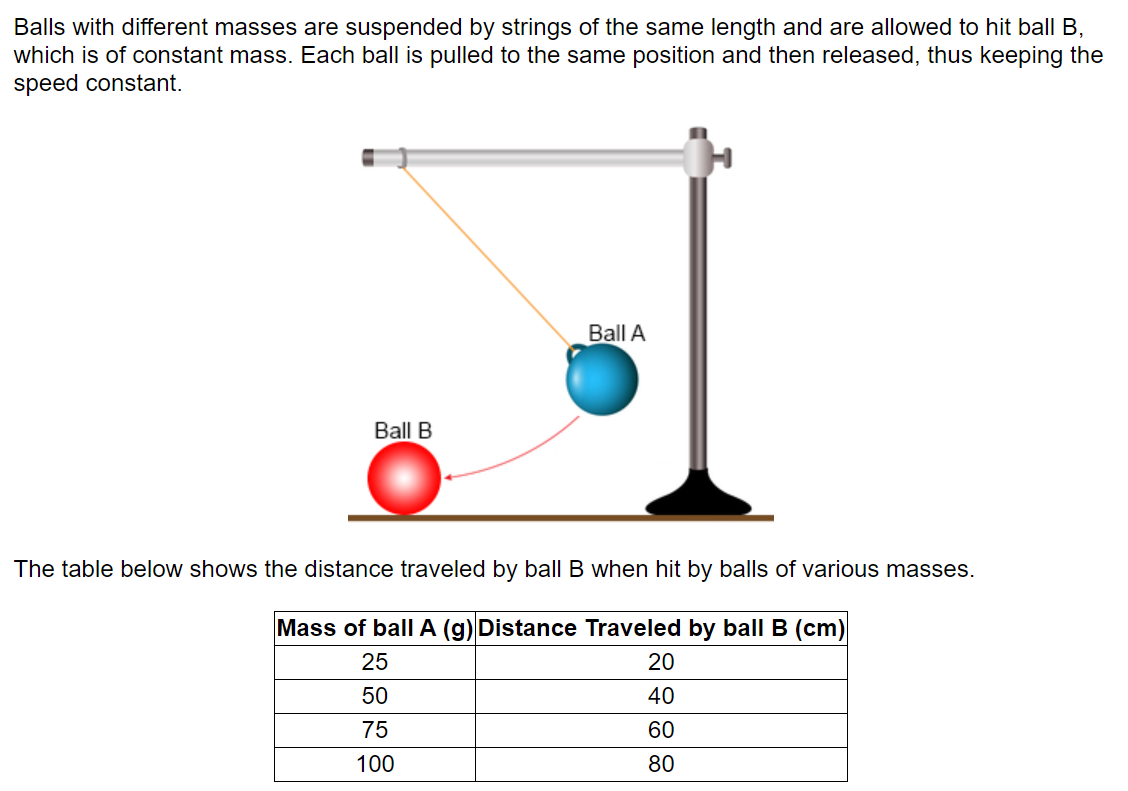
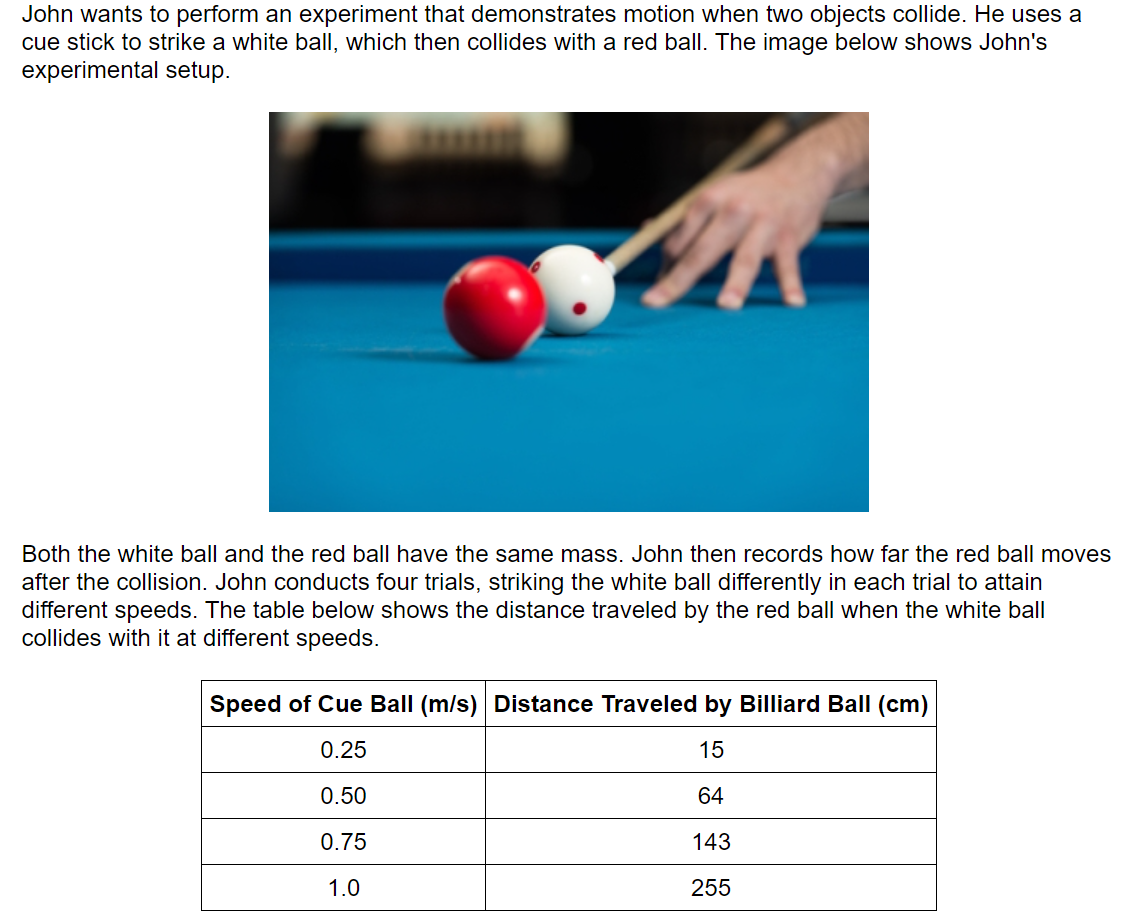
Which of the following statements best describes the results of the experiment?
Mr. Ito's students suggested several investigations that could be done to learn about the movement of heat. Mr. Ito completed the investigations in front of his class. The investigations and their results are provided below.
investigation W: A bowl was filled with warm soup. The temperature of the bowl increased.
investigation X: A warm pan was put on top of an ice cube. The ice cube slowly melted.
investigation Y: A marble was placed near a light source. After some time, the marble felt warm.
investigation Z: A cold spoon was put into a warm cup of tea. The spoon quickly began to warm.
Which investigation is an example of the movement of heat through radiation?
Which of the following statements best explains the results of the experiment?
Why is chemical energy a type of potential energy?
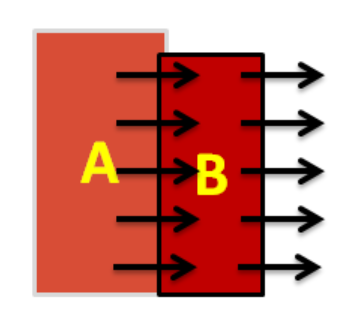
Below is a diagram representing the movement of heat waves from two different objects. The arrows represent the movement of the heat.
Which statement about the diagram above is NOT true.
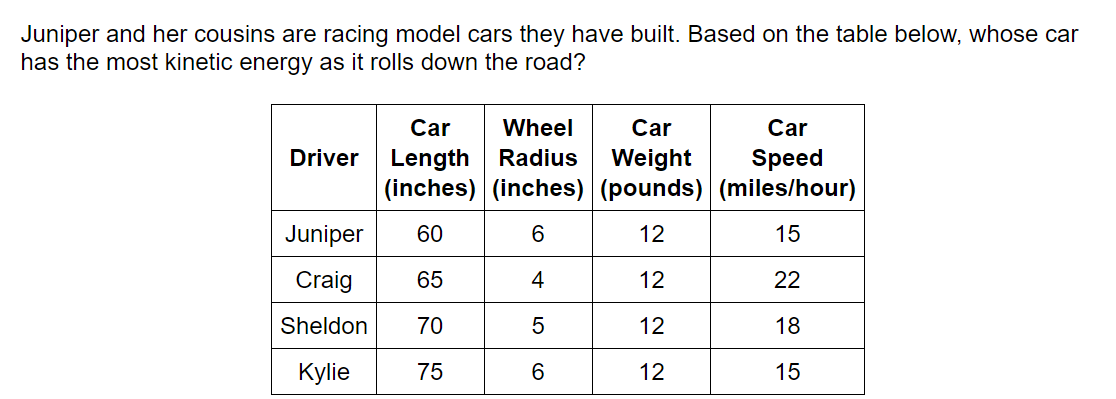
Kinetic energy is the energy of motion. How could a person determine how much kinetic energy an object has?