HG U1D6 Putting It All Together Aug8
star
star
star
star
star
Last updated about 1 year ago
15 Nsɛmmisa
1
1
1
1
1
1
1
1
1
1
1
1
1
1
1
Warm-Up
a. The sum of 6x2 + 10x - 7 and -x2 - 8x is equal to
b. When we subtract 9x2 - 4 from 10x2 + 9x - 8, the result equals
c. (3x2 - 10x - 2) - (6x + 3) =
d. The product of 5x and (x + 3) is equal to
e. (x - 6)(x + 3) =
f. (3x - 4)(3x2 + 3x - 4) =
g. (-x + 1)(x2 - 3x + 4) =
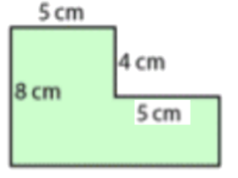
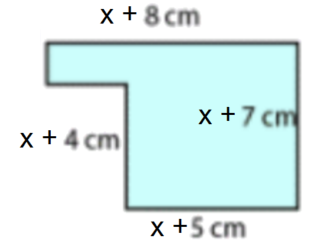
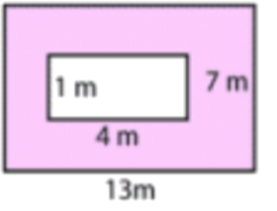
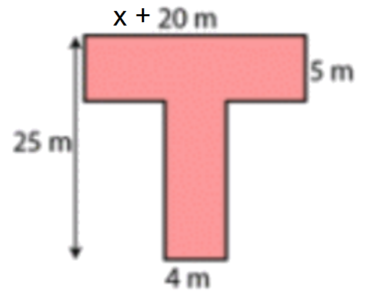
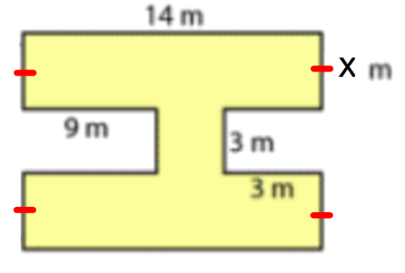
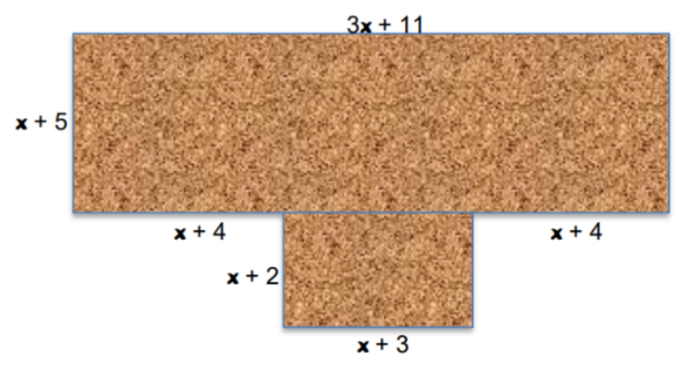
Write a polynomial in standard form to represent the area of the shaded region in the polygon.
Area =
Write a polynomial in standard form to represent the area of the shaded region in the polygon.
Area =
Write a polynomial in standard form to represent the area of the shaded region in the polygon.
Area =
Write a polynomial in standard form to represent the area of the shaded region in the polygon.
Area =
Write a polynomial in standard form to represent the area of the shaded region in the polygon.
Area =
Perimeter
Write a polynomial expression to represent the perimeter of the polygon.
Perimeter =
The leading coefficient is not always the first coefficient in a polynomial in standard form.
The perimeter of any shape is determined by multiplying the side lengths by 2 before adding.
If a rectangular prism has the side lengths of 2x, x + 3, and 4, the volume will represent a trinomial
The area of a square patch of land, where wildflowers grow, is x2 - 16. The length and width of the patch of land must be x + 4.
A Square is Stretched into a Rectangle.
Hint: Draw this!
The square has unknown dimensions.
a. Write an expression to represent the perimeter and area of a square with unknown dimensions. (Hint: I used x for the variable.)
Perimeter of the Square=
Area of the Square =
Opposite sides of the square are increased by 4. The other opposite sides are decreased by 3.
b. Write an expression to represent the perimeter and area of the new rectangle.
Perimeter of the Rectangle =
Area of the Rectangle =
c. Which one is bigger? The square or the rectangle? Graph the each polynomial to see.
Hint - Possible answers: Square, Rectangle, Neither (They're the same.), Depends on the value of x.
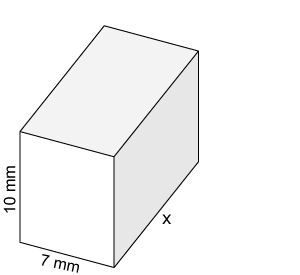
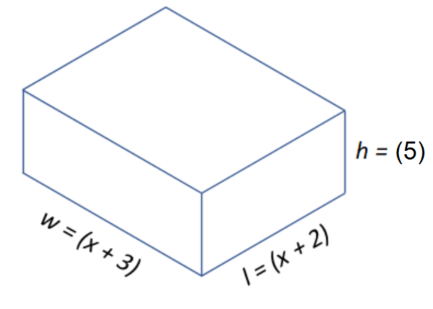
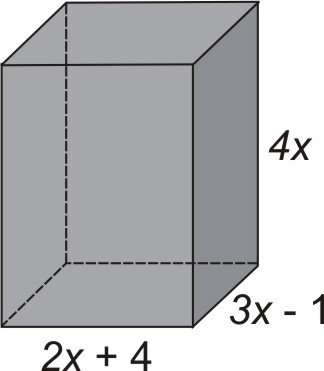
Write a polynomial expression to represent the volume of the box.
Volume =
The degree of the volume is
The lead coefficient is
Write a polynomial expression to represent the volume of the box.
Volume =
The degree of the volume is
The lead coefficient is
Write a polynomial expression to represent the volume of the box.
Volume =
The degree of the volume is
The number of terms in the simplified polynomial is