Analysis of use of figurative language and connotation.
20
20
20
20
20
Question 1
1.
Question 2
2.
Question 3
3.
Question 4
4.
Question 5
5.
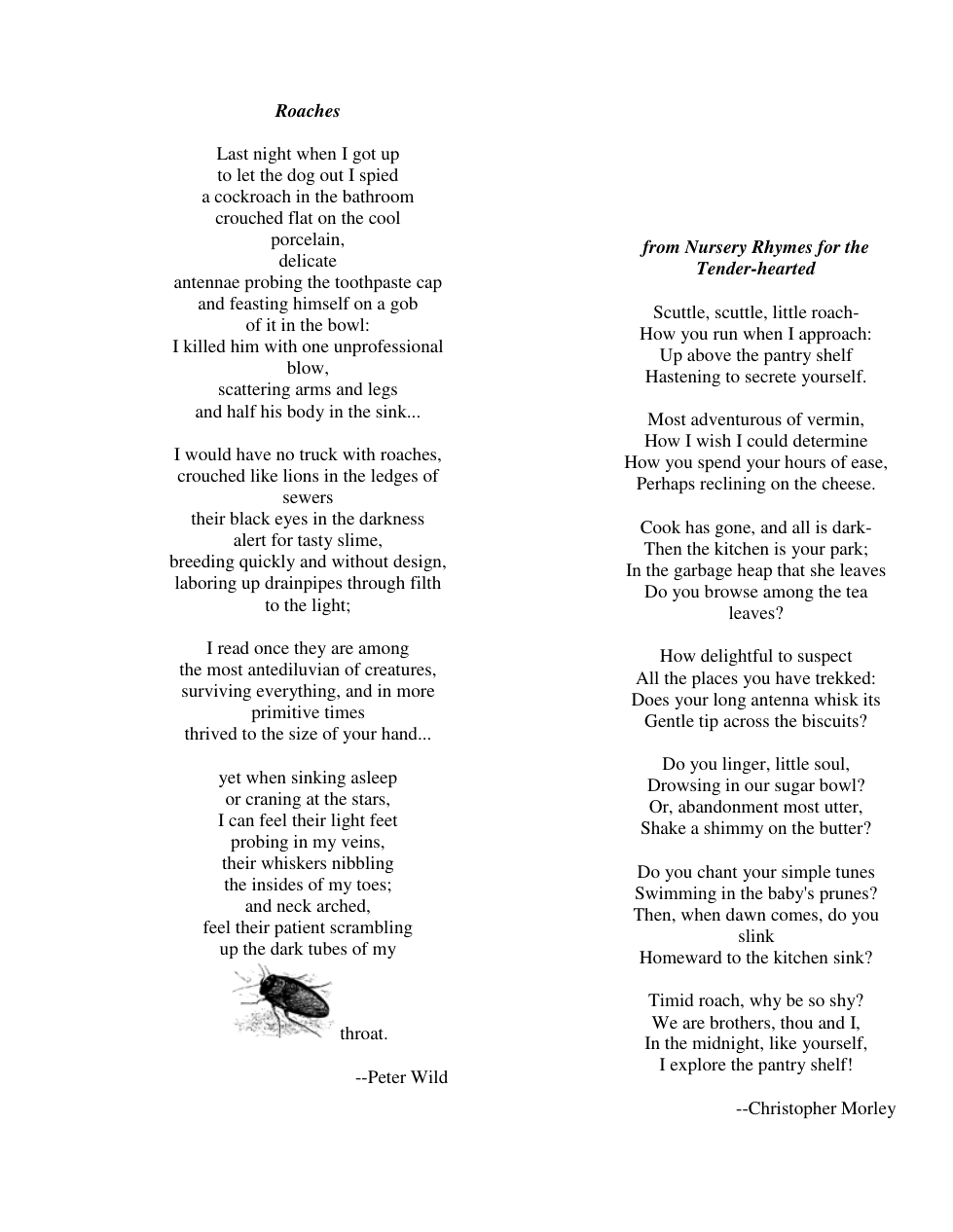
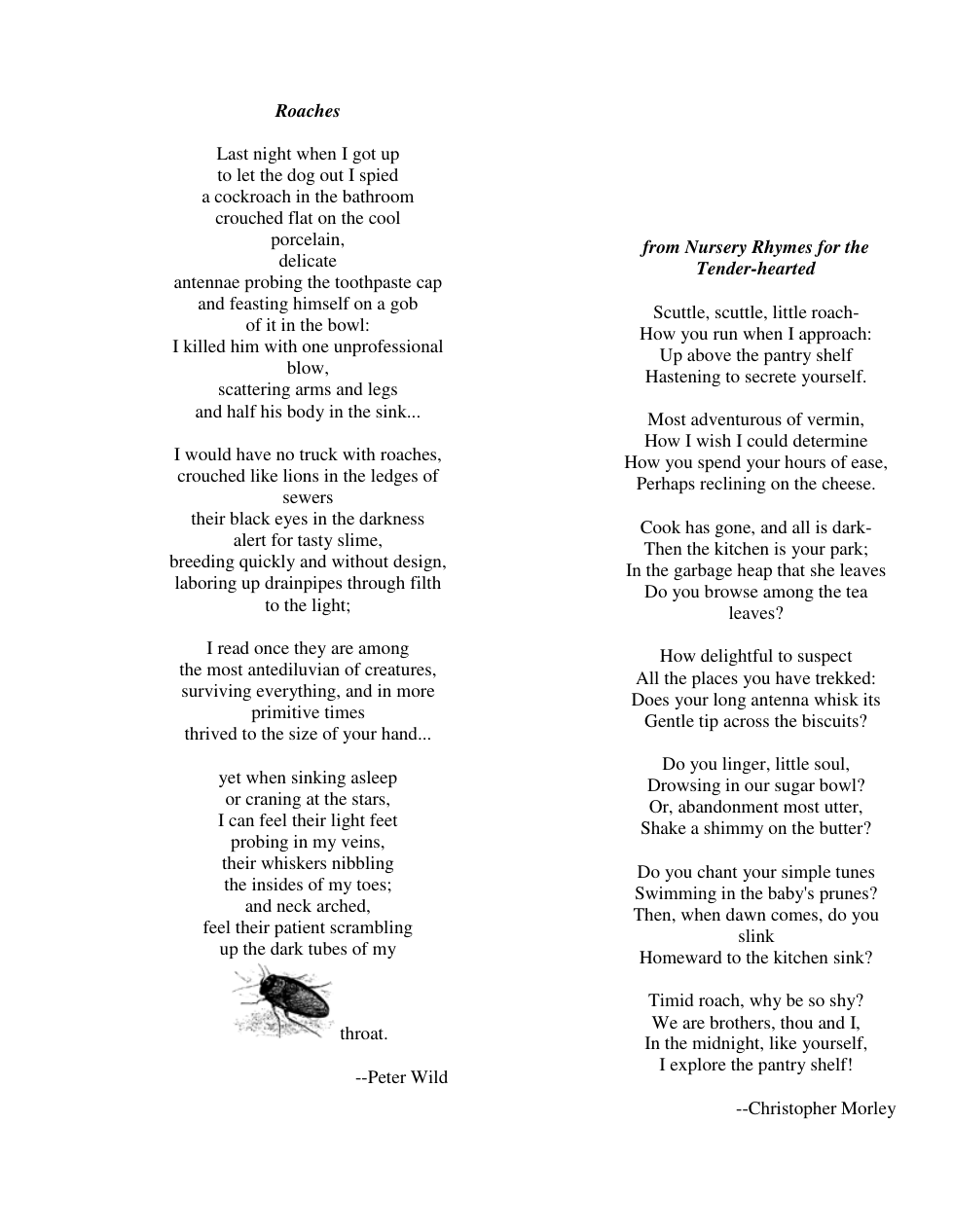
In the first poem, how does the poet use personification to describe the roach?
A. The roach is described as crouching flat on the cool porcelain.
B. The roach is given human-like qualities such as 'probing' and 'feasting.'
C. The roach is compared to a lion in the ledges of sewers.
D. The roach is depicted as an ancient creature surviving primitive times.
Which line from the second poem, 'Nursery Rhymes for the Tender-hearted,' best illustrates the poet's use of hyperbole?
A. 'How you run when I approach'
B. 'Do you chant your simple tunes swimming in the baby's prunes?'
C. 'We are brothers, thou and I'
D. 'In the garbage heap that she leaves'
How do the poets' connotations of roaches differ between the two poems?
A. Both poets view roaches as ancient creatures that are disgusting and vile.
B. Wild views roaches as disgusting pests, while Morley finds them adventurous and somewhat endearing.
C. Wild and Morley both see roaches as timid and shy creatures that avoid humans.
D. Both poets use figurative language to describe roaches as hardworking and industrious insects.
In the second poem, 'Nursery Rhymes for the Tender-hearted,' how does the use of alliteration in the line 'Scuttle, scuttle, little roach' contribute to the poem's tone?
A. It creates a sense of urgency and fear.
B. It adds a playful and rhythmic quality to the poem.
C. It highlights the roach's quiet and stealthy movements.
D. It emphasizes the roach's disgusting and repulsive nature.
How does the use of simile in the line 'crouched like lions in the ledges of sewers' from the first poem impact the reader's perception of roaches?
A. It suggests that roaches are timid and shy creatures.
B. It portrays roaches as majestic and powerful.
C. It emphasizes the roaches' filthy living conditions.
D. It implies that roaches are ancient and prehistoric.