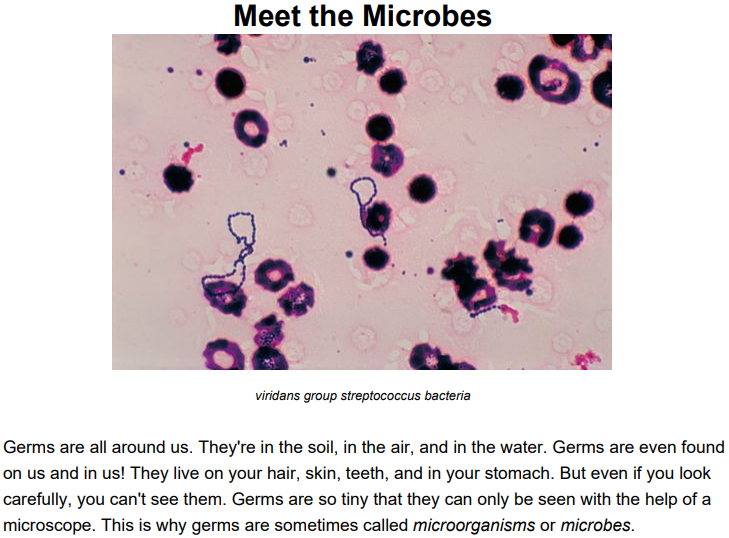
1
What do you see in the picture?
What do you see in the picture?
1
Where do germs live?
Where do germs live?
This Formative is OPTIONAL unless Ms. Brunett tells you that you must complete it because you have 4 or more absences. It has 4 assignments. Each assignment you complete will improve your grade on one missing or incomplete class assignment, or it will count as one assignment for a day when you were absent. If you have no missing or incomplete class assignments, and if you were not absent, each assignment will be worth 10% extra credit. This Formative is due Friday, March 7th.
Este Formative es OPCIONAL a menos que la Sra. Brunett le indique que debe completarlo porque tiene 4 o más ausencias. Tiene 4 tareas. Cada tarea que complete mejorará su calificación en una tarea de clase faltante o incompleta, o contará como una tarea por un día en el que estuvo ausente. Si no tiene tareas de clase faltantes o incompletas, y si no estuvo ausente, cada tarea valdrá un 10% de crédito adicional. Este Formative debe entregarse el viernes 7 de marzo.
Iyi Formative ntabwo isabwa keretse Madamu Brunett akubwiye ko ugomba kuyuzuza kuko ufite 4 cyangwa byinshi udahari. Ifite inshingano 4. Buri mukoro urangije uzamura amanota yawe kumurongo umwe wabuze cyangwa utuzuye, cyangwa bizabarwa nkinshingano imwe kumunsi mugihe udahari. Niba udafite umukoro wabuze cyangwa utuzuye, kandi niba utari uhari, buri mukoro uzaba ufite agaciro ka 10% byinguzanyo. Iyi Formative igomba kuwa gatanu, 7 Werurwe.
هذا النموذج التكويني اختياري ما لم تخبرك السيدة برونيت بضرورة إكماله لأنك تغيبت 4 مرات أو أكثر. يحتوي النموذج على 4 واجبات. كل واجب تكمله سيحسن درجتك في واجب واحد مفقود أو غير مكتمل، أو سيحسب كواجب واحد ليوم كنت غائبًا فيه. إذا لم يكن لديك واجبات مفقودة أو غير مكتملة، وإذا لم تكن غائبًا، فستستحق كل مهمة 10% رصيدًا إضافيًا. موعد تسليم هذا النموذج التكويني هو الجمعة 7 مارس.
What do you see in the picture?
Where do germs live?
How can germs help us?
How do viruses make you sick?
Why are bacteria different from viruses?
What is the main idea of the section "The Invaders"?
Why do most people stay healthy?
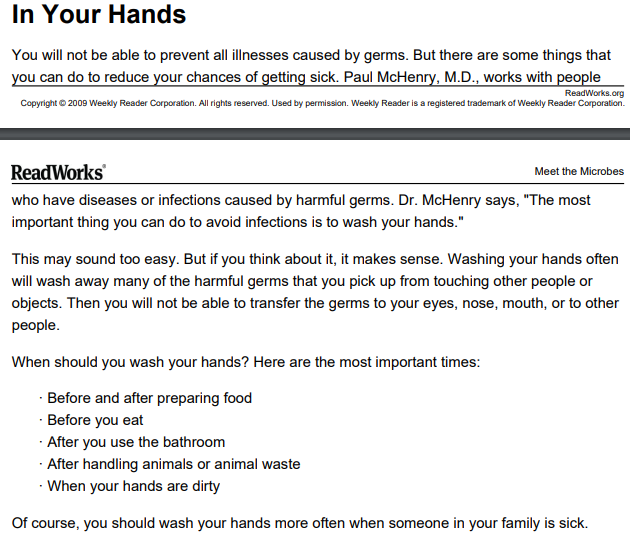
How can you prevent infection from germs?
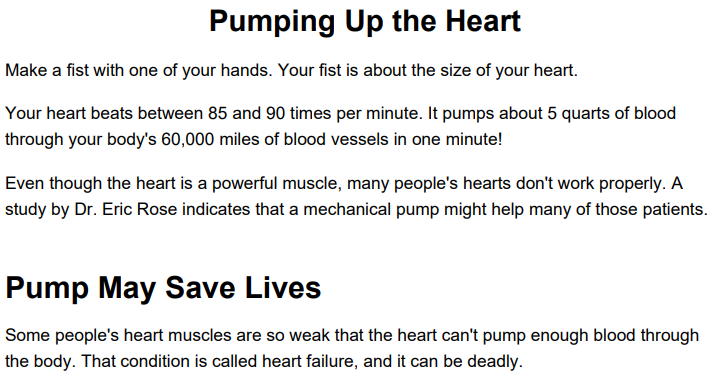
How many times does your heart beat per minute?
What might help people whose hearts don't work properly?
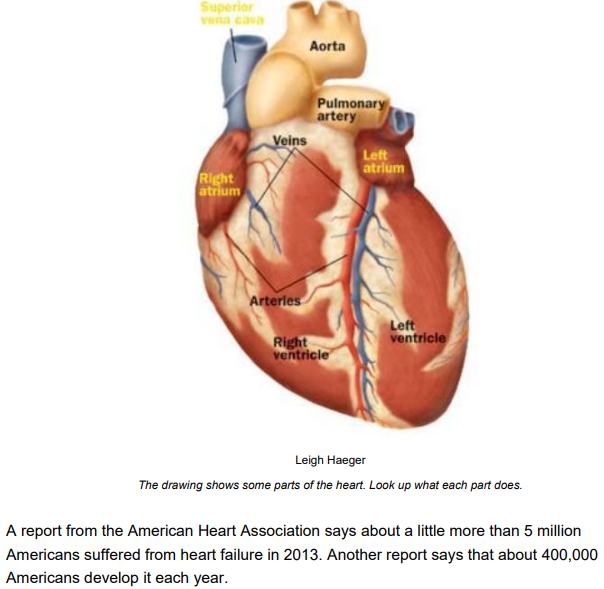
What is the purpose of this paragraph?
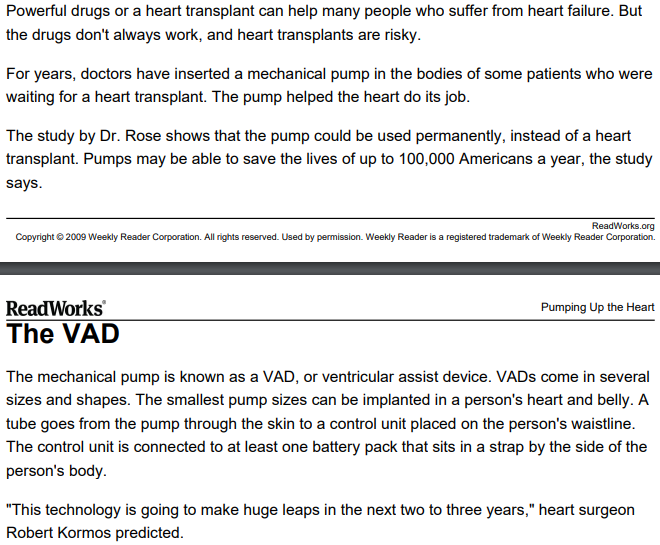
What is the problem with drugs or heart transplants?
Why are the pumps important?
Where do the smallest VADs go?
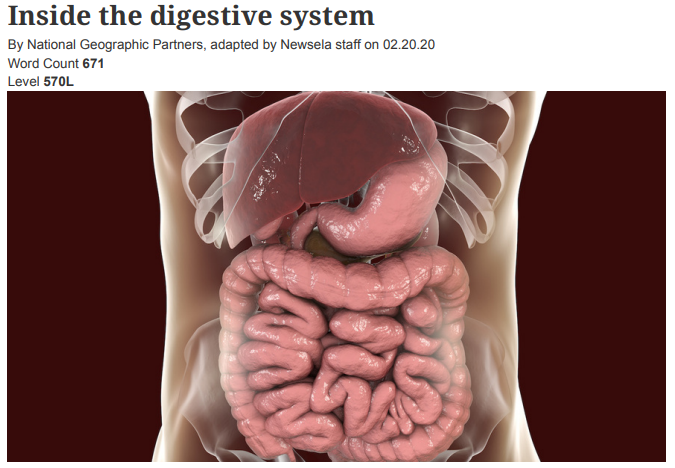
What do you see in the picture?
What is the function of the digestive system?
What do your teeth do?
What is the difference between chewing and the rest of the digestion process?
What happens after nutrients are absorbed in the small intestine?
What is the function of the pancreas?
What is one function of the liver?
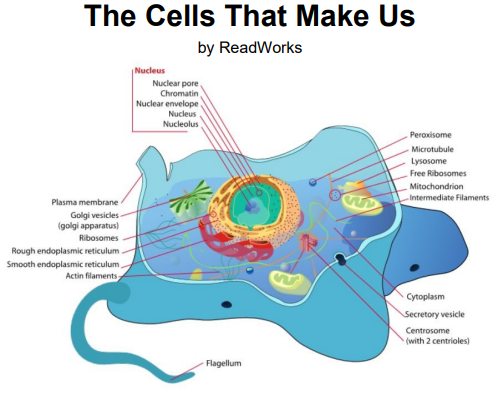
What do you see in the picture?
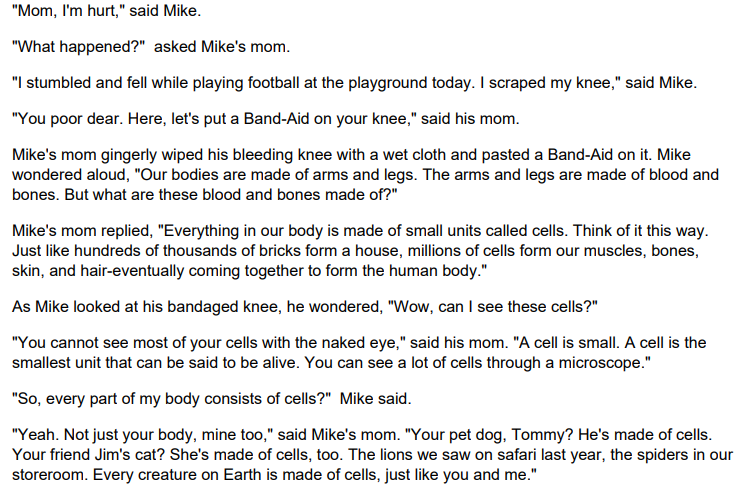
What happened to Mike?
What is everything in our body made of?
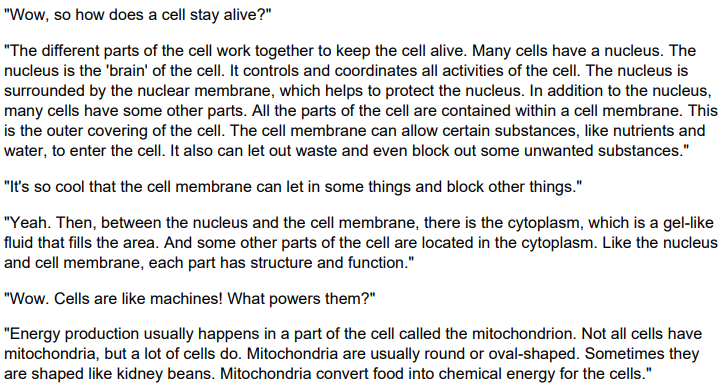
What is the function of the nucleus?
What part of the cell allows certain substances to enter the cell?
Why are the mitochondria important?
What problem do some people have with their heart muscles?
What does the liver do with alcohol?
Why can you not see cells?
What is every creature on Earth made of?