Epic Grammar Benchmark - Middle School (8/9/2024)
star
star
star
star
star
Last updated 7 days ago
61 Nsɛmmisa
Use the the grammar benchmark that you completed to add your anwers to this formative document.
Use the the grammar benchmark that you completed to add your anwers to this formative document.

Parts of Speech - Match
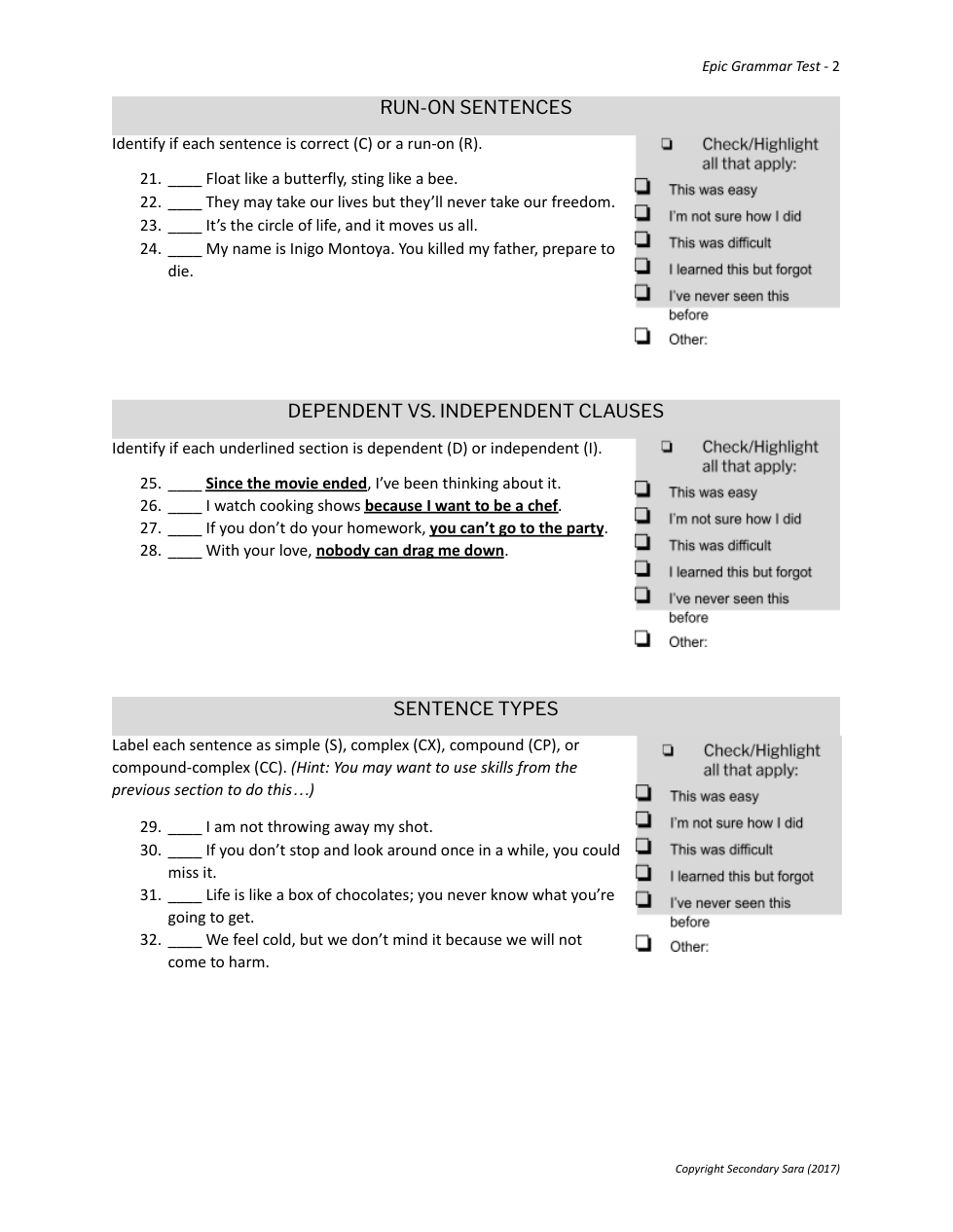
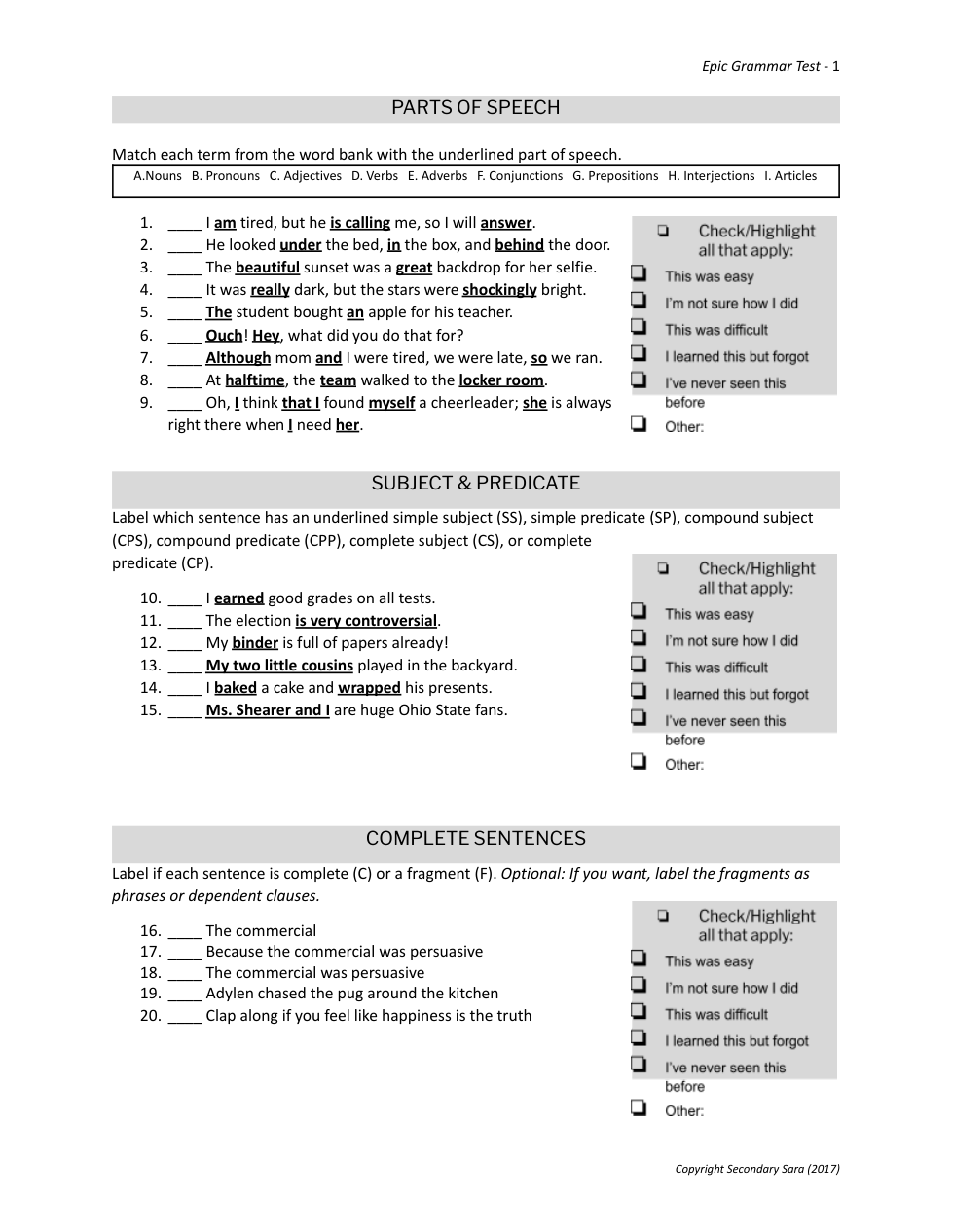
Parts of Speech - Match
Parts of Speech - Match
Parts of Speech - Match
Parts of Speech - Match
Parts of Speech - Match
Parts of Speech - Match
Parts of Speech - Match
Parts of Speech - Match
Label which sentence has an underlined simple subject (SS), simple predicate (SP), compound subject (CPS), compound predicate (CPP), complete subject (CS), or complete predicate (CP).
Label which sentence has an underlined simple subject (SS), simple predicate (SP), compound subject (CPS), compound predicate (CPP), complete subject (CS), or complete predicate (CP).
Label which sentence has an underlined simple subject (SS), simple predicate (SP), compound subject (CPS), compound predicate (CPP), complete subject (CS), or complete predicate (CP).
Label which sentence has an underlined simple subject (SS), simple predicate (SP), compound subject (CPS), compound predicate (CPP), complete subject (CS), or complete predicate (CP).
Label which sentence has an underlined simple subject (SS), simple predicate (SP), compound subject (CPS), compound predicate (CPP), complete subject (CS), or complete predicate (CP).
Label which sentence has an underlined simple subject (SS), simple predicate (SP), compound subject (CPS), compound predicate (CPP), complete subject (CS), or complete predicate (CP).
Label if each sentence is complete (C) or a fragment (F). Optional: If you want, label the fragments as phrases or dependent clauses.
Label if each sentence is complete (C) or a fragment (F). Optional: If you want, label the fragments as phrases or dependent clauses.
Label if each sentence is complete (C) or a fragment (F). Optional: If you want, label the fragments as phrases or dependent clauses.
Label if each sentence is complete (C) or a fragment (F). Optional: If you want, label the fragments as phrases or dependent clauses.
Label if each sentence is complete (C) or a fragment (F). Optional: If you want, label the fragments as phrases or dependent clauses.
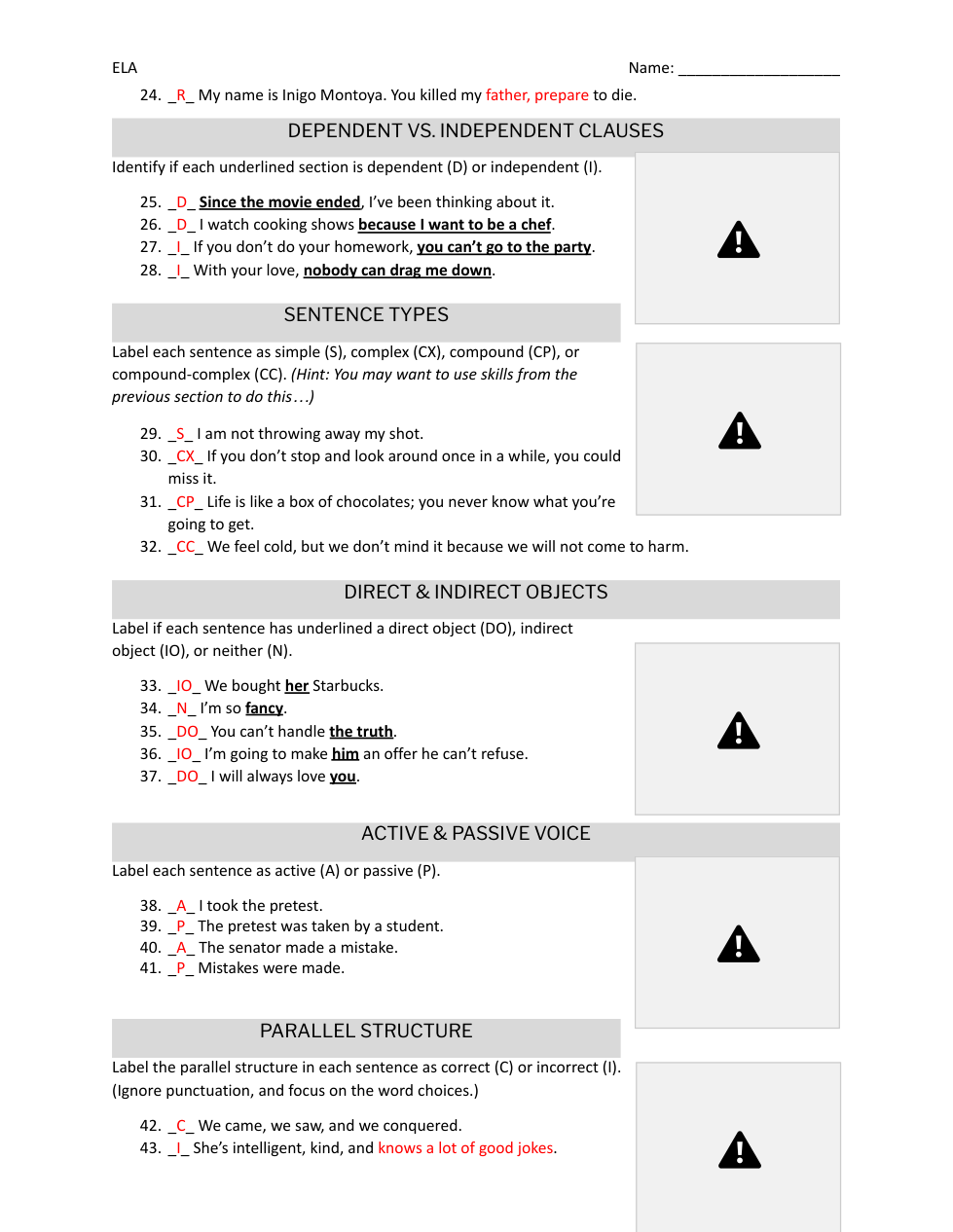
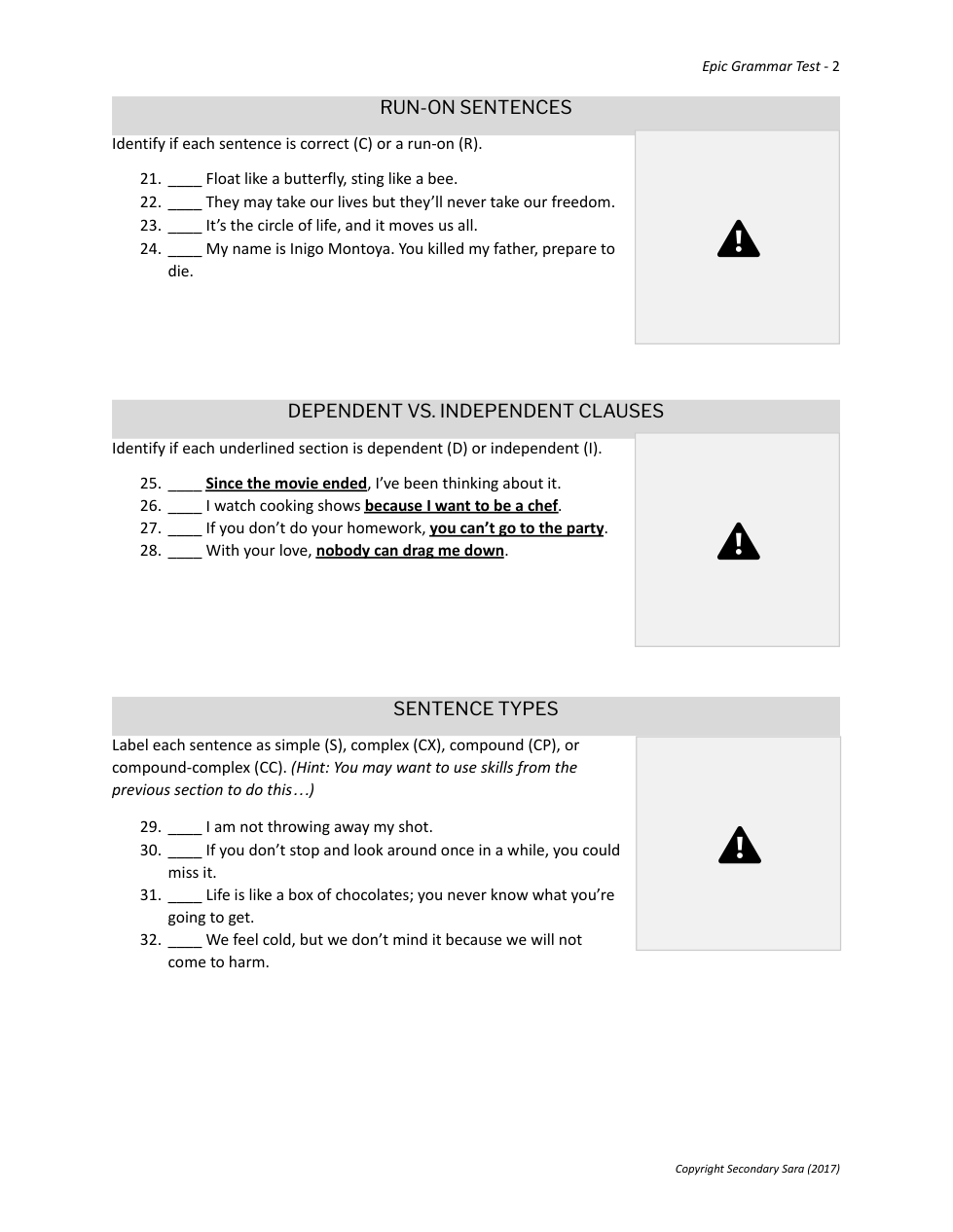
Identify if each sentence is correct (C) or a run-on (R).
Identify if each sentence is correct (C) or a run-on (R).
Identify if each sentence is correct (C) or a run-on (R).
Identify if each sentence is correct (C) or a run-on (R).
Identify if each underlined section is dependent (D) or independent (I).
Identify if each underlined section is dependent (D) or independent (I).
Identify if each underlined section is dependent (D) or independent (I).
Identify if each underlined section is dependent (D) or independent (I).
Label each sentence as simple (S), complex (CX), compound (CP), or compound-complex (CC). (Hint: You may want to use skills from the previous section to do this…)
Label each sentence as simple (S), complex (CX), compound (CP), or compound-complex (CC). (Hint: You may want to use skills from the previous section to do this…)
Label each sentence as simple (S), complex (CX), compound (CP), or compound-complex (CC). (Hint: You may want to use skills from the previous section to do this…)
Label each sentence as simple (S), complex (CX), compound (CP), or compound-complex (CC). (Hint: You may want to use skills from the previous section to do this…)
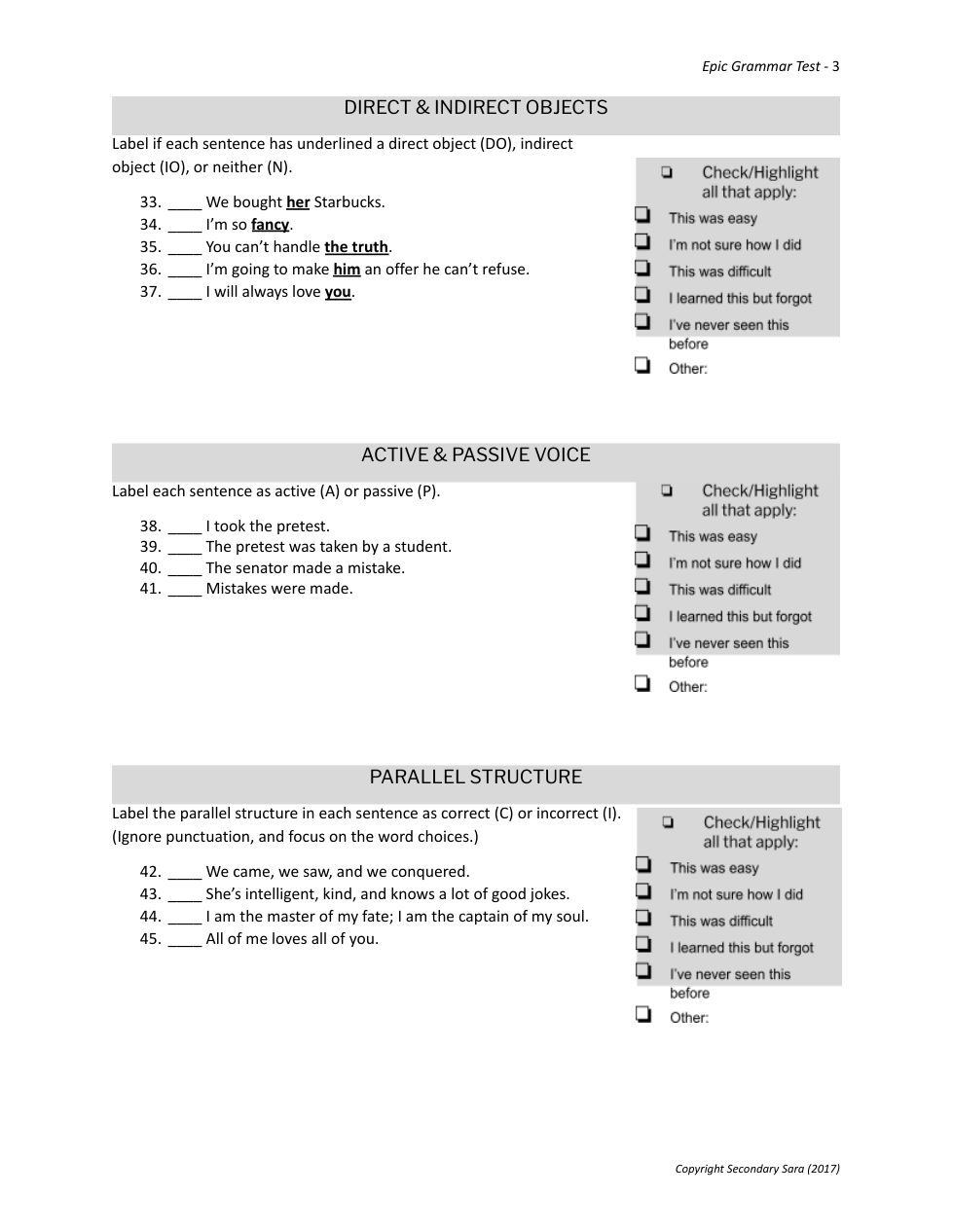
Label if each sentence has underlined a direct object (DO), indirect object (IO), or neither (N).
Label if each sentence has underlined a direct object (DO), indirect object (IO), or neither (N).
Label if each sentence has underlined a direct object (DO), indirect object (IO), or neither (N).
Label if each sentence has underlined a direct object (DO), indirect object (IO), or neither (N).
Label if each sentence has underlined a direct object (DO), indirect object (IO), or neither (N).
Label each sentence as active (A) or passive (P).
Label each sentence as active (A) or passive (P).
Label each sentence as active (A) or passive (P).
Label each sentence as active (A) or passive (P).
Label the parallel structure in each sentence as correct (C) or incorrect (I). (Ignore punctuation, and focus on the word choices.)
Label the parallel structure in each sentence as correct (C) or incorrect (I). (Ignore punctuation, and focus on the word choices.)
Label the parallel structure in each sentence as correct (C) or incorrect (I). (Ignore punctuation, and focus on the word choices.)
Label the parallel structure in each sentence as correct (C) or incorrect (I). (Ignore punctuation, and focus on the word choices.)
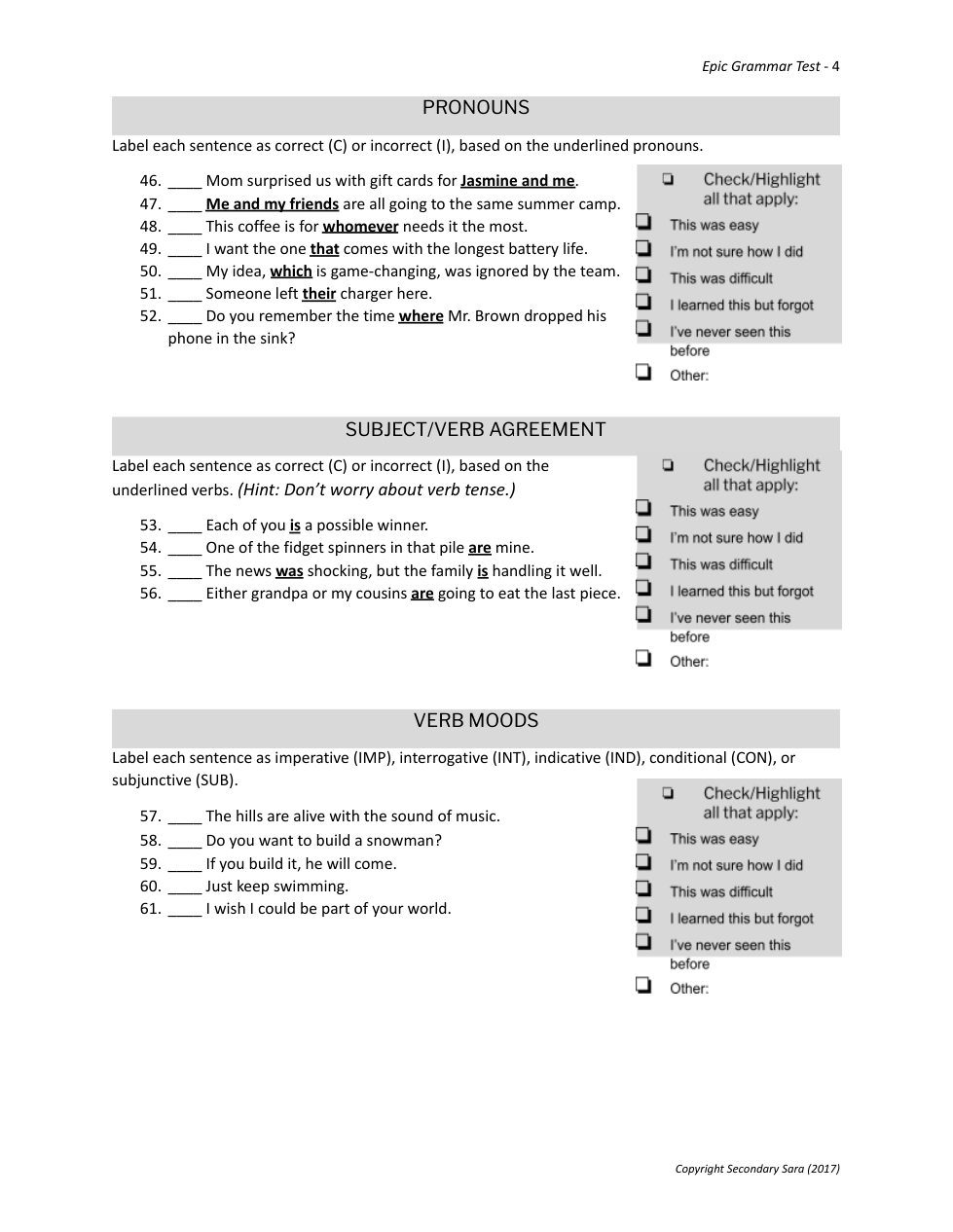
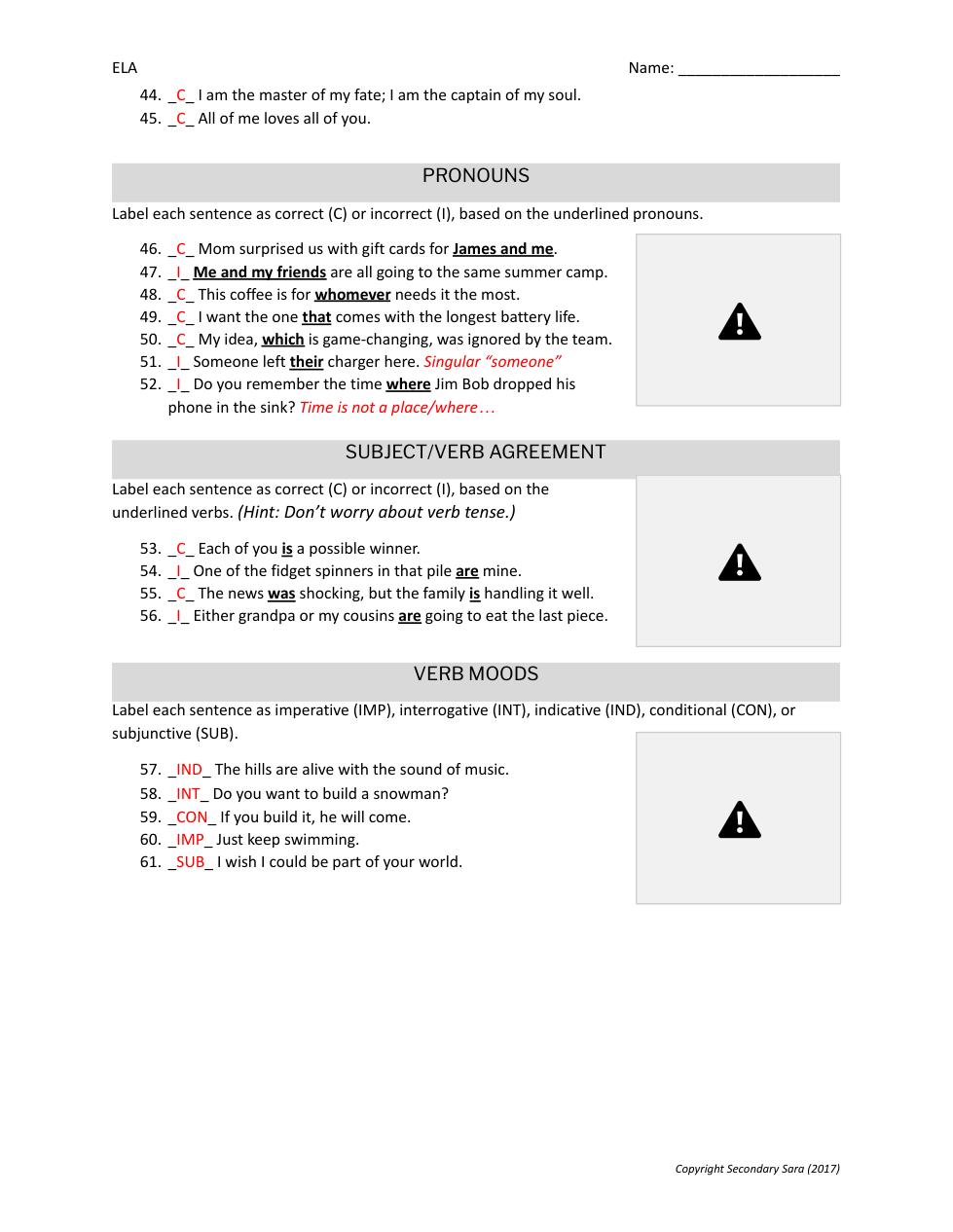
Label each sentence as correct (C) or incorrect (I), based on the underlined pronouns.
Label each sentence as correct (C) or incorrect (I), based on the underlined pronouns.
Label each sentence as correct (C) or incorrect (I), based on the underlined pronouns.
Label each sentence as correct (C) or incorrect (I), based on the underlined pronouns.
Label each sentence as correct (C) or incorrect (I), based on the underlined pronouns.
Label each sentence as correct (C) or incorrect (I), based on the underlined pronouns.
Label each sentence as correct (C) or incorrect (I), based on the underlined pronouns.
Label each sentence as correct (C) or incorrect (I), based on the underlined verbs. (Hint: Don’t worry about verb tense.)
Label each sentence as correct (C) or incorrect (I), based on the underlined verbs. (Hint: Don’t worry about verb tense.)
Label each sentence as correct (C) or incorrect (I), based on the underlined verbs. (Hint: Don’t worry about verb tense.)
Label each sentence as correct (C) or incorrect (I), based on the underlined verbs. (Hint: Don’t worry about verb tense.)
Label each sentence as imperative (IMP), interrogative (INT), indicative (IND), conditional (CON), or subjunctive (SUB).
Label each sentence as imperative (IMP), interrogative (INT), indicative (IND), conditional (CON), or subjunctive (SUB).
Label each sentence as imperative (IMP), interrogative (INT), indicative (IND), conditional (CON), or subjunctive (SUB).
Label each sentence as imperative (IMP), interrogative (INT), indicative (IND), conditional (CON), or subjunctive (SUB).
Label each sentence as imperative (IMP), interrogative (INT), indicative (IND), conditional (CON), or subjunctive (SUB).