LEVEL 2
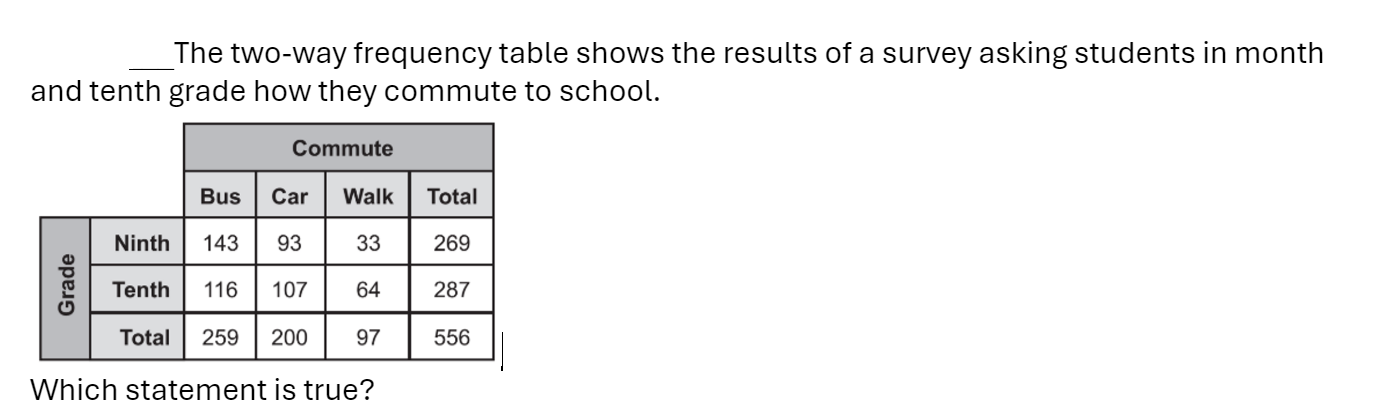
JUSTIFY YOUR ANSWER.
LEVEL 2
JUSTIFY YOUR ANSWER.
LEVEL 2
JUSTIFY YOUR ANSWER.
LEVEL 2
Place an X in the table to show whether each item is a categorical or a quantitative variable.
LEVEL 2
The two-way relative frequency table shows the types of artworks found at two different art galleries.
Part A: What is the relative frequency that an artwork is a sculpture and at Gallery A?
Part B: What is the relative frequency that an artwork is a painting given that it is at Gallery B?
SHOW YOUR WORK.
LEVEL 2
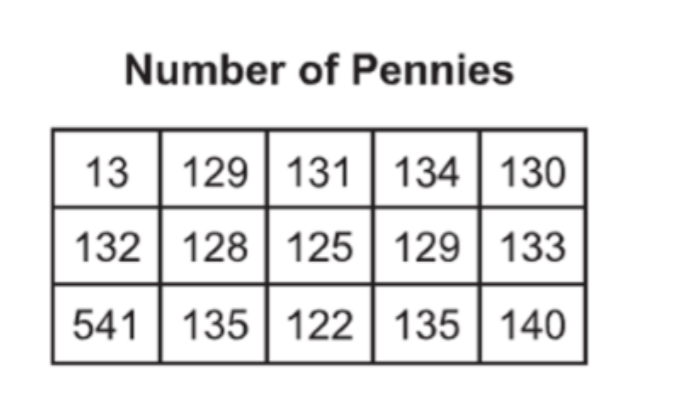
The number of pennies donated in 15 jars is shown in the table. What is the mean, median, mode and range of the donated pennies?
SHOW YOUR WORK
LEVEL 3
An athlete runs every day for one week. The following week she runs one mile further than she ran on that day the previous week. How will the mean and interquartile range for the number of miles she runs in the second week be different from those in the first week?
LEVEL 3
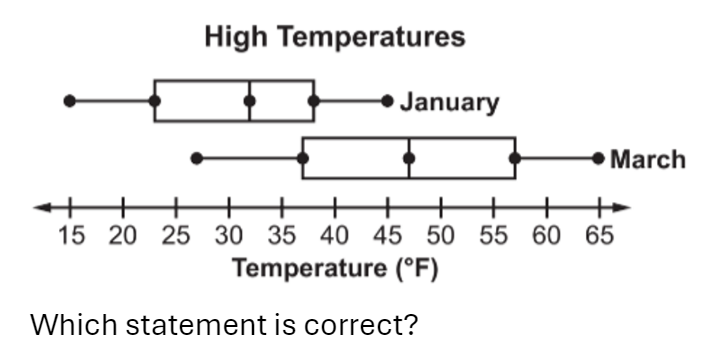
The box plot shows the average high temperatures every day for January and March in a particular city.
LEVEL 3
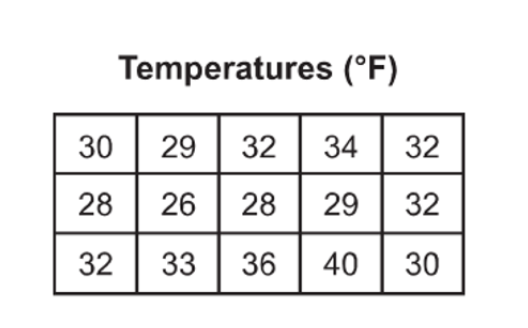
Temperatures of 15 locations in a refrigerated warehouse are shown in the table. What is the mean, median, standard deviation, and interquartile range (IQR) for the temperatures in degrees Fahrenheit?
SHOW YOUR WORK.
LEVEL 3
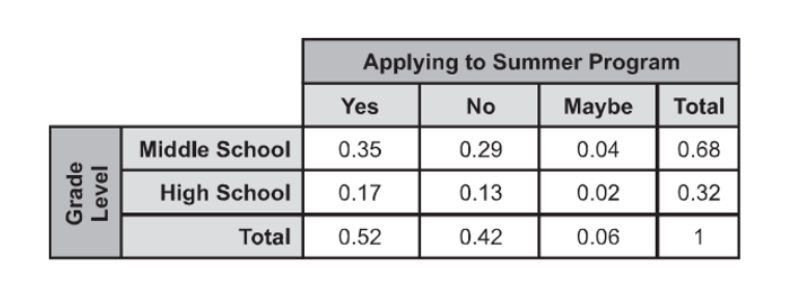
The results of a survey about applying to a summer program for middle school and high school students are shown in the two-way relative frequency table.
SHOW YOUR WORK.
LEVEL 4
The five number summary for the ages of members of a marching band is shown.
{13,15,17,19,25}
SHOW YOUR WORK.
LEVEL 4
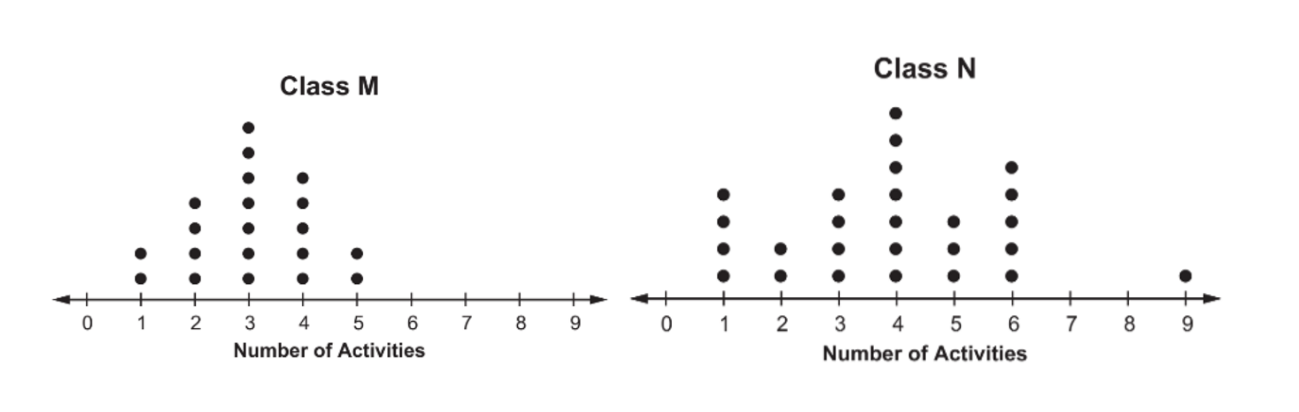
The numbers of activities that students in two classes participate in are shown below.
SHOW YOUR WORK.