1
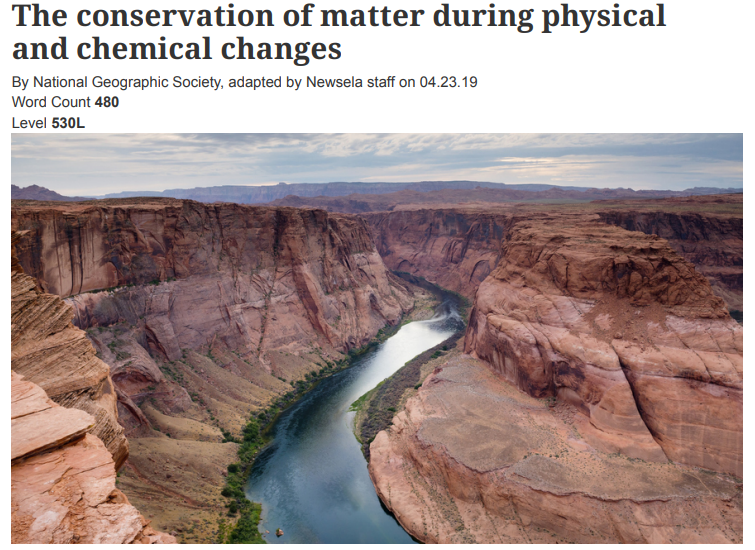
What do you see in the picture?
What do you see in the picture?
This Formative is OPTIONAL unless Ms. Brunett tells you that you must complete it because you have 4 or more absences. It has 4 assignments. Each assignment you complete will improve your grade on one missing or incomplete class assignment, or it will count as one assignment for a day when you were absent. If you have no missing or incomplete class assignments, and if you were not absent, each assignment will be worth 10% extra credit. This Formative is due Friday, March 7th.
Este Formative es OPCIONAL a menos que la Sra. Brunett le indique que debe completarlo porque tiene 4 o más ausencias. Tiene 4 tareas. Cada tarea que complete mejorará su calificación en una tarea de clase faltante o incompleta, o contará como una tarea por un día en el que estuvo ausente. Si no tiene tareas de clase faltantes o incompletas, y si no estuvo ausente, cada tarea valdrá un 10% de crédito adicional. Este Formative debe entregarse el viernes 7 de marzo.
Iyi Formative ntabwo isabwa keretse Madamu Brunett akubwiye ko ugomba kuyuzuza kuko ufite 4 cyangwa byinshi udahari. Ifite inshingano 4. Buri mukoro urangije uzamura amanota yawe kumurongo umwe wabuze cyangwa utuzuye, cyangwa bizabarwa nkinshingano imwe kumunsi mugihe udahari. Niba udafite umukoro wabuze cyangwa utuzuye, kandi niba utari uhari, buri mukoro uzaba ufite agaciro ka 10% byinguzanyo. Iyi Formative igomba kuwa gatanu, 7 Werurwe.
هذا النموذج التكويني اختياري ما لم تخبرك السيدة برونيت بضرورة إكماله لأنك تغيبت 4 مرات أو أكثر. يحتوي النموذج على 4 واجبات. كل واجب تكمله سيحسن درجتك في واجب واحد مفقود أو غير مكتمل، أو سيحسب كواجب واحد ليوم كنت غائبًا فيه. إذا لم يكن لديك واجبات مفقودة أو غير مكتملة، وإذا لم تكن غائبًا، فستستحق كل مهمة 10% رصيدًا إضافيًا. موعد تسليم هذا النموذج التكويني هو الجمعة 7 مارس.
What do you see in the picture?
What happens when atoms join together with other atoms?
Why could the atoms that were inside a dinosaur be inside you?
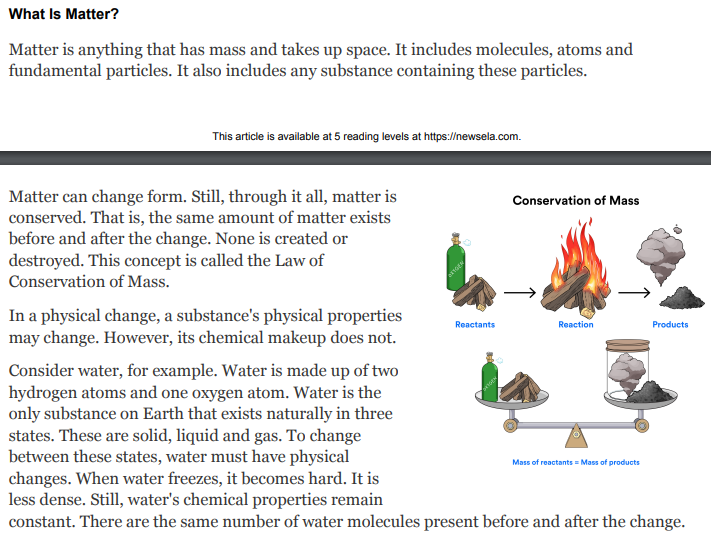
What is the Law of Conservation of Mass?
Which of these is true about the change of water between different states?
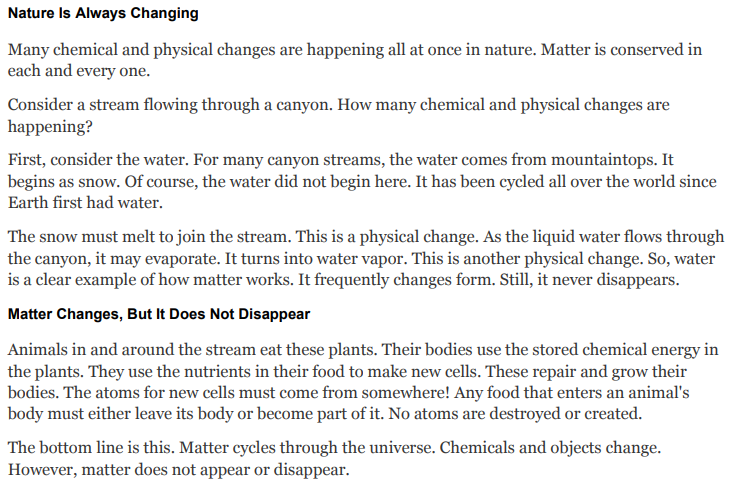
What happens to matter during both chemical and physical changes?
How are physical and chemical changes similar?
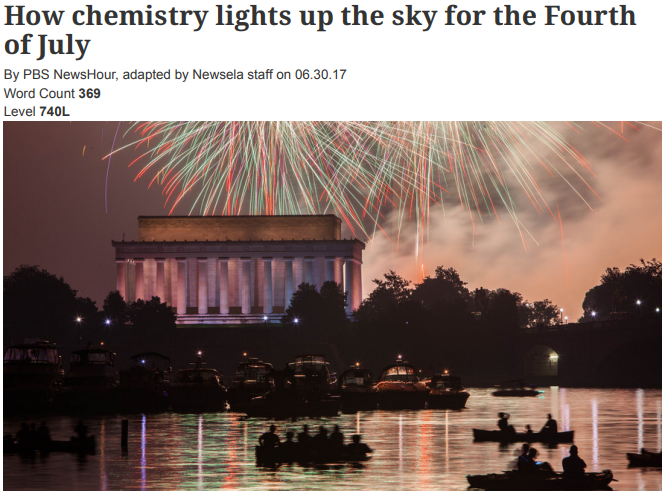
What do you see in the picture?
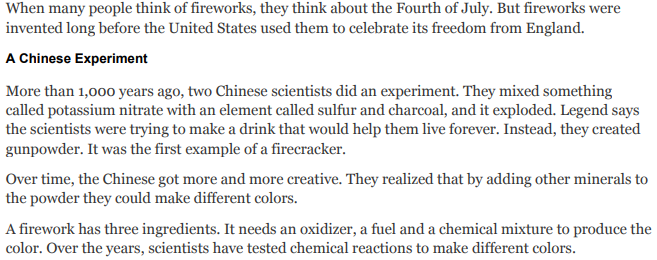
What is the purpose of the section "A Chinese Experiment"?
How did Chinese scientists discover firecrackers?
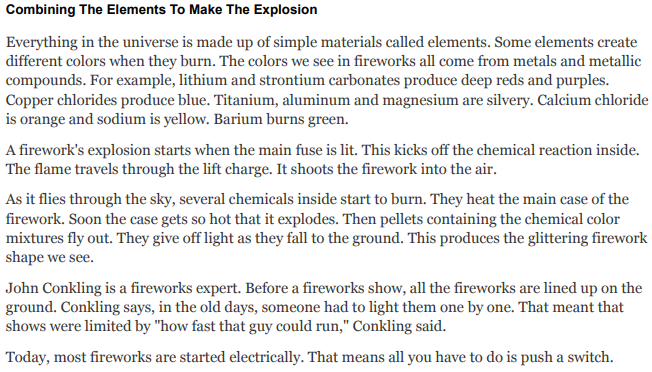
If you wanted to make a yellow firework, what element should you use?
What kicks off the chemical reaction in a firework?
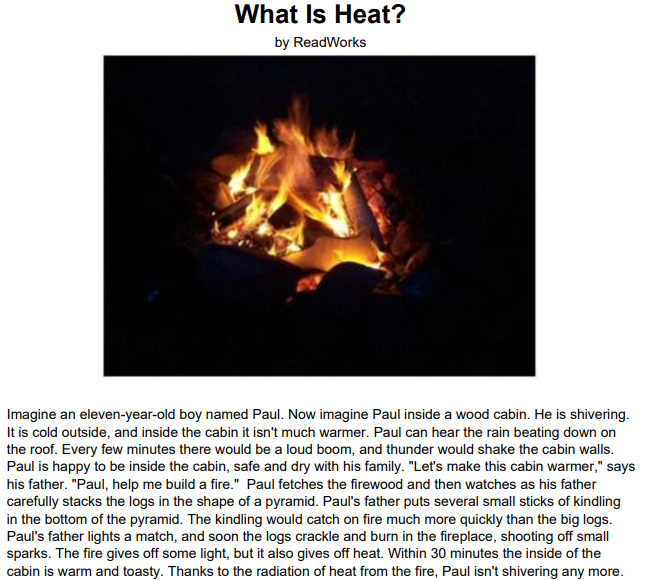
Does the picture show a reversible or irreversible change? Why?
Why does Paul's father decide to build a fire?
What are the three components a fire needs to burn?
Why would it be important to be careful cleaning up the embers from a fire?
What is the difference between conduction, convection, and radiation?
If you wanted to keep heat inside your house, what material should you use to build your house?
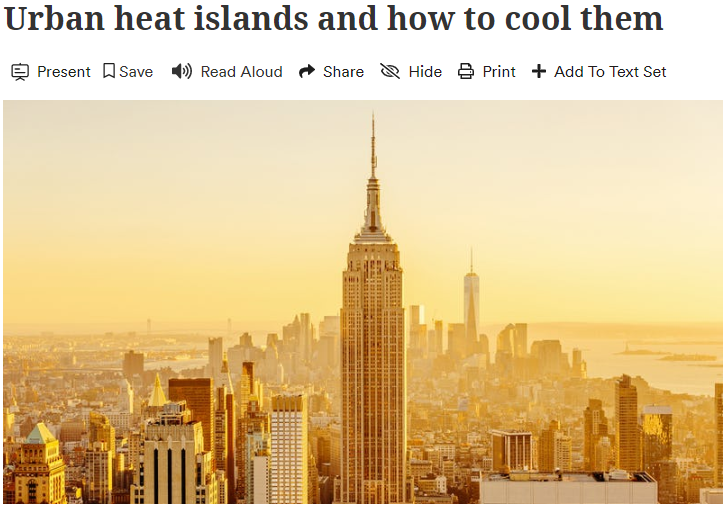
What do you see in the picture?
How are cities different from the land around them?
Why are temperatures hotter in cities?
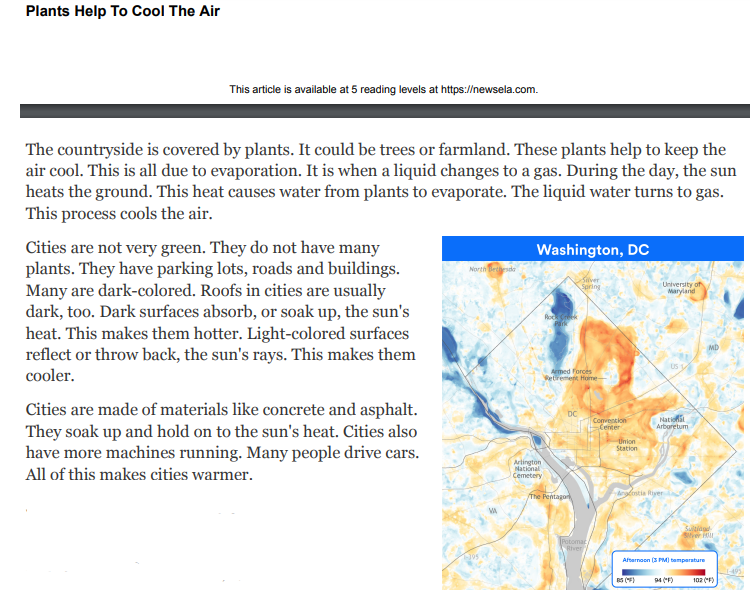
How do plants help keep the countryside cooler?
How do dark surfaces make cities hotter?
What were the results of the scientists' experiment with cool roofs?
What effect did watering green spaces have on the city?
Where do the atoms to make new cells come from?
How can fireworks be different colors?
How are most fireworks started today?
What kind of heat transfer (radiation, conduction, or convection) makes the cabin warm?
How does heat naturally move?