Twa kɔ nsɛm atitiriw so
Log in
Sign up for FREE
arrow_back
Laabri

NAISHK Year 8 Baseline Assessment

star
star
star
star
star
Last updated about 2 years ago
26 Nsɛmmisa
Hyɛ no nsow a efi ɔkyerɛwfo no hɔ:

NAISHK Year 8 Baseline Assessment

Read the questions carefully and answer the questions.

You can listen to each track as many times as you like.

Ɛhia
1
Ɛhia
1
Ɛhia
1
Ɛhia
2
Ɛhia
1
Ɛhia
2
Ɛhia
1
Ɛhia
1
Ɛhia
3
Ɛhia
1
Ɛhia
1
Ɛhia
1
Ɛhia
1
Ɛhia
1
Ɛhia
1
Ɛhia
1
Ɛhia
2
Ɛhia
1
Ɛhia
3
Ɛhia
1
Ɛhia
4
Ɛhia
1
Ɛhia
2

TRACK 1:

Listen to this track and answer questions 1 - 5

Asemmisa {{asɛmmisaAhyɛnsode}}
1.

In addition to percussion , what other family of instruments is used in the music?

Asemmisa {{asɛmmisaAhyɛnsode}}
2.

What type of percussion instrument features in this extract?

Asemmisa {{asɛmmisaAhyɛnsode}}
3.

Which texture word best describes this music?

Asemmisa {{asɛmmisaAhyɛnsode}}
4.

Give two musical reasons why this music is suitable for a solemn (sad) occasion

Asemmisa {{asɛmmisaAhyɛnsode}}
5.

When do you think this music was composed?

TRACK 2:

Listen to this track and answer questions 6 - 9

Asemmisa {{asɛmmisaAhyɛnsode}}
6.

What is the first instrument you hear and what family do all the instruments in this piece of music belong?

Asemmisa {{asɛmmisaAhyɛnsode}}
7.

How would you describe the key of this piece of music?

Asemmisa {{asɛmmisaAhyɛnsode}}
8.

In what century do you think this music was composed?

Asemmisa {{asɛmmisaAhyɛnsode}}
9.

Briefly describe the music, referring to Texture, Pitch and Rhythm

TRACK 3:

Listen to this track and answer questions 10 - 13

Ɛhia
1
Asemmisa {{asɛmmisaAhyɛnsode}}
10.

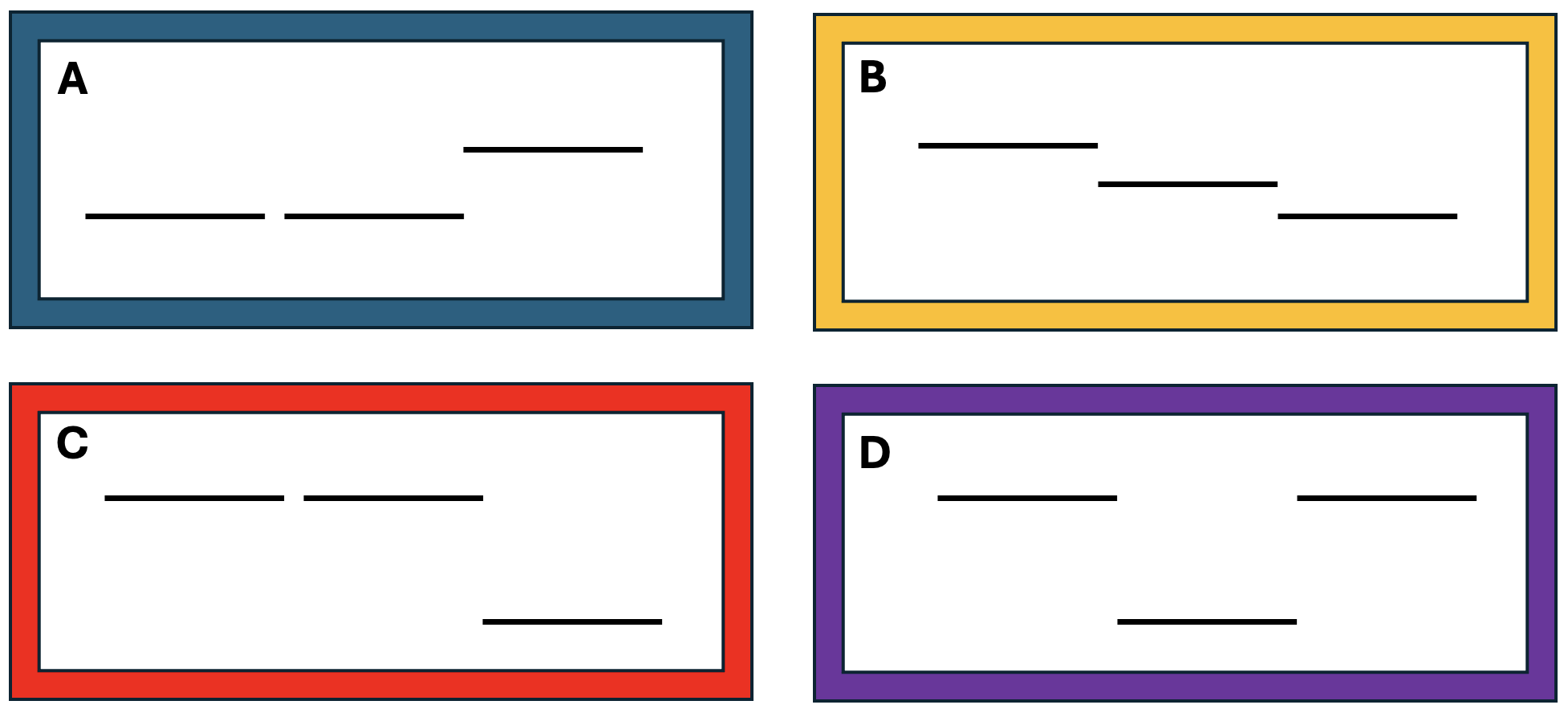
In track 3 the lowest-pitched instruments play a short three-note motif several times. Choose one answer to indicate which shape best represents this motif.
Asemmisa {{asɛmmisaAhyɛnsode}}
11.

Tracks 2 and 3 were both composed in the same century

Asemmisa {{asɛmmisaAhyɛnsode}}
12.

Tracks 2 and 3 use the same instruments

Asemmisa {{asɛmmisaAhyɛnsode}}
13.

What tempo are tracks 1, 2 and 3 all played at

TRACK 4:

Listen to this track and answer questions 11 - 19

Asemmisa {{asɛmmisaAhyɛnsode}}
14.

Which stringed instrument do you hear in the introduction?

Asemmisa {{asɛmmisaAhyɛnsode}}
15.

What does this instrument play through the whole track?

Asemmisa {{asɛmmisaAhyɛnsode}}
16.

What type of instrument comes in next?

Ɛhia
1
Asemmisa {{asɛmmisaAhyɛnsode}}
17.

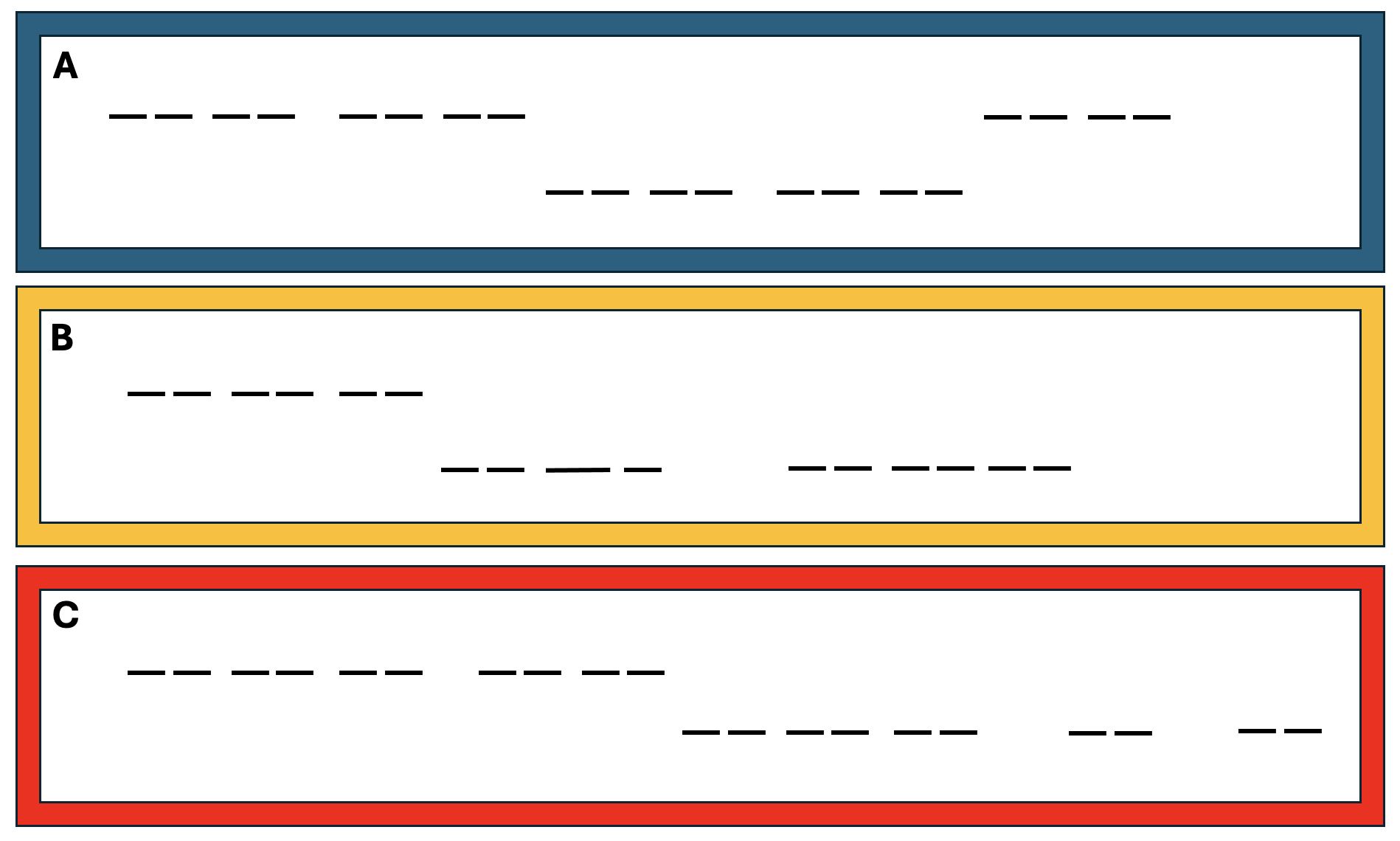
Choose one letter to show which shape best matches the repeating bass line.

Asemmisa {{asɛmmisaAhyɛnsode}}
18.

Which non-western country do you think this extract is influenced by?

Asemmisa {{asɛmmisaAhyɛnsode}}
19.

Why do you think it comes from this country?

TRACK 4:

Listen to Track 4 and answer questions 20 - 26

Asemmisa {{asɛmmisaAhyɛnsode}}
20.

How would you describe the tempo of this song?

Asemmisa {{asɛmmisaAhyɛnsode}}
21.

Name three instruments you can hear in the introduction (before the singer joins in)

Asemmisa {{asɛmmisaAhyɛnsode}}
22.

Which family of instruments joins in during the first verse and features in most of the song?

Asemmisa {{asɛmmisaAhyɛnsode}}
23.

Match the following terms about structure to their definitions by drawing the lines between them

Draggable itemarrow_right_altCorresponding Item

bridge

arrow_right_alt

section where there are no voices and the melody is often played by different instruments

chorus

arrow_right_alt

sections where melody often stays the same but the words change

instrumental

arrow_right_alt

section where words and melody remain the same, returning throughout the song

verse

arrow_right_alt

section which normally appears once and contrasts with all other sections

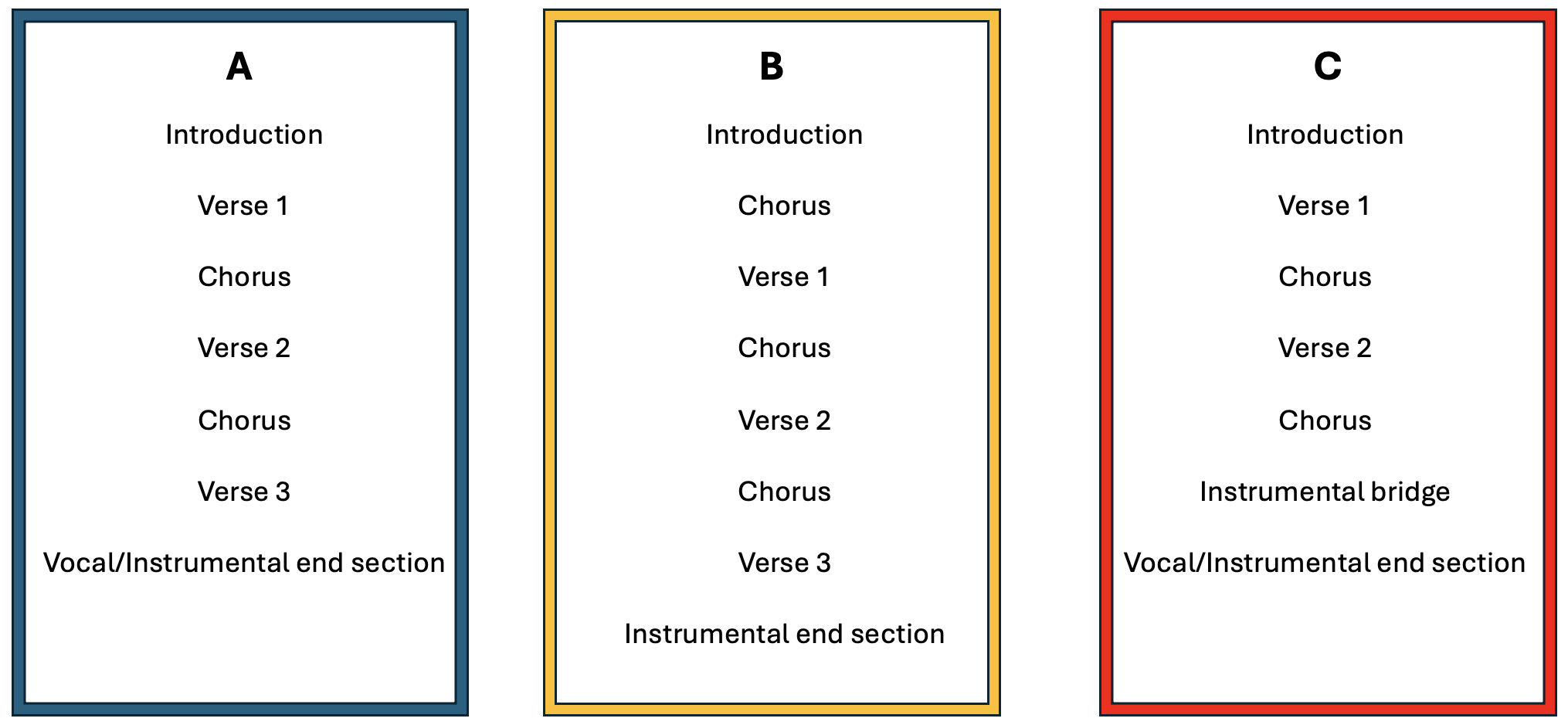
Look at the song structures pictured as A, B and C

Ɛhia
1
Asemmisa {{asɛmmisaAhyɛnsode}}
24.

Which structure does this track follow? Tick either A, B or C after following the descriptions on the picture

Asemmisa {{asɛmmisaAhyɛnsode}}
25.

In which section of the piece do you think the texture become thicker?

Asemmisa {{asɛmmisaAhyɛnsode}}
26.

Describe the dynamics in this piece