2.06 Reading check

Last updated 6 months ago
15 questions
Here is a link to our recording from 9/19/24
Here is a copy of the google doc with my notes from this unit.
Here are the slides from the class session.


Watch my lesson overview from Sept 2023 here. https://www.youtube.com/watch?v=4oRrPb-uG8o
2.01 Introduction
4

Our bodies have control systems that help to maintain the condition of Homeostasis. Select the 4 parts that are common to all control systems.

1

Which feedback system is considered inhibitory, meaning it works to stop changes.

1

Increasing contractions during childbirth to stimulate or amplify change (in the uterus) is an example of which type of feedback?

2.02 What's in a Cell? Cell Structures
3

Modern cell theory has evolved to include three key points:
Which of the following are the parts of the Cell Theory? (there is more than one correct choice - select all 3 correct answers to earn full credit)

There is a video that describes the cell membrane embedded in this lesson. You can also watch a similar video here if you would like to see the same information in a slightly different style (both contain the same information)
1

What is the main component of our cell membranes?

1

Look at the Test your knowledge questions in 2.02 for help with this question.

Your lab partner says, “I see something that looks like sheets or discs layered on top of one another with little bumps all over it.” Which of the following cell structures are they describing?

1

Look at the Test you knowledge questions in 2.02 for help with this question.

Your lab partner says “I see a dark round thing in the center of the cell. Wow, it’s so much darker than everything else.” Which of the following cell structures are they describing?

2.03 What do cells really do?
1

Cellular respiration is the group of processes our cells use to create ATP energy molecules by breaking down glucose.

1

Passive transport includes processes like Diffusion and Osmosis that do not require the cell to use ATP energy.

2.04 A day in the life of a cell: The cell cycle
7
Drag the terms to complete the diagram showing two types of cellular division.
Mitosis is the process that makes exact copies of cells to replace old cells and allow our bodies to grow.
Meiosis is the process that makes sperm and egg cells needed for sexual reproduction (we'll learn more about this process in A&P B)
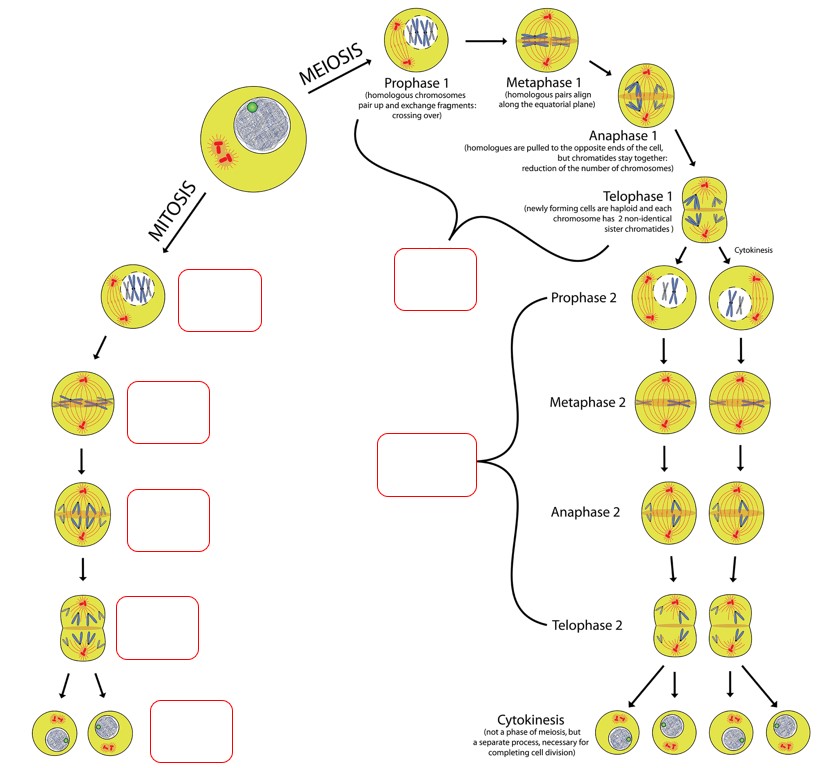
Other Answer Choices:
Anaphase
Prophase
Meiosis I
Cytokinesis
Metaphase
Meiosis II
Telophase
Part 2: What is a Fever?
Watch the video clip on what a fever response by the body is, then answer questions 1, 2 and 3 that follow.
2

What sets your body temperature?

2

How does stress affect your body temperature?

2

How might a fever help your body fight off an infection?

Part 3: Body Control Center
  1. Go to the interactive: Body Control Center Interactive PBS
  2. Click Launch
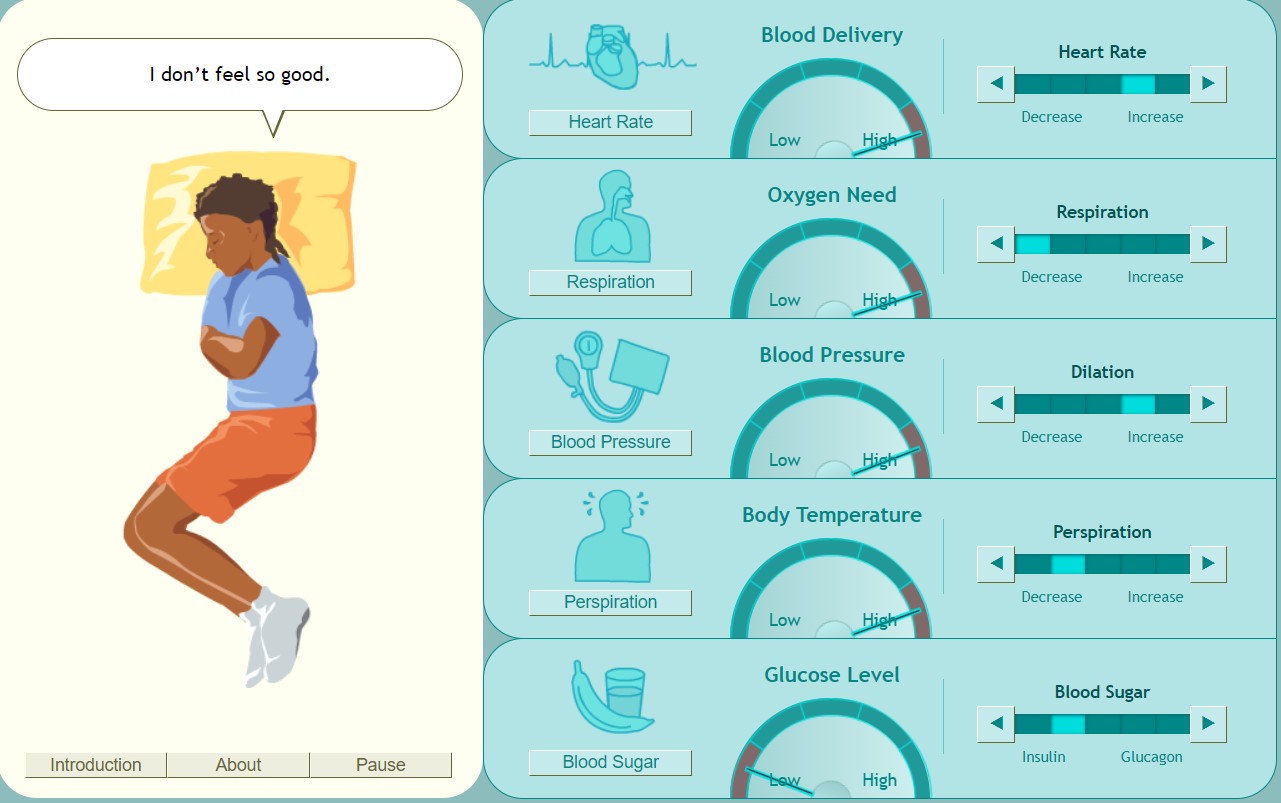
  3. In this activity, it’s up to you, not the body, to maintain homeostasis in a virtual person. Monitor the displays and use the controls to keep the indicators centered. But don‘t become complacent when you achieve a balance. Our subject will randomly change states—from standing, to running, to resting—and throw off your settings


4. After you have launced the interactive, click on each of the 5 body functions to learn more about how these work.
2

Click on the sentence that describes how much sweat a person can release in an hour of intense activity.

Perspiration

There are a number of ways your body maintains a constant temperature. When respiration rate increases, for example, heat from within your body is released with each exhalation. Water in the blood can also absorb heat and transport it to the skin, where the heat radiates into the surrounding air. But when you get really hot, perspiration is the most effective way that the body controls its internal temperature. As perspiration evaporates from the skin’s surface, the skin is cooled. During strenuous activity, your body can release as much as 1.5 liters of sweat every hour.
In this activity, you can cool the body by increasing how much it sweats.
1

This is the only assignment for Unit 2. We'll begin learning about the Skeletal system next. I know this unit is fast and it is meant to be a brief overview of things you learn in detail in Biology.

How are you feeling about Anatomy & Physiology so far? Are you learning new information or is this mostly a review of material you've learned before?

Do you need help going back through any Unit 1 assignments to make corrections?