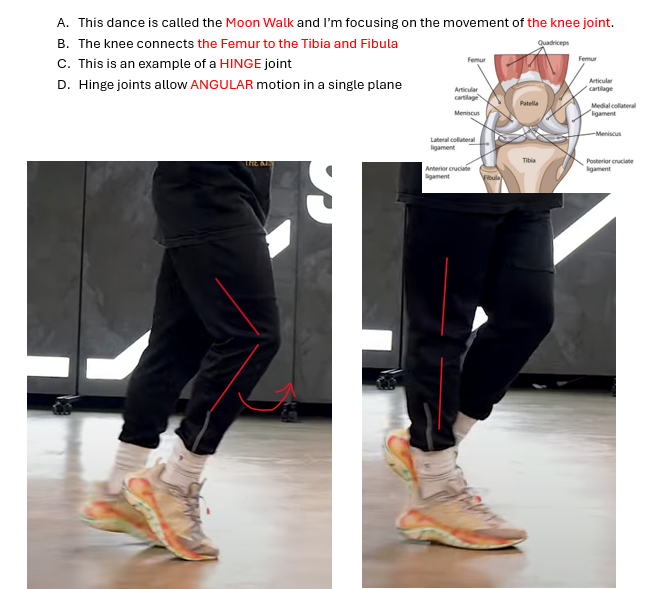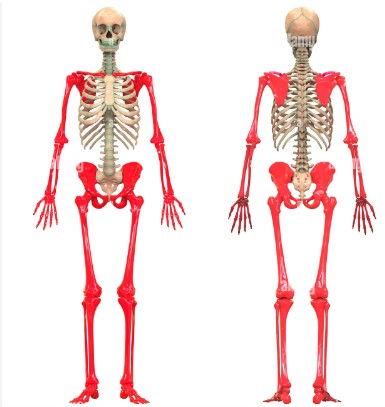
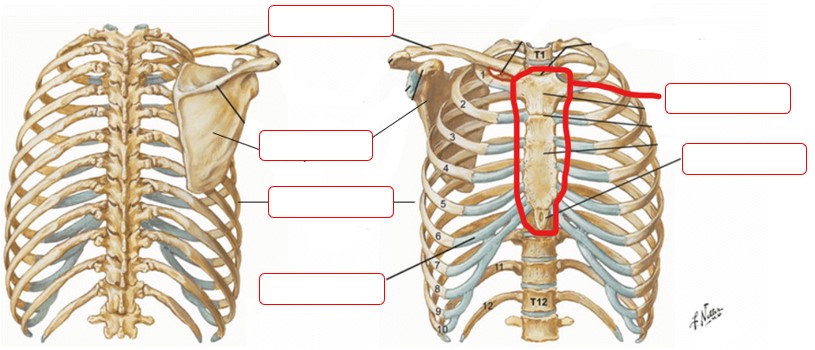
Which division of the skeletal system is highlighted in red in the image above?
Which division of the skeletal system is highlighted in red in the image above?
In this assignment we will review the names of bones and divisions of the skeletal system and then you will identify the connections between bones (joints) and demonstrate your understanding of their movements.
Past recordings:
Here is the link to get the recording for this lesson. The link is from our class session last year (spring 2023).
Here is a link to the class recording from 9/29/23.
Here is a link to the class recording from 1/5/24.
Remember to go back and make corrections after you submit your work.
Be sure to focus on just ONE joint and the bones that connect together there for the final question in this assignment.
If you love learning about the skeleton and want to take your knowledge to the next level- give Anatomy Arcade a try!
https://www.anatomyarcade.com/games/WAB/WAB.html
This is completely optional but I'd like to know if you tried it and what you thought.
Which division of the skeletal system is highlighted in red in the image above?
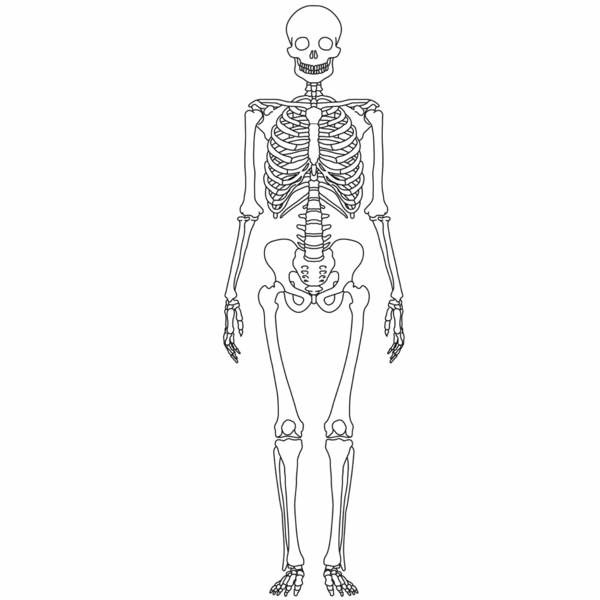
Select the bone that is indicated in the diagram in spot #3
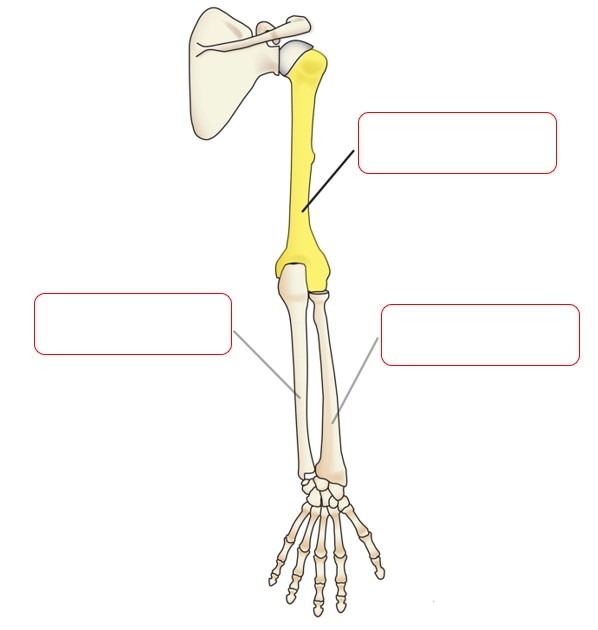
Drag the names of the arm bones to their position on the diagram below.
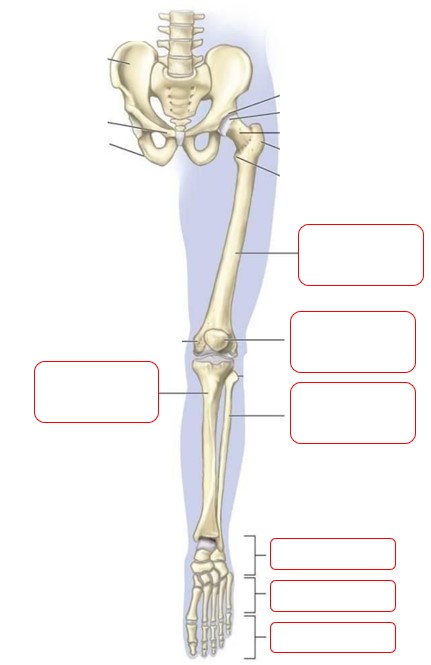
Drag the bone names for the lower limb in order to label the diagram below.
Match each of the joint names with the type of motion they allow.
| Draggable item | arrow_right_alt | Corresponding Item |
|---|---|---|
Pivot | arrow_right_alt | Angular movement in a single plane |
Hinge | arrow_right_alt | Angular, rotation, and circumduction |
Gliding | arrow_right_alt | Rotational in a single plane (twisting) |
Saddle | arrow_right_alt | Single plane multidirectional (back and forth) |
Ball and Socket | arrow_right_alt | Angular in two planes |
Condylar | arrow_right_alt | Angular in two planes and circumduction |
Choose your favorite dance move (or exercise) and focus on the movement that takes place at one joint. Here's a fun example if you need inspiration!
I recommend that you try the move for yourself so that you can get a better understanding of the bones involved in holding the movement (but this part is not required), check out an online video of the action if you need help visualizing.
We will go over several examples in class so feel free to use one of those for guidance if you would like. **Be sure to select a joint that is NOT the knee joint when you answer this question**
You can create a document to upload your response or add a screen shot in the 'show your work tool'. I'm including an example below to help you understand what your response should look like.
In your answer:
A. Tell me the name of the movement/dance/exercise and which specific movement you are focusing on in your diagram.
B. Which joint are you focusing on and which bones are involved in achieving the movement? Include a diagram of the joint
C. What type of joint connects those bones? (gliding, hinge, ball and socket, etc)
D. What type of movement occurs with that type of joint (angular, rotational, etc - check the class slides for help with this)?
Select the bone that is indicated in the diagram in spot #4
Select the bone that is indicated in the diagram in spot #5
When referring to the skeletal system, what is a joint?
Joints between the bones of the skull are called sutures; they are immovable and are classified as Synarthroses or Fibrous joints.
Which is an example of a joint where the bones are held together by cartilage and can move only a little?
Freely moving joints are also called Synovial joints.