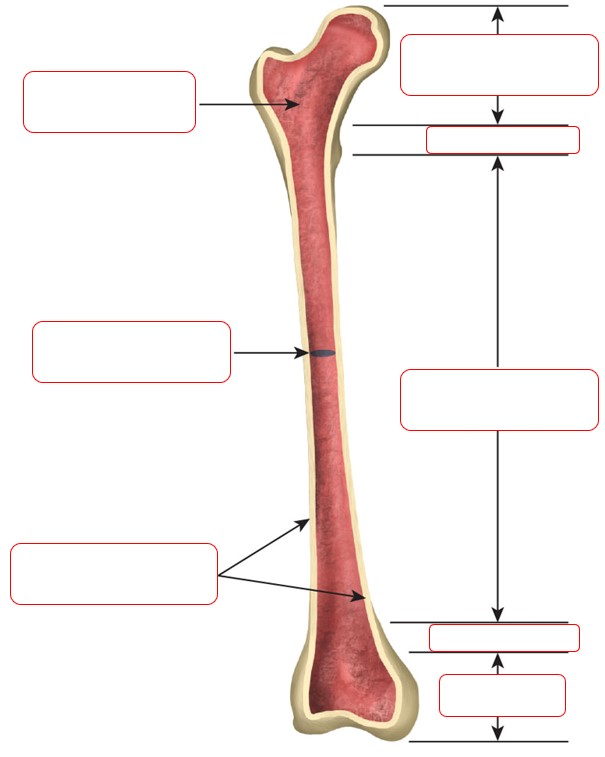
Mmuae Afoforo a Wobɛpaw:
Metaphysis
Epiphysis
Spongy bone
Medullary cavity
Diaphysis
Compact bone
In this unit we'll be learning about the Anatomy & Physiology of the Skeletal system.
We'll focus on three learning targets in this assignment:
Describe the structure and function of bones
Identify the different types of bones
Differentiate between the axial and appendicular skeleton
Here is a recording from our class session last school year. Feel free to use the recording to help you as you complete the assignment. I will update with this year's recording link once we go over the assignment in class.
Which of the following are functions of the skeletal system?
(select all of the choices that are correct)
How might a forensic science technician use knowledge of the skeletal system in their everyday work?
Match the two types of bone formation processes with their description
| Draggable item | arrow_right_alt | Corresponding Item |
|---|---|---|
Ossification | arrow_right_alt | The process of building an embryo’s bones. |
Calcification | arrow_right_alt | the development of bone from the time an individual is born, and it continues throughout their entire life. |
Match the descriptions of the two types of bone with their characteristics.
| Draggable item | arrow_right_alt | Corresponding Item |
|---|---|---|
Compact bone | arrow_right_alt | Does not have osteons. Found on the ends of long bones. Has internal branches called trabeculae. |
Cancellous (spongy) bone | arrow_right_alt | Has many cylinder shaped units called osteons. Makes up the smooth tissue on the outside of bone. |
Match the five types of bones with their description.
| Draggable item | arrow_right_alt | Corresponding Item |
|---|---|---|
Flat bones | arrow_right_alt | Built to withstand a great deal of weight and provide support. Are found in the arms and legs. |
Long bones | arrow_right_alt | Mostly spongy and cube shaped. Allow for movement. |
Short bones | arrow_right_alt | Provide protection for soft tissues like the brain and lungs. |
Move the stages of healing from a bone fracture in order from the time of fracture (first) unti healing (last).
Hemotoma
Soft callus
Hard callus
Remodeling
Bone projections are features that stick out and bone depressions are holes or indentations in bone.
What type of bone depression is a cavity or hollow space within a bone?
Select the bones from the list below that are part of the Appendicular Skeleton.
There are 4 correct choices
Watch the first 2-3 minutes of this video. Where does the doctor say the patient's knee is wearing out?
Be sure to use the correct anatomical direction term. (check the hint if you need help)
What questions do you have about the skeletal system?
I will do my best to answer your questions during our next class session or I can also reply to you here.