In the Anatomy tab:
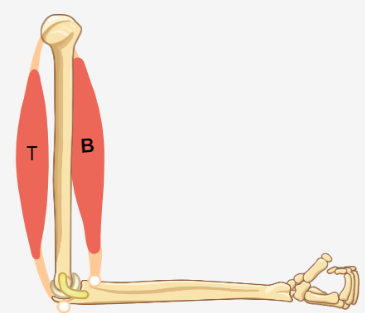
Observe: Turn on Hide muscles and Show labels.
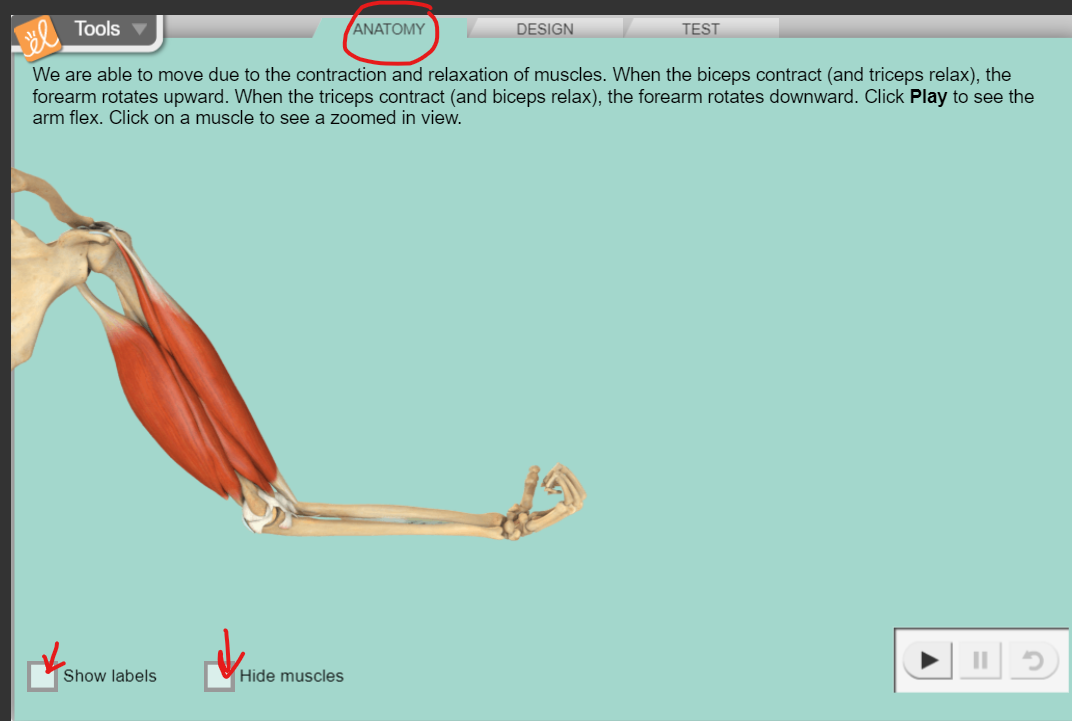
Which bone connects the shoulder to the forearm?
In the Anatomy tab:
Observe: Turn on Hide muscles and Show labels.
Which bone connects the shoulder to the forearm?
Here is a link to the most recent class recording, from 10/8/24.
In this assignment we will use the Muscles and Bones Gizmo
You can follow the instructions to login and do the activity on your own, I made a help video to assist you as you complete this assignment. Feel free to check it out here: https://youtu.be/AgEZ_2TEyvg
Here is a link to the class recording from 10/10/23.
Here is a link to the class recording from 1/16/24.
One question asks you to take a screen shot of your work. If you're not sure how, click here for assistance.
Here is a copy of our lesson slides.
Trimester 2, 24-25 students
Step 1: Go to go-el.com/join
Step 2: Type in your teacher’s class code: ELTZZWGY
This class code is for T2 Anatomy A 24-25 (If you need a code for a different trimester or school year, please let me know)
Click “Next” to continue.
Step 3: If you’ve used Gizmos before and remember your login information, you can login to your account. Otherwise, create a new account.
Step 4: Write down your username and password
Gizmo Login instructions:
https://apps.explorelearning.com/account/el/login/student
In the Anatomy tab:
Observe: Turn on Hide muscles and Show labels.
Which bone connects the shoulder to the forearm?
What are the names of the two forearm bones?
Observe: Note the white connective tissue along the elbow. Cartilage reduces friction between bones. Examine the ligament and tendons.
Ligaments connect bones to while tendons connect bones to
Explore: Click Play. Observe the muscles as the forearm moves up and down.
When the arm FLEXES (bends upward), which muscle contracts?
When the arm EXTENDS (straightens), which muscle contracts?
Why do muscles work in pairs?
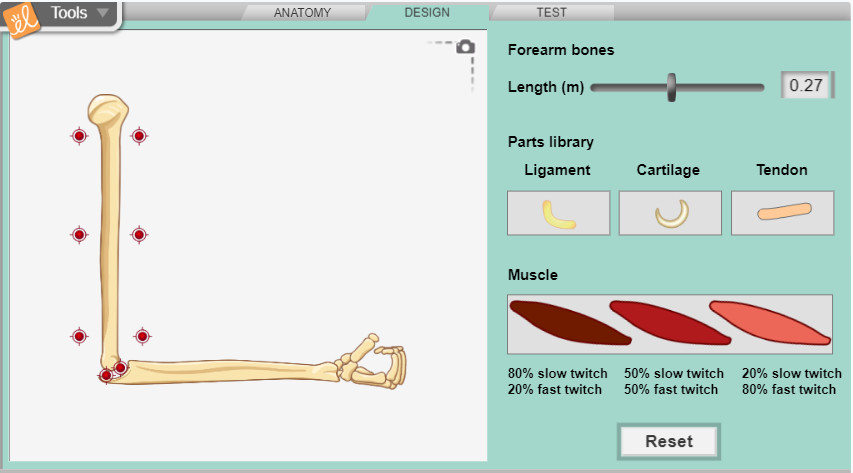
Experiment: In this activity, you will custom design an arm to lift a dumbbell using bones, muscles, and connective tissue. Drag pieces from the parts library to the red dots on the left. The arm is complete when all of the red dots are covered. Refer back to the ANATOMY tab if needed. When you are finished, select the TEST tab.
Design your muscle structure here:
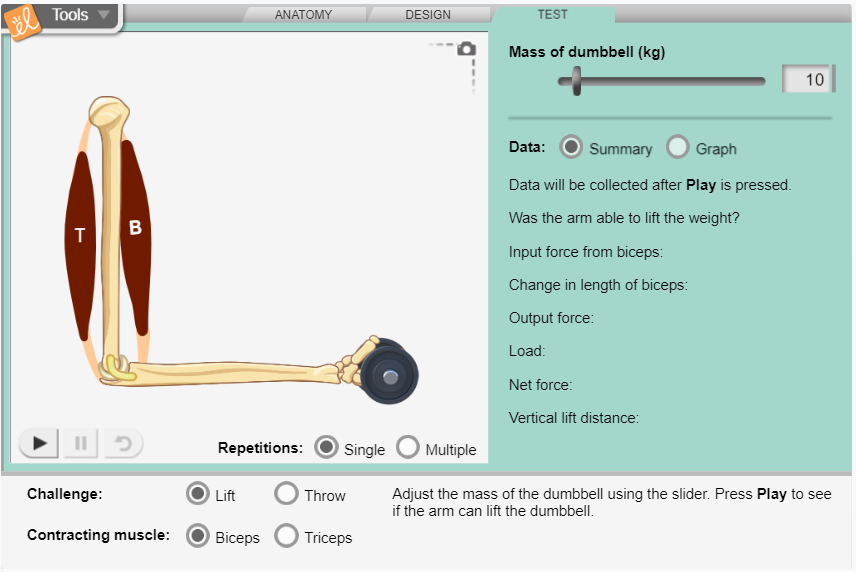
Test in the TEST tab to see what weight the arm can lift:
You'll need to add muscles, tendons and ligaments to get the joint to function.
Check the class recording if you need help with the arm build.
In the TEST tab select the following settings:
Mass of dumbbell: 10kg
Repetitions: Single
Challenge: Lift
Contracting muscle: biceps
Trial 1:
Click play to observe the action of the arm.
What was the vertical lift distance?
Trial 2:
Go back to the Design tab and drag the end of the tendon connecting the biceps to the Radius bone to the right to 0.070.
Go back to the Test tab and
Click Play to lift the dumbbell again.
What was the vertical lift distance this time?
In the Show your work area you can paste a screen shot from Trial 1 and Trial 2, or you can use the Free Response box to tell me the lift distance.
**Watch the class recording if you need assistance with this question**
Compare: Note the three different options for the ratio of slow twitch fibers to fast twitch fibers.
Slow twitch (ST) fibers contract and relax more slowly than fast twitch (FT) fibers.
Slow twitch fibers are great at endurance activities, like running long distances, while Fast twitch fibers are better at doing a big work load for a short time, like an overhead barbell press.
Construct an arm using each of the three muscles, for both the biceps and triceps.
Determine the maximum dumbbell mass each arm can lift and record in the table in the Show Your Work tool (or use the Free response box to type the maximum lift mass for each of the arm designs)
Arm design B
Arm design C
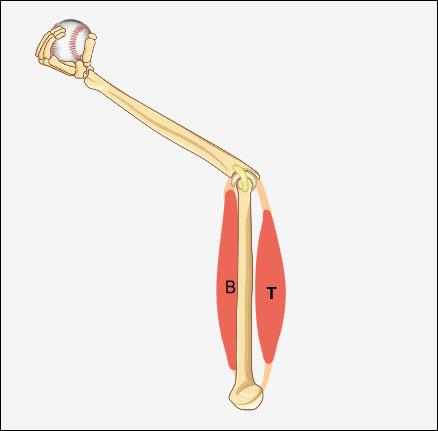
When throwing a ball, why does the triceps muscle contract?
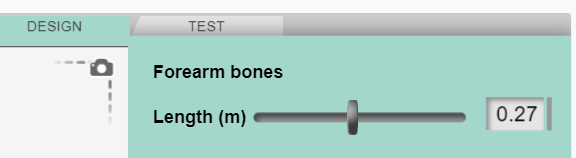
Go back to the Design tab and play around with the Forearm bone length. Then, test to see which arm can lift the most weight.
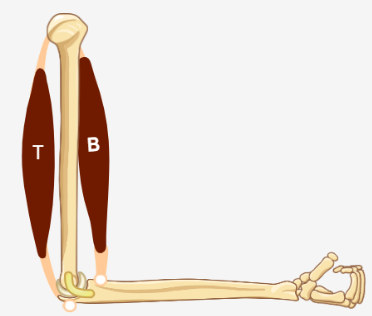
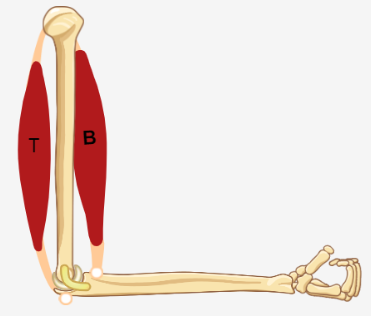
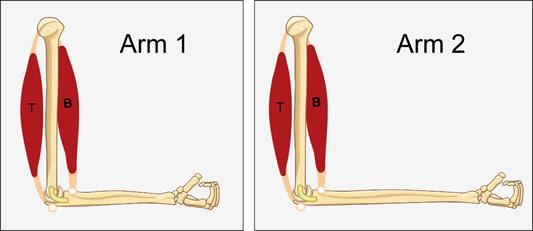
Assuming that the muscles within both arms below are of the same strength, which arm would be able to lift the most weight, and why?
Identify a disease or disorder that is associated with the MUSCULAR SYSTEM and learn about it online, in a magazine, newspaper, etc. Complete the questions below to share with me what you’ve learned.
Here are a few suggestions and links to great resources for research:
You can copy/paste the questions below into your response and then type your answer after the question. This makes it easier for me to grade your work.
A. What is the name of the disorder your researched:
B. What causes this disorder?
C. What are the signs and symptoms of someone experiencing this condition? (How would you know if you have it?)
D. What is the treatment or management for this condition?
E. How many people in the US are affected by this condition?
F. What other interesting facts about this condition did you learn in your research?