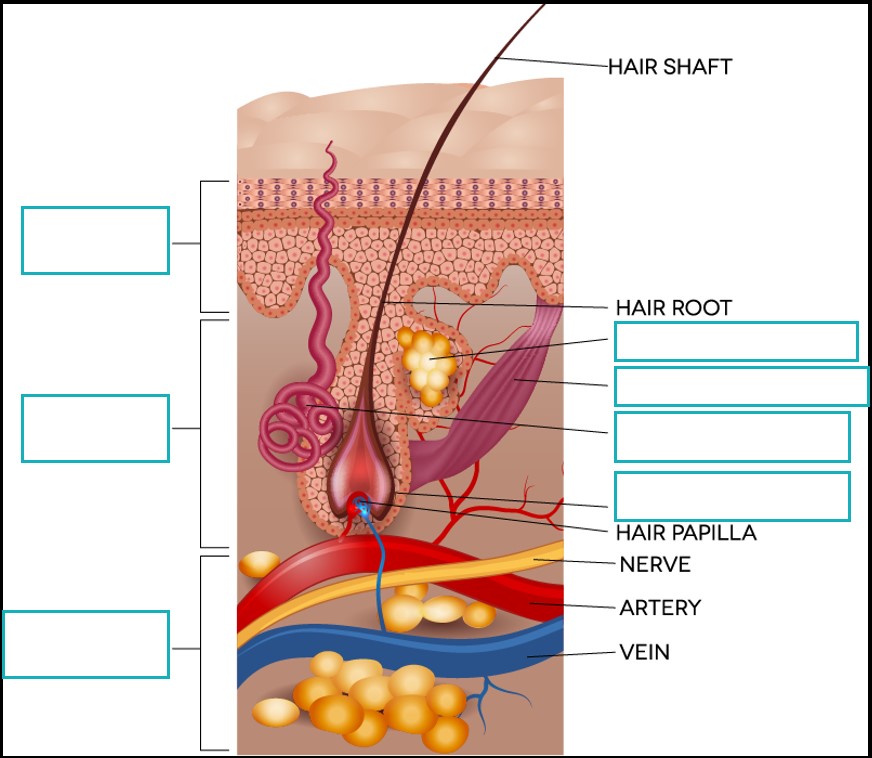
Match the structures with their area on the diagram of the skin cross section.
Mmuae Afoforo a Wobɛpaw:
Epidermis
Dermis
Sweat gland
Hypodermis
Sebaceous gland
Hair follicle
Arrector pili muscle
Describe one way that our skin helps to maintain homeostasis in our body?
What do you think of the skin as a body system? Did you find any of the new material you learned in this unit interesting?
Analyze the structure and function of the integumentary systems
Discuss potential alterations in skin integrity
Demonstrate the knowledge and skill related to performing effective hand hygiene
Identify and analyze common diseases and disorders of the integumentary system
Unit slides
What structures are considered part of our (human) integumentary system? (there are 4 correct choices)
Match the structures with their area on the diagram of the skin cross section.
Match the skin receptors with the sensation they detect.
| Draggable item | arrow_right_alt | Corresponding Item |
|---|---|---|
Mechanoreceptors | arrow_right_alt | light touch |
Nocieptors | arrow_right_alt | Vibration and texture |
Tactile corpusclues | arrow_right_alt | variations in temperature |
Thermoreceptor | arrow_right_alt | pain |
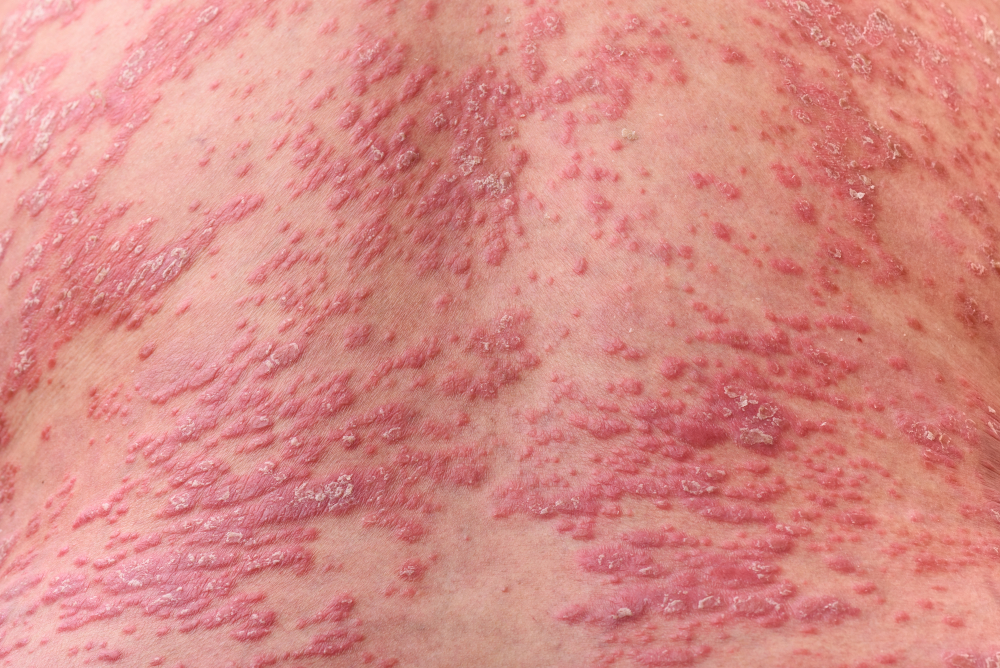
Which description best matches the skin lesions shown ?
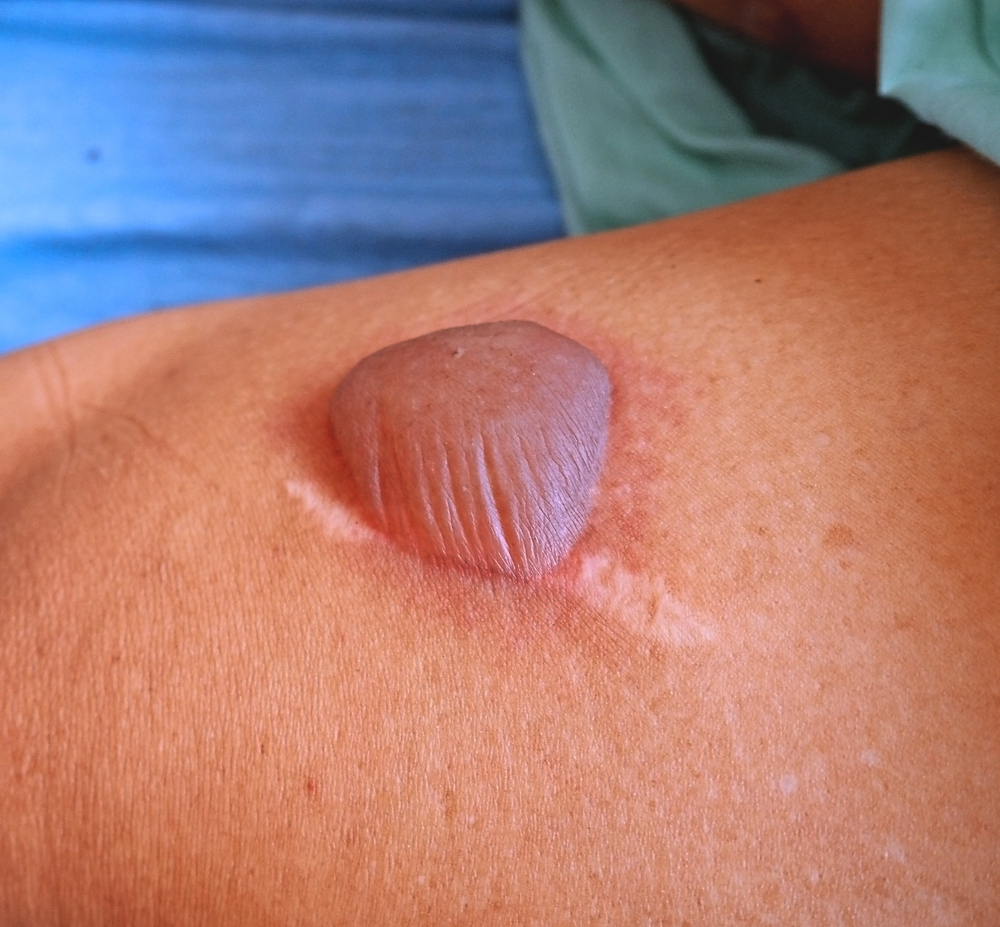
Which description best matches the skin lesion shown?