7.11 Blood Typing Investigation

Last updated 6 months ago
13 questions
Past recordings:
Here is a link to our class recording from 2/13/24.
Here is the recording link for our class session from 11/3/23.

This is the final assignment for our blood unit. Please remember to go back and check your answers and make corrections after you submit the assignment. I always update the gradebook to reflect your highest score earned.


I created the video below (about 7 mins) to help cover the content that we'll miss on Thursday. You can also use the recording links from last year's class, above, if you'd like additional details.
1

Blood is grouped according to the presence or absence of inherited:

1

How often is a healthy person able to donate whole blood?

1

Persons under 18 years old are not eligible to donate blood in WA.

1

Someone received a transfusion of an incompatible blood type, which ultimately led to major kidney damage. What is responsible for this outcome?

4

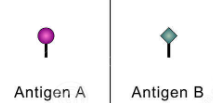
Use this key to help you identify the Red Blood Cells shown below and drag them to the category for the blood type they match.

Key:

  • Type A
  • Type B
  • Type O
  • Type AB
1

Is it possible for the couple with the blood types shown below to have a child with type O blood?

Complete the Punnett square to show the possible blood types for the children that the couple shown might have and help you solve the problem.

Dad: Type O blood
Mom: Type A blood

2

If a mother with a negative Rh blood type (A-, B-, AB-, or O-) has a baby who is + for the Rh group (A+, for example). Why is it important to receive the Rhogam treatment if she becomes pregnant again?

Check the hint below if you are in need of help with this question.

Complete the activity below to do a virtual blood typing experiment and determine the blood types of 4 individuals. If the activity is not loading you can follow this link to access it directly.
Follow the steps to determine each person's blood type and use that to answer the questions below.

Step 1: Add blood to each of the 3 spots on the dish
Step 2: Add each of the antibody solutions to it's corresponding well in the test dish
Step 3: Use the reaction results to determine the blood type.

How to read the results:
A reaction of clumping, when anti-A antibodies are mixed with a blood sample, indicates A antigens on the RBCs. The absence of a reaction indicates the person does not have that blood group antigen.

If you need practice and examples- check the class recording and class slides that I have linked above in the instructions.
2
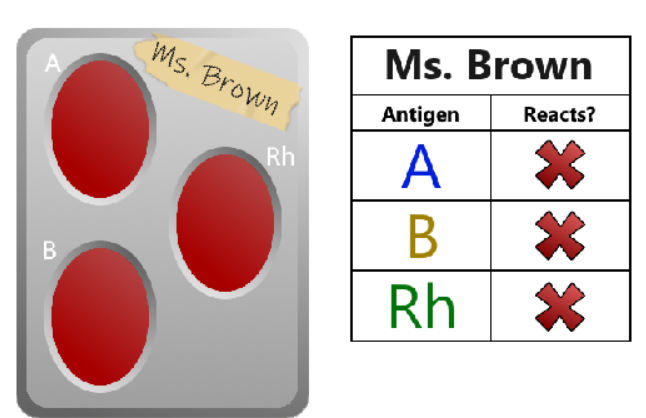
Complete the steps to check Ms. Brown's blood type- your results should look like this, which indicates no reaction between the test antibodies and blood group antigens on her RBC's surface. You can click the green finish button to check your results.


Ms. Brown's blood type is: _______
2
Mr. Green's blood type is: _______
2
Mr. Jones' blood type is: _______
2
Mr. Smith's blood type is: _______
2

Ms. Potter has A+ blood and is in need of donor blood when she undergoes surgery next week. Which of the individuals that you tested in the activity would be compatible donors for Ms. Potter?

1

Do you have any questions about the components of blood, blood typing, or anything else we discussed in this unit?

Do you need help with any assignments as we near the end of the trimester?