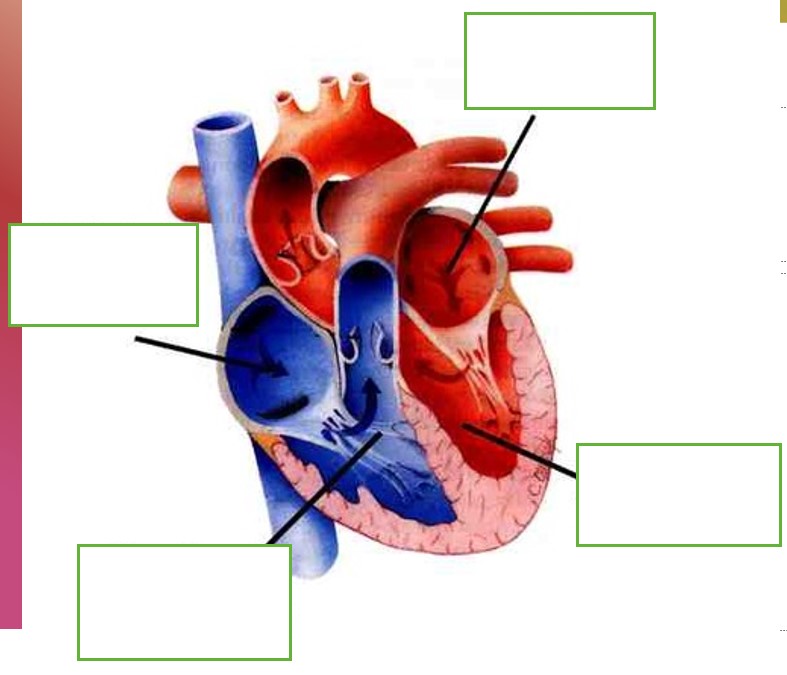
Match the labels with name of the heart chamber on the diagram.
Mmuae Afoforo a Wobɛpaw:
Left atrium
Right Ventricle
Right atrium
Left ventricle
You can choose to watch one of the class recordings from the 3 options below, the all cover the same material, so no need to watch multiple recordings. I cover all of the questions in this assignment in each of these lessons. The slides are also included below so that you can review diagrams.
1. View the class recording here if you want help reviewing all of the concepts from this lesson, we addressed every question from the assignment during the recorded session. I will update with this year's recording link once we cover the topic in class.
2. Here is the recording link from class on 11/7/23
3. Here is the recording link from class on 2.16.24
After studying this unit, you will be able to:
1.Describe the structure and function of the heart and circulatory pathways
2.Compare and contrast systemic and pulmonary circulation
3.Summarize the path for electrical conduction in the hear4.Discuss common diseases and disorders that affect the cardiovascular system
Feel free to open the class slides if you would like help answering the questions below.
The heart lies in the mediastinum along with major organs of:
The apex of the heart is
Athletes' hearts are heavier than average because:
The purpose of the valves in your heart is to:
Which cavity in the heart receives deoxygenated blood?
Saying something is "pulmonary" means it is related to your:
Put the follow in order to show the pattern of blood flow from the body to the lungs. Be sure to start with BODY and end with LUNGS
lungs
body
vena cava
pulmonary artery
right ventricle
right atrium
Ultimately, veins and arteries are defined most by:
Match the labels with name of the heart chamber on the diagram.
The specific route for circulation that passes through the liver is:
Compared to an average person with the same lifestyle and situation, you would expect the person with the stronger heartbeat to have:
Which of the following is characteristic of a patient with atherosclerosis?
Your aorta is closest in diameter to
The human heart has
150 beats per minutes is a healthy resting heart rate for a 40 year old adult.
Blood pressure is higher in veins than in arteries.
A cath lab is a facility that allows for detailed imaging of the blood vessels that feed the heart.
What are some examples of procedures that can be done in a Cath lab?
Do you have any questions about the types of careers that might work in a cath lab?