The image below is of a palace built to exemplify the power of which European monarch?
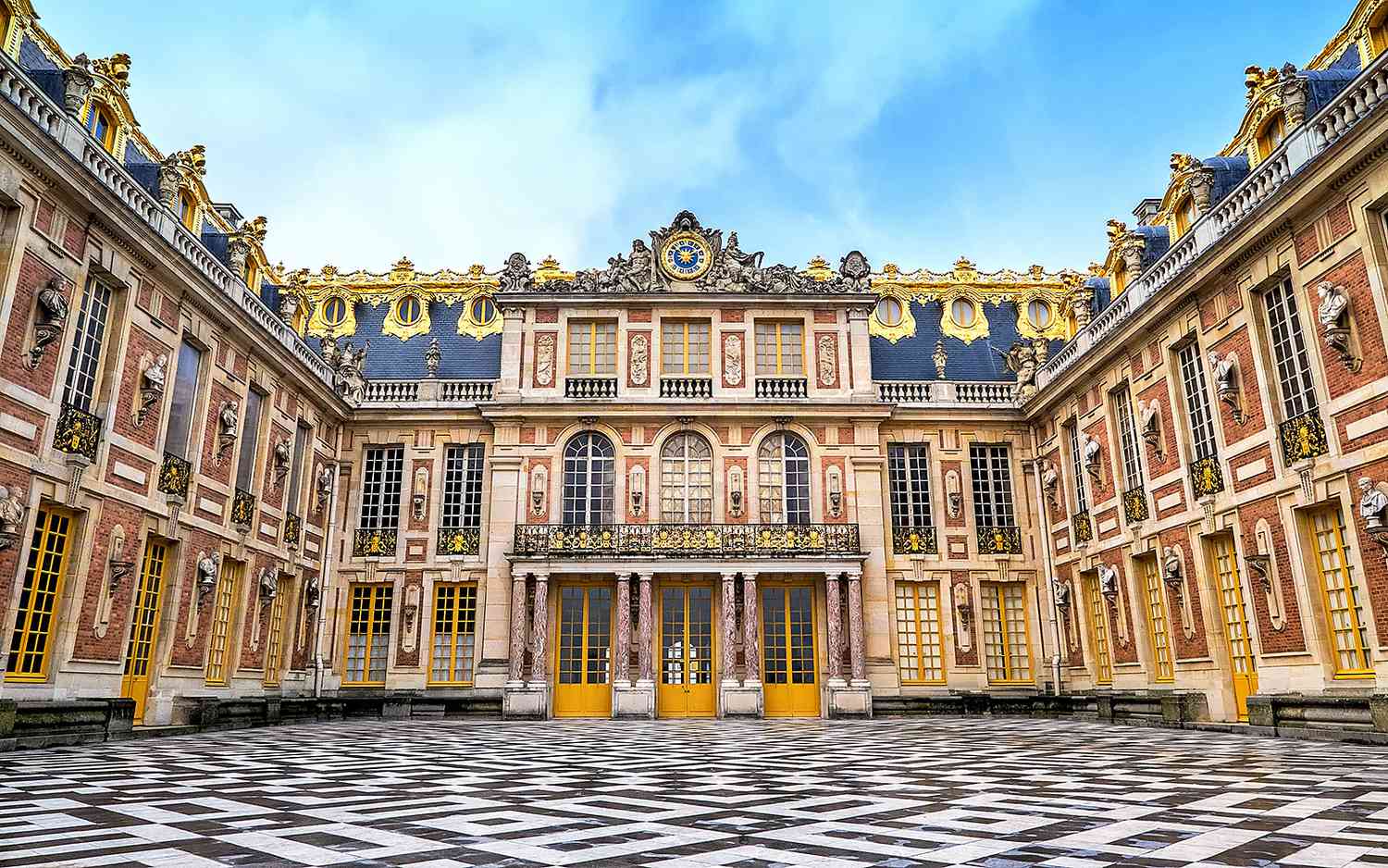
The image below is of a palace built to exemplify the power of which European monarch?
| Draggable item | arrow_right_alt | Corresponding Item |
|---|---|---|
Thirty Years' War | arrow_right_alt | Political system where a ruler has complete and unlimited control |
Versailles | arrow_right_alt | First absolute monarch in Europe; financed the Spanish Armada and fought wars to defend Catholicism |
Henry IV | arrow_right_alt | Site of the grand palace built by Louis XIV to exemplify his power |
Spanish Armada | arrow_right_alt | Austrian monarch whose rise to power was challenged by Prussia |
Philip II | arrow_right_alt | Best example of an absolute monarch; French monarch who fashioned himself the "Sun King" |
bureaucracy | arrow_right_alt | Massive fleet that failed to invade England in 1588 |
Absolutism | arrow_right_alt | Huguenot ruler of France who put an end to the French Wars of Religion |
Junkers | arrow_right_alt | Bloody 1600s religious conflict that empowered France and depowered Austria |
Maria Theresa | arrow_right_alt | Prussian nobility known for military experience and prowess |
Louis XIV | arrow_right_alt | Administrative system of workers all directly employed by the government |
Which of these is NOT a characteristic of an absolute monarchy?
Which of the following best explains why the Thirty Years' War was so violent and chaotic compared to other European religious conflicts?
How did absolute monarchs justify their unlimited power?
The image below is of a palace built to exemplify the power of which European monarch?
How did the Thirty Years' War impact the balance of power in Europe?
Which of the following is an outcome of the Peace of Westphalia?
Which of the following is something an absolute monarch would NOT typically do?
What did Prussia become renowned for across Europe?
How did the Edict of Nantes help to end the French Wars of Religion?
What major change in European politics resulted from Prussia's victory in the War of the Austrian Succession?
Why did Louis XIV fashion himself the "Sun King"?
Why did Catholic France choose to intervene in the Thirty Years' War on the side of the Protestants?
Choose ONE of the two following prompts to answer:
1. Describe both why and how European countries transitioned from feudalism to absolutism during the 1500/1600s.
2. Identify and explain one accomplishment by Louis XIV that showed how he was an absolute monarch.