Which of these changes during France's Third Republic is shown in the image?
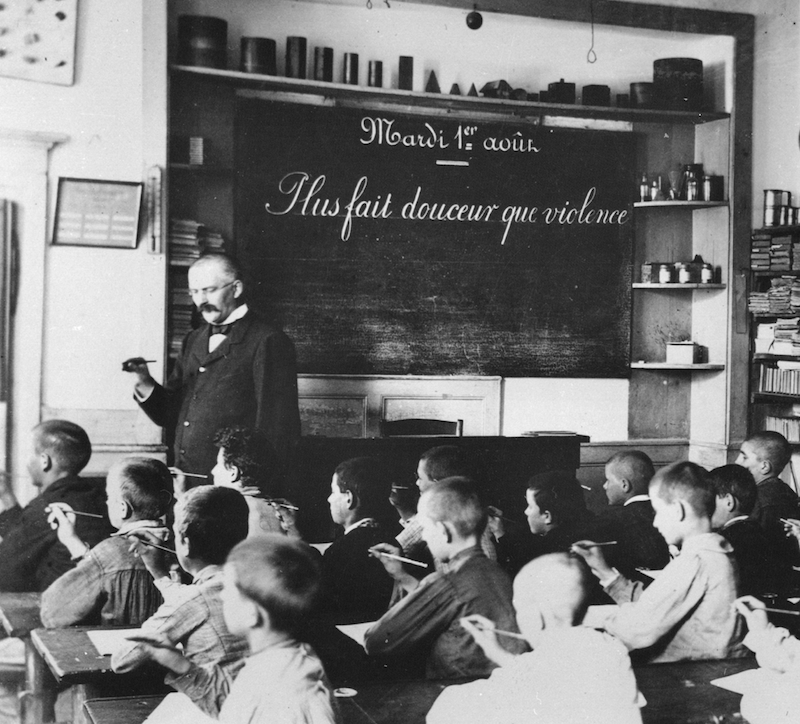
Which of these changes during France's Third Republic is shown in the image?
| Stavka koja se može prevući | arrow_right_alt | Odgovarajuća stavka |
|---|---|---|
John D. Rockefeller | arrow_right_alt | Support for the political independence of a cultural group or ethnicity |
Dreyfus Affair | arrow_right_alt | Nickname given to the Balkans region due to ethnic tension and volatility |
Chartism | arrow_right_alt | American industrialist who created a global monopoly over oil production |
Dual Monarchy | arrow_right_alt | French political scandal that exposed the high level of anti-Semitism in 1800s Europe |
Queen Victoria | arrow_right_alt | Political system where Austria and Hungary were ruled by the same king |
"Powderkeg of Europe" | arrow_right_alt | Prussian Prime Minister who helped to unify Germany |
Simon Bolivar | arrow_right_alt | British monarch who ruled with values of respectability and tradition |
Otto von Bismarck | arrow_right_alt | Italian revolutionary and patriot who overtook the southern parts of Italy before ceding land to Victor Emmanuel |
Realpolitik | arrow_right_alt | Political movement to expand the vote and democratize in Great Britain |
Giuseppe Garibaldi | arrow_right_alt | Politics based on practical needs rather than morality or ideology |
Nationalism | arrow_right_alt | High tariffs placed on foreign grain by the British government; abolishment of the tariffs was seen as a victory for liberalism |
Corn Laws | arrow_right_alt | Latin American revolutionary who helped many South American countries revolt away from Spain |
Which of these changes during France's Third Republic is shown in the image?
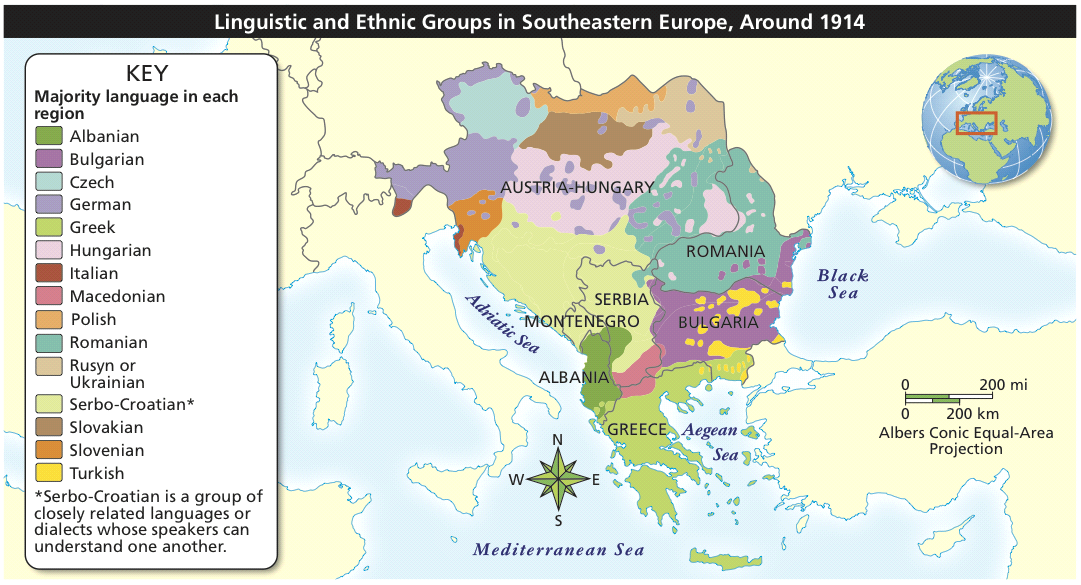
Which of the following reasons best describe why observers would have referred to the region in the map as the "powder keg" of Europe?
How did nationalism lead to the decline of the Ottoman Empire?
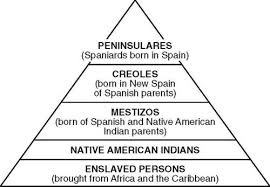
Using the chart as reference, which of the social classes in colonial Spain was responsible for leading revolutions during the early part of the 1800s?
Which statement best analyzes how the Dreyfus Affair reflected European society during the late 19th century?
Which of these policies, originally created by Otto von Bismarck, became a hallmark of German society in the late 1800s?
Which event did Toussaint l'Ouverture influence?
Which change did the Austrian Habsburgs agree to under pressure of nationalism?
Which statement best explains why Giuseppe Garibaldi gave up Naples and Sicily to Victor Emmanuel in 1861?
Which of these factors made Italian unification more difficult?
Which of the following statements best describes why the Revolutions of 1848 failed to create permanent change?
Which of these contributed MOST to the creation of Italian nationalism?
What led to the formation of coalition governments during France’s Third Republic?
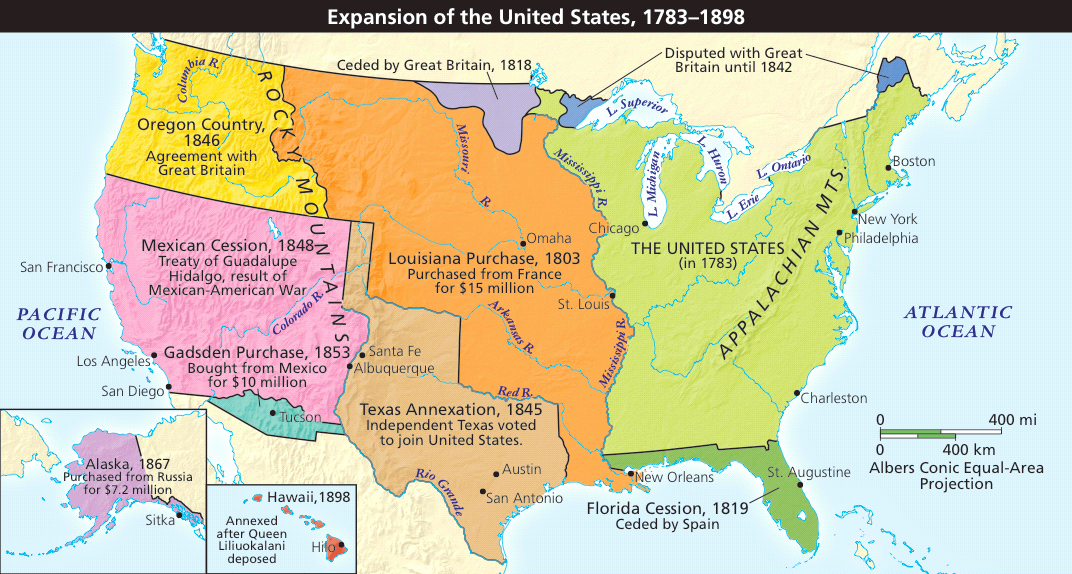
What idea inspired the expansion of the United States to the area on the map that is west of the Mississippi River?
“As queen, [she] came to embody the values of her age. These . . . ideals included duty, thrift, honesty, hard work, and above all respectability.”
Which historical figure fits the description in the text?
What led to the establishment of Haiti as an independent republic?
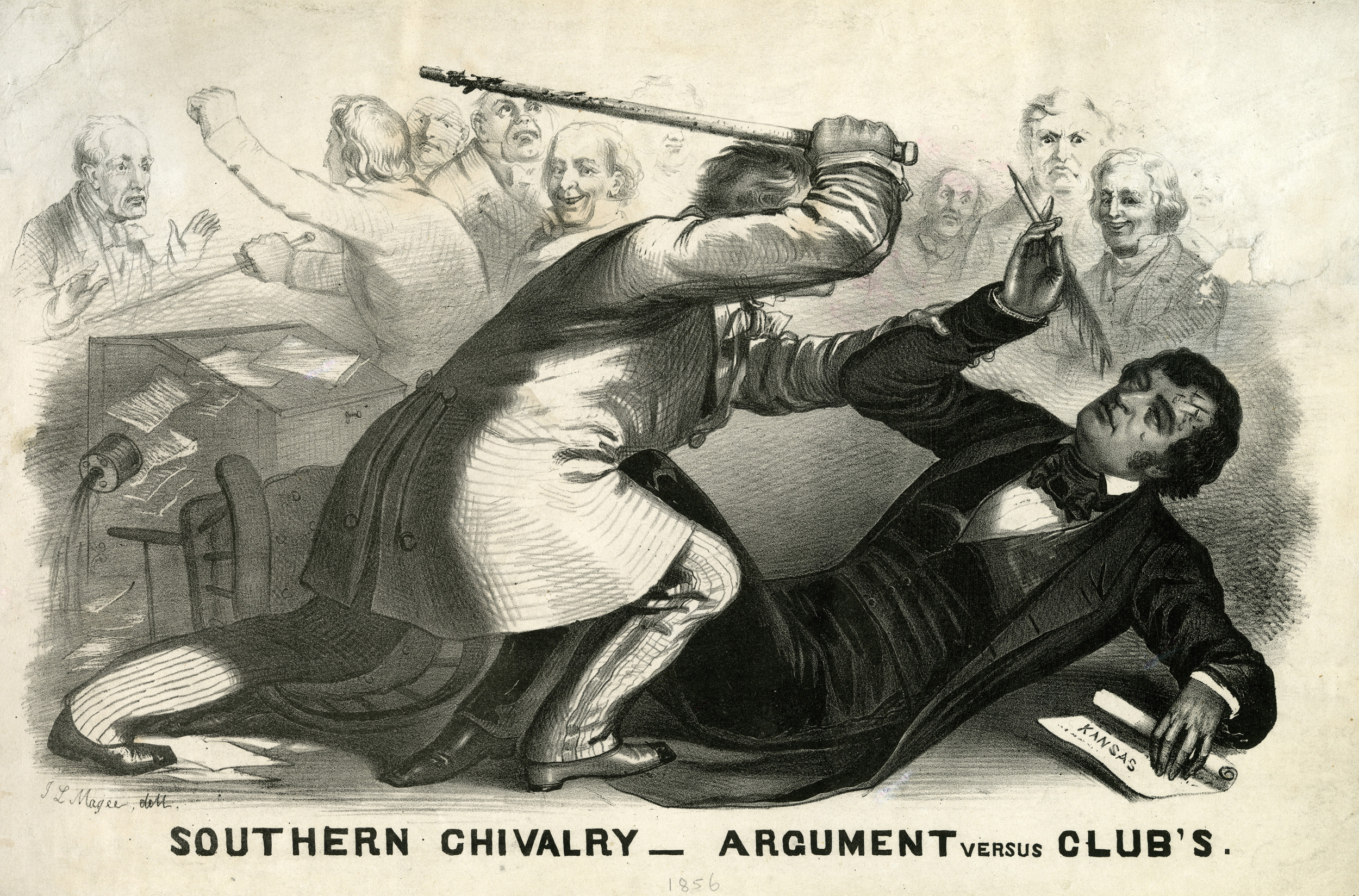
The cartoon below depicts the caning of Massachusetts senator Charles Sumner by SC representative Preston Brooks. What issue was responsible for bringing the men to the physical conflict shown?
“The reform bill did not satisfy the demands of more radical reformers like the Chartists, who stood for working class interests. In the 1830s, they drew up the People’s Charter, a petition setting out their goals.”
What was one of the key demands in the document this quote references?
Why was Russia slow to industrialize and reform?
Which of the following scenarios best represents the use of realpolitik?
Which post-Civil War amendment gave African-American men the right to vote?
“There is something that governments care for more than human life, and that is security and property, so it is through property that we shall strike the enemy.”
— Emmeline Pankhurst
What cause did this message support?
How did the Fourteenth Amendment apply to former enslaved people?
Victory over France in the Franco-Prussian War led to the creation of which state?
How did Andrew Carnegie and John D. Rockefeller transform the United States in the early 1900s?
“Germany does not look to Prussia’s liberalism, but to her power. . . . The great questions of the day are not to be decided by speeches and majority resolutions—that was the mistake of 1848 and 1849—but by blood and iron!”
— Otto von Bismarck, 1862
How does this excerpt from a speech reflect Bismarck’s practice of Realpolitik?
Why was the abolishment of the Corn Laws by Parliament considered a victory for liberalism?
“He would march his army across the Andes and attack the Spanish at Bogotá, the capital of the viceroyalty of New Granada (present-day Colombia). First, he cemented an alliance with the hard-riding llañeros, or Venezuelan cowboys. Then, in a grueling campaign, he led an army through swampy lowlands and over the snowcapped Andes. Finally, in August 1819, he swooped down to take Bogotá from the surprised Spanish.”
Which revolutionary leader is discussed in this text?
Choose TWO of the four prompts below. Please respond to your choices in complete thoughts and sentences.
1. Explain how France establishes the Third Republic.
2. Explain how social conditions, the actions of the tsars, and industrialization led to revolution in Russia in 1905.
3. Explain how slavery became the primary political problem of the United States between 1789 and 1860.
4. Explain and provide an example for how realpolitik came to prominence as a political ideology in 1800s Europe.