Log in
Sign up for FREE
arrow_back
Library

World War II Test

star
star
star
star
star
Last updated 4 months ago
30 questions
Required
2
Required
2
Required
2
Required
2
Required
2
Required
2
Required
2
Required
2
Required
2
Required
2
Required
2
Required
2
Required
1
Required
2
Required
2
Required
2
Required
2
Required
2
Required
2
Required
1
Required
2
Required
2
Required
2
Required
2
Required
2
Required
2
Required
2
Required
2
Required
2
Required
14
Question 1
1.

Question 2
2.

Question 3
3.

Question 4
4.

Question 5
5.

Question 6
6.

Question 7
7.

Question 8
8.

Question 9
9.

Question 10
10.

Question 11
11.

Question 12
12.

Question 13
13.

Question 14
14.

Question 15
15.

Question 16
16.

Question 17
17.

Question 18
18.

Question 19
19.

Question 20
20.

Question 21
21.

Question 22
22.

Question 23
23.

Question 24
24.

Question 25
25.

Question 26
26.

Question 27
27.

Question 28
28.

Question 29
29.

Question 30
30.

Choose TWO prompts to answer. Please use complete sentences and coherent thoughts.

1. Describe the causes and effects of the Japanese attack on Pearl Harbor.
2. Trace the development and explain the use of the first atomic bomb.
3. Explain why Germany's invasion of the Soviet Union fails.
4. Explain the causes of the Great Depression.

“Two days later, Britain and France declared war on Germany. World War II had begun. History had again arrived at one of its great turning points.”

Which event had occurred two days previously?
the signing of the Munich Agreement
the German invasion of Poland
the announcement of the Nuremburg Laws
the annexation of Austria
Why were the 1920s in the United States often characterized as the "Roaring Twenties?"
The Great Depression led to a decade of instability
Social conflicts over prohibition created frequent public riots
German hyperinflation began affecting the US economy
The US experienced unprecedented economic prosperity
This map highlights the German failure to...
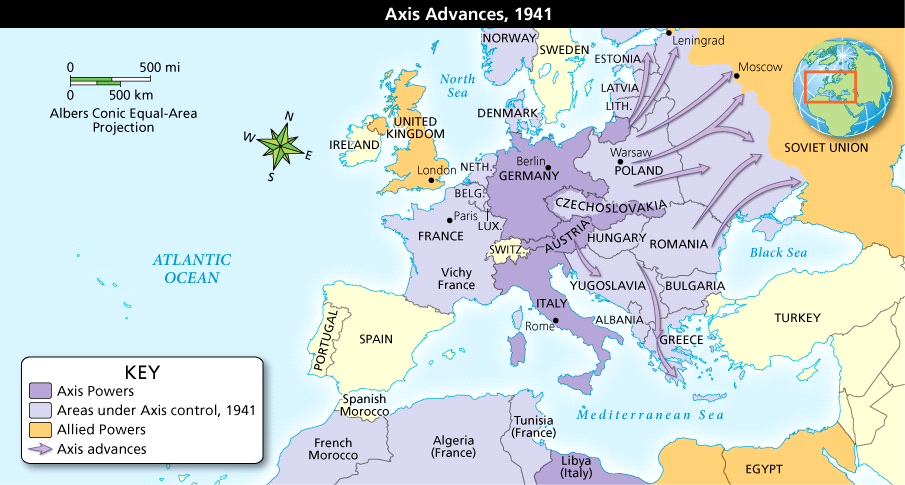
invade the United Kingdom.
annex Austria.
ally with Italy.
invade the Soviet Union.
Which of the following is NOT a reason for the appeasement policy of western democracies during the 1920s and 30s?
France's military was still demoralized due to the human toll of World War I
The traumas of World War I had created a generation of pacifists
Westerners generally feared communism more than fascism
The United States pressured the Allies into friendly relations with the Nazis.
Following World War II, what did the Allies form to keep the peace and prevent a third global conflict?
Nuremburg trials
United Nations
League of Nations
Manhattan Project
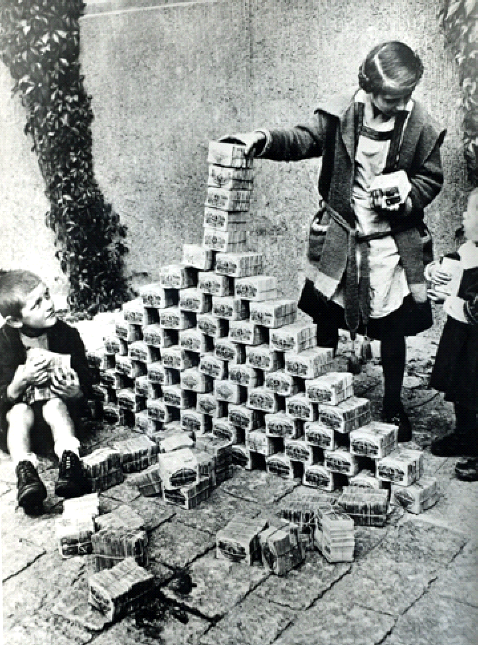
The picture below was taken in 1920s Germany. Which factor accounts for the scene in the image?

Germany had recently switched to a communist command economy
Soviet invasions had caused goods shortages in Germany
German children were inspired by nationalism
Hyperinflation devalued the German currency
Which of the following MOST contributed to the rise of extreme and authoritarian governments across Europe in the 1930s?
the outbreak of World War II
diplomatic disagreements between Britain and France
a civil war in Germany
the onset of the Great Depression
Which of the following statements best supports the idea that American culture was adopted globally during the 1920s?
The New York Stock Exchange was seeing extremely high trading prices.
Jazz was the most popular form of music across the world.
American bank loans were propping up the post-WWI economy.
Hitler and the early Nazi party attempted to stage a coup in Munich.
"We knew the world would not be the same. A few people laughed, a few people cried. Most people were silent. I remembered the line from the Hindu scripture, the Bhagavad Gita; Vishnu is trying to persuade the Prince that he should do his duty and, to impress him, takes on his multi-armed form and says, 'Now I am become Death, the destroyer of worlds.' I suppose we all thought that, one way or another."

— J. Robert Oppenheimer, 1965 television interview

This quote describes the reaction to what milestone during World War II?
First use of blitzkrieg tactics
First use of aircraft carriers as an offensive ship
First use of an atomic bomb
First surrender to the Nazis
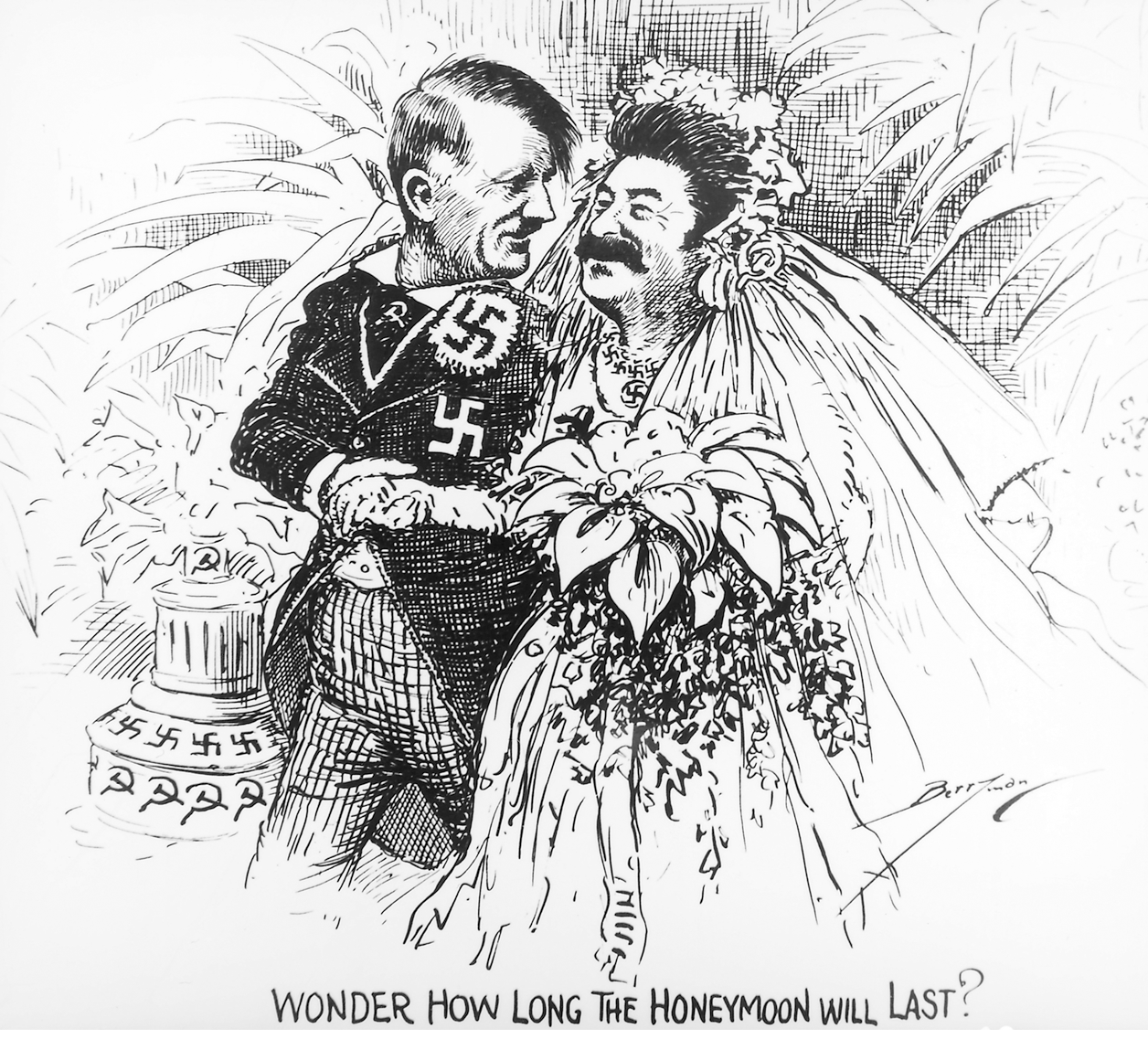
What message did the artist of the cartoon want to portray?

Germany and the Soviet Union were fierce enemies whose agreement would not stand for long.
Germany and the Soviet Union were historical friends.
The Soviet Union was betraying its former allies by entering into an agreement with Germany.
Democratic countries needed to fight fascism as well as communism.
“They broke our windowpanes, and the house became very cold. . . . We were standing there, outside in the cold, still in our night clothes, with only a coat thrown over. . . . Then they made everyone lie face down on the ground. . . . ‘Now, they will shoot us,’ we thought. We were very afraid.”

— Sophie Nussbaum, 48 Hours of Kristallnacht: Night of Destruction/Dawn of the Holocaust by Michael Goeffrey

Which of Hitler’s objectives resulted in the event described in the quote?
rearmament of Germany
overthrow of the Weimar Republic
campaign of anti-Semitism
defiance of the Treaty of Versailles
The map, dated to 1941, depicts in black the ________________ at their greatest extent.
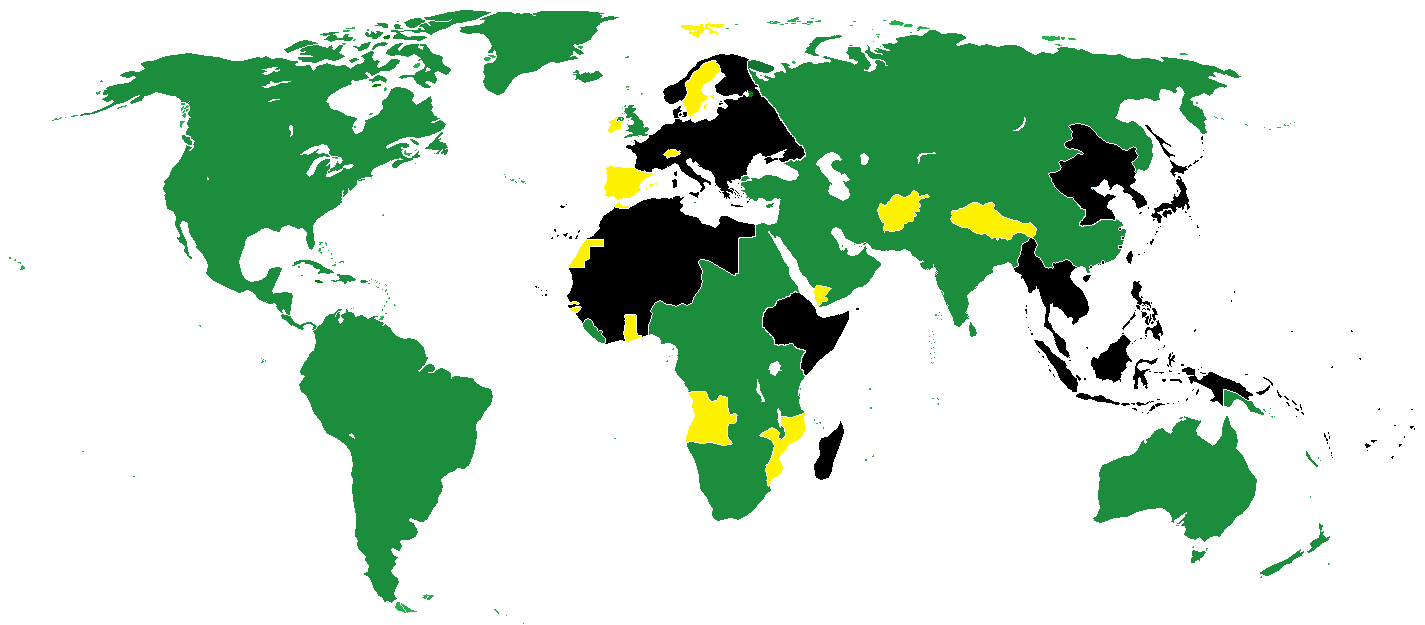

Allied Powers
United Nations
Central Powers
Axis Powers
What role did climate play in the Nazi invasion of the Soviet Union?
A poor harvest cut off Soviet food supplies
Favorable weather conditions allowed Germany to advance quickly
Poor weather prevented Germany from using blitzkrieg tactics
German troops were unprepared for the Russian winter
Which of these choices is the best example of buying on margin?
Investing in a foreign country after a war.
Getting a mortgage to assist in buying a home.
Using a credit card to buy an appliance.
Borrowing from a bank or broker to purchase a stock.
What factor most directly impacted the success of Germany's 1941 invasion into the Soviet Union?
Use of scorched earth tactics by retreating Soviet troops
Disgust with the einsatzgruppen amongst normal German soldiers
Fuel shortages in Germany
Arrival of the Russian winter
“In 1940, with Europeans distracted by war, Japan advanced into French Indochina and the Dutch East Indies. In response, the United States banned the sale of war materials, such as iron, steel, and oil, to Japan. Japanese leaders saw this move as a threat to Japan’s economy and its Asian sphere of influence.”

What did Japan do in response to the U.S. actions described in the text?
Japan joined the Axis Powers.
Japan invaded the Philippines.
Japan began developing an atomic weapon.
Japan attacked Pearl Harbor.
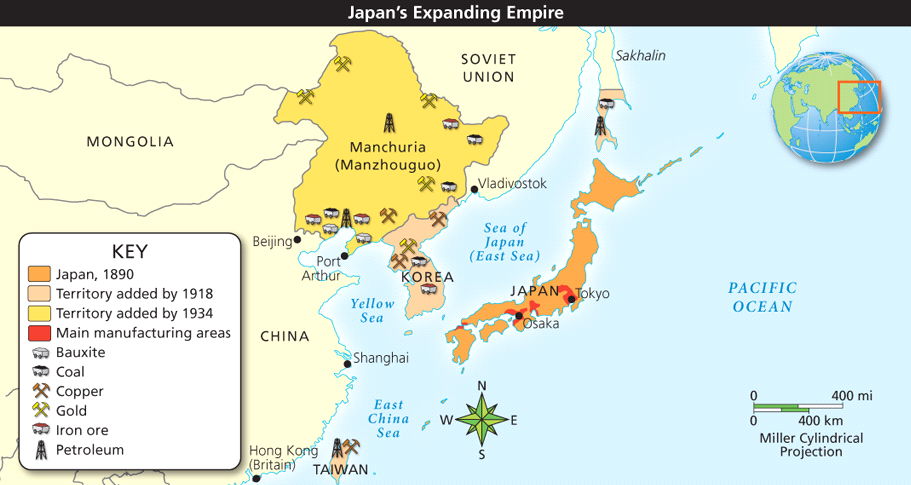
What statement is best supported by the information on the map?

Japan's mainland was flush with resources like iron and petroleum.
Japan looked to China for the natural resources it lacked.
The Japanese had fully invaded and occupied China by 1934.
By 1918, ultranationalist militarists were running Japan.
Which of these was a consequence of the event called "The Blitz?"
The Soviets managed to hold off the siege of Leningrad for two-and-a-half years.
Britain became stronger in its resolve to stand up to Germany.
Germany annexed Czechoslovakia.
Hiroshima and Nagasaki were destroyed.
Which of these was an immediate consequence of the Nuremberg Laws?
German Jews were forced into ghettos.
Germany and the Soviet Union agreed to peaceful relations.
German Jews lost their citizenship.
Germans in the Sudetenland were given self-governance.
Which of the following was a core part of the Allied campaign to defeat Japan?
Island hopping
Battleship warfare
Kamikaze attacks
blitzkrieg
Which of these was a postwar economic effect of World War II?
The Germans funded the European effort to rebuild
Nations increased their debt by continuing to sell war bonds
Europe's economy recovered quickly and on its own
Europe was obliterated, leaving factories and infrastructure mostly destroyed
Which conclusion is best supported by the chart?
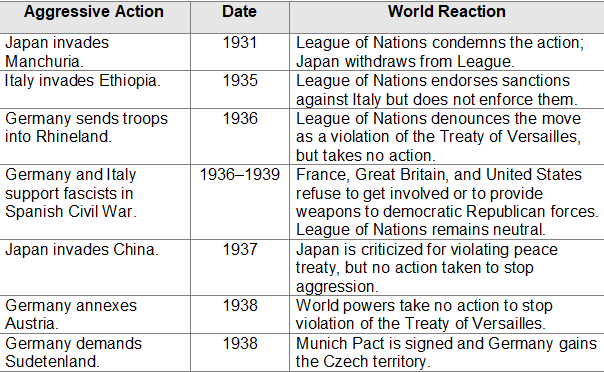
The League of Nations was effective at its job of mitigating conflict.
World War II had broken out by 1937.
Britain and France were not concerned about Nazi aggression.
The policy of appeasement did not succeed in achieving its goals.
“The battle lasted for five days in May 1942. For the first time in naval history, ships engaged in a naval battle never even saw each other. Attacks were carried out by planes launched from aircraft carriers, or ships that transport aircraft and accommodate the take-off and landing of airplanes. The Allies prevented Japan from seizing several important islands. More importantly, the Americans sank one Japanese aircraft carrier and several cruisers and destroyers.”

Based on the description in the text, which WWII military action is probably being described?
bombing of Pearl Harbor
Battle of Stalingrad
Battle of the Coral Sea
bombing of Hiroshima
What does the phrase “the final solution” refer to?
the Allied plan to attack the Axis from two fronts
the Japanese plan to brutalize the Chinese capital city
the American decision to drop two atomic bombs on Japan
the Nazi plan to exterminate all European Jews
What was the result of the destruction shown in this photograph?
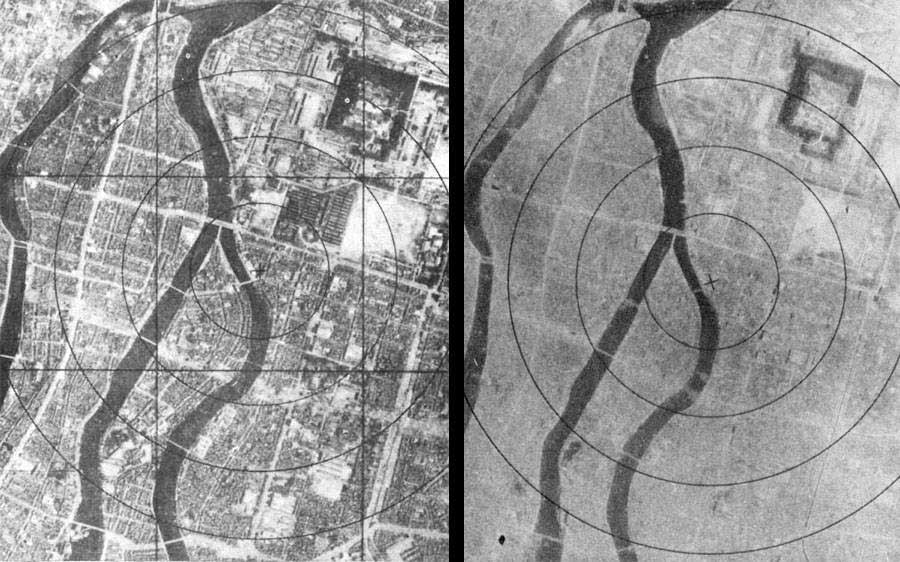


Japan surrendering and World War II ending
Soviet troops successfully defending Stalingrad
Allied troops storming Normandy on D-Day
Which event is often considered the "start" of the Great Depression?
Election of Franklin D. Roosevelt
US stock market crash
German invasion of Poland
German invasion of Belgium
“Truman warned the Japanese that if they did not surrender, they could expect ‘a rain of ruin from the air, the like of which has never been seen on this Earth.’”

Which endeavor allowed the United States to make this threat?
Nuremberg trials
Rape of Nanking
Manhattan Project
Potsdam Conference
Which choice best reflects how the process below affected the start of the Great Depression?
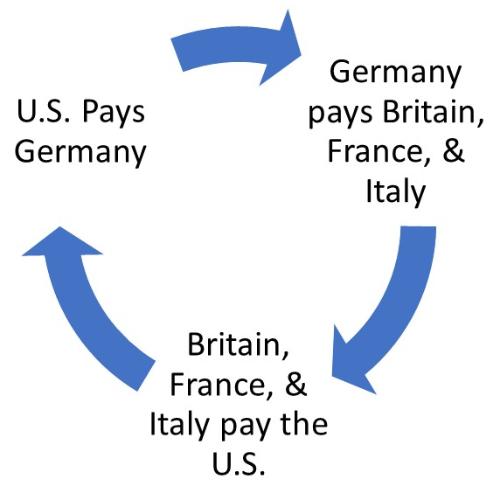
European dependence on US loans made the global economy extremely fragile
Britain suffered the worst under the early Depression
The Soviet Union avoided the Depression because it was uninvolved in US loaning
The US was able to end the Depression quickly due to an influx of cash
What historical event is MOST responsible for the trend seen in the graph below?
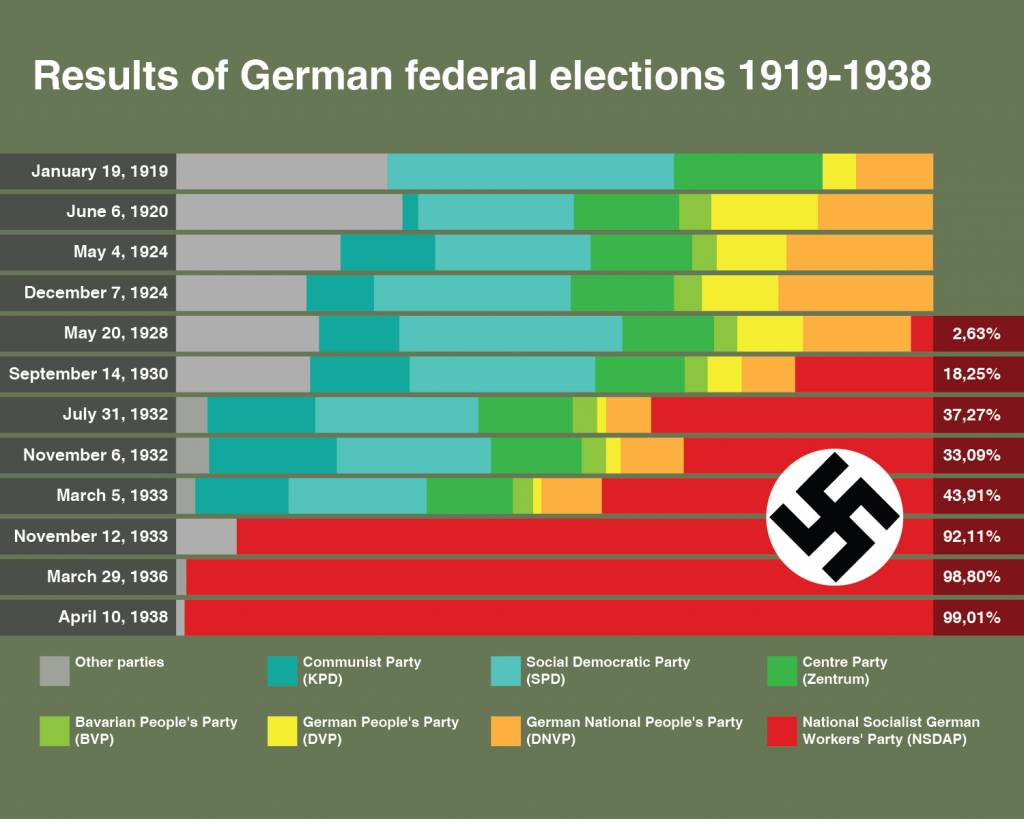
World War II
Jazz Age
The Great Depression
World War I